
Water
-
Legal & Regulatory
Proposed Cooling Water Rule’s Ripple Effects
The U.S. Environmental Protection Agency (EPA) has a long history of making waves with the electric power industry because of its efforts to regulate the way thermal power plants construct and operate their cooling water intake structures (CWIS). These structures divert billions of gallons of water into power plants’ cooling systems and can injure or kill billions of aquatic organisms.
-
 O&M
O&MPlant of the Year: AES Gener’s Angamos Power Plant Earns POWER’s Highest Honor
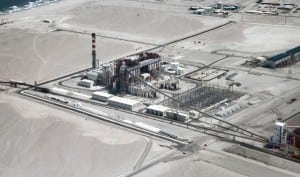
AES Gener recently completed construction of twin coal-fired, 260-MW units in the electricity-starved desert of northern Chile that may serve as models for future hybrid-fossil plant designs. For meeting an aggressive construction schedule, integrating a 20-MW battery energy storage system, embracing desalination, using the first-of-its-kind seawater cooling tower in South America, and employing innovative financing methods, the AES Gener Angamos plant has earned POWER’s 2012 Plant of the Year Award.
-
 Waste to Energy
Marmaduke Award: Combined Solar Technologies’ Hybrid Plant: Using Wastewater and Olive Pits to Produce Clean Water and Clean Energy
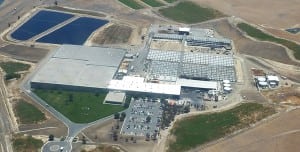
Combined Solar Technologies (CST) has designed, built, owns, and operates a water purification system located at the Musco Family Olive Co. facility in Tracy, Calif., that burns olive pits to purify highly saline wastewater through a distillation process while also producing electric power. For its pioneering approach, CST is the winner of POWER’s 2012 Marmaduke Award for excellence in plant problem-solving. The award is named for Marmaduke Surfaceblow, the fictional marine engineer and plant troubleshooter par excellence, whose exploits were chronicled in POWER beginning in 1948.
-
 Gas
GasPerformance-Based Cooling Water Treatment
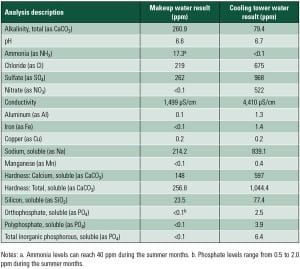
A West Coast combined cycle plant that uses reclaimed water found that cycling 300 times a year caused disruptions to the plant’s cooling water chemical treatment program. The solution was a performance-based monitoring and control system that uses available plant operating data plus algorithms to measure corrosion rates and fouling factors, which in turn allows the plant to trim chemical feed rates so they correlate with a specified corrosion rate, rather than a suggested chemical residual.
-
 Coal
CoalClean Air, Dirty Water
Efforts by power producers to meet clean air rules mean that wastewater effluent streams now face revised EPA regulations. A skirmish involving a New Hampshire power plant could set the tone for the next battle over regulations.
-
 Water
WaterTechnique Generates Salinity Gradient Power and Cleans Wastewater
Exploiting the difference in salt concentrations between the freshwater runoff from river mouths at the point where they meet saltwater reservoirs such as seas and oceans to harness power isn’t a new thing.
-
 Solar
SolarThink Water When Designing CSP Plants
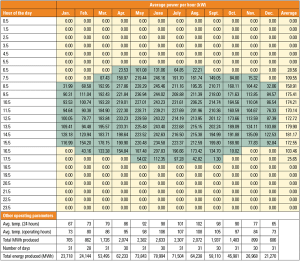
The operation of solar thermal power plants differs substantially from that of fossil-fired plants, as the sun determines the generation rather than market demand. However, design of the power island to minimize water usage is very similar to that of a fossil plant. This renewable technology requires renewed thinking of its water systems’ design.
-
 Water
WaterPromoting Sustainable Water Usage in Power Generation
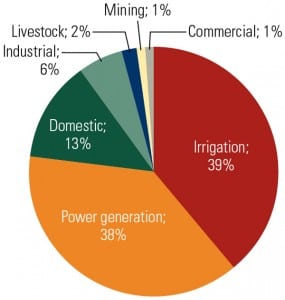
Growing concern about water usage by U.S. electric power generation is being prompted by a number of factors, including projected increases in power demand due to population growth, competing uses for water, and recent drought conditions in various parts of the country. Our overview presents diverse perspectives from industry experts about current and future challenges of balancing power generation needs with declining water availability.
-
 Water
WaterClever “Helper” Tower Solves Cooling Water Dilemma
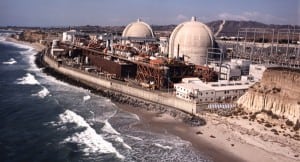
Gone are the days when ocean or river water for once-through cooling of a new power plant was assumed to be available. Today, more than 500 fossil-fueled and 38 nuclear plants use once-through cooling. However, regulators in several states are aggressively pushing what is essentially a ban on the use of once-through water cooling, forcing a conversion to closed-cycle cooling.
-
 Coal
CoalVietnam Works Hard to Power Economic Growth
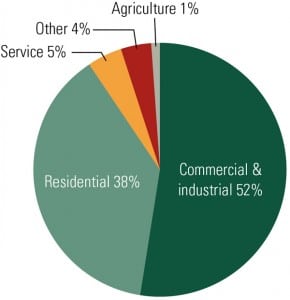
For the past 15 years, Vietnam has enjoyed enviable gross domestic product increases, averaging 7% annually. That kind of economic growth increases power demand, but financing new capacity remains a challenge. Reaching its ambitious capacity growth goals will require Vietnam to expand its financing and vendor base, attract foreign investment, and ensure future fuel supplies in a region thick with competition for those resources.
-
Coal
Editors Select Top Five Stories of 2011
The POWER editorial staff’s picks for the most significant stories of 2011.
-
 O&M
O&MEPRI Bridges Industry R&D Gaps
The technologies used to generate and distribute electricity will be radically transformed during the coming decade. Amid that change, the power industry must continue to meet customer reliability, safety, and cost-of-service expectations. Achieving the right balance among these often-conflicting goals is the primary focus of every utility. The Electric Power Research Institute is helping utilities achieve that balance with R&D programs for many new and emerging technologies.
-
Legal & Regulatory
The Water-Energy Balancing Act
Water has long been energy production’s silent partner. In the past, we Americans seemed to take it for granted that plentiful water supplies would be available for a variety of energy needs ranging from the operations of coal-fired power plants to natural gas production activities.
-
 Coal
CoalCWA 316(b) Update: Fish Guidance and Protection
The U.S. Environmental Protection Agency (EPA) has proposed new Clean Water Act section 316(b) regulations for once-through cooling water intake structures. Comments on the proposed rules closed in August, and a final rule is expected mid-2012. The EPA estimates that at least half of the power plants using once-through cooling will be required to implement a best technology available solution in coming years. That typically means barriers and screens, but you may want to consider other options.
-
 Coal
CoalFundamentals of Zero Liquid Discharge System Design
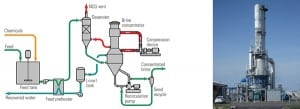
Power plants often produce wastewaters that contain salts, such as those from wet gas scrubbing, coal pile run-off, and leachate from gypsum stacks. Evaporation of those liquid wastes in a modern zero liquid discharge system produces clean water that is recycled into the plant plus a solid product suitable for landfill disposal. Here are the options to consider.
-
 O&M
O&MThe New Water Lab
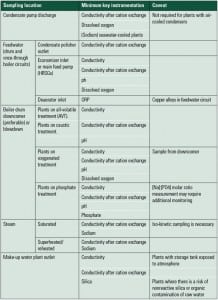
Recent advances in water laboratory instrumentation—from improved sample conditioning to advanced online instruments—have reached the market. Here’s a look at the equipment you’ll find in the best-equipped power plant laboratory this year.
-
O&M
BIG PICTURE: Lights Out (Web Supplement)
A web supplement to the September issue with details of global power shortages.
-
 O&M
O&MSystems Integration, Flexible Control Reduce Makeup Water Cost
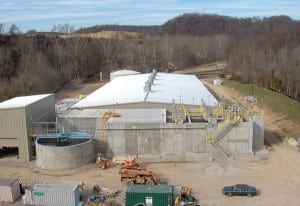
Longview Power, a 695-MW coal-fired power plant now under construction in Maidsville, W.Va., is scheduled to begin commercial operation later this year. The $2 billion project reached 580 MW in early June, just a month after completing the “first fire on coal” schedule milestone. Testing and tuning of the controls and various systems continue.
-
 Water
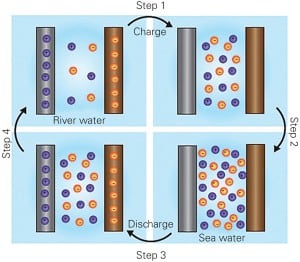
WaterBattery That Extracts Energy from Water Salinity Difference
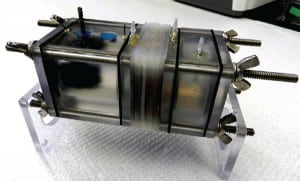
A rechargeable battery developed by researchers from Stanford University employs the difference in salinity between freshwater and saltwater to generate a current.
-
Water
Readers Write
In the September and October 2010 issues, POWER Contributing Editor David Daniels explored the causes and damage mechanisms of condenser tube leaks (“Taming Condenser Tube Leaks,” Part I and Part II). Dennis J. Schumerth, Valtimet’s director of business development, took issue with several of Daniels’ statements regarding the proper use of titanium condenser tubes. We have given Schumerth the opportunity to express his concerns and for Daniels to reply.
-
Hydro
Massive Energy Storage Facility Planned for Mexico-U.S. Border
Dubai-based energy firm Rubenius in October proposed to build a $4 billion energy storage facility based on sodium sulfur (NaS) technology on a 345-acre site in the Mexican state of Baja California, close to the U.S. border. If it comes to fruition, the facility—dubbed a “mega region energy warehouse” by Mexico’s President Felipe Calderon—will feature 1,000 MW of battery storage and offer “storage space” to energy companies and utilities in both Mexico and the U.S.
-
 Gas
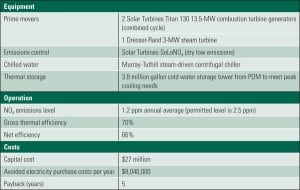
GasSmart Power Generation at UCSD
The University of California, San Diego has been accumulating awards for its savvy use of a constellation of power generation and energy-saving technologies. The campus already controls a fully functioning microgrid—including a cogeneration plant—and, as befits a research institution, is constantly looking for new ways to make its energy system smarter. This “living laboratory,” as campus leaders like to call it, demonstrates what it takes to build a smarter grid and why the effort is worth it.
-
Commentary
The Nexus of Energy and Water
The age-old adage “water and electricity don’t mix” does not apply to 21st-century infrastructure planning. The two entities can no longer be viewed as separate commodities. The demands on both are intertwined, so solutions for meeting new and growing challenges associated with water scarcity and carbon regulations must also be integrated. Water is essential to […]
-
 Water
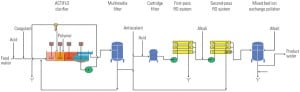
WaterMine Drainage: An Alternative Source of Water
Although mining practices often vary greatly according to the material produced and the value of the deposit, one common denominator is that mining of materials containing sulfide minerals creates acid mine drainage (AMD). AMD is one of the mining industry’s major environmental challenges.
-
 Hydro
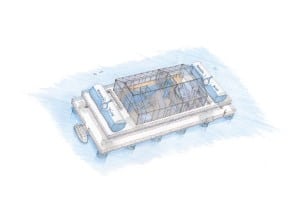
HydroWave Energy Device to Tap Marine Energy in Gulf of Mexico
The U.S. Army Corps of Engineers earlier this year awarded its first Section 10 permit ever to a commercial wave-powered demonstration facility planned for installation in the Gulf of Mexico. The novel offshore platform, dubbed the SEADOG, will use a buoy and piston mechanism combined with a water wheel to generate electricity and desalinate water.
-
 Water
WaterReACT Reduces Emissions and Water Use
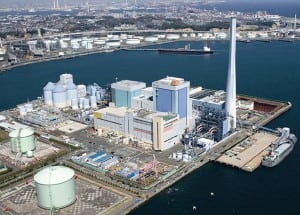
Regenerative activated coke technology (ReACT) is an integrated multipollutant control approach that removes SOx, NOx, and Hg from coal-fired plants by adsorption with activated coke to attain emissions levels found at natural gas–fired plants. One big advantage of this technology is that it uses only a fraction of the water used by conventional wet flue gas desulfurization. A recent license agreement brings this technology to the U.S.
-
 Water
WaterCirculating Fluid Bed Scrubbers Bridge the Gap Between Dry and Wet Scrubbers
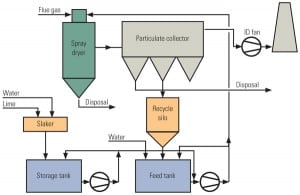
Circulating fluid bed (CFB) dry scrubbing technologies provide distinct advantages over conventional spray dryer absorber scrubbers for removing SO2 from flue gases. The CFB also competes well against wet limestone flue gas desulfurization processes typically favored for large boilers firing high-sulfur coals. With high SO2 removal rates in a dry treatment process, the CFB scrubber appears to be the best of both technologies: a water-stingy scrubber with high SO2 removal rates.
-
 Water
WaterAppraising Our Future Cooling Water Options
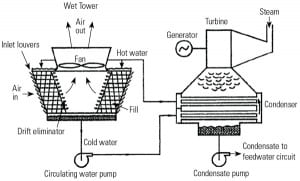
Ensuring the availability of water for power plants is a matter of both water quantity and quality. As freshwater becomes less available for power plant use, new supplies from marginal or impaired sources will require new cooling technologies. We look at cooling equipment options and how water availability and quality affect cooling system design and cost.
-
 Coal
CoalAdding Desalination to Solar Hybrid and Fossil Plants
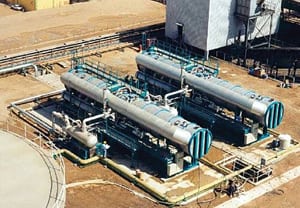
Shrinking water supplies will unquestionably constrain the development of future power plants. A hybrid system consisting of concentrated solar thermal power and desalination to produce water for a plant, integrated with a combined cycle or conventional steam plant, may be the simple solution.
-
 Water
WaterSub-Sea Water Treatment System Provides Reliable Supply for the Huarun Power Plant
River deltas experience extreme seasonal changes in water quality that perplex conventional water treatment systems. Industrial development in China, including new power plants, has spurred the development of desalination processes that have tamed these brackish water sources to provide a virtually unlimited supply of boiler-quality water.