
Trends
-
 Nuclear
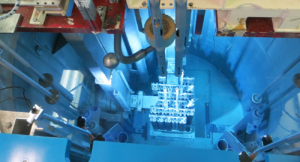
INL Enlists NVIDIA on ‘PROMETHEUS’ AI Effort to Halve Nuclear Deployment Timelines Under DOE Genesis Mission
Idaho National Laboratory (INL) has teamed up with artificial intelligence (AI) computing giant NVIDIA to advance “PROMETHEUS,” INL’s first-of-its-kind demonstration of an autonomous nuclear reactor driven by AI, to execute a key challenge under the Department of Energy’s (DOE’s) Genesis Mission. The move adds momentum to DOE’s push to apply AI across the full reactor […]
-
 Interview
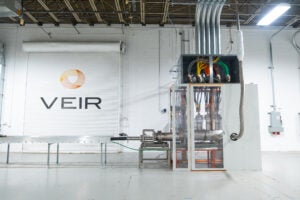
The POWER Interview: Helping Power Infrastructure ‘Keep Pace With Modern Ambition’
The challenge of upgrading how power is generated, along with needed improvements in electricity transmission and distribution, is being met in a variety of ways by an array of companies.
-
 Trends
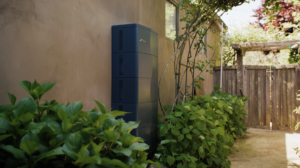
Lunar Energy Raises Millions to Support VPPs, Home Battery Energy Storage
Lunar Energy, a leader in integrated home battery systems and virtual power plant software, announced it raised $102 million in an oversubscribed Series D round led by B Capital and Prelude Ventures. This round follows a previously unannounced Series C financing of $130 million led by Activate Capital.
-
 Trends
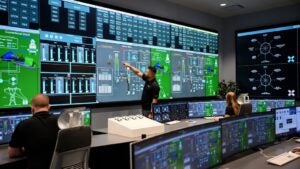
Powering Tomorrow: A Multi-Technology Roadmap for the Global Energy Transition
As global electricity demand surges 40% by 2035 and warming projections worsen, nuclear, geothermal, gas, offshore wind, storage, and fusion must all advance—along with the workforce to build them. The global energy landscape is undergoing its most significant transformation since the Industrial Revolution. Electricity demand is surging at unprecedented rates while the imperative to decarbonize […]
-
 data centers
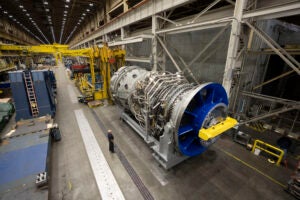
Xcel Energy Inks Dual Alliances with GE Vernova, NextEra to Support 6-GW Data Center Outlook, Generation Expansion
Xcel Energy has moved to lock in supply and development capacity for what could become 6 GW of data center load through separate strategic agreements with GE Vernova and NextEra Energy, announced this week, that reserve five F-class gas turbines, multiple gigawatts of wind capacity, and joint development resources to support generation buildout into the […]
-
 Commentary
Substation-Sited Generation: A New Frontier for Utility Resilience and Flexibility
For decades, utilities have deployed distributed generation along distribution circuits primarily for single-circuit capacity support and voltage regulation. While these applications remain valuable, a broader opportunity is emerging: siting generators directly at substations to unlock system-level benefits that extend far beyond any single feeder. For rural electric cooperatives, municipal power systems, and even investor-owned utilities […]
-
 Trends
Empowering the Grid: How Utilities Can Harness AI Safely and Effectively
When it comes to the latest technologies, utilities aren’t exactly early adopters—with good reason. Silicon Valley’s motto of “move fast and break things” can have disastrous consequences when applied to an industry tasked with keeping the lights on around the clock for millions of Americans.
-
 Technology
Sense Announces Edge-Powered Grid Fault Detection Embedded in Smart Meters
Sense, a company focused on grid edge intelligence, has announced a new edge-powered Fault Detection Solution that is embedded directly into next-generation smart meters.
-
 Trends
How AI Use Cases from Other Sectors Can Transform Utilities
The AI boom is poised to fuel a rapid—and drastic—surge in electricity demand, placing unprecedented pressure on utilities to modernize their grids, integrate distributed energy resources, and reduce mounting supply chain and customer costs.
-
 Energy Security
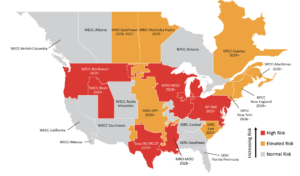
NERC Warns Long-Term Grid Reliability Risks Mounting from Surging Demand, Lagging Resources
The North American electric grid faces intensifying reliability risks over the next decade as demand growth driven by data centers and artificial intelligence threatens to outpace resource additions, according to the 2025 Long-Term Reliability Assessment (LTRA) released Jan. 29 by the North American Electric Reliability Corporation (NERC). The annual 10-year reliability assessment from North America’s Electric Reliability […]
-
 Engineering
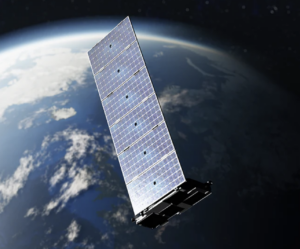
Revolutionizing Energy Connectivity: The Strategic Role of LEO Satellite Networks
By positioning satellites significantly closer to Earth, LEO networks deliver high-bandwidth, low-latency connectivity that makes connection speed at an offshore platform or remote location, just as fast and secure as you will find at corporate headquarters.
-
 Commentary
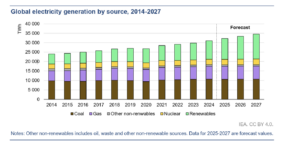
AI’s Power Crunch: Six Trends That Will Decide Who Wins the Next Decade
For the U.S., keeping up with AI’s insatiable appetite is the biggest systemic risk of the next decade. America needs a massive expansion of power plants, transmission lines, and advanced hardware, while using AI itself to drive grid progress and optimize power distribution.
-
 Trends
How Utilities Can Prepare for the AI-Driven Energy Surge
After more than two decades of relative stasis, electricity demand in the U.S. is expected to increase by 25% by 2030 and by more than 75% by 2050, compared to 2023—a transformation largely driven by the surge in new data centers needed to power the artificial intelligence (AI) boom.
-
 Trends
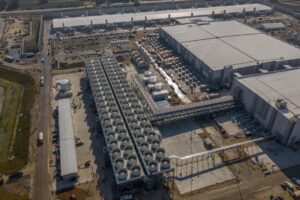
Microsoft Commits to Full Electricity Cost Recovery in Data Center Communities
Microsoft has committed to “paying its way” to ensure its data centers will not ramp up residential utility rates, becoming the first major hyperscaler to publicly commit to a comprehensive framework that ties artificial intelligence (AI) data center growth to cost-recovery rate design. The hyperscaler also pledged to advance utility coordination, directly fund grid infrastructure, […]
-
 Interview
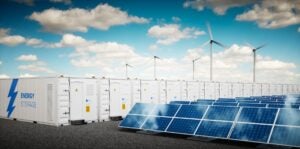
The POWER Interview: Grid Integration of DERs
Integrating distributed energy resources (DERs) such as solar, wind, batteries, and electric vehicles into the power grid is an important part of the energy transition. Utilities and transmission system operators know they need more flexibility when it comes to power generation and delivery, which involves modernizing infrastructure, using advanced controls, and developing new market rules to manage two-way power flow.
-
 Commentary
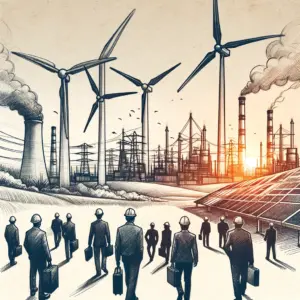
Why 2026 Is the Year the Energy Transition Finally Accelerates
This year will be a pivotal period for the global energy transition. The International Energy Agency’s recent revision to its net-zero roadmap reveals a changing narrative: we are no longer waiting on breakthrough technologies. Sixty-five percent of the emissions reductions we need are achievable with tools sitting on the shelf today. So, the debate is no […]
-
 Trends
PJM Dials Back Near-Term Load Outlook but Maintains Steep Long-Term Growth Trajectory
PJM Interconnection has trimmed its near-term peak-demand projections in its updated 20-year load forecast, citing tighter vetting of large-load adjustment requests and revised electric-vehicle (EV) and economic assumptions. The grid operator, however, reaffirmed expectations for significant long-term growth driven by data centers and broader electrification. In its 2026 Long-Term Load Forecast, issued on Jan. 14, PJM […]
-
 Nuclear
The Nuclear Industry’s Race Against the Clock: EPRI Experts on Fleet Optimization, SMRs, and What’s Next
The electricity sector faces a timing problem that’s becoming impossible to ignore. Data centers, artificial intelligence (AI) deployment, industrial reshoring, and broader electrification are driving load growth at rates not seen in decades—and much of that new demand wants carbon-free, firm power. Nuclear checks those boxes. But can the industry deliver capacity fast enough? POWER […]
-
 Trends
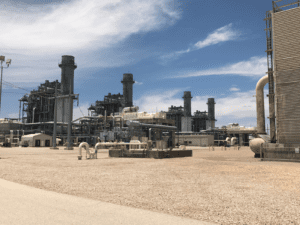
Vistra to Bolster Gas-Fired Fleet by 5.5 GW with $4B Cogentrix Acquisition
Vistra Corp. has executed definitive agreements to acquire Cogentrix Energy, a portfolio company of Quantum Capital Group, in a $4 billion transaction that will expand its generation footprint across the PJM Interconnection, ISO New England, and the Electric Reliability Council of Texas (ERCOT). Announced on Jan. 5, 2026, the acquisition includes 10 modern natural gas […]
-
 Commentary
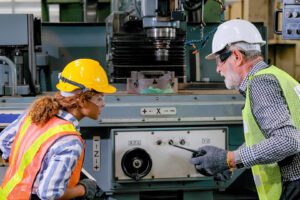
The Next Blackout Won’t Be Caused by a Storm—It Will Be Sparked by a Talent War
Imagine a city going dark, not from a hurricane or a cyberattack, but because there weren’t enough skilled workers to restore power after a routine failure. While utilities scramble to fill critical roles, hyperscale data centers are hiring the same talent at premium salaries. The grid’s biggest vulnerability isn’t hardware; it’s a talent war that utilities are losing.
-
 O&M
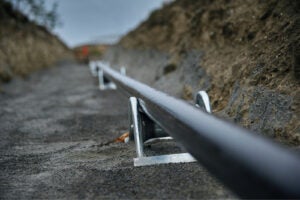
O&MUnderstanding Cable Rejuvenation: A Modern Approach to Grid Reliability
For more than 60 years, polyethylene (PE) and ethylene-propylene rubber (EPR) underground cables have powered communities, industries, and progress. The hope was these cables could last decades before needing to be replaced, but due to water treeing—microscopic moisture-induced formations that degrade insulation and threaten reliability, they’re aging more rapidly than expected. With traditional replacement being costly and labor-intensive, it was time for a new solution.
-
 Interview
The POWER Interview: Investing in Energy Solutions for the Data Center Boom
The race to lead when it comes to artificial intelligence (AI) is becoming more about securing the power necessary for data centers and other AI infrastructure. In this POWER Interview, Andrejka Bernatova, founder, chairman, and CEO of Dynamix Capital Partners, discusses Dynamix’s belief that the energy and infrastructure industry is in the early phases of a decades-long transition to a low-carbon, sustainable future.
-
 Infographics
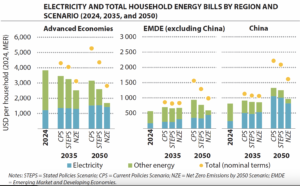
THE BIG PICTURE: Power Affordability [Infographic]
Household electricity use is set to climb sharply through 2035 as electrification expands, shifting power system costs toward capital-intensive grids, renewables, and storage and making affordability increasingly sensitive to policy and financing choices. POWER’s monthly print infographic breaks down the forces reshaping electricity bills worldwide. In its November 2025–released World Energy Outlook, the International Energy […]
-
 Trends
The Age of Electricity and 5 Other Forces Reshaping the Global Energy Outlook
The world has firmly crossed into the “Age of Electricity.” That is a unifying finding in the International Energy Agency’s (IEA’s) 2025 edition of the World Energy Outlook (WEO), which shows a global
-
 Trends
Meeting the Moment: Industry Leaders Chart the Course for Power in 2026
From artificial intelligence-driven efficiency to transmission bottlenecks, power industry insiders share their perspectives on the opportunities and obstacles shaping 2026 and beyond. The power generation
-
 Electrification
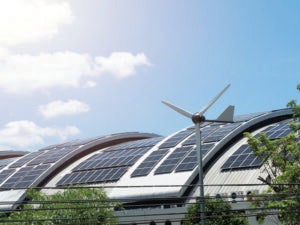
Reshaping the Power Grid: Driving Resilience Through DERs
Distributed energy resources (DERs) have become a major part of the power generation landscape, particularly in support of a more reliable and resilient grid. Generating electricity from a variety of sources, including fossil fuels and renewables, using smaller-scale installations is now a key element of demand response and energy efficiency.
-
 Legal & Regulatory
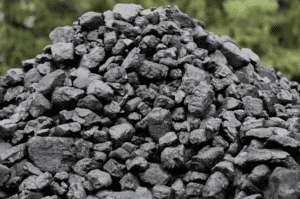
Despite Federal Support, Economic Forces Are Driving the Future of Coal
The Trump administration during both its terms has prioritized its efforts on reviving the coal industry by introducing a series of policy changes and executive actions intended to boost coal leasing and production on federal lands. Yet, despite these political moves, coal’s trajectory in the U.S. energy market has followed a different path.
-
 Legal & Regulatory
DOE Uses Emergency Powers to Freeze More Than 2 GW of Coal Retirements as Opposition Intensifies
A rapid succession of Section 202(c) emergency orders has forced utilities to keep more than 2 GW of coal capacity online in December alone, marking an unprecedented federal intervention in grid operations and triggering legal challenges from states and environmental groups. Across all orders issued since May 2025, the DOE has now stalled the retirement […]
-
 Gas
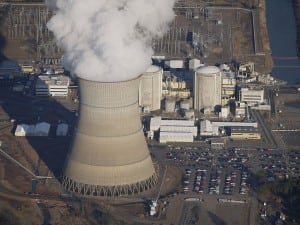
GasEntergy Arkansas Adding New Gas-Fired Power, Extending Nuclear as Part of Investment Plan
Entergy Arkansas, the utility that provides electricity to about 735,000 customers in 63 counties in that state, announced a plan to add about 2.6 GW of new power generation capacity, in part by converting old coal-fired units to burn natural gas. It also is renewing the operating license for the 1.8-GW Arkansas Nuclear One power plant, the state’s only nuclear power station, with plans to invest in new equipment that would increase the facility’s output.
-
 Data Centers
Alphabet Buying Clean Energy Developer to Support Data Centers
Alphabet, the parent of technology giant Google, has announced a definitive agreement to acquire Intersect, which provides data center and energy infrastructure solutions, for $4.75 billion in cash, plus the assumption of debt. Google already owns a minority stake in Intersect from a previously announced funding round.