Geothermal
-
 Geothermal
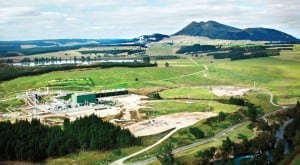
140-MW Geothermal Plant Starts Up in New Zealand
One of the world’s largest geothermal power stations was officially opened this May on New Zealand’s North Island. A joint venture between Mighty River Power and Tauhara North No. 2 Trust, the new 140-MW Nga Awa Purua Geothermal Power Station increases geothermal’s share of power in New Zealand to around 14%—a proportion that has more than doubled since 2005.
-
 Hydro
HydroUtility Perspectives on Using Renewable Power
As U.S. utilities increase the percentage of renewable energy in their generation portfolio, they must deal with a number of key issues related to selecting specific technologies. Additionally, they must figure out what it will take to make renewables emerge as a mainstream generating option in the future.
-
 Hydro
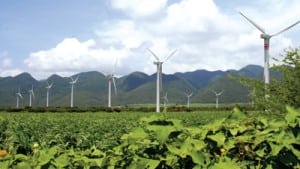
HydroPower in Mexico: Renewables Remain More Desired than Real
Mexico has already developed substantial large hydro and geothermal resources. However, without policy changes and government-sponsored financial incentives, unconventional renewable sources are taking the equivalent of baby steps.
-
Geothermal
Permeable UK Granite Is Good News for Geothermal Energy
In mid-February, the Geological Society of London raised the hopes of those promoting geothermal energy when results of exploratory drilling in Weardale, County Durham, revealed record levels of permeability in granite. Although the results are promising for the development of geothermal energy, they may have less welcome implications for the safe disposal of radioactive waste in deep repositories.
-
 O&M
O&MThe U.S. Gas Rebound
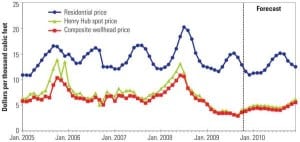
"It’s déjà vu all over again," said Yogi Berra. The Hall of Fame catcher could easily have been predicting the coming resurgence of natural gas – fired generation. Yes, a few more coal plants will be completed this year, but don’t expect any new plant announcements. A couple of nuclear plants may actually break ground, but don’t hold your breath. Many more wind turbines will dot the landscape as renewable portfolio standards dictate resource planning, but their peak generation contribution will be small. The dash for gas in the U.S. has begun, again.
-
Geothermal
The Future of Geothermal
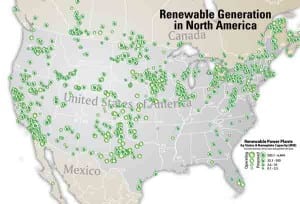
(Web supplement to "Assessing the Earthquake Risk of Enhanced Geothermal Systems.") The future of geothermal energy will be driven by six primary technologies, but each will pose its own challenges.
-
-
 Geothermal
Assessing the Earthquake Risk of Enhanced Geothermal Systems
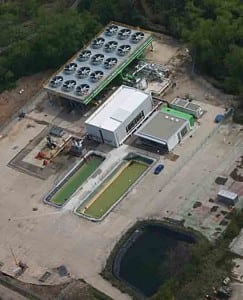
Enhanced geothermal systems (EGS) deliberately induce seismicity — earthquakes — in order to access hot, subsurface rocks for use in geothermal power generation. Recent quakes around the world have frightened those living near EGS sites and sparked controversy over the technique. We asked experts to provide EGS technical details and to evaluate the seismic risk the process poses.
-
 Coal
CoalCanada Moves to Rebalance Its Energy Portfolio
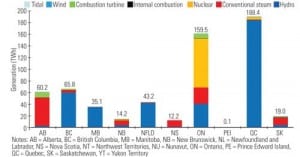
Though Canada is rich in fossil fuels, nuclear power may fuel a significant portion of the nation’s future electrical generation needs, especially in provinces that have traditionally relied on hydropower and fossil fuels.
-
Coal
Energy R&D: The Missing Link to a Sustainable Energy Future
Q: What do you get when you gather roughly two dozen top researchers from academia, government, and industry to speak on interdisciplinary energy-related issues for a week?
A: A lot of informative but crowded slides, high-octane brain power, fact-based analysis of where we are and we’re headed globally, informed questions, and surprisingly practical answers. -
Hydro
Renewable Project Finance Options: ITC, PTC, or Cash Grant?
Dozens of institutional investors in U.S. renewable energy projects pulled out of the market when the nation’s liquidity reserves dried up late last year. Some left the renewable market sector in search of more lucrative investment opportunities. Others found themselves unable to take advantage of the attractive tax credits because they themselves lacked profits against which to use the credits. The American Recovery and Reinvestment Act of 2009, approved February 13, changed the investor ground rules — again.
-
 Geothermal
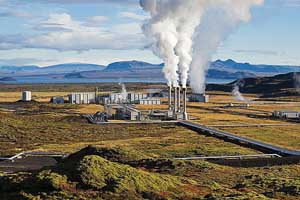
Tapping Geothermal Energy with a Comprehensive Strategy
Geothermal energy in Europe may have been used for centuries — it was popularized by the Romans and adopted by the Turks — but geothermal-generated electricity was first produced at Larderello, Italy, in 1904. Since then, its growth on the continent has shot up to 820 MW. But, according to the European Renewable Energy Council, the resource’s full potential has barely been harnessed.
-
Hydro
International Organization to Push Renewable Energy
Seventy-five countries from around the world joined a new political agency dedicated to the acceleration of green energy this January, but several notable nations — including the U.S., Canada, Australia, UK, Japan, and China — were not among them.
-
 Geothermal
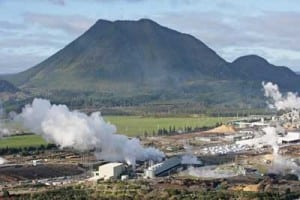
New Zealand Geothermal Station Opens
New Zealand’s biggest geothermal energy project in 20 years was officially opened in Kawerau in late November. The state-owned Kawerau Geothermal Station (Figure 5), on the North Island, adds 100 MW to the national grid.
-
 Geothermal
Top Plants: Thermo Plant, Beaver County, Utah
Geothermal energy projects are gaining steam in many parts of the western U.S., in large part because geothermal power has the advantage of being a renewable energy source that provides baseload power with no emissions and no waste by-products. One example of the latest developments in geothermal power generation is the recently completed 10-MW geothermal plant in rural Utah, which uses innovative modular power generation units.
-
 Geothermal
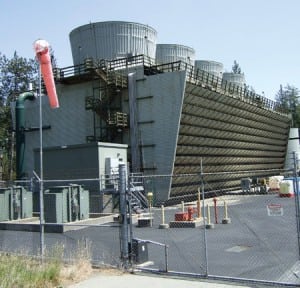
U.S. sees 20% jump in planned geothermal
The U.S., which continues to lead the world in on-line geothermal energy capacity, saw a 20% jump in new power projects since January this year, a survey released by the Geothermal Energy Association (GEA) in August showed.
-
 Geothermal
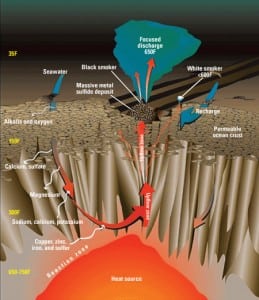
Tapping seafloor volcanic vents
Modern ocean power systems look to convert the mechanical energy of waves or tidal movement to electrical energy. But that’s not all the sea has to offer. It may also be possible to capture and convert the enormous quantities of heat produced by magma escaping through seafloor vents—an undersea version of geothermal energy.
-
 Legal & Regulatory
Regulators should stop playing the greed card
In early February, Western GeoPower (WGP) announced its termination of a 20-year geothermal power purchase agreement (PPA) with Pacific Gas and Electric Co. (PG&E). A WGP press release explains that the company terminated the agreement because a regulatory approval condition had not been obtained within a 180-day time period stipulated in the PPA. WGP’s CEO, […]
-
 Geothermal
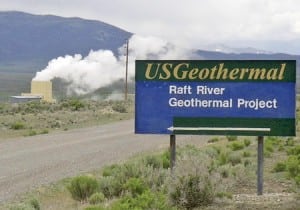
Raft River Geothermal Project, Malta, Idaho
Geothermal power is a unique renewable energy because it has the best potential capacity factor and is perhaps the only option for baseload power generation. U.S. Geothermal has constructed the first geothermal plant in Idaho in a generation by restoring an abandoned DOE demonstration project site that may possess a development potential of over 100 MW using proven power generation technology. The success of Raft River may well determine the future of geothermal energy production in Idaho.
-
 Nuclear
Global Monitor (July 2007)
Pistachio plant gives new meaning to green/Slightly sun-powered grill/Will lithium revolutionize hydrogen storage?/Calpine’s major Geysers geothermal upgrade/Rhone-Alps is French PV hot spot/Fuel cell–powered ice-resurfacing machine/Westinghouse proposes revised AP100 design/Sandia perfects solar alignment/SCE wants comprehensive coal study/POWER digest
-
 Coal
CoalInvestment in generation is heavy, but important needs remain
Forecasting the direction of the U.S. electric power industry for 2007, much less the distant future, is like defining a velocity vector; doing so requires a direction and speed to delineate progress. In this special report, POWER’s first stab at prognostication, the editors look at current industry indicators and draw conclusions based on their more than 100 years of experience. To borrow verbatim the title of basketball legend Charles Barkley’s book: I May Be Wrong but I Doubt It.
-
Coal
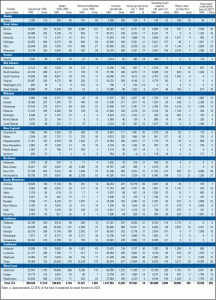
Near-term capital spending in the North American power industry
Following the money invested in projects is a viable way to compare growth trends for power projects using the four major generation types: coal, natural gas, nuclear, and renewable.
-
 Commentary
Turning the corner on global warming
In his keynote speech this May to the Global Roundtable on Climate Change, held in Iceland and hosted by the Earth Institute of Columbia University, Ólafur Ragnar Grimsson—the president of Iceland—challenged government and business leaders to take measurable steps now to build a prosperous and sustainable future through smart science and public policy. Grimsson’s call […]
-
 Legal & Regulatory
Renewable contracts merit longer terms
The length of term allowed for power sales contracts is a critical determinant of the ability of states to meet their increasingly ambitious renewable power targets. Many utilities advocate limiting terms to 10 or perhaps 15 years for renewable energy contracts, emphasizing the "flexibility" that shorter terms offer. In contrast, contract terms of 20 or […]
-
 Hydro
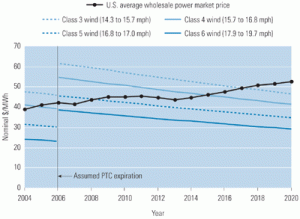
HydroRenewable energy’s growing share
Renewable power development will continue to grow in the U.S., with the nonhydro total reaching 53,121 MW by the end of 2016. So predicts a soon-to-be-released report from Boulder, Colo.–based Platts Analytics (which, like POWER, is a part of Platts, a division of The McGraw-Hill Companies). If all that capacity goes on-line, it would […]
-
Hydro
Promoting renewable exports
Promoting renewable exports The DOE is not the only U.S. government department promoting renewable energy. Any U.S. energy firm or supplier looking to export its goods and services can tap the services of the Energy Team at the Commerce Department’s International Trade Administration (ITA), which is part of the U.S Commercial Service (USCS). The […]
-
 Hydro
HydroFuel cells reach MW class
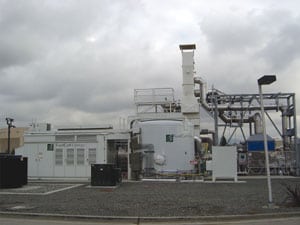
Most people think of fuel cells within a single, "not ready for prime time" context: powering tomorrow's automobiles. But stationary fuel cell power plants are beginning to power some industrial facilities today. The need for heat as well as ultraclean power, and the availability of a renewable fuel, recently came together in a Seattle suburb, site of the world's first commercial megawatt-scale fuel cell power plant—powered entirely by gas produced by anaerobic digestion of municipal wastewater.
-
 Hydro
HydroBig batteries blooming
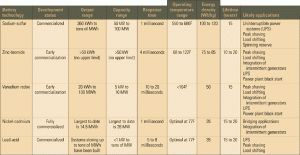
Several advanced battery technologies tailored for utility applications have doffed their white coats and donned hard hats. These new bulk energy storage devices, which can almost instantly shave peaks and shift loads, are the answer to the dreams of T&D system designers and operators. Finally, years of R&D in electrochemistry are beginning to pay dividends in the field.
-
 Geothermal
Geothermal: Hotter than ever
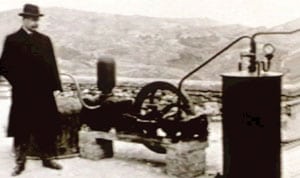
Balmy days are on the horizon for geothermal energy. The renewal of the Production Tax Credit in the U.S. and improved drilling and electricity production techniques are the two main reasons geothermal energy advocates are bullish about the industry. POWER looks at some interesting installations and explains why the optimism is well-founded.