
Legislative
-
 Commentary
America’s Nuclear Renaissance: How the TVA Can Lead Our Energy Future
You may have heard of the Tennessee Valley Authority (TVA), our nation’s largest public utility and source of cheap, clean, and reliable electricity for 10 million people. You may even know that its Board of Directors is appointed by the President of the United States and confirmed by the United States Senate, making it directly […]
-
 Legal & Regulatory
Trump’s EPA Set to Undo Limits on Power Plant Emissions
The Trump administration has announced several regulatory rollbacks designed to curb limits on power plant emissions, along with cutting protections for air and water quality. Environmental Protection Agency (EPA) Administrator Lee Zeldin on March 12 said the agency is moving to undo at least 31 regulations established during the Biden administration in an effort to […]
-
 Gas
GasMaryland Officials Support Gas Plants Among Cleaner Forms of Generation
Maryland lawmakers have introduced a bill in the state legislature that sponsors say would provide an easier path to build new power plants, including natural gas-fired facilities, and lower utility bills for ratepayers as part of the process.
-
 Legal & Regulatory
Lawmakers Scrutinize Power Sector’s Future as Surging Demand Raises Alarms
In a hearing that underscored the mounting challenges facing the American power sector, industry leaders warned Congress that the nation’s power infrastructure is approaching a precarious juncture as unprecedented demand growth collides with retiring baseload generation. At the House Energy Subcommittee hearing on March 5, titled “Scaling for Growth: Meeting Demand for Reliable, Affordable Electricity,” […]
-
 Legal & Regulatory
Trump Energy Policy Changes Signal Major Industry Shifts in 2025 and Beyond
There has been significant outrage from the left around changes the Trump administration has made since taking office, including actions that specifically affect the power industry. Yet, it’s not uncommon
-
 Legal & Regulatory
Private Equity Weighs Focus as Government Policies Shift
As the new administration begins implementing its energy policy agenda, the market is keenly anticipating the impact on private equity sponsors’ energy transition investments. President Trump has signaled
-
 Coal
CoalU.S. Coal Plants Get Reprieve as Market and Policies Change
Several U.S. utilities in recent months have said they plan to keep coal-fired units in their generation fleets operating past their scheduled retirement dates, in most cases citing increased demand for electricity in their service areas. Some also note that the Trump administration is likely to eschew enforcement of current pollution standards, and attempt to […]
-
 Legislative
Oil and Gas Exec Wright Confirmed to Lead DOE
The U.S. Senate in a 59-38 vote has confirmed Colorado-based oil and gas executive Chris Wright as secretary of the Dept. of Energy (DOE). Seven Democrats, including both Michael Bennet and John Hickenlooper from Wright’s home state, crossed party lines and voted with Republicans on Feb. 3 to confirm Wright. Angus King, the independent from […]
-
 Renewables
Solar Trade Group’s Plan: 700 GWh of Energy Storage by 2030
The Solar Energy Industries Association (SEIA) published a white paper outlining the industry group’s vision for U.S. energy storage, setting a target to install 10 million distributed energy storage sites and reach 700 kWh of installed storage capacity the end of the decade. The white paper, released Jan. 28 along with a guide to energy […]
-
 Legislative
Biden’s DOE Finalizes $15 Billion Loan Guarantee to California’s PG&E
The Biden administration has finalized a $15 billion loan guarantee to California utility Pacific Gas & Electric (PG&E), in the biggest outlay to a single group in the history of the Dept. of Energy’s (DOE) Loan Programs Office (LPO). The Jan. 17 announcement comes one day after the outgoing administration said it would provide nearly […]
-
 Interview
Industry Experts Say Storage, Renewables, Transmission Key Parts of 2025 Energy Outlook
The outlook for the power generation sector in 2025 promises a continuation of the energy transition, though there’s plenty of debate about the direction of the industry. Advocates for renewable energy, particularly in the U.S., are concerned about how the incoming Trump administration—with its support for fossil fuels—could impact the growth of clean technologies. Utilities […]
-
 Legal & Regulatory
Watt’s Up with Cyber and AI? Navigating Legal Currents in Power Generation and Smart Grids
In the rapidly evolving landscape of power generation, companies are increasingly integrating smart grids and artificial intelligence (AI) into their operations. This transition, while promising enhanced efficiency and reliability, also brings forth a myriad of challenges, particularly in the realms of cybersecurity and legal compliance. This commentary delves into three legal issues around emerging cybersecurity […]
-
 Legal & Regulatory
Trump’s Focus on Energy Will Have Variety of Impacts
President-elect Donald Trump’s transition team has made the U.S. energy industry a focus of its plans for his first days in office, with analysts and energy experts expecting a rollback of environmental regulations for coal- and natural gas-fired power plants. That may have some utilities rethinking their strategies about the scheduled closure of some fossil […]
-
 Power
PowerWoodMac Analysis Says Trump Energy Agenda Will Face Roadblocks
An analysis from global data and analytics group Wood Mackenzie says Republican control of the White House and Congress means U.S. energy policy will move away from net-zero emissions targets, but there remains bipartisan support for the Inflation Reduction Act (IRA). The group also said competitive economics for renewable power resources mean the energy transition […]
-
 Coal
CoalSouthern CEO: Data Center Demand, Regulatory Changes Could Keep Coal-Fired Units Online
Utilities recognizing the need to produce more electricity, in part to satisfy demand from data centers, may keep coal-fired units in operation longer than anticipated. A lessening of environmental regulations under the incoming Trump administration also means power generators are rethinking plans to retire their fossil fuel-burning facilities. Chris Womack, CEO of Southern Co., is […]
-
 Coal
CoalPower Demand from Data Centers Keeping Coal-Fired Plants Online
The power generation sector is looking at numerous ways to provide enough electricity to satisfy demand from data centers. Bloomberg Intelligence recently said its research shows data centers, buildings filled with servers and other computing equipment for data storage and networking that supports operations and artificial intelligence (AI), could be responsible for as much as […]
-
 Solar
SolarNew Legislation Would Expand Access to Community Solar
A New Mexico senator has introduced a bill that would support community solar projects and help expand access to solar energy across the U.S. Sen. Ben Ray Luján (D), considered a champion for advancing clean energy through community solar, on October 1 introduced the Community Solar Consumer Choice Act. Rep. Kathy Castor (D-FL) introduced companion […]
-
 Legal & Regulatory
Gray Skies for U.S. Power Generation? Uncertainty and Turmoil on the Horizon
The Supreme Court’s landmark decision this past summer in Loper Bright Enterprises v. Raimondo marks a significant shift in administrative law by overturning the long-standing principle of Chevron deference, which was established in Chevron U.S.A. Inc. v. Natural Resources Defense Council Inc. in 1984. The Loper ruling from earlier this year is poised to have […]
-
 Legal & Regulatory
Evolution of Decommissioning Requirements in Renewable Energy
With legislative momentum around clean power generation and net-zero emissions policies rapidly building, the U.S. is seeing rapid increases in installed wind and solar capacity each year. At the same time, older generations of renewables are facing a new challenge: obsolescence. The first utility-scale wind and solar projects in the U.S. were developed in the […]
-
 Legal & Regulatory
Unlocking America’s Clean Hydrogen Potential: Navigating Policy, Challenges, and Market Opportunities
The U.S. clean hydrogen sector is poised for significant growth, driven in part by its potential to reduce carbon dioxide emissions in hard-to-abate industries such as transportation and chemical production. The Inflation Reduction Act (IRA) and the Bipartisan Infrastructure Law (BIL) have catalyzed this momentum, providing production tax credits (PTCs) and billions in funding to […]
-
 Energy Security
U.S. in a Race with China to Develop Commercial Fusion Power Technology
Fusion energy is a promising form of power generation that aims to harness the same process that powers the sun and stars. Fusion involves combining two light atomic nuclei to form a heavier nucleus, releasing a large amount of energy in the process. This is the opposite of nuclear fission, which splits heavy atoms apart. […]
-
 Legal & Regulatory
Net Metering Reform: Premature or Long Overdue?
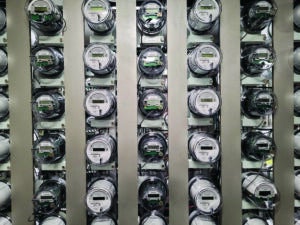
The growth of distributed energy resources (DERs) has significantly increased over the past decade as the U.S. moves to decarbonize the electric grid. Growth has been possible by incentivizing the transition to clean energy; states and federal legislation, such as the Inflation Reduction Act (IRA), have used tax credits and other programs to accelerate deployment. […]
-
 Hydro
HydroDOE Injects $430M to Revitalize, Modernize U.S. Hydropower Fleet
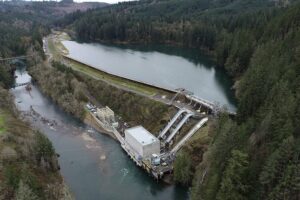
The Department of Energy (DOE) has selected 293 hydroelectric projects across 33 states that will receive up to $430 million in incentive payments for capital improvements directly related to grid resiliency, dam safety, and environmental improvements. The funding, unveiled on Sept. 5, stems from the DOE Grid Deployment Office’s (GDO’s) Maintaining and Enhancing Hydroelectricity Incentives […]
-
 Gas
GasMajor Project Rejected in Texas’ Flagship Dispatchable Power Loan Program
The Texas Energy Fund (TEF), a flagship loan program designed to boost the state’s dispatchable generation, faced its first setback on Sept. 4 when the Public Utility Commission of Texas (PUCT) denied Aegle Power’s loan application for a 1,292-MW combined cycle generating facility in Harlingen—its second-largest shortlisted facility. The PUCT said Aegle Power’s application, filed […]
-
 Energy Storage
DOE Announces $125 Million in Funding to Support Energy Storage Research
The U.S. Department of Energy (DOE) announced it will provide $125 million in funding to support two Energy Innovation Hub groups that will look at challenges facing the battery energy storage industry. The DOE on September 3 said teams of researchers “will develop scientific concepts and understanding to impact decarbonization of transportation and incorporation of […]
-
Interview
How Trump or Harris Would Alter the U.S.’s Energy and Power Landscape
A new U.S. president will be inaugurated in less than five months. Polls show the race between Donald Trump and Kamala Harris to be very close, with potentially only a few swing states deciding the election. While energy policy may not be a deciding factor for many Americans in choosing who they will vote for, […]
-
 Commentary
Two Years After IRA: Carbon Capture Coalition Executive Director Reflects on Coalition’s Progress and What’s to Come
This week marks the second anniversary of the Inflation Reduction Act (IRA), a critical milestone for the section 45Q tax credit, the foundational policy for the deployment of carbon management technologies, which was further enhanced in the IRA. The 45Q tax credit provides a credit on a per-ton basis for carbon that is captured from […]
-
 Commentary
Looking Through ‘Green-Colored’ Glasses: Hydrogen in the Energy Transition
Transitioning the world towards cleaner and greener energy is proving to be more challenging than we once all hoped. There are real concerns about what impact the slower speed of uptake is having on our
-
 Legal & Regulatory
Post-Chevron Ushers in ‘New Normal’ For Regulated Community
The U.S. Supreme Court recently overturned the longstanding Chevron doctrine, a foundation of administrative law for 40 years, when it ruled on Loper Bright Enterprises v. Raimondo . The impacts on a wide
-
 Commentary
It’s Time for the U.S. to Get Smart on Critical Minerals to Advance Clean Energy Goals
As governments adapt to ongoing clean energy goals, such as the Paris Agreement, green technologies have become more important than ever. The U.S. government has confirmed such goals, striving to implement 100% carbon pollution-free electricity by 2035 and achieve net-zero emissions by 2050. We are further seeing demand for critical minerals for these green technologies grow, as copper, zinc, […]