
Legal & Regulatory
-
 Solar
SolarLeveling the Market Playing Field for Hybrid Power Plants
The Federal Energy Regulatory Commission (FERC) is an independent agency that, among other things, regulates the interstate transmission of electricity. Its ultimate mission is to “Assist consumers in obtaining economically efficient, safe, reliable, and secure energy services at a reasonable cost through appropriate regulatory and market means, and collaborative efforts.” In the past, FERC has […]
-
 Commentary
Biden’s Jobs Plan—A Game-Changer for Clean Energy?
The American Jobs Plan was announced by the White House earlier this year to much fanfare. It describes sweeping action, using bold words like “reimagine” and “rebuild.” And while the Jobs Plan is not
-
 Commentary
Start with Reliability to Crack the Cost-Emissions-Resilience Puzzle in Electric Power
The way we generate and distribute electricity has become a Rubik’s cube for power companies, regulators, and consumers. The need to reduce carbon emissions linked to climate change by investing in renewables is acknowledged by most experts. At the same time, recent unusual weather events have demonstrated that there is also an urgent need to […]
-
 Coal
CoalConsumers Energy to Quit Coal by 2025, Speeding Closure of Five Units
Michigan’s largest energy provider Consumers Energy will stop using coal as a fuel source for power generation within the next four years—15 years earlier than previously planned. In an updated integrated resource plan (IRP) filed with the Michigan Public Service Commission (MPSC) on June 23, the CMS Energy subsidiary said the effort would lead Michigan’s […]
-
 Carbon Capture
CCUS: Big Opportunity and Hard Questions
For the world to avoid a climate catastrophe, carbon capture is likely a necessity, not an option. To meet the Paris Agreement’s objectives—keep warming below 2C and preferably near 1.5C—net zero carbon emissions must be achieved circa 2050, and some carbon dioxide will have to be extracted from the atmosphere. Deployment of carbon capture, utilization, […]
-
 Nuclear
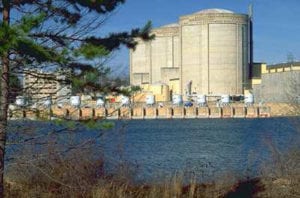
Despite South Carolina IRP Rejection, Duke Energy Seeks 80-Year Operation for Oconee Nuclear Units
Duke Energy has kicked off an effort to renew the operating licenses of all its 11 nuclear reactors for 20 more years, starting with Oconee Nuclear Station, its largest nuclear plant. The utility on June 21 filed an application with the U.S. Nuclear Regulatory Commission (NRC) for a subsequent license renewal (SLR) for the three-unit 2.5-GW […]
-
 Offshore Wind
West Coast Offshore Wind Closer to Becoming a Reality
In late May, the U.S. Department of the Interior, in conjunction with the Department of the Navy and the State of California, announced plans to offer leases to develop offshore wind projects for the north-central coast of California. The lease sale is scheduled to occur in 2022 and would be the first such West Coast […]
-
 News
NewsConnecticut Becomes Eighth State to Adopt Energy Storage Targets
Under a newly enacted law, Connecticut will deploy 1 GW of energy storage by December 2030 and pursue interim targets to deploy 300 MW by 2024 and 650 MW by 2027. With the measure, Connecticut joins California, Massachusetts, New Jersey, Nevada, New York, Oregon, and Virginia, states that have so far set targets to procure […]
-
 News
NewsFERC-NARUC Task Force Will Tackle Transmission Issues
Two groups concerned with issues regarding the regulation and production of U.S. electricity have announced formation of a joint federal-state task force on power transmission, an effort to better identify the costs and benefits associated with electric power projects, and support the buildout of renewable energy resources. The Federal Energy Regulatory Commission (FERC), an independent […]
-
 Legal & Regulatory
International Trade Laws and the Clean Energy Industry: How to Keep Regulatory Issues from Short-Circuiting Your Company’s Growth
New restrictions on international trade have become near-daily headlines. Sanctions, export controls, restrictions on foreign investment in the U.S., and actions prohibiting the importation of goods produced using forced labor affect all U.S. companies including those in the clean energy sector. Keeping up with these ever-evolving regulations is a difficult task, but getting smart about […]
-
 News
NewsIn Major Reversal, EPA, Army Will Revise Definition of ‘WOTUS’
In yet another dramatic turn for federal policy governing the “waters of the U.S.” (WOTUS), the Biden administration has announced its intent to revise the definition of WOTUS, citing “destructive impacts” to critical water bodies under a Trump-era rule. The Environmental Protection Agency (EPA) and the Department of the Army on June 9 issued a declaration […]
-
 Legislative
Texas Governor Enacts Grid Reliability Measures, Including Power Plant Weatherization, ERCOT Reforms
Texas Gov. Greg Abbott has signed into law sweeping bills approved by Texas legislators that will require power generators in the state to weatherize against extreme events and revamp organizational oversight of the Electric Reliability Council of Texas (ERCOT). Hours before the state’s regular 140-day legislative session dwindled to its end on May 30—and amid […]
-
 Legal & Regulatory
Missouri v. Biden: The Benefits and Costs of Carbon Emissions
The Biden administration in February announced that for the remainder of 2021, federal agencies will conduct regulatory and environmental analyses assuming that the global “social cost” of emitting carbon
-
 Cybersecurity
DHS Issues Pipeline Cybersecurity Directive but Industry Championing FERC Mandatory Standards
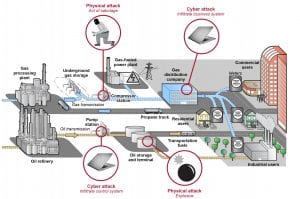
Owners and operators of the 100 most “critical” hazardous liquid and natural gas pipelines, and liquefied natural gas (LNG) facilities will need to act within the next 30 days to align with federal cybersecurity guidance under new mandates issued by the Transportation Security Administration (TSA). The TSA’s May 27-issued pipeline-focused security directive is a notable, […]
-
 Climate change
Germany Shifts Net-Zero Target to 2045, Sets Tougher Limits for Energy Industry
Germany has moved its climate neutrality target up from 2050 to 2045 and adopted new interim binding targets that will require greenhouse gas (GHG) emissions reductions of 65% by 2030 and 88% by 2040, compared to 1990 levels. After 2050, notably, the country—which is Europe’s biggest economy—envisions it will achieve negative GHG emissions. Germany’s federal […]
-
Nuclear
Surry Nuclear Plant Gets 20-Year Extension as Indian Point Goes Dark
The Nuclear Regulatory Commission (NRC) has approved 20-year subsequent renewed licenses (SRLs) for Dominion Energy Virginia’s Surry Power Station Units 1 and 2 near Newport News, Virginia, making them only the fifth and sixth reactors in the U.S. cleared to operate for 60 to 80 years. But the number of operating U.S. nuclear reactors fell […]
-
 News
NewsERCOT Unveils Plan for Invoicing Default Uplift Charges
ERCOT market participants are grappling with the resulting financial fallout from winter storm Uri, which devastated Texas in February. Many are now familiar with actions the Texas Public Utility Commission (PUCT) took during the weather event, moves made with the intent to bring and maintain as much generation online as possible. Most notable, the commission […]
-
 Nuclear
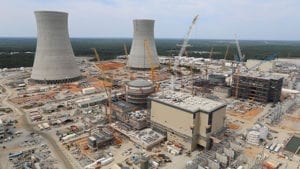
How the Department of Energy Is Helping Keep Nuclear Power Relevant
In the decade following World War II, the U.S. government took a keen interest in helping to create a commercial nuclear power industry. Although there were military leaders and members of Congress who
-
 Legal & Regulatory
The Hydrogen Rainbow: Elected Officials Focus on Green
Blue, green, turquoise, yellow, pink, blue, grey and brown/black. Hydrogen is currently beset by a host of colorful adjectives, but what part of the hydrogen rainbow is most likely to lead to a pot of gold (and environmental benefits)? Elected officials across the country are more and more focused on promoting green hydrogen, which is […]
-
 News
NewsReprieve for Nuclear, Gas in EU’s Sustainable Finance Taxonomy Rules
The European Union’s (EU’s) much-watched Taxonomy Climate Delegated Act—the world’s first “green list”—unveiled by the European Commission (EC) on April 21 qualifies several power-producing sectors in its technical screening criteria for sustainable investment decisions. However, it delays controversial decisions on gas and nuclear. The EC adopted the Delegated Act as part of an ambitious package […]
-
 Coal
CoalVistra Backs Illinois Transition Measure to Keep At-Risk Coal Plants Online Through 2025
Bleeding financially from underperforming and legally burdened coal generation in downstate Illinois and elsewhere, Vistra, the nation’s largest competitive generator, has renewed its call for passage of the Illinois Coal to Solar and Energy Storage Act, a bill that could help keep 2.2 GW of existing at-risk capacity online through 2025 while the state expands […]
-
 Markets
Yes, Texas’ Deregulated Electricity Market Has Problems, but It Can (and Should) Be Fixed
The severe winter storm that knocked out Texas’ electricity grid in February, plunging millions of people into a cold, dark ordeal, has led to a number of takes about what went wrong. The state’s deregulated energy market has been frequently singled out as the root cause. But, while a contributing factor, it wasn’t the only […]
-
 International
The Tsunami Coming for Mexico
Although Mexican economic history shows moments of tension between the private sector and the federal government—for example, during the administration of President Luis Echeverría (1970-1976)—never in the modern era has such tension reached the levels experienced at this time. The attacks on the private sector, including foreign investment, that the current federal administration has carried […]
-
 Legal & Regulatory
Biden Weighs Preserving Infrastructure EO Focused on Cybersecurity
President Joe Biden on his first day in office sent a clear signal that he would not follow his predecessor’s policies with respect to energy and climate issues. On Jan. 20, 2021, Biden signed Executive
-
 Nuclear
New Mexico Sues NRC to Halt Consolidated Interim Nuclear Waste Storage Facilities
New Mexico has sued the Nuclear Regulatory Commission (NRC), challenging the legality of the agency’s proceedings involving separate proposals to build and operate two consolidated interim storage facilities (CISFs) for spent nuclear fuel (SNF) in New Mexico and Texas. In a complaint filed on March 29 against the NRC and the U.S. government, New Mexico […]
-
POWER Podcasts
Is It Safe to Invest in Mexican Energy Projects?
In late 2013, Mexico embarked on a path to transform its energy markets. Then-President Enrique Peña-Nieto oversaw constitutional reforms that ended state-run monopolies, and opened Mexico’s power market to competition and investment from foreign and private companies. By most accounts, the policies were highly effective in spurring investments in renewable energy and efficient natural gas-fired […]
-
 News
NewsEPA Finalizes Rule to Curb Cross-State Pollution
The U.S. Environmental Protection Agency (EPA) has issued an update and finalized a pollution rule that will require reductions in ozone emissions from power plants in 12 states this year. The update to the Cross-State Air Pollution Rule (CSAPR), issued March 15, is designed to curb emissions of nitrogen oxide (NOx)—primarily from coal-fired power plants—ahead […]
-
 POWER Podcasts
Are 1-in-10-Year Events Really 1-in-10-Year Events Anymore?
When evaluating resource adequacy requirements, many power companies and grid operators have used a methodology that originated more than 70 years ago. This probabilistic reliability approach has generally performed adequately through the years. It has generally evaluated loss-of-load events occurring at frequencies of one-day-in-10-years (1-in-10) to be acceptable in terms of system reliability. However, it’s […]