
Markets
-
 Nuclear
Google Deal Backs 890 MW of Constellation Nuclear Uprates at 11 PJM Reactors
Hyperscaler Google and Constellation Energy, the largest nuclear operator in the U.S., have signed a 20-year power purchase agreement (PPA) designed to support $4.3 billion of upgrades at 11 nuclear units across the PJM Interconnection, which is slated to add 890 MW of generating capacity from Constellation’s existing reactors by the end of 2032. The […]
-
 Finance
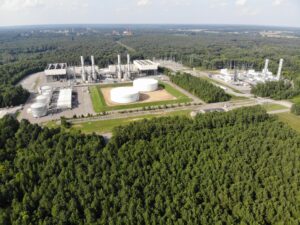
LS Power Closes Funding Round With $6 Billion in Commitments
Energy infrastructure developer and investor LS Power said it has successfully closed the LS Power Equity Partners VI (Fund VI) with total fund commitments of about $6 billion. Fund VI, which was launched in January of this year, was oversubscribed and fully allocated against its hard cap by July, which was well in excess of […]
-
 Commentary
The Commercial Storage Gap is Not Technical. It is What Survives Capital Approval
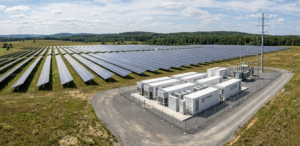
Last year an automotive parts manufacturer asked us for solar with battery storage on a 110-kW system. They were ready to buy the battery. We told them not to. Their half-hourly data showed a site that ran hard through the day and went almost dark by early evening. Solar would cover the daytime load directly. […]
-
 Expert Commentary
Bringing a Power Plant’s Worth of Load Onto the Grid: NERC’s Interconnection Reckoning
Data centers are connecting to the transmission system faster than the reliability rules were built to handle and behaving nothing like the passive load those rules assumed. Here’s what the North American Electric Reliability Corp.’s (NERC’s) Large Loads Action Plan, a new class of registered entity, and a hard 2026 deadline mean for anyone planning, […]
-
 Data Centers
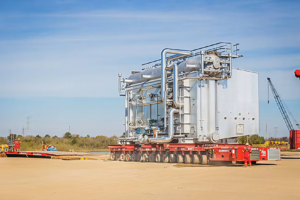
AI Data Centers Turn to Industrial Boilers and Steam Turbines for Power
Artificial intelligence (AI) data centers are being built at an unprecedented pace. There are more than 12,000 active projects in the U.S. currently seeking grid interconnection representing 1,570 GW of generator capacity and 1,030 GW of energy storage. Analyst firm Omdia predicts that AI will drive more than 50% of installed power generation capacity over […]
-
 Smart Grid
NextEra, Santee Cooper Point to Real Dollar Savings From AI Deployments
NextEra Energy says an artificial intelligence (AI)–driven dispatch and outage-scheduling tool has saved its customers more than $20 million so far this year. Santee Cooper expects a custom AI weather-forecasting model to help it avoid spot-market purchases that can cost $100,000 an hour during extreme weather. Both utilities say the tools moved from concept to […]
-
 Business
Is the Smart Money Buying Operators Rather Than Megawatts?
The wait for a large gas turbine now runs longer than the time it takes to design, permit, and build the plant it will sit in. Order one today from any of the three largest manufacturers, and the delivery slot
-
 Gas
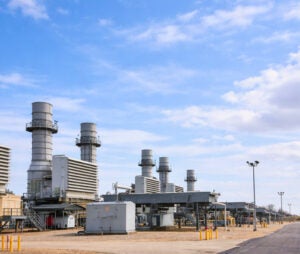
GasHull Street Acquires Two PJM-Based Power Stations from Rockland Capital
Maryland-based investment firm Hull Street Energy announced it has completed its acquisition of two Midwestern power plants that provide electricity in the PJM Interconnection.
-
 Legal & Regulatory
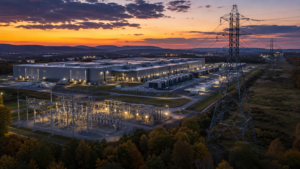
Shapiro Sets Binding GRID Requirements in Pennsylvania, Targets Data Center Power Costs
Pennsylvania Gov. Josh Shapiro signed an executive order on Aug. 18 that raises the bar for large data center development in the state, directing agencies to condition favorable permitting treatment and tax benefits on compliance with new energy, infrastructure, environmental, workforce, and community requirements. Executive Order 2026-05 applies its central permitting provisions to data centers with […]
-
 Trends
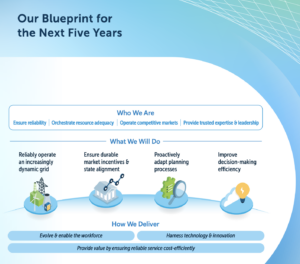
PJM Widens Response to Data Center Load as Capacity Shortfalls Deepen
PJM Interconnection has proposed a new framework that would allow large data centers and other major electricity users to enter service without first securing enough new capacity to cover their demand—but would make the uncovered portion of that load available for reduction before PJM calls on existing pre-emergency demand-response resources if electricity supplies become dangerously […]
-
 Commentary
The New Economics of AI Infrastructure: Why Tax Strategy Is Now Part of Energy Strategy
The conversation around data center development has changed dramatically over the past few years. Earlier, when developers needed to evaluate a new facility, the questions were relatively straightforward. Is the market attractive? Can we secure the land? Can we obtain reliable power? Can we raise the necessary capital? All those questions still matter. But a […]
-
 Data Centers
Contested 5-GW Ridgeline Gas, Solar, and Data-Center Complex in West Virginia Clears Site-Control Question
The West Virginia Department of Environmental Protection’s (WVDEP) Division of Air Quality (DAQ) has determined that Purcellville, Virginia-based Fundamental Data satisfied the site-control requirements associated with its August 2025 air quality permit for the Ridgeline Facility—a gas turbine power plant that Fundamental Data is planning as the first phase of a project intended to include […]
-
 Commentary
Energy Dominance Requires Commitments That Last
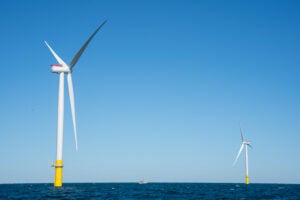
The Trump administration’s decision to unwind offshore wind leases through negotiated buybacks has predictably reignited the debate over renewable energy. Many welcome the move as a correction to policies that heavily favored offshore wind during the previous administration. That debate is perfectly legitimate. However, the recent agreements involving TotalEnergies, Bluepoint Wind, Golden State Wind, Duke, Invenergy, and […]
-
 Data Centers
More Data Center Operators Commit to Abbott’s Texas Standards as Power Companies Endorse ERCOT Batch Framework
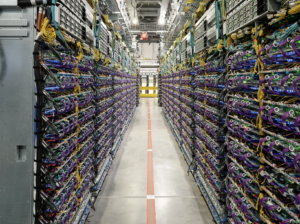
A growing group of data center operators—including Dallas-based Skybox Datacenters, Austin-headquartered bitcoin miner and hyperscale developer Mara, and global colocation giant Digital Realty—have publicly committed to comply with Texas Gov. Greg Abbott’s data center standards and the state’s active audit of projects in the Texas grid operator’s interconnection queue. They join QTS Data Centers, Blackstone’s […]
-
 Data Centers
Texas Audit Could Delay 49.8 GW of Data Center Load, Cost Projects Up to $15 Billion, BNEF Warns
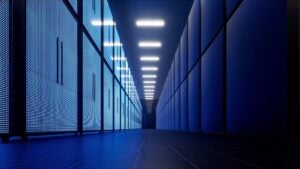
Texas Gov. Greg Abbott’s Aug. 3 order pausing all new data center connections to the Electric Reliability Council of Texas (ERCOT) grid until a comprehensive audit is complete could delay 49.8 GW of new data center electricity demand from advancing on the ERCOT system—nearly 20% of the U.S. development pipeline—BloombergNEF (BNEF) said in an Aug. 5 […]
-
 Interview
The POWER Interview: NRG’s Case for Bring Your Own Power—and the Labor to Build It
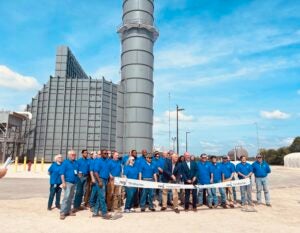
NRG Energy on Aug. 4 unveiled its first Bring Your Own Power (BYOP) project, a 1.2-GW combined-cycle plant in Texas supported by a 15-year contract with an investment-grade “leading global cloud and artificial-intelligence hyperscaler.” The $3.2 billion facility, backed by a customer parent guarantee, is targeted for commercial operation in late 2029 and could be […]
-
 Legal & Regulatory
Abbott Orders Full Audit of Texas Data Center Interconnection Queue, Threatens to Deny Grid Access
Texas Governor Greg Abbott has directed the Public Utility Commission of Texas (PUCT) and the Electric Reliability Council of Texas (ERCOT) to conduct a comprehensive audit of every data center advancing through the state’s interconnection queue, warning that projects that fail to disclose ownership, financial, water, and community-impact information could be denied grid access. The […]
-
 Commentary
The Power Sector’s New Constraint Isn’t Demand—It’s Everything Else
For most of the last two decades, the anxiety in power planning was about demand: would consumption grow fast enough to justify new capacity, and how would an aging fleet keep pace? That question has inverted. Demand is no longer the uncertain variable—it is the one thing forecasters are confident about. The uncertainty now sits […]
-
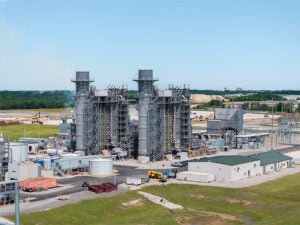 Gas
GasRayburn Energy Station: A Cooperative’s Answer to Texas-Sized Risk
For Rayburn Electric Cooperative, ownership of the 758-MW combined cycle plant in Sherman, Texas, means stable rates, hardened reliability through heat waves and winter storms, and a hedge against the
-
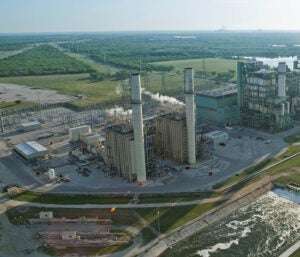 O&M
O&MFrom 18 Forced Outages to Zero Missed Starts: How CPS Energy’s Arthur von Rosenberg Plant Rebuilt Its Reliability
A deliberate shift from reactive maintenance to a reliability-centered operating culture cut the 500-MW combined cycle plant’s forced outage rate by 90%—and delivered perfect availability through Texas’s
-
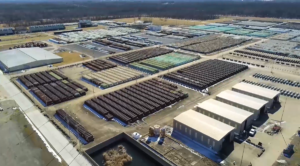 Data Centers
Brookfield, NextEra to Develop $100B Data Center Campus at DOE’s Paducah Site, Paired With 4.6 GW of Dedicated Generation
A coalition led by Brookfield and NextEra Energy has unveiled plans to build a $100 billion, privately funded artificial intelligence (AI) data center campus at the U.S. Department of Energy’s (DOE) Paducah Site in Western Kentucky, paired with up to 4.6 GW of dedicated new power generation that will be built and paid for solely to serve […]
-
Legal & Regulatory
PJM’s 2028/2029 Capacity Auction Falls Short of Reliability Standard for Second Straight Year
PJM Interconnection’s capacity market fell short of its reliability requirement for the second consecutive Base Residual Auction (BRA), clearing at the Federal Energy Regulatory Commission (FERC)-approved price ceiling of $325/MW-day for the June 2028–May 2029 delivery year and leaving the grid operator’s 13-state footprint about 6,800 MW below the reserve target needed to meet its […]
-
 Legal & Regulatory
FERC Orders Mandatory NERC Reliability Standards for Data Center and Other Computational Loads
The Federal Energy Regulatory Commission (FERC) has directed the North American Electric Reliability Corporation (NERC) to file one or more new or modified mandatory reliability standards governing the integration of computational loads—a category defined broadly enough to cover generative-AI data centers, cryptocurrency mines, and other information-technology facilities—by Dec. 31, 2026. FERC’s order, issued on July […]
-
 Data Centers
The New Power Build Cycle for AI Data Centers
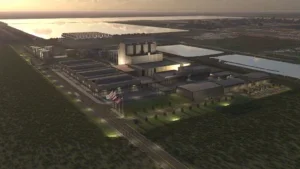
AI-driven load growth is putting significant strain on the grid, intensifying pressure on utilities and developers to secure firm capacity and meet increasingly compressed delivery timelines. While tools such as transmission optimization can deliver incremental gains, they do not address the core issue: the pace of AI data center expansion is forcing a shift from […]
-
 Energy Storage
First Year in Operation: Performance Lessons From a 100-MW/400-MWh CAISO Battery
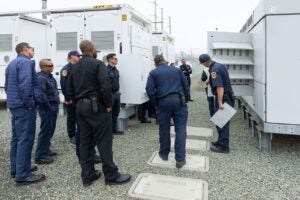
Battery energy storage promises fast response, grid flexibility, and predictable output, yet most discussions rely on modeled projections rather than actual operating data. This article presents first year performance results from Caballero, a 100-MW/400-MWh battery energy storage system (BESS) active in the California Independent System Operator (CAISO) grid since early 2025. It also examines a […]
-
 Nuclear
Centrus Signs $900M DOE Contract, Pivots Sole U.S. HALEU Cascade to Commercial Operation
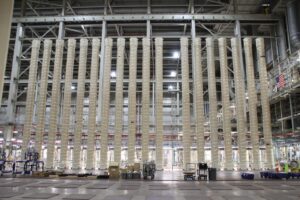
Centrus Energy has finalized a $900 million task order with the U.S. Department of Energy (DOE) that clears the way for the company to transition its pioneering high-assay low-enriched uranium (HALEU) cascade in Piketon, Ohio, from a government-funded demonstration to private commercial operation. The Bethesda, Maryland-headquartered firm on July 1 announced that its wholly owned subsidiary American […]
-
 Legal & Regulatory
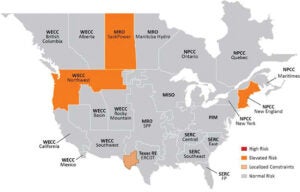
Why a Calmer Summer Outlook Hasn’t Settled the Capacity Question
A milder reliability assessment, 58 GW of new resources, and softening load forecasts have eased the near-term mood. Analysts and executives warn the breathing room is borrowed time. For the first time in
-
 Data Centers
A Republican and a Democrat Walk Into EEI—and Agree on Data Centers
Brian Kemp is a Republican. Katie Hobbs is a Democrat. The governor of Georgia campaigns on tax cuts and a growth agenda; the governor of Arizona calls herself a social worker who came to the job from a
-
 Geothermal
Geothermal Has Its Own Ghawar Fields—Nobody Is Looking for Them Yet
The global hunt for clean, always-on power is intensifying. Data centers powering artificial intelligence (AI) are signing long-term energy contracts at extraordinary speed. Against this backdrop, geothermal energy—carbon-free and available around the clock—is attracting serious capital for the first time in a generation.
-
 Data Centers
FERC Orders All Six Regional Grid Operators to Justify or Rewrite Large-Load Tariffs
The Federal Energy Regulatory Commission (FERC) has voted unanimously to issue tailored show-cause orders under Section 206 of the Federal Power Act to each of the six regional transmission organizations (RTOs) and independent system operators (ISOs) under its jurisdiction, directing them to either defend or reform tariff rules governing how data centers, manufacturing facilities, and […]