
Legal & Regulatory
-
 Nuclear
DOE Releases $900M to Spur Gen III+ Nuclear SMR Deployment, Targets Two ‘First Mover’ Projects
A $900 million funding opportunity released by the Department of Energy (DOE) on Oct. 16 seeks to spur “first mover” teams that could deploy the first two Gen III+ light water small modular reactors (SMRs) in the U.S. It will also provide funding for “fast follower” deployment support by addressing critical gaps that have long […]
-
 Commentary
How the Presidential Election Could Impact Renewable Energy Tax Credits
President Biden signed the Inflation Reduction Act (IRA) into law in 2022. The IRA is the largest public investments in renewable energy in American history and created more than 20 different tax incentives for renewable energy and related manufacturing. Certain Republic politicians have directed vitriol at the IRA. However, even if Republicans win the White […]
-
 Legal & Regulatory
The Other Side of Safety—Litigation and the Expert Witness
What happens when you suffer a catastrophic injury at work and can’t continue in your career? Workers compensation begins. Those payments last until you reach the maximum medical improvement point. How long will you receive those benefits? It varies from state-to-state. In California, for example, benefits pay up to 104 weeks for most injuries and […]
-
 Legal & Regulatory
Supreme Court Clears Way for Limits on Power Plant Mercury, Methane Emissions
The U.S. Supreme Court has said that rules requiring power plants burning fossil fuels to reduce emissions of toxic substances can stand, dealing a blow to several Republican-led states and some power generators that had challenged the regulations. The Environmental Protection Agency (EPA) in May of this year finalized rules on emissions of mercury, after […]
-
 Legal & Regulatory
$1.5B Federal Boost for Four Major Transmission Projects as DOE Unveils National Grid Study
The Department of Energy (DOE) has awarded capacity contracts of up to $1.5 billion to four major transmission lines under its Transmission Facilitation Program (TFP) to aid the transfer of 7.1 GW of new capacity throughout Louisiana, Maine, Mississippi, New Mexico, Oklahoma, and Texas. The DOE’s Grid Deployment Office (GDO) on Oct. 3 also released its […]
-
 Legal & Regulatory
How Local Opposition Can Thwart Renewable Energy Projects
Two-thirds of Americans say that they support the development of alternative energy sources such as wind, solar, and hydrogen power. At least that’s what the Pew Research Center found in a nationwide survey
-
 Legal & Regulatory
FTC Green Guides: The Growing Scrutiny on ‘Clean’ Natural Gas Claims
In an era of increasing environmental awareness, companies, particularly those in the energy sector, face heightened scrutiny over how they market their products. Natural gas, often promoted as a cleaner alternative to other fossil fuels, has become a focal point of this scrutiny. However, the Federal Trade Commission (FTC) Green Guides, a set of guidelines […]
-
 Nuclear
DOE Finalizes $1.52B Palisades Loan for First-Ever U.S. Nuclear Plant Recommissioning
Marking the first-ever revival of a nuclear power plant in the U.S., the Department of Energy (DOE) on Sept. 30 finalized a $1.52 billion loan guarantee to Holtec International to support the recommissioning of the 800-MW Palisades nuclear plant in Covert Township, Michigan. Separately, the U.S. Department of Agriculture (USDA) awarded electric cooperative Wolverine Power […]
-
 Hydro
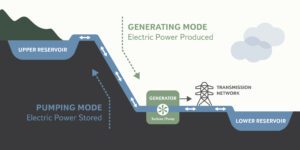
HydroDemonstration to Convert Kentucky Coal Mine to Pumped Hydro Secures Federal Funding
A project that will demonstrate the conversion of a former coal mine in Bell County, Kentucky, into a utility-scale 287-MW pumped storage hydroelectric facility has garnered federal backing from the Department of Energy’s (DOE) Office of Clean Energy Demonstrations (OCED). Rye Development, a pumped storage hydropower developer, on Sept. 25 secured $12.1 million—the first tranche […]
-
 Legal & Regulatory
Gray Skies for U.S. Power Generation? Uncertainty and Turmoil on the Horizon
The Supreme Court’s landmark decision this past summer in Loper Bright Enterprises v. Raimondo marks a significant shift in administrative law by overturning the long-standing principle of Chevron deference, which was established in Chevron U.S.A. Inc. v. Natural Resources Defense Council Inc. in 1984. The Loper ruling from earlier this year is poised to have […]
-
 Legal & Regulatory
Evolution of Decommissioning Requirements in Renewable Energy
With legislative momentum around clean power generation and net-zero emissions policies rapidly building, the U.S. is seeing rapid increases in installed wind and solar capacity each year. At the same time, older generations of renewables are facing a new challenge: obsolescence. The first utility-scale wind and solar projects in the U.S. were developed in the […]
-
 Legal & Regulatory
Unlocking America’s Clean Hydrogen Potential: Navigating Policy, Challenges, and Market Opportunities
The U.S. clean hydrogen sector is poised for significant growth, driven in part by its potential to reduce carbon dioxide emissions in hard-to-abate industries such as transportation and chemical production. The Inflation Reduction Act (IRA) and the Bipartisan Infrastructure Law (BIL) have catalyzed this momentum, providing production tax credits (PTCs) and billions in funding to […]
-
 Offshore Wind
California Confirms Strategy for Centralized Offshore Wind Procurement
Following more than three years of planning and analysis, California has established an offshore wind goal of 7,600 MW, with procurements starting as early as 2027. Through its central procurement efforts, California intends to bring about a “market transformation” to help reduce the costs of particular technologies, like offshore wind, allowing them to be developed […]
-
 Legal & Regulatory
Net Metering Reform: Premature or Long Overdue?
The growth of distributed energy resources (DERs) has significantly increased over the past decade as the U.S. moves to decarbonize the electric grid. Growth has been possible by incentivizing the transition to clean energy; states and federal legislation, such as the Inflation Reduction Act (IRA), have used tax credits and other programs to accelerate deployment. […]
-
 Hydro
HydroDOE Injects $430M to Revitalize, Modernize U.S. Hydropower Fleet
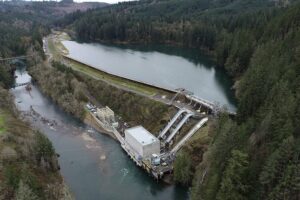
The Department of Energy (DOE) has selected 293 hydroelectric projects across 33 states that will receive up to $430 million in incentive payments for capital improvements directly related to grid resiliency, dam safety, and environmental improvements. The funding, unveiled on Sept. 5, stems from the DOE Grid Deployment Office’s (GDO’s) Maintaining and Enhancing Hydroelectricity Incentives […]
-
 Gas
GasMajor Project Rejected in Texas’ Flagship Dispatchable Power Loan Program
The Texas Energy Fund (TEF), a flagship loan program designed to boost the state’s dispatchable generation, faced its first setback on Sept. 4 when the Public Utility Commission of Texas (PUCT) denied Aegle Power’s loan application for a 1,292-MW combined cycle generating facility in Harlingen—its second-largest shortlisted facility. The PUCT said Aegle Power’s application, filed […]
-
 Legal & Regulatory
Supreme Court Showdown: EPA Defends Carbon Capture Amid Power Industry Backlash
The Environmental Protection Agency (EPA) has doubled down on its stance that carbon capture is “adequately demonstrated” in a brief filed with the U.S. Supreme Court as part of a bid to urge the high court to allow the agency’s contentious Carbon Pollution Standards to remain in effect while legal challenges continue. The Supreme Court […]
-
 Renewables
Risk Management, Skilled Counsel Key in Renewable Energy
Renewable energy project developers and contractors must be prepared to negotiate novel risks in a quickly changing global market. Technological innovations in renewable energy equipment and decreasing
-
 Legal & Regulatory
New FERC Has Golden Opportunity to Pass Interregional Transmission Planning Rule
Our electric system was designed to experience service interruptions once per decade. That time is long gone. In the past three years, the U.S. South has sustained two debilitating winter storms, forcing utilities to cut power when their customers needed it the most. In 2023 alone, the U.S. was hit with more than 28 separate […]
-
 Commentary
Energizing the Grid: Insights into the DOE’s GRIP Program
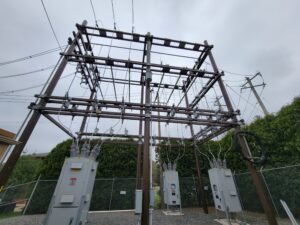
To secure federal funding, developers must navigate various financing and investment options related to grid resiliency and modernization, transmission deployment, and critical electric generation facilities. Responding to funding demands, however, can pose significant challenges. Balancing early-stage project commitments with application requirements blurs the line between speculating about long-term project details, being non-responsive, and making costly […]
-
 Legal & Regulatory
EPA Rolls Out Label Program to Define ‘Clean’ Construction
The Environmental Protection Agency (EPA) has announced a plan to implement a new label program that it expects will help federal purchasers and buyers find and choose more climate-friendly construction materials. Under the label program, which stems from “extensive public input,” the EPA will initially focus on asphalt, concrete, glass, and steel products with “lower […]
-
 Nuclear
India’s Prototype Fast Breeder Nuclear Reactor Moves Closer to Criticality
India’s Atomic Energy Regulatory Board (AERB) will allow the country’s flagship 500-MWe/1,250-MWth prototype fast-breeder reactor (PFBR) in Kalpakkam, Tamil Nadu, to approach criticality. The nuclear energy safety watchdog on July 30 granted state-owned Bharatiya Nabhikiya Vidyut Nigam Ltd. (BHAVINI) permission to embark on the final stage of core loading following assessments, extensive safety reviews, and plant […]
-
 Legal & Regulatory
EU Mandates Biodiversity Restoration, Setting Up New ‘Green’ Requirements Alongside ‘Clean’ Ones for Power Sector
This June, the European Council formally adopted a first-of-its-kind regulation that sets out to restore at least 20% of the European Union’s (EU’s) land and sea areas by 2030 and all ecosystems in need of
-
 Commentary
Looking Through ‘Green-Colored’ Glasses: Hydrogen in the Energy Transition
Transitioning the world towards cleaner and greener energy is proving to be more challenging than we once all hoped. There are real concerns about what impact the slower speed of uptake is having on our
-
Legal & Regulatory
Post-Chevron Ushers in ‘New Normal’ For Regulated Community
The U.S. Supreme Court recently overturned the longstanding Chevron doctrine, a foundation of administrative law for 40 years, when it ruled on Loper Bright Enterprises v. Raimondo . The impacts on a wide
-
 Legal & Regulatory
Federal Court Rejects Stay on EPA’s Carbon Pollution Standards in Setback for Power Industry
The U.S. Court of Appeals for the District of Columbia has denied motions to stay a suite of Environmental Protection Agency (EPA) regulations that champion carbon capture and storage (CCS) technology as a key pathway for reducing greenhouse gas emissions (GHGs) from fossil fuel-fired power plants. The rules face legal challenges from 24 states, eight […]
-
 Legal & Regulatory
Brighter Tomorrow Act Paves Way For More Solar Investment in Maryland
Maryland Gov. Wes Moore in May of this year signed the Brighter Tomorrow Act into law. The measure expands the solar facilities that qualify for subsidy, and improve the level of subsidy, and contains certain miscellaneous provisions applicable generally expanding access to subsidies—as well as benefits to workers and persons of low to moderate income. […]
-
 Legal & Regulatory
South Africa Extends Koeberg Unit 1’s Lifespan, Stands Firm on Nuclear Expansion Plans
South African state-owned utility Eskom has garnered the National Nuclear Regulator’s (NNR’s) approval to continue operating Unit 1 of the 1,860-MW Koeberg Nuclear Power Station for another 20 years, until July 21, 2044. The nuclear regulator’s approval effectively extends the lifetime of the 930-MW unit to 60 years. The unit’s current 40-year license was set […]
-
Courts
The Chevron Deference Is Dead. What Does It Mean for the Power Sector?
The U.S. Supreme Court on June 28 overturned the Chevron doctrine—a forty-year-old precedent—significantly curtailing the power of federal agencies to interpret ambiguous statutory provisions, even in areas of agency expertise. The landmark 6–3 decision could have far-reaching effects on the power industry, with specific impact on sweeping energy regulations from the Environmental Protection Agency (EPA) […]
-
 Supply Chains
U.S. Seeks Bids for Domestic Low-Enriched Uranium to Counter Russian Influence
In a strategic move to jumpstart domestic uranium enrichment capacity in the U.S., the Department of Energy (DOE) has launched a request for proposals (RFP) to buy low-enriched uranium (LEU) from domestic suppliers. The RFP will seek LEU through procurement contracts for indefinite quantity and indefinite delivery (IDIQ). It could result in awards of “two […]