
Legal & Regulatory
-
 Legal & Regulatory
FERC Adopts Transmission Reform; Commissioner Cries Foul
There has been a growing consensus in recent years that the transmission planning process must be reformed to ensure reliability in the face of a rapidly changing grid. Despite the need for new transmission to
-
 Commentary
Federal Court Blocks Attempt by Coal Power Plants to Evade Cleaning Up Coal Ash Sites
The U.S. Court of Appeals in Washington, D.C., on June 28 blocked the coal power industry’s attempt to get out of the requirement that they prevent toxic coal ash from contaminating groundwater. The court affirmed that the EPA regulations established in 2015 already prohibit closing coal ash dumps with ash sitting in groundwater. Industry filed […]
-
 Coal
CoalTri-State Advances ERP With Unopposed Settlement Filing
Colorado electric cooperative Tri-State Generation and Transmission Association is proposing aid to coal communities in its service territory as part of an unopposed comprehensive settlement of the first phase of the group’s recent Electric Resource Plan (ERP). The company on June 27 said the filing is an important milestone in the energy transition of the […]
-
 Legal & Regulatory
Supreme Court Halts EPA’s ‘Good Neighbor Plan’
The U.S. Supreme Court in a 5–4 vote blocked enforcement of the Environmental Protection Agency’s (EPA’s) final “Good Neighbor Plan,” a rule intended to significantly cut smog-forming nitrogen oxide (NOx) pollution from power plants and other industrial facilities in 23 states. In the meantime, the applicants, which include the states of Ohio, Indiana, and West […]
-
 Legal & Regulatory
The ADVANCE Act—Legislation Crucial for a U.S. Nuclear Renaissance—Clears Congress. Here’s a Detailed Breakdown
The U.S. Senate has passed the Accelerating Deployment of Versatile, Advanced Nuclear for Clean Energy (ADVANCE) Act, sweeping legislation that seeks to promote U.S. nuclear leadership, accelerate advanced nuclear technology development while preserving existing nuclear generation, bolster national security measures, and enhance regulatory efficiency to support new nuclear deployment. The Senate passed the bill on […]
-
 Legal & Regulatory
GOP Lawmakers Aim to Protect Coal and Gas-Fired Power Plants from EPA Rules
Forty-three Republican senators (along with one Independent) introduced a Congressional Review Act (CRA) resolution of disapproval on June 5 to overturn emissions rules issued by the Environmental Protection Agency (EPA), which they say target existing coal-fired power plants and new gas-fired plants. The action was led by U.S. Sen. Shelley Moore Capito (R-W.Va.), Ranking Member […]
-
 Trends
2024 Shaping Up to Be Dramatic for Transmission and Distribution
In a significant push toward modernizing America’s aging grid infrastructure, the Biden administration, in partnership with 21 states, has launched the Federal-State Modern Grid Deployment Initiative. The measure marks the latest triumph for transmission and distribution (T&D), which has seen “lumpy” progress in recent decades. The initiative unveiled on May 28 essentially seeks to establish […]
-
 Commentary
Congress Wants to Solve Nuclear Waste. The Solutions Are Known.
It’s welcome that the U.S. House of Representatives in April revived policy discussions over nuclear waste. Our organizations support nuclear energy as a tool of economic opportunity and emissions reduction, and we believe that nuclear’s sustainable expansion is necessary for global health and prosperity. Nuclear’s role in deep decarbonization is clearer than ever, especially as […]
-
 Commentary
Clean Hydrogen: America’s Promising Next Fuel Source for a Resilient Energy Future
The past few years have shown that the need for cleaner energy sources is only growing, while balancing economic and infrastructure concerns remains vital to safeguard American energy dominance and security. The 2021 Bipartisan Infrastructure Law and 2022 Inflation Reduction Act are two recent examples of massive investments into American infrastructure and jobs, forging ahead […]
-
 Legal & Regulatory
How Regulatory Burdens and Misguided Incentives Are Degrading Power System Reliability
It’s no secret that the U.S. electric power system has undergone a remarkable transition that continues today. Coal-fired generation, which was the leading source of power generation during the 20th century, often providing more than half of the country’s electricity supply, fell to about 16.2% of the mix in 2023. Meanwhile, the U.S. solar market […]
-
 Legal & Regulatory
States, Trade Groups Sue EPA Over New Fossil Fuel Rules
More than two dozen states and a handful of trade groups filed separate lawsuits in the U.S. Court of Appeals for the D.C. Circuit, challenging parts of the Environmental Protection Agency’s (EPA’s) suite of new final environmental regulations targeting fossil-fired power plants. The challenges respond to the publication in the Federal Register on May 9 […]
-
 Legal & Regulatory
Perfect Storm for the Grid: Convergence of Energy Growth and Policy
There are numerous articles and studies warning of the fragile nature of America’s electric grid. The vulnerabilities will only become more apparent as we continue to undergo a fundamental shift in how
-
 Legal & Regulatory
Planning for ‘Flip Dates’ in Tax Equity Partnerships
The U.S. government offers certain benefits to renewable energy projects, primarily in the form of tax credits and depreciation. But the reality is that a growing number of tax-equity partnerships are reaching the end of their lifespan, and the sponsors and tax-equity investors in these projects need to be preparing for the future. In fact, […]
-
 Legal & Regulatory
EPA Unleashes Four-Pronged Assault on Fossil Fuel Power Pollution
In an unprecedented move, the U.S. Environmental Protection Agency (EPA) on April 25 simultaneously finalized four major environmental rules covering greenhouse gases (GHG), air toxics, wastewater discharges, and coal combustion residuals from fossil fuel-fired power plants. Among the rules is the EPA’s final Carbon Pollution Standards, which marks the agency’s third attempt to broadly curb […]
-
 Legal & Regulatory
Federal U.S. Power Sector Initiatives Went Full Throttle in April: Here’s the List
The Biden administration has unveiled several sweeping actions over the past month aimed at boosting clean energy deployment, enhancing manufacturing jobs, and reducing pollutant emissions across the power sector. The measures—many announced as part of a comprehensive Earth Week agenda on April 25—are notable for their strategic push in an election year, highlighting the administration’s […]
-
 Legal & Regulatory
NRC Advances Rule to Streamline Advanced Nuclear Reviews
The Nuclear Regulatory Commission (NRC) has voted to codify proposed changes to streamline a key environmental review process for advanced nuclear reactors. Nuclear advocates lauded the measure as one of the regulator’s most important actions in 2024. The NRC on April 17 approved its staff’s recommendation to publish a proposed rule that would amend […]
-
 Legal & Regulatory
Action Needed Now to Support New Power Transmission Capacity
The Federal Energy Regulatory Commission (FERC) in its March 2024 open meeting made clear that successful energy transition requires immediate action. With the Inflation Reduction Act (IRA) as a benchmark, the U.S. will need to expand its electrical transmission capacity at an annual rate double that seen between 1978 and 2020, as reported by the […]
-
 Legal & Regulatory
EPA Denies Industry Petition to Delist Stationary Combustion Turbines as Hazardous Pollutants
The U.S. Environmental Protection Agency (EPA) has denied an industry petition seeking to delist stationary combustion turbines from the agency’s list of hazardous air pollutants (HAP) major source categories regulated under section 112 of the Clean Air Act (CAA). The agency’s final action on April 11 responds to an August 2019 petition filed by several […]
-
 Legal & Regulatory
FERC Proposal Would Cut Reactive Power Compensation, a Potential Hit to Independent Power Producer’s Revenue Mix
In a time where capacity revenues are pricing lower and many generation owners find that their facilities are not being dispatched for energy on a consistent basis, reliable revenue streams are increasingly important. In addition to selling energy and capacity, many generation facilities collect fixed, monthly payments for the provision of “reactive power,” which are […]
-
 Legal & Regulatory
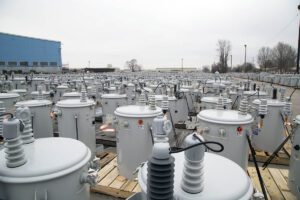
DOE Eases Requirements in Final Transformer Efficiency Standards Amid Supply Chain Strain
The U.S. Department of Energy’s (DOE’s) final energy efficiency standards for distribution transformers appear to strike a compromise with industry, softening the agency’s stance on steel requirements for essential transformer components and extending compliance deadlines to five years. The DOE’s final standards issued on April 4 seek to reduce losses in three types of distribution […]
-
 Legal & Regulatory
Navigating Change: Impact of California’s Advanced Clean Fleets Regulation on Businesses
The California Advanced Clean Fleets (ACF) regulation, which began being implemented on Jan. 1, 2024, is designed to complement the Advanced Clean Trucks (ACT) rule, which mandates a significant increase in the number of medium- and heavy-duty zero-emission vehicles (ZEVs) on California roads. There’s much to understand about the regulation and how it will impact […]
-
 Commentary
What FERC Order 2023 Means for the Interconnection Queue
In recent years, concerns about the lengthy interconnection queue have dominated headlines. This queue has emerged as a major obstacle to adding new generating facilities to the U.S. power grid. It is primarily caused by grid congestion, permitting issues, extensive infrastructure project delays, and the traditional interconnection study approaches used in many states. To address […]
-
 Legal & Regulatory
Distributed Power, EAAS—New Ways to Join the Clean Energy Transition
The first image that likely comes to mind when the average energy consumer thinks about renewable energy is some kind of vast (utility-scale) solar or wind farm, or a massive battery project, usually pictured
-
 News
NewsDigital Solutions Provide Great Benefits for Cooperative Utilities
Although cooperatives may not have the financial resources of large investor-owned utilities, valuable digital solutions are still within their grasp. Because they have fewer resources to employ, co-ops may
-
 Legal & Regulatory
U.S., UK, Canada Ink Trilateral Memo to Cooperate on Advanced Reactor Licensing
Nuclear regulatory agencies from the U.S., Canada, and the UK will collaborate on technical reviews and share best practices for advanced reactors and small modular reactor (SMR) technologies. The measure is aimed at improving regulatory efficiency and effectiveness as more reactor technologies seek approval in the three countries. A trilateral memorandum of cooperation (MOC) signed […]
-
 Legal & Regulatory
Measure Twice, Cut Once—A Roadmap for Enabling VPPs Through Policy and Program Design
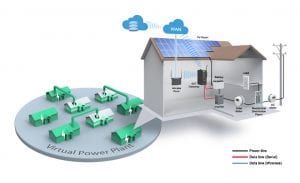
Virtual power plants (VPPs), as aggregations of dispatchable distributed energy resources (DERs), can deliver grid services ranging from resource adequacy to reliability at scale—all while making energy more affordable. Yet, despite their merits, the U.S. utility industry is yet to leverage the full potential of these readily available, affordable, customer-sited resources to add flexibility to the grid. Of course, the decision to incorporate […]
-
 Legal & Regulatory
Get Ready For California’s Three Sweeping New Climate Disclosure Laws
Can a requirement to simply disclose information truly be a big deal? Can a requirement that only applies to big companies, or companies that do business in California, actually impact your small business or your business in another state? Can a requirement that doesn’t take effect until next year or later really require thought and […]
-
 Legal & Regulatory
EPA Drops Existing Gas-Fired Plants from Contentious Power Plant GHG Rule
(Updated March 7 with responses from EPA): The U.S. Environmental Protection Agency (EPA) will drop requirements covering existing natural gas-fired power plants in its final Section 111 rule regulating power sector greenhouse gas (GHG) emissions, which is expected in April. EPA Administrator Michael Regan on Feb. 29 said in a written statement the agency’s rule—which the […]
-
 Legal & Regulatory
NRC Sets Stage for Advanced Nuclear with New Part 53 Rule
The Nuclear Regulatory Commission (NRC) has directed its staff to publish a proposed rule and draft guidance to create Part 53, a much-awaited risk-informed and technology-inclusive licensing framework geared toward advanced technologies, including non-light-water-reactors (non-LWRs). In a staff requirements memorandum (SRM) made public on March 4, the commission directed staff to incorporate several changes to […]
-
 Legal & Regulatory
Overcoming Hurdles in Offshore Wind Development: Ireland in a Race Against Time
As the world intensifies its efforts to combat climate change, Ireland has set ambitious goals to produce offshore renewable energy as part of its Climate Action Plan. A member of the European Union (EU)