
Coal
-
 Coal
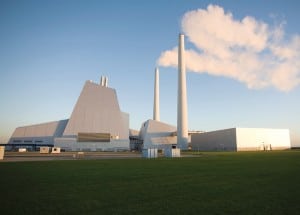
CoalEurope: More Coal, Then Less
Europe’s continuing drive toward sustainable energy does not rule out a new generation of coal power plants to replace those scheduled to close by 2015.
-
 Coal
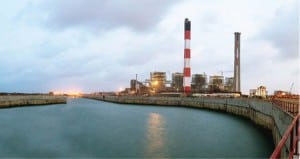
CoalIndia’s Chronic Coal Shortages Threaten Coal Power Ambitions
India has been besieged by a coal shortage of unprecedented severity that has forced privately owned and money-strapped state-owned coal-fired power plants alike to rely on expensive imports from Indonesia and South Africa to replenish woefully inadequate stocks.
-
Coal
FirstEnergy, AEP, and GenOn Continue Trimming Coal-Fired Fleet Size
FirstEnergy Corp., AEP, and GenOn have all announced coal-fired plant closures, totaling over 13 GW, caused by the recently finalized Mercury and Air Toxics Standards.
-
Coal
EPA to Keep Thresholds in Step 3 of Tailoring Rule for GHG Permits
A proposed rule issued in late February by the Environmental Protection Agency (EPA) will not change the greenhouse gas (GHG) permitting thresholds for the Prevention of Significant Deterioration (PSD) and Title V Operating Permit programs. However, it includes revisions to the permitting program that would provide some flexibility in how compliance is achieved with GHG emission caps.
-
O&M
NERC: Loss of Reactive Power, Voltage Instability Likely Outcome from Geomagnetic Disturbance Effects
A new report released in early March by the North American Electric Reliability Corp. (NERC) found that loss of reactive power was the most likely outcome from a severe solar storm that was centered over North America. Significant losses of reactive power could lead to voltage instability, and, if not identified and managed appropriately, power system voltage collapse could occur, the report concludes.
-
 O&M
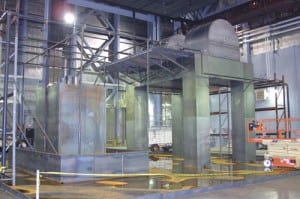
O&MPreventing and Mitigating Oil Fires in Power Plants
It has been said that a picture is worth a thousand words. However, photos of the conflagrations that have resulted from ignition of minor lube oil leaks on a typical steam turbine room floor will leave you speechless. Full-scale physical simulations of oil fires by the insurance company FM Global leave no doubt that power plant fire prevention and mitigation is a judicious blend of art and science.
-
O&M
Using Explosives for Boiler Deslagging
This unconventional technique for removing slag from solid fuel-fired boilers, used for more than two decades, has exploded in popularity. But the risks are very real, and not all blasters are created equal.
-
 Coal
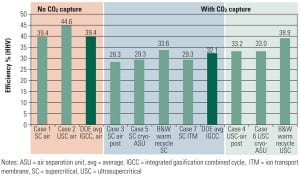
CoalDesign Features of Advanced Ultrasupercritical Plants, Part I
Advanced ultrasupercritical (A-USC) is a term used to designate a coal-fired power plant design with the inlet steam temperature to the turbine at 700C to 760C. In Part I of a three-part report, we introduce the A-USC boiler. Future reports will discuss the metallurgical and boiler design challenges.
-
 O&M
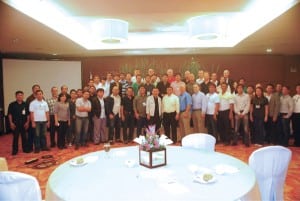
O&MUser Group Profile: Philippine Coal Plant Users’ Group
The Philippine Coal Plant Users’ Group (PCPUG), the leading nonprofit organization involved in generating electricity in the Philippines, recently held a conference introducing its mission and vision.
-
 Coal
CoalPlant of the Year Trophy Presented
The POWER Plant of the Year for 2011 was Kansas City Power & Light’s 850-MW Iatan 2, located about 30 miles northwest of Kansas City.
-
 Coal
CoalCoping with Coal Dust
Plants can no longer sweep coal dust under the rug and ignore the health and safety hazard it presents, because a single spark can cause a dust explosion that could put a plant out of service, perhaps permanently. Managing dust in a power plant begins with good housekeeping, followed by retrofits using properly designed equipment.
-
 Coal
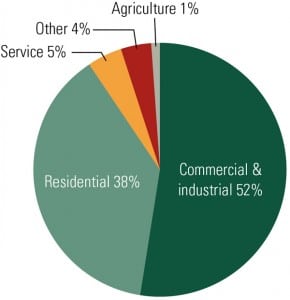
CoalVietnam Works Hard to Power Economic Growth
For the past 15 years, Vietnam has enjoyed enviable gross domestic product increases, averaging 7% annually. That kind of economic growth increases power demand, but financing new capacity remains a challenge. Reaching its ambitious capacity growth goals will require Vietnam to expand its financing and vendor base, attract foreign investment, and ensure future fuel supplies in a region thick with competition for those resources.
-
Commentary
Has the Dust Settled?
As our seasons transition, so may the fire and deflagration hazards from coal and combustible dust that once were visible and now may be out of sight. Yet often, what is out of sight presents the greatest hazard and risk.
-
Coal
EIA: Policy and $3 Gas Could Prompt Accelerated Decline of Coal Power, Renewables
The U.S. power sector will see heightened electricity consumption over the next two years, a spurt in natural gas–fueled power generation that is expected to offset a slight decline in coal power, and a significant decline in hydropower generation that could mark a decline in overall renewable generation, the Energy Information Administration (EIA) says in its latest short-term outlook.
-
Coal
EPA Finalizes Air Toxics Rule
The Environmental Protection Agency (EPA) on Dec. 21 issued its final Mercury and Air Toxics Standards (MATS), which will require about 40% of all coal-fired power plants in the U.S. to deploy pollution control technologies to curb emissions of mercury and other air pollutants such as arsenic and cyanide within three years.
-
Coal
EPA Releases, Federal Court Blocks CSAPR
The U.S. Court of Appeals for the District of Columbia Circuit temporarily blocked the Cross-State Air Pollution Rule (CSAPR) just two days before it was set to go into effect. The federal court ordered the Environmental Protection Agency (EPA) to continue administering the previously promulgated Clean Air Interstate Rule (CAIR) until a final decision can be made on the merits of the rule, likely this summer or fall.
-
 O&M
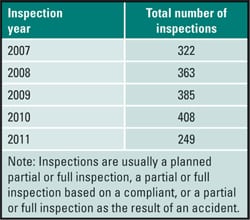
O&MAudit Your Coal Dust Prevention Program
The hazards of coal dust accumulation in power plants are familiar to coal-fired plant operators. Operators of plants that burn Powder River Basin coal are particularly aware of necessary housekeeping and fuel-handling practices, but any plant that allows excessive amounts of coal dust to accumulate is playing Russian Roulette with its staff and equipment.
-
O&M
Constructing and Managing Coal Ash Landfills
Creating a landfill to hold dry boiler ash is a challenging proposition these days. There’s more to the project than you might imagine, as you’ll learn from this article about the development of a typical new ash landfill.
-
 O&M
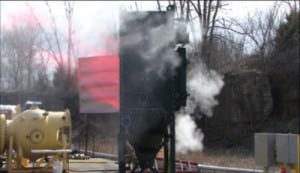
O&MCollecting Dust
Rules requiring removal of combustible dust from the workplace will undoubtedly improve worker safety and health. A survey of equipment suppliers finds a variety of dust collection systems are available to meet just about every dust collection need in the power house.
-
 Coal
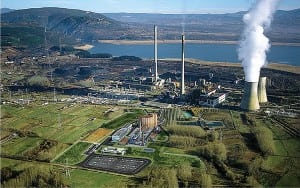
CoalOne Step Forward, Two Steps Back for CCS Projects
Last December, as Spain’s national carbon capture and storage (CCS) research laboratory Fundación Ciudad de la Energía (CIUDEN) began a much-watched testing phase of oxycombustion in its 30-MWth circulating fluidized bed (CFB) boiler in Cubillos del Sil, Vattenfall scrapped the €1.5 billion ($2 billion) Jänschwalde CCS demonstration project that it had planned to build and begin operating by 2015 in the German federal state of Brandenburg.
-
 Coal
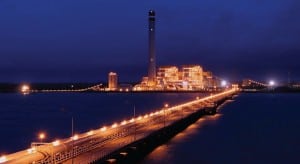
CoalIndonesia Inaugurates Three Coal Plants
Indonesian state-owned utility Perusahaan Listrik Negara (PLN) formally launched operations at three new coal-fired power plants on Dec. 28.
-
 Coal
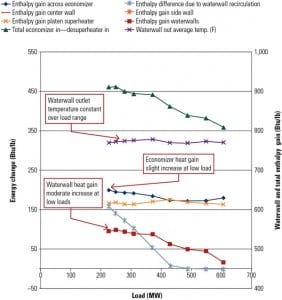
CoalEnhanced Load Dispatch Rate and Furnace Protection Through Model Predictive Control
The enhanced plant performance achieved at the 1,477-MW Morgantown Generating Station shows the value of model predictive control in conjunction with intelligent distributed control algorithms. This project update looks at how the project team moved from ramp rate improvements to reducing tube metal temperatures to improved component life.
-
 Coal
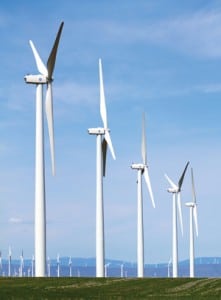
CoalAbundant Clean Energy Fuels Brazil’s Growth
Brazil’s power industry has long been dominated by its vast hydro resources, which historically have accounted for over 80% of the country’s generation capacity. With engineering marvels like the massive Itaipú dam and the proposed Belo Monte project, the country is a leader in the development and use of hydroelectricity on a grand scale. But as the 2001 energy crisis proved, dependence on a single source leaves the country vulnerable to severe shortages. Thanks to government programs designed to take advantage of the country’s favorable climate, Brazil is committed to diversifying its energy mix while continuing to maintain a renewable energy focus.
-
 Coal
CoalColstrip’s Cure for Mercury
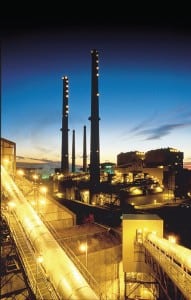
In January 2012 a new mercury control system at the Colstrip power plant in Montana reached its first major milestone: two years of operation with mercury emissions below the state regulatory limit. The plant uses Alstom’s unique Mer-Cure technology to capture up to 90% of the mercury leaving the stack.
-
Coal
Editors Select Top Five Stories of 2011
The POWER editorial staff’s picks for the most significant stories of 2011.
-
 Coal
CoalTHE BIG PICTURE: Gas Taxes
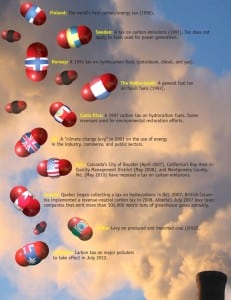
After years of political wrangling, coal-rich Australia in November passed legislation that will require the nation’s top 500 polluters, starting in July 2012, to pay a tax at a fixed price of A$23 (US$23.50) per ton of carbon. The tax increases 2.5% annually until 2015, when an emissions trading program will begin. With the Kyoto […]
-
 Coal
CoalWorld Energy Outlook Forecasts Great Renewables Growth
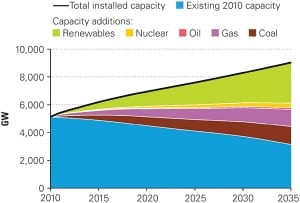
Driven by policies to limit carbon emissions, as well as government subsidies, the share of worldwide nonhydro renewable power is set to grow from just 3% in 2009 to 15% in 2035, the International Energy Agency (IEA) forecasts in its recently released World Energy Outlook 2011. Under the same scenario—which assumes that carbon pricing, explicit […]
-
Coal
Australia Levies Landmark Carbon Tax
After more than a decade debating whether to pass a carbon-limiting law, Australia’s Senate in November voted in a landmark bill that will impose a price on carbon emissions. The country, which accounts for just 1.5% of global carbon emissions, but which is the world’s highest emitter per capita because 80% of its power comes […]
-
 Coal
CoalAsian Sub-Bituminous Coal Users’ Group Formed
Over the past 11 years, the Powder River Basin Coal Users’ Group (PRBCUG) has grown to become the voice of North American generating companies that are dedicated to the safe and efficient use of PRB coal. POWER, the group’s media sponsor, has reported on the PRBCUG’s annual meetings, which are colocated with the ELECTRIC POWER Conference & Exhibition each year. POWER also reports annually on the group’s coal plant of the year award. For 2011, in the large plant category the award went to Kansas City Power & Light’s Iatan Unit 2 (see our August 2011 issue); the small plant category winner, Muscatine Power & Water, is profiled in this issue, beginning on page 56.
-
 Coal
CoalU.S. Confronts Pipeline Gaps While Europe Juggles Renewables and Debt
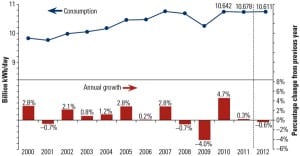
U.S. optimism has been restored by reports of abundant, reasonably priced natural gas to fuel most new generation; however, huge gaps in the fuel delivery system (thousands of miles of pipelines are needed) will soon challenge gas plant development. Meanwhile, the cloud of sovereign debt hangs over all major capital projects in Europe, where the UK moves ahead with new nuclear projects while many of its neighbors shut the door on nuclear and struggle to finance their commitment to renewables.