
Coal
-
 Coal
CoalNavigant Announces Coal-Fired Generation Operational Excellence Awards
Navigant’s Operational Excellence Awards are presented annually to those North American coal-fired generation plants that have demonstrated excellence in cost-efficient reliable plant performance over the preceding five-year period. The data used to select the winners derives from Navigant’s Generation Knowledge Service fossil database.
-
 Coal
CoalWorld Energy Outlook Foresees Distinct Generation Shift
Global generating capacity is poised to soar by more than 72%, to 9,340 GW, by 2035 from 5,429 GW in 2011, despite retirement of about 1,980 GW, the International Energy Agency (IEA) forecasts in its World Energy Outlook 2012, released in November.
-
 Coal
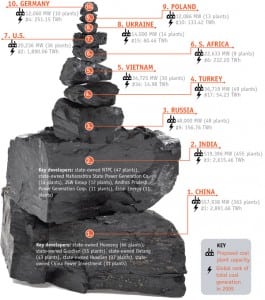
CoalTHE BIG PICTURE: The Coal Pile
About 1,199 new coal-fired facilities (as defined by the World Research Institute)—a total installed capacity of 1,401 GW—were being proposed globally as of July 2012, spread across 59 countries.
-
 Coal
CoalSafety a Main Theme at Asian Coal Users’ Meeting
Power plant operators, managers, and other professionals from across Southeast Asia met in Hong Kong in early November for the second annual Asian Sub-Bituminous Coal Users’ Group meeting, created to share information and best practices related to safety, handling, combustion, characteristics, and risk management of the fuel.
-
 O&M
O&MControlling Fugitive Combustible Coal Dust
Regardless of how much prevention is employed to mitigate combustible dust in coal-fired power plants, fugitive coal dust is pervasive and can be dangerous. In coal-fired power plants, mechanical transfer points are leading sources for airborne fugitive dust. However, because coal dust travels quickly over large areas with minimal airflow, fugitive combustible dust settles in many areas.
-
O&M
Emerging Technologies Enable “No Regrets” Energy Strategy
Achieving a balance between affordable and sustainable electricity while improving reliability is a challenge unlike any the electricity sector has faced since its inception. Technology innovations in key areas such as energy efficiency, smart grid, renewable energy resources, hardened transmission systems, and long-term operation of the existing nuclear and fossil fleets are essential to shaping the future of electricity supplies.
-
 Coal
CoalSlow Growth Ahead—with Unexpected Flares of Activity
North American shale gas was supposed to realign the generation fleet here and abroad (thanks to anticipated exports) far into the future. Turns out, that’s not exactly how the near term is shaping up. Despite stagnant (and even putrid) economies and legislative bodies in the U.S. and EU, there promises to be sufficient market volatility to keep everyone alert.
-
 Coal
CoalCoal Battered Early, Later Rebounds
For the first time, U.S. generation from coal and natural gas was equal in 2012, although just momentarily. Gas dominated early in the year, but as gas prices rose in response to supply and demand forces, coal use rebounded. Expect more of the same give-and-take in 2013.
-
 History
The Russian Power Revolution
Exports of natural resources have given Russia increased global political and economic clout. But domestically, the world’s fourth-largest generator of electricity has had to embark on the most ambitious reforms ever undertaken to modernize dilapidated Soviet-era power infrastructure and incentivize a massive capacity expansion to support a revived economy.
-
Coal
EPA Tightens Fine Particulate Matter NAAQS
The Environmental Protection Agency (EPA) on Friday issued a final rule that strengthens its National Ambient Air Quality Standard (NAAQS) for fine particulate matter (PM2.5) to 12.0 micrograms per cubic meter (μg/m3) but declared it would not finalize a proposal to update separate secondary PM2.5 standards. The final rule’s issuance was lauded by environmental and public health groups, though industry groups opposed it, citing concerns that nonattainment areas would suffer economic setbacks.
-
Coal
UPDATE: EPA’s First GHG Permitting Violation Reaps $34,000
Major oil and gas production company Vintage Production California and its subsidiary OXY USA last week agreed to pay $34,000 to resolve the Environmental Protection Agency’s (EPA’s) first greenhouse gas (GHG) permitting violation case.
-
Coal
AEP to Retire 800-MW Big Sandy Coal Unit By 2015
Six months after withdrawing a $1 billion plan to retrofit its 49-year-old Big Sandy coal-fired plant near Louisa, Ky., from the Kentucky Public Service Commission (PSC), American Electric Power (AEP) operating unit Kentucky Power on Wednesday announced it would retire the plant’s 800-MW Unit 2 by 2015 and will decide on the future of its 278-MW Unit 1.
-
Coal
Reserve Margins in Texas Barely Healthy Again, ERCOT Says
Texas could again see tight power supplies in the summer of 2013 and beyond—with reserve margins dropping to 2.8% by 2022—even though the outlook has improved, the Electric Reliability Council of Texas (ERCOT) warned in its latest long-term outlook released on Monday.
-
Coal
Report: Fuel for Power Generation to Lead Energy Growth Through 2040
Fuel for power generation will account for about 55% of demand-related energy growth through 2040, ExxonMobil forecasts in its freshly released annual energy forecast. Like several other forecasters, the Irving, Texas–based oil and gas company also predicts that natural gas will emerge as the leading source of electricity generation by 2040. Among key findings in […]
-
Coal
Silicon Valley Funds Ontario Inventor’s Atmospheric Vortex Engine
Maybe it’s time to start talking about the “POWER bump.” Over two years ago, POWER magazine published a story about a new concept for generating power from waste heat. Today, Sarnia, Ontario’s AVEtec Energy Corp. announced that Silicon Valley entrepreneur and venture capitalist Peter Thiel will fund a prototype Atmospheric Vortex Engine (AVE) invented by the company’s president, Louis Michaud. The technology holds promise for low-cost thermal plant efficiency gains by generating power from waste heat.
-
Coal
NRG Abandons Plans to Build New 744-MW Coal Unit at Limestone Plant
NRG Energy has given up a $1.2 billion plan to add a 744-MW pulverized coal unit to its Limestone Electric Generating Station near Jewett, Texas, saying low natural gas prices had rendered the project uneconomic.
-
Coal
Coal Ash Recycling Rate Is Lagging, Says Industry Group
Regulatory uncertainty concerning the disposal of coal ash has stalled coal ash recycling in the U.S. and kept levels below those reported in 2008 for a third consecutive year, suggests a new report from the American Coal Ash Association (ACAA).
-
Coal
EIA Projects Faster Growth of Natural Gas Production, Gas Generation
Compared to projections from last year, an Early Release Overview of the Energy Information Administration’s (EIA’s) Annual Energy Outlook 2013 (AEO2013) released on Wednesday foresees higher gas production and, with it, a higher share of gas generation by 2040. The outlook also projects a growing share of renewable and nuclear power, but dampened future coal use.
-
Coal
NRDC Urges EPA to Cut GHGs from Existing Fleet via Flexible Approach
The Natural Resources Defense Council (NRDC) on Monday made public a proposal that calls for the Environmental Protection Agency (EPA) to use its authority under the Clean Air Act (CAA) to set greenhouse gas (GHG) emissions standards for existing power plants. The NRDC approach would have the EPA create “systemwide standards” rather than ones based on individual generating units.
-
Coal
Report: LNG Exports to Have Net Economic Benefits, Impact Domestic Power Sector
Allowing unlimited U.S. exports of liquefied natural gas (LNG) would increase marginal costs of supply and raise domestic natural gas prices, but it would have "net economic benefits" across a range of scenarios ranging from relatively normal conditions to stress cases with high costs of producing natural gas in the U.S. and exceptionally large demand for U.S. LNG exports around the world, a report prepared for the Department of Energy and released on Wednesday suggests.
-
Coal
Economics Favor Natural Gas Even as Coal Burn Rebounds
The wave of coal-to-gas switching in 2012 is giving way to a coal rebound in 2013, according to a number of coal and generating companies. Nevertheless, the long-term trend toward gas is likely to continue. -
 Coal
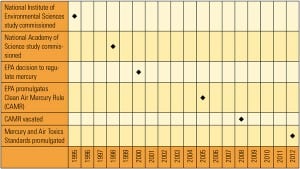
CoalMercury Regulations Up in the Air
U.S. Environmental Protection Agency efforts to regulate mercury emissions from coal- and oil-fired power plants have spanned nearly two decades. In February of this year the agency promulgated the Mercury and Air Toxics Standards, but changes to the standards continue.
-
 Coal
CoalChina Leads the Global Race to Cleaner Coal
Coal used for power generation has been the cornerstone of economic development, social progress, and a higher quality of life around the globe and is now fueling the 21st-century economic miracle rapidly unfolding in China. Meanwhile, China is leading the world in coal-fired plant efficiency and the deployment of clean coal technologies.
-
Coal
GAO: Coal Power Sector Poised for “Significant” Change
A report released on Wednesday by the Government Accountability Office (GAO) surveying the U.S. coal-fired power sector says that retirements of older units, retrofits of existing units with pollution controls, and the construction of some new coal-fueled units are expected to significantly change the coal-fueled electricity generating fleet, but that coal will likely remain a key fuel source through 2035.
-
Coal
Report: Mississippi Power’s Kemper Project Will Be Over-Budget and Behind Schedule
A new report from the Institute of Energy Economics and Financial Analysis (IEEFA) challenges claims by Mississippi Power Co. (MPC) that its 582-MW Kemper Integrated Gasification Combined Cycle (IGCC) plant under construction in Kemper County, Miss., is 70% complete, and suggests that the project is over budget and behind schedule in several respects.
-
Coal
DOE Approves Advanced Testing for MTR’s Polymeric Membrane Carbon Capture Technology
A post-combustion polymeric membrane system that promises to separate and capture 90% of the carbon dioxide emitted from a pulverized coal plant has been successfully demonstrated and last week received approval from the Department of Energy (DOE) to advance to a larger-scale field test.
-
O&M
Duke Prepares for Testing at Edwardsport IGCC Plant
Duke Energy said in mid-October that testing was under way in preparation for commercial operation next year of its 630-MW integrated gasification combined cycle (IGCC) Edwardsport power plant in Knox County, Ind.
-
Coal
Lawmakers to EPA: Consider MATS Subcategory for Waste Coal Plants
A bipartisan delegation of lawmakers from Pennsylvania on Oct. 15 urged the Environmental Protection Agency (EPA) to consider creating a separate subcategory for power plants that convert coal refuse into energy in its final Mercury and Air Toxics Standards (MATS). Though waste coal plants made an important environmental contribution by reducing coal refuse piles, the hydrochloric acid (HCl) standard in the MATS rule could push them out of business, they said.
-
Coal
EPA Petitions Full Federal Court to Rehear CSAPR Appeal
The Environmental Protection Agency (EPA) on Oct. 5 appealed a federal court decision handed down on Aug. 21 that vacated the agency’s July 2011–finalized Cross-State Air Pollution Rule (CSAPR) because, the court said, it violated federal law. The EPA is now seeking a rehearing en banc that would involve all eight judges that serve at the U.S. Court of Appeals for the D.C. Circuit.
-
O&M
EPRI: Generation Sector Research Update
This synopsis of today’s most interesting research related to power generation gives you a glimpse of what’s possibly coming to your plant in the not-so-distance future. Research under way today will surely determine how power plants are designed, operated, and maintained for many years to come.