
Coal
-
Coal
DOE Approves Advanced Testing for MTR’s Polymeric Membrane Carbon Capture Technology
A post-combustion polymeric membrane system that promises to separate and capture 90% of the carbon dioxide emitted from a pulverized coal plant has been successfully demonstrated and last week received approval from the Department of Energy (DOE) to advance to a larger-scale field test.
-
O&M
Duke Prepares for Testing at Edwardsport IGCC Plant
Duke Energy said in mid-October that testing was under way in preparation for commercial operation next year of its 630-MW integrated gasification combined cycle (IGCC) Edwardsport power plant in Knox County, Ind.
-
Coal
Lawmakers to EPA: Consider MATS Subcategory for Waste Coal Plants
A bipartisan delegation of lawmakers from Pennsylvania on Oct. 15 urged the Environmental Protection Agency (EPA) to consider creating a separate subcategory for power plants that convert coal refuse into energy in its final Mercury and Air Toxics Standards (MATS). Though waste coal plants made an important environmental contribution by reducing coal refuse piles, the hydrochloric acid (HCl) standard in the MATS rule could push them out of business, they said.
-
Coal
EPA Petitions Full Federal Court to Rehear CSAPR Appeal
The Environmental Protection Agency (EPA) on Oct. 5 appealed a federal court decision handed down on Aug. 21 that vacated the agency’s July 2011–finalized Cross-State Air Pollution Rule (CSAPR) because, the court said, it violated federal law. The EPA is now seeking a rehearing en banc that would involve all eight judges that serve at the U.S. Court of Appeals for the D.C. Circuit.
-
O&M
EPRI: Generation Sector Research Update
This synopsis of today’s most interesting research related to power generation gives you a glimpse of what’s possibly coming to your plant in the not-so-distance future. Research under way today will surely determine how power plants are designed, operated, and maintained for many years to come.
-
 O&M
O&MInsulation and Lagging Fundamentals
Insulation and lagging are key to saving energy in a typical steam plant, and plant operators would be well advised to pay close attention to energy losses in their insulation and lagging systems.
-
 O&M
O&MJinzhushan 3: The World’s First PC-Fired Low Mass Flux Vertical Tube Supercritical Boiler, Part 2
The world’s first supercritical pulverized coal–fired low mass flux vertical tube Benson boiler is Jinzhushan 3, located in Hunan Province of the People’s Republic of China. The 600-MW Babcock & Wilcox Power Generation Group Inc. once-through boiler burns Chinese anthracite using downshot pulverized coal (PC) technology. Part 2 of this three-part article discusses the boiler technology. The third and final part will review the plant’s performance test results.
-
Coal
Ohio State Develops CO2 Capture Membranes to Lower Energy Penalty Costs
In a project funded by the U.S. Department of Energy’s (DOE’s) Office of Fossil Energy (OFE), researchers at The Ohio State University have developed what they call a groundbreaking new hybrid membrane that combines the separation performance of inorganic membranes with the cost-effectiveness of polymer membranes. The breakthrough technology has vast commercial potential for use at coal-fired power plants with carbon capture, utilization, and storage (CCUS), a key element in national efforts to mitigate climate change.
-
Coal
EPA Proposes Slightly Modified MATS for New Power Plants
A reconsidered proposal issued by the U.S. Environmental Protection Agency (EPA) on Friday sets out slightly weakened emission limits for mercury, particulate matter (PM), acid gases, and certain individual metals for future coal- and oil-fired power plants.
-
Coal
Arizona Protests EPA-Imposed Regional Haze Limits at Three Coal Plants
A decision by the Environmental Protection Agency (EPA) to impose new pollution limits on three coal-fired power plants in Arizona on Friday drew criticism from state officials, who said that the costly measure, which overrides the state’s regional haze plan, is designed to protect visibility, not public health.
-
History
FuelCell Energy Claims Largest Order in Industry’s History
FuelCell Energy Inc. on Monday announced an order from its South Korean partner, POSCO Energy, for 121.8 MW of fuel cell kits and services to be manufactured at the FuelCell Energy production facility in Torrington, Conn. The company said this represents the largest order for both its company and the fuel cell industry.
-
Coal
Coal Burn Rebounds in the Third Quarter, but Economics Still Favor Natural Gas
Natural gas–fired generation gave up some ground to coal during the third quarter, and coal producers are optimistic that higher natural gas prices will benefit coal, especially coal sourced from the Powder River Basin in Wyoming. Even so, at least one Midwest utility expects natural gas to power what could be as much as 1,500 MW of new generating capacity it may add over the next several years.
-
 Coal
CoalPotential Impacts of Closed-Cycle Cooling Retrofits at U.S. Power Plants
The Clean Water Act Section 316(b) rule changes regarding cooling water intake structures that are expected next year could affect up to 428 power plants, representing 1,156 individual units, according to the Electric Power Research Institute. Depending on plant size and the complexity of the retrofit project, retrofit capital costs could range from very low to over $500 million for large nuclear plants. The power industry total cost is projected to be over $100 billion.
-
Coal
Santee Cooper Plans Coal, Oil Unit Retirements on Regulatory Cost Concerns
Four coal and two oil generating units at two of the oldest power plants owned by Santee Cooper are to be retired. South Carolina’s state-owned utility said last week that the decision was reached by its board of directors after considering generation resource needs and the cost of complying with new environmental regulations.
-
Coal
EPA Petitions Full Federal Court to Rehear CSAPR Appeal
The Environmental Protection Agency (EPA) on Friday appealed a federal court decision handed down on Aug. 21 that vacated the agency’s July 2011–finalized Cross-State Air Pollution Rule (CSAPR) because, the court said, it violated federal law. The EPA is now seeking a rehearing en banc that would involve all eight judges that serve at the U.S. Court of Appeals for the D.C. Circuit.
-
Coal
Brattle Report Projects Doubled Coal Retirement Estimates Ascribed to Low Gas Prices
An update to a 2010 analysis on the market and regulatory outlook facing coal-fired power plants in the U.S. from economists at The Brattle Group forsees that 59 GW to 77 GW of coal plant capacity are likely to retire over the next five years—about 25 GW more than previously estimated—due primarily to lower expected natural gas prices.
-
Coal
State Proposal to Resolve EPA Dispute Calls for Retirement of San Juan Coal Units
A settlement proposed by New Mexico’s Environment Department on Wednesday calls for retiring two units at the 1,800-MW San Juan Generating Station located 15 miles west of Farmington, N.M., by December 2017 and installing selective noncatalytic reduction, a less-costly air emissions control technology than one proposed by the U.S. Environmental Protection Agency (EPA), on the other two units, 3 and 4. Plant owner PNM Resources said in statement that it was hopeful the state’s proposal would resolve a long-standing dispute with the EPA to address regional haze.
-
Coal
GenOn, Progress Shutter 972-MW of Coal-Fired Capacity on Oct. 1, Rocky Mountain Considers Closure
On Oct. 1, GenOn shuttered its 482-MW coal-fired Potomac River Generating Station as Progress Energy Carolinas retired three coal-fired units—two at the 316-MW Cape Fear plant near Moncure, N.C., and the 177-MW H.B. Robinson Unit 1 near Hartsville, S.C. Utah’s Rocky Mountain Power, a unit of PacifiCorp, meanwhile reportedly warned employees and public officials that it may close its 190-MW coal-fired Carbon Power Plant in northeastern Utah over the next few years because it has no room to install air emissions controls to make it compliant with federal rules by 2015.
-
 Coal
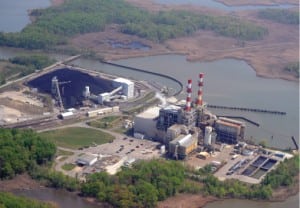
CoalTOP PLANT: C.P. Crane Generating Station, Middle River, Maryland
A desire to do things right led Constellation Energy to invest $70 million to convert its 400-MW C.P. Crane Generating Station to burn Powder River Basin coal and develop the culture critical to making that conversion a success. In addition to being named a 2012 POWER Top Plant, the PRB Coal Users’ Group recognized the plant for its efforts with its Plant of the Year Award
-
 Coal
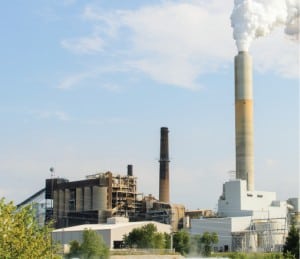
CoalTOP PLANT: Merrimack Station’s Clean Air Project, Bow, New Hampshire
To comply with the New Hampshire law governing mercury emissions, Merrimack Station management recently installed a single scrubber system on the facility’s two coal-fired boilers. The plant’s Clean Air Project was completed on Mar. 30, 2012, ahead of schedule and under budget. Now the 440-MW Merrimack Station has reduced its mercury and sulfur dioxide emissions by more than 95% and is one of the cleanest coal-fired power plants in the nation
-
 Coal
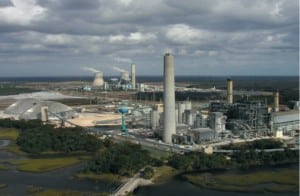
CoalTOP PLANT: Northside Generating Station, Jacksonville, Florida
Since the Northside Generating Station’s two repowered units were placed into service in 2002, a series of modifications and repairs have been undertaken to make its two circulating fluidized bed boiler plants reliable. The two chief problems were ash agglomeration on heat transfer surfaces and poor Intrex heat exchanger performance. JEA reports these problems have been permanently resolved, and data shows the two units have joined the top tier of reliable fossil plants.
-
 Coal
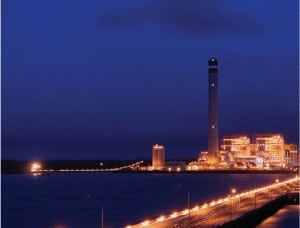
CoalTOP PLANT: Tanjung Jati B Electric Generating Station, Central Java Province, Republic of Indonesia
Units 3 and 4 expand the Tanjung Jati Electric Generating Station’s capacity by adding 1,320 MW of reliable power that helps to boost Indonesia’s growing economy. Now the 2,640-MW coal-fired facility provides approximately 12% of the electricity available on the Java-Bali grid. The new units feature a flue gas desulfurization system and electrostatic precipitators that reduce air emissions and protect the environment.
-
 Coal
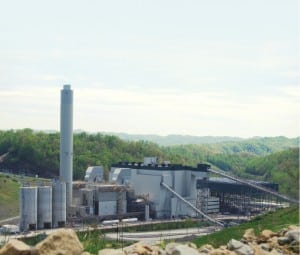
CoalTOP PLANT: Virginia City Hybrid Energy Center, Virginia City, Virginia
Dominion’s 585-MW Virginia City Hybrid Energy Center, located in southwestern Virginia, relies on two circulating fluidized bed boilers that burn coal and local waste coal mixed with up to 20% biomass. The project also features one of the industry’s largest air-cooled condenser systems to minimize the plant’s water usage. The $1.8 billion project entered commercial service July 10, on budget and on schedule
-
 Coal
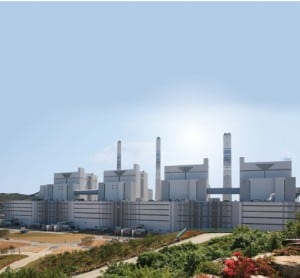
CoalTOP PLANT: Yeongheung Power Station Unit 3, Yeongheung Island, South Korea
The insatiable power demands of a huge modern metropolitan area like Seoul call for both big thinking and flexibility. The successful launch of this large, state-of-the-art supercritical coal plant required adapting to unforeseen changes in fuel supply while meeting highly restrictive environmental controls. The resulting high-availability facility is a POWER Top Plant
-
 O&M
O&MReducing Ash Agglomeration in JEA’s CFB Boilers
A chronic operational problem with circulating fluidized bed boilers is ash buildup or agglomeration that turns into slag, which forces frequent shutdowns for cleaning. Solving the problem is tricky, because combustion efficiency relies on good fuel quality, but the best fuel for efficiency may not be the best fuel for minimizing furnace and tube fouling and ash plugging.
-
 Coal
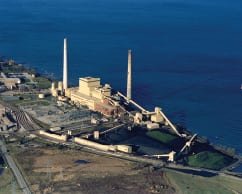
CoalAre Economics Trumping Regulation?
The fate of coal-fired generation remains fluid as owners weigh environmental rules, the effect of low natural gas prices, and the shifting cost of investing in emissions control technology. An analysis of generating unit data suggests that smaller, older, less-efficient, and less-frequently dispatched assets are most vulnerable to retirements. Recently accelerated retirement dates for some units indicate that economic factors are a more important determining factor than pending environmental mandates
-
 Coal
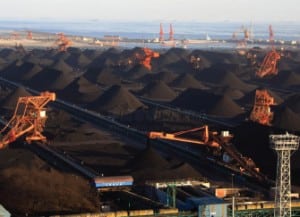
CoalChina’s Power Generators Face Many Business Barriers
China’s five largest power generators own half of that country’s power generating assets. Faulty policies and the rapidly changing global economy have made it difficult for these companies to fulfill the high expectations arising from enactment of the Power System Reform Scheme of 2002
-
 Coal
CoalEMO Technology Promises Improved Mercury Removal
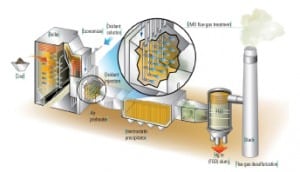
The latest Environmental Protection Agency mercury control limits in the Mercury and Air Toxics Standards present a significant technical challenge to the power industry. Shaw offers a cost-effective process that promotes mercury oxidation and removal in fossil fuel combustion applications that can potentially achieve consistent mercury oxidation above 95%. Shaw’s E&I Group EMO technology provides the industry with an alternative to halogen salt addition and activated carbon injection that can also be used to augment the performance of existing Hg control applications and strategies
-
 Coal
CoalEPA Stalls on Coal Combustion Residuals
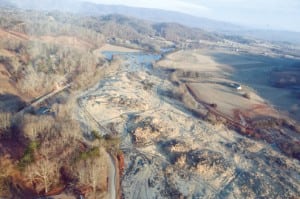
In 2010, the U.S. Environmental Protection Agency (EPA) proposed federal rules regulating coal combustion residuals (CCRs) for the first time to address the risks posed by coal-fired power plants’ disposal of such waste byproducts. The need for new regulations remains a topic of debate, heightened by the EPA’s reticence to release the rule. The EPA says that it will release the new rule by the end of this year–over two years late.
-
Coal
Replacing Coal: U.S. Combined Cycle Development Trends, Challenges
There’s plenty of uncertainty in gas-fired power these days, with low prices and impending coal plant retirements. Even so, many generators are forging ahead with some ambitious projects and plans for the future.