
Business
-
 Coal
CoalGlobal Monitor (January 2008)
Dominion applies for new Virginia reactor / ABB commissions world’s largest SVC / Google Earth adds air quality data / Alstom supplies integrated solar/CC project in Morocco / DOE updates coal plant database / Dam the Red Sea? / Complying with CWA Section 316
-
 Coal
CoalRegulatory risks paralyzing power industry while demand grows
In our second annual report on the state and future of the U.S. power generation industry, we combine the considerable experience of POWER’s editorial staff with the market savvy of Industrial Info Resources Inc. (see next story) to preview the industry’s direction in 2008. We anticipate that the specter of carbon control legislation will hobble coal and make renewables the hot ticket while nukes continue to inch forward in a generation market that is basically treading water.
-
Business
Workforce analysis: Replacing management by fad with management certainty
The biggest problem facing industrial managers is ensuring that they’ll continue to have a skilled workforce. With so many people nearing retirement, organizational skills are at risk, which poses a direct threat to operations. Many companies are making big investments to capture the unique knowledge and experience of graybeards before they move on. But that is just one aspect of a far more complex issue.
-
 Gas
GasGlobal Monitor (December 2007)
TVA may revive Bellefonte / GE’s globetrotting Jenbaches / Largest PV plant taking shape / When will PV be competitive? / Siemens goes to the wall with solar / Breakthrough in metamaterials / POWER digest
-
Commentary
The mother of all energy crises
POWER readers today face severe problems in the electricity supply business. But a much bigger problem will soon burst on the scene: the peaking of world oil production. Experts have forecast peaking since shortly after the first U.S. well began production in 1859, and many subsequent forecasts of peaking have proven incorrect. Oil reserves dip […]
-
 Legal & Regulatory
Rigid COD deadlines do more harm than good
A utility executive responsible for procuring renewable power recently lamented that, at the time of contract execution, renewable “projects” are typically at a very preliminary stage of development, offering scant information about project specifics. Regulatory or other objectives often cause the utility to require that the power purchase agreement be executed before critical permits have […]
-
 Wind
WindDeveloping wind projects in California—or anywhere
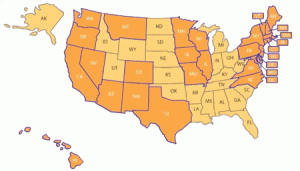
Acquiring capacity from renewable resources is now mandatory for many electric utilities, and nowhere is green generation being pursued with more vigor than in California. Regulators there want power from renewables to account for at least 20% of utilities’ annual sales by 2010, and Governor Schwarzenegger is proposing increasing the minimum to 33% by 2020. Wind power appears to have the lowest technical risks of the renewables options, but don’t ignore the rising development risks. Here’s a primer on developing wind projects in the Golden State—and elsewhere.
-
 Business
This month in POWER…
During this 125th anniversary year, Retrospective has surveyed the evolution of the power industry as chronicled in POWER. The magazine’s original focus in the 1880s was to fill the fledgling industry’s technical information vacuum and share common operating experiences. Our goals today are remarkably similar, as technology continues to change and operators continue to learn […]
-
 Coal
CoalGlobal Monitor (November 2007)
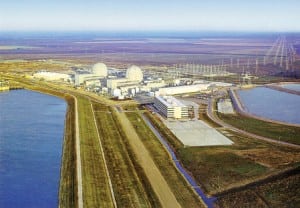
NRG applies for first COL / TVA green-lights Watts Bar 2 / Southern Co. and Florida muni launch IGCC project / UK approves wave energy "hub" / New Jersey-New York HV system launched / Membrane strips CO2 from methane faster / POWER digest
-
 Legal & Regulatory
Can FERC deliver transmission?
This May, the Arizona Corporation Commission (ACC) rejected a proposal by Southern California Edison (SCE) to build Devers-Palo Verde No. 2 (DPV2)—a 230-mile-long, high-voltage transmission line connecting California and Arizona. The line, approved by the California Public Utilities Commission (CPUC) four months earlier, would enable SCE to import additional low-cost electricity from Arizona. The ACC’s rejection of DPV2 highlights a significant challenge for state and regional resource planners—weighing state interests against the regional benefits of interstate electricity commerce.
-
Business
Milestones on the road to commercial operation
The electric power industry is capital-intensive, and it takes several years to build and commission a baseload plant for commercial operation. Owners seek contractors who are willing—given proper incentives—to build a plant for a lump-sum price with a guaranteed schedule and performance. Matching an owner’s wants with contractors’ needs is an exercise in allocating risk. Avoid the contract traps that can stall a project and cost millions to resolve.
-
 Business
This month in POWER . . .
POWER began its life in October 1882 as a tabloid-size publication originally entitled Steam. About the same time, two young Boston advertising salesmen decided to launch a new magazine about textile mill steam plants, called POWER. They bought Steam prior to publishing POWER’s first issue, so early issues of this magazine carried the flag “POWER, […]
-
 Gas
GasThis month in POWER (OCTOBER)
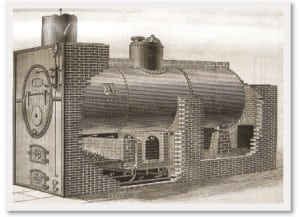
October 1886 In the late 19th century, efficient combustion of solid fuels was achieved more by trial and error than by a fundamental understanding of stoichiometry and staged combustion. Boiler manufacturers took many different approaches to the challenge. Some made sense; others didn’t. In which category does the design described below fall? In 1886 the […]
-
Instrumentation & Controls
Integrated software platform eludes many owner/operators
Ongoing research into experience with plant- and fleet-level software reveals that these applications work side by side but do not necessarily function as an integrated “knowledge management” system. On the supplier side, the industry continues to be fragmented, with individual programs governing a narrow part of the overall plant.
-
 Gas
GasGlobal Monitor (August 2007)
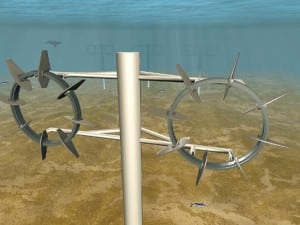
PG&E mounts tidal power project / GE F-class turbine breaks record / Iowa welcomes ethanol-fed hog / NYPA upgrades pumped-storage plant / Bush blesses Browns Ferry 1 restart / Shearon Harris looks to live on / Nevada bets on solar thermal / Climate models questioned / POWER digest
-
 Business
Application determines DG system configuration
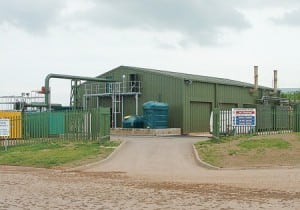
The intended use is the primary consideration (even fuel is secondary) when choosing an on-site energy system. Whether the need is for power alone or for heat as well, distributed generation plants have delivered lower energy costs and improved reliability to industrial and commercial customers worldwide. Following are six case studies of reciprocating engine systems that highlight their versatility.
-
 Coal
CoalWestar’s Lawrence Energy Center wins for not blinking on safety
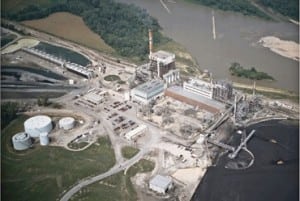
It took Westar Energy eight years to upgrade the Lawrence Energy Center to burn Powder River Basin coal. Its zero lost-time accident record during the million-man-hour project is a testament to Westar’s commitment to workplace safety. Here’s your backstage pass to meet the PRB Coal Users’ Group 2006 Plant of the Year.
-
 O&M
O&MSafety, compliance, and then production maximizes bottom line
When injuries or accidents occur, the employer ultimately loses on two counts: increased medical costs and employee absences. A policy of "safety, compliance, and then production" is more than just good business; it’s also good stewardship of the health and safety of employees who deserve no less.
-
 Smart Grid
Smart grid still just a "vision thing"
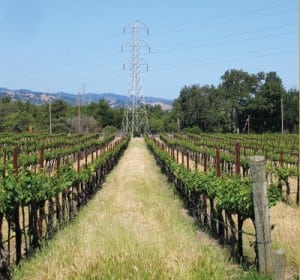
T&D systems with embedded intelligence have a great future, and they always will. Too many powerful forces—politics, money, and power—remain to be reconciled before consumers and utilities can work together, seamlessly, to reduce electricity demand and eliminate delivery system bottlenecks.
-
 Coal
CoalGlobal Monitor (June 2007)
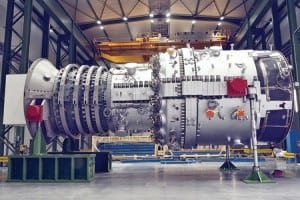
Siemens, E.ON to test world’s largest GTG / Midwest to add 76-MW peaker in Kansas / Tapping the sun near Phoenix / Georgia Tech developing 3-D PV nanocells / Wind farms with hydrogen backup? / BNSF , union come to terms / IPL to buy 200-MW wind project / India to improve environmental monitoring / POWER digest
-
 Business
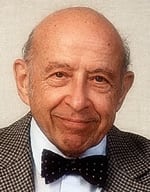
Chauncey Starr: A personal memoir
Chauncey Starr, founder of EPRI—the Electric Power Research Institute—and its first CEO, passed away on April 17, 2007. The previous day, a celebration of his recent 95th birthday had been held at EPRI, where Chauncey held forth for more than an hour on his life experiences and lessons learned. He was in fine fettle. Chauncey […]
-
 Business
How to make VARs—and a buck
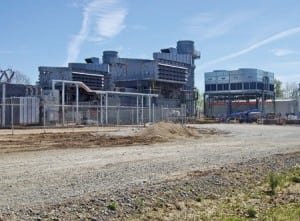
Last month, POWER weighed the pros and cons of the various grid interconnection options available to distributed generation plants. This month we explore the technology choices for generating reactive power, or volt-amperes reactive (VARs), which utilities are willing to pay for as an ancillary service.
-
 Business
A rearview mirror and bright headlights
This month’s issue of POWER commemorates 125 years of continuous publishing for the power generation business. The anniversary gives us all a chance to assess where we’ve been and where we’re going as a publication and as an industry. As power industry professionals, we all know the value of a rearview mirror—of remembering lessons […]
-
 O&M
O&MFocus on O&M (May 2007)
Cyber security and the grid; Harnessing the Yangtze;
Hydraulic system overhaul;
O&M problems not caused by cycling;
-
 Legal & Regulatory
States should cede control of renewable power to regional markets
State policy makers are characteristically reluctant to recognize that they have advanced a policy as far as they can, and that they must cede some control to fully realize its ultimate benefits. Ceding control often runs counter to policy makers’ political instinct to serve their constituents. Doing so is even harder when a new […]
-
 Business
The history of POWER is the history of power
This month we officially commemorate the 125th anniversary of the magazine that has been essential reading for owners and operators of power generating plants. As you read this brief history, you’ll see that—although we’re looking back at an illustrious past—the secret of POWER’s success has been its commitment to the future. As we look forward to the next milestone anniversary, we anticipate covering the latest developments in a new generation of power technologies. As always, our mission is to provide the best information and advice in the service of safely and efficiently powering the global energy industry.
-
 Business
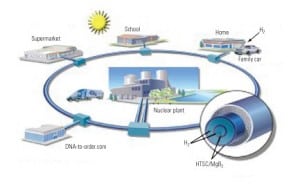
Could SuperCables deliver both hydrogen and electricity via a SuperGrid?
Transporting large quantities of electric power over long distances via superconducting DC cables was first considered more than 40 years ago by two IBM scientists. With the recent advent of long-length commercial high-temperature superconductors (HTSCs) and the desire to move the U.S. to a hydrogen-based economy, SuperCables could revolutionize the marketing of electricity. Using HTSCs cooled by hydrogen, a SuperCable could simultaneously deliver electricity and hydrogen to end users for domestic and industrial consumption and to power fuel cell cars.
-
 Business
This month in POWER…
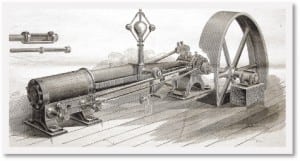
May 1885 POWER reported on the latest Twist Automatic Engine (Figure 1) in its cover story for the May 1885 issue. The editor explained that "each end of the cylinder has one main valve, for admission and exhaust, and one cut-off valve; all being plugs with partial rotary movement; and the cut-off valves being within […]
-
 Coal
CoalGlobal Monitor (April 2007)
Npower plans big coal plant in UK / Berkeley boffins make thermoelectric discovery / Rinspeed’s roadster: Fast, fun, and green / Dead chickens, the weirdest renewable / Siemens celebrating three big deals / Nevada Power picks P&W, CH2M Hill / Scuderi’s air-hybrid engine / Ovation for huge new Chinese coal plant / PG&E dips toe into wave power / POWER digest
-
 Coal
CoalAt CERA Week 2007, most life was carbon-based
For the past 25 years, Cambridge Energy Research Associates has hosted an annual conference that has drawn the captains of the worldwide oil and gas and electricity industries. The 120 distinguished speakers at this year’s summit attracted more than 2,000 delegates from 55 countries, making it the largest and most diverse ever. Naturally, one of POWER’s contributing editors was there, too; here’s his take on what transpired.