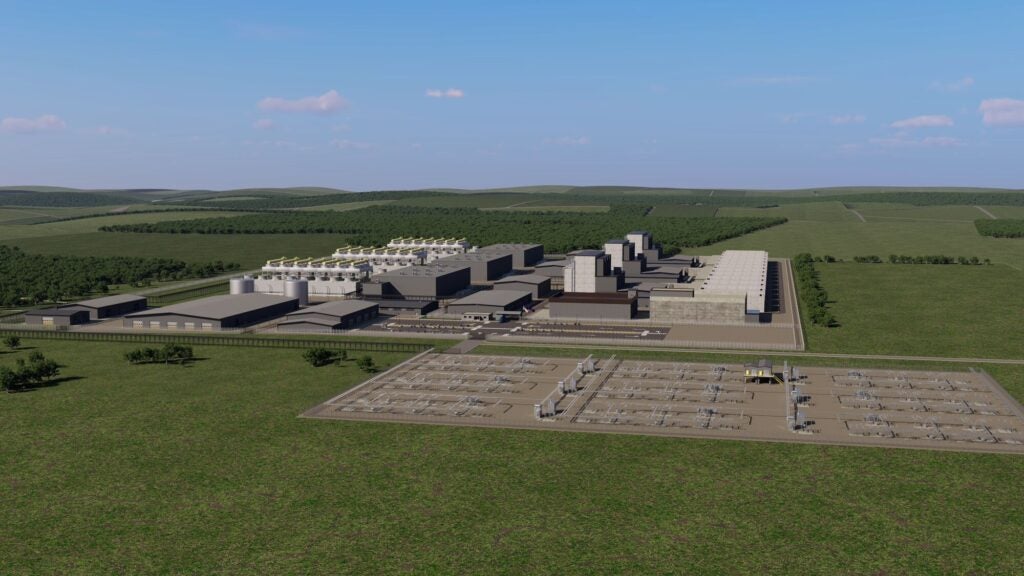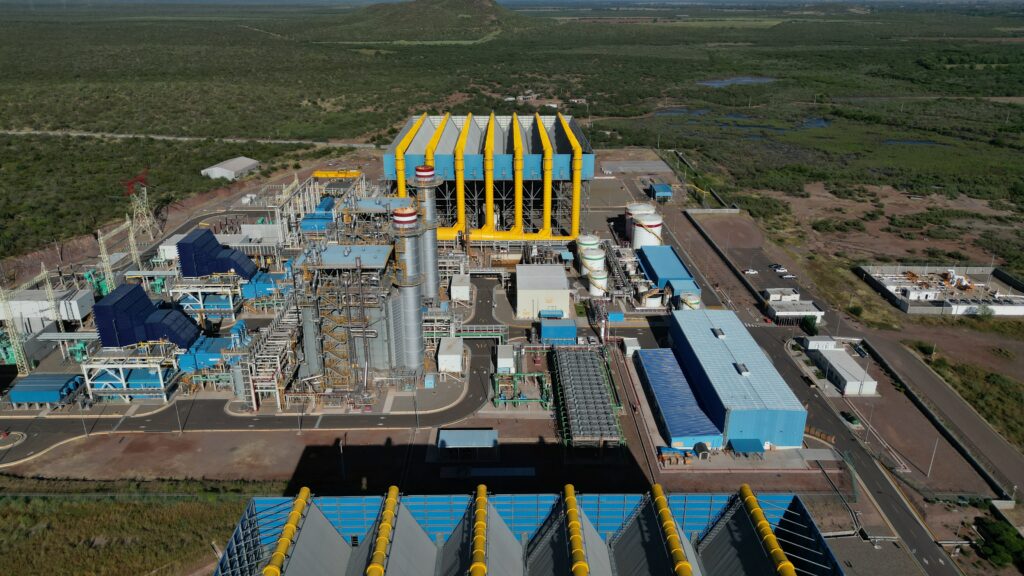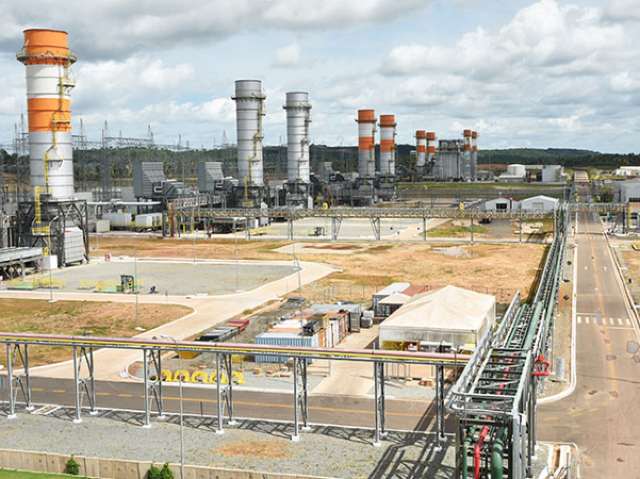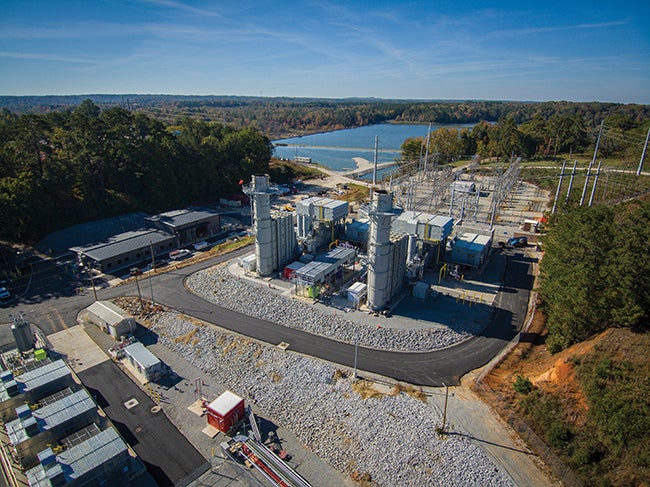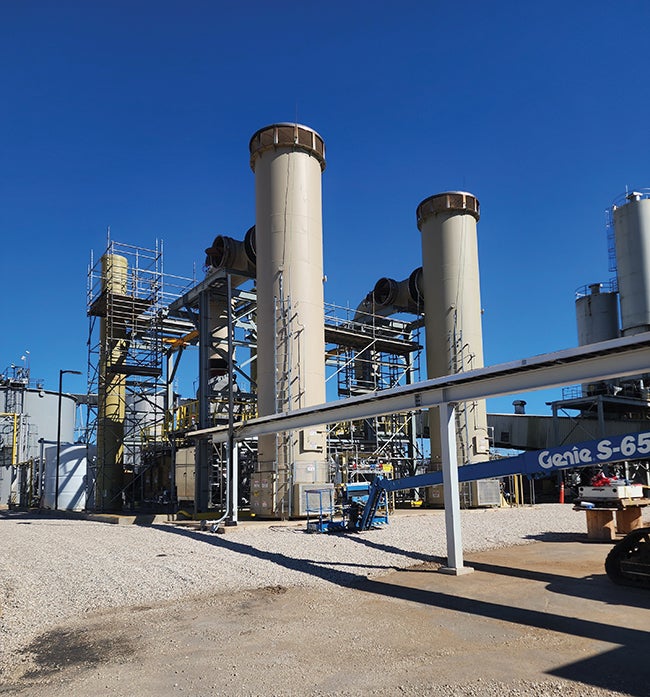
A Brazilian natural gas company has launched a new model for power generation. Eneva, the largest natural gas operator in Brazil, said it started commercial operation of the first asset in its Azulão Complex, part of the company’s “Reservoir-to-Wire” (R2W) model. Officials on August 19 said the Azulão installation, which will feature two gas-fired power plants, is designed to improve Brazil’s energy infrastructure by generating electricity at the source of natural gas production.
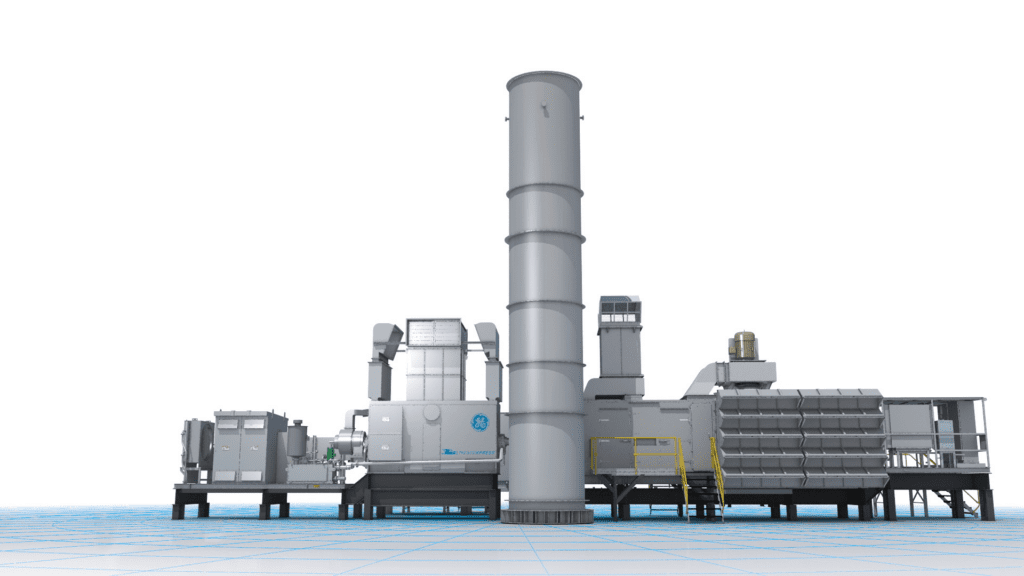
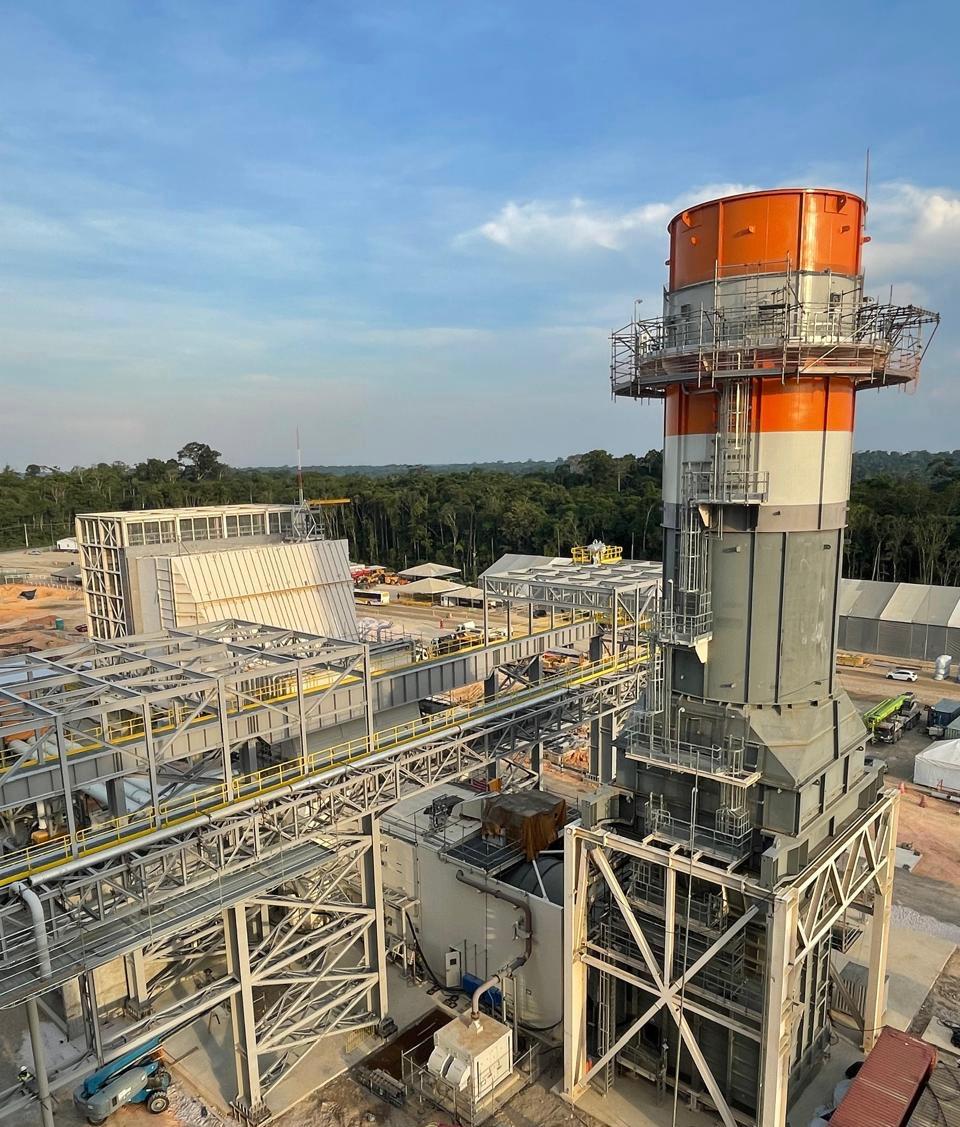
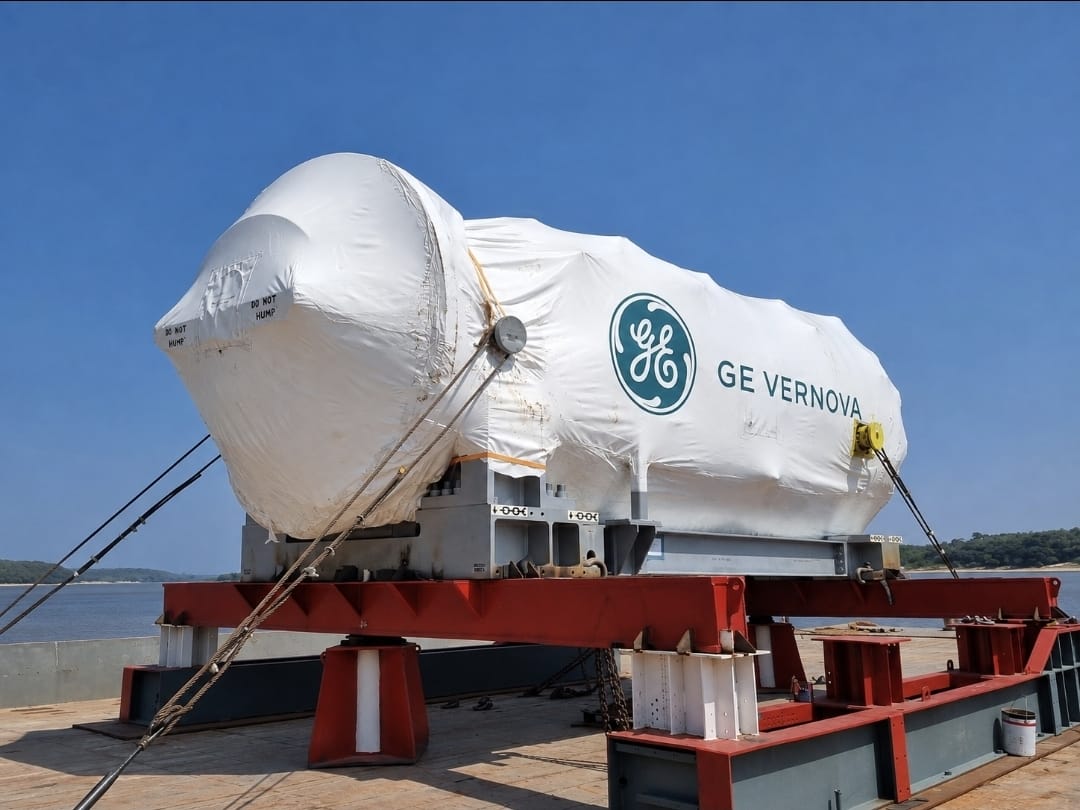
The Azulão I thermal power plant that is now online is contracted to provide as much as 295 MW of firm and dispatchable capacity to Brazil’s National Interconnected System (SIN) for at least 15 years. Officials said the power plant, along with the Azulão II plant that also will be part of the Azulão Complex, will help ensure stability of the Brazilian power grid. The Azulão plants feature H-Class 7HA.02 gas turbines from GE Vernova, paired with a H65 generator. The complex is located in Silves in the Brazilian state of Amazonas. The Azulão Complex once both gas-fired power plants are online—scheduled for July 2027—are expected to deliver combined generation of as much as 950 MW.
“The start of commercial operations at Azulão I represents the realization of one of Eneva’s most significant projects,” said Rafael Coitinho, Engineering, Construction & Assembling Director at Eneva. “This development demonstrates our ability to structure and execute large-scale strategic investments, even in highly complex logistical and operational environments. The Azulão Complex reinforces the consistency of our integrated business model, the strength of our company, and our commitment to contributing to Brazil’s energy security and economic development.”
The Azulão power plants are expected to deliver rapid load-following capabilities, which support grid balancing and the growth of renewable energy resources, including wind and solar, across Brazil. The complex is integrated into the Tucuruí-Macapá-Manaus transmission system, a high-voltage corridor spanning about 1,850 kilometers (1,150 miles). Eneva and GE Vernova implemented a custom-engineered Sub Synchronous Resonance (SSR) blocking filter paired with a torsional stress relay solution to help ensure the plant could operate reliably and in harmony with the surrounding transmission system.
Renewable energy resources are expected to account for more than 85% of Brazil’s electricity generation by 2035, according to Brazil’s Ten-Year Energy Expansion Plan (PDE 2035), which was developed by the Energy Research Company (Empresa de Pesquisa Energética, or EPE), a federal agency in Brazil linked to the Ministry of Mines and Energy. Officials have said that with the expected growth of renewables, gas-fired generation is important to help balance and stabilize the country’s power grid with firm capacity.
“Azulão is the ultimate expression of our comprehensive portfolio strength,” said Marco Vera, VP of New Units for GE Vernova’s Gas Power business in Latin America. “By integrating our advanced gas-powered technology with specialized, cutting-edge grid-stabilization solutions, and long-term maintenance services, we have proven that we can deploy high-efficiency power in even the most complex transmission environments. Our ability to tailor these end-to-end solutions reflects our deep commitment to addressing our customer’s most demanding energy needs and underscores our unwavering dedication to supporting Brazil’s economic development and long-term energy security.”
—Darrell Proctor is a senior editor for POWER.