Articles By

-
General
The Nominations Are Open: What is the Worst Government Energy Website?
By Kennedy Maize Washington, D.C., July 3, 2013 – As a daily reporter for and an editor of energy publications, online and offline, I deal with a lot of industry and government websites. The typical bell curve applies in my experience. Some are really quite good. Some stink. Most are somewhere in the middle. But […]
-
Reversing the Drop in Combined Heat and Power Use
The benefits of combined heat and power haven’t been enough help it to keep pace with other generation resources. That’s why a new regulatory approach is needed.
-
Nuclear
Is Cheap Gas Killing Nuclear Power?
Cheap natural gas is being blamed for many of the nuclear industry’s current predicaments. But is gas truly the culprit?
-
Business
Picking the Right Technology in an RPS Market
The complexities of operating under a broad renewable portfolio standard require careful analysis of the options when planning a new power plant. Here’s how one generator in California navigated the sea of conflicting priorities when it was time to upgrade.
-
O&M
Cost Benefits of a Cycling Analysis on a Combined Cycle Unit
Cycling is a fact of life for most gas plants. But do you really understand the true costs of cycling operation? Not having a full picture risks leaving substantial money on the table.
-
News
Everett LNG Terminal at the Crossroads
Don’t talk to New England about exporting natural gas. Without the Everett Marine Terminal, the region’s gas supply crunch would be a whole lot worse.
-
Business
NERC Says Gas Availability Should Be Part of Reliability Assessments
Sounding the call for new perspective, the North American Electric Reliability Corp. says it’s past time to formally consider gas availability and gas supply constraints when assessing the reliability of the bulk power system.
-
Business
Natural Gas and Renewables Are Allies, Not Adversaries, Says Report
Though often cast as rivals for the same slice of the generation pie, gas and renewables, according to a new study of the ERCOT market, are natural allies for the long term.
-
 Coal
CoalGas-Electric Integration “Swamps” All Other Issues
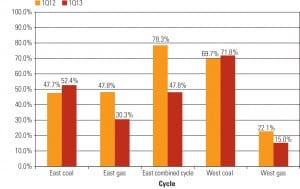
Panelists at the ELECTRIC POWER 2013 Keynote and Roundtable Discussion in Chicago in May were consumed by the need to ensure future reliability by more closely integrating the gas and electricity markets. Acknowledged less directly were distortions created by renewable energy subsidies and mandates, onerous regulations affecting coal, and “irreversible” demand destruction caused by the success of energy efficiency and demand management programs. The elephant in the room was the continued demise of electricity markets.
-
News
Four Strange-But-True Stories
Last month’s column, “Opinions à la Carte,” prompted an unusually high number of emails from readers. Unexpectedly, the responses to the different format were universally favorable.
-
 Gas
GasIs Gas Getting Too Hot to Handle?
With ever-increasing demands for fast ramping and flexibility, natural gas–fired plants are grabbing a bigger share of the generation pie. But uncertainty about future prices and concerns about overreliance on a single fuel are dampening enthusiasm during what may be the most exciting time for gas ever. Natural gas is hot—but will generators and the market get burned?
-
 Coal
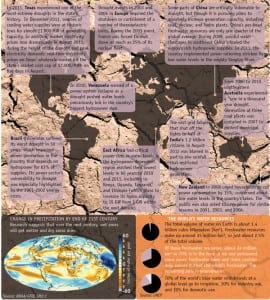
CoalTHE BIG PICTURE: Parched
Water scarcity as it relates to energy use is becoming a major concern.
-
 Gas
GasWhat Does the Market Expect from Gas Plants?
With the country awash in natural gas and new construction dominated by gas-fired plants, one would think that integrating these plants into the grid would be simple. Like politics, integration problems appear to be local.
-
 Solar
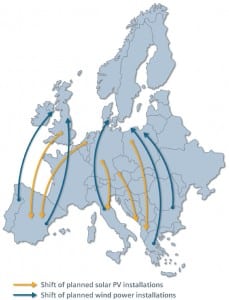
SolarPower Sector Laments Europe’s Uncertain Future Energy Policy
Energy policy in the European Union (EU) is in upheaval as concerns mount over the impact of energy costs on the competitiveness of the power industry.
-
 Nuclear
The Beguiling Promise of the HTGR
It’s easy to see why technologists fall in love with high-temperature gas-cooled reactors (HTGRs). These nuclear machines are remarkable inventions, at least on paper. But few have actually seen the real world for any length of time, and their real-world experience has been mixed.
-
 Nuclear
Turkey Prepares to Host First ATMEA 1 Nuclear Reactors
An agreement signed by Turkish Prime Minister Recep Tayyip Erdogan and Japan’s Prime Minister Shinzo Abe this May could pave the way for the world’s first ATMEA 1 reactors to be built in Turkey in the 2020s.
-
Wind
Wind Resources Face Market and Policy Headwinds
Natural gas prices and low wholesale electricity prices are creating headwinds for large-scale renewable projects such as wind.
-
 Water
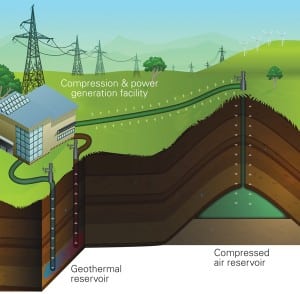
WaterEnergy Storage Developments and Demand Ramp Up
Despite technical and financial hurdles, annual global demand for grid-scale energy storage is expected to soar to 185.4 GWh by 2017, which means a possible 231% average year-on-year demand growth between 2012 and 2015, according to Lux Research.
-
 O&M
O&MFighting Transformer Fires
Transformer fires are fearsome events, perhaps the most dangerous common threats to human life—both onsite and beyond the boundaries of a power plant—that can hit an electric utility.
-
 Gas
GasE.ON Avoids Shuttering Ultramodern German Combined Cycle Units Despite Profit Concerns
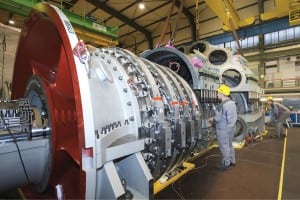
German energy giant E.ON in late April narrowly averted idling its Irsching 4 and 5 units in Bavaria, Germany—its most technologically advanced gas-fired generating units that began operations just three years ago at a cost of €400 million.
-
Nuclear
Too Dumb to Meter, Epilogue
As the book title Too Dumb to Meter: Follies, Fiascoes, Dead Ends, and Duds on the U.S. Road to Atomic Energy implies, nuclear power has traveled a rough road. For the conclusion of POWER’s exclusive serialization of the book, we offer the “Epilogue: Some Dumb Ideas Never Die.” The first 12 installments are available in the POWER online archives.
-
Business
POWER Digest (July 2013)
Saudi Arabia and Egypt Sign $1.6 Billion Agreement to Link Electricity Grids. Under an agreement signed on June 1, Saudi Arabia’s majority state-owned utility, Saudi Electricity Co., and Egypt’s state power company, Egyptian Electric Holding Co., will share the cost of building a 3,000-MW undersea transmission cable to link their electricity grids. The $1.6 billion […]
-
 O&M
O&MIndustrial Wireless Sensors: A User’s Perspective
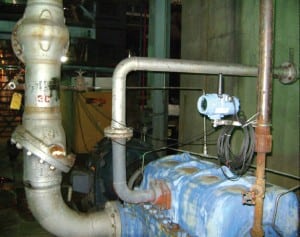
There are many reasons to anticipate that the use of wireless instrumentation in industrial settings will increase dramatically in the next few years.