Articles By

-
 Nuclear
Turkey Prepares to Host First ATMEA 1 Nuclear Reactors
An agreement signed by Turkish Prime Minister Recep Tayyip Erdogan and Japan’s Prime Minister Shinzo Abe this May could pave the way for the world’s first ATMEA 1 reactors to be built in Turkey in the 2020s.
-
Wind
Wind Resources Face Market and Policy Headwinds
Natural gas prices and low wholesale electricity prices are creating headwinds for large-scale renewable projects such as wind.
-
 Water
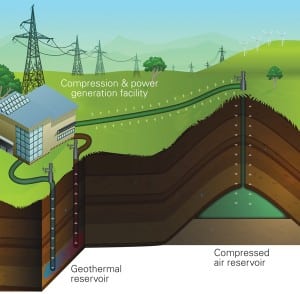
WaterEnergy Storage Developments and Demand Ramp Up
Despite technical and financial hurdles, annual global demand for grid-scale energy storage is expected to soar to 185.4 GWh by 2017, which means a possible 231% average year-on-year demand growth between 2012 and 2015, according to Lux Research.
-
 O&M
O&MFighting Transformer Fires
Transformer fires are fearsome events, perhaps the most dangerous common threats to human life—both onsite and beyond the boundaries of a power plant—that can hit an electric utility.
-
 Gas
GasE.ON Avoids Shuttering Ultramodern German Combined Cycle Units Despite Profit Concerns
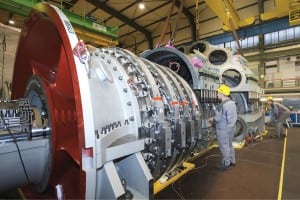
German energy giant E.ON in late April narrowly averted idling its Irsching 4 and 5 units in Bavaria, Germany—its most technologically advanced gas-fired generating units that began operations just three years ago at a cost of €400 million.
-
Nuclear
Too Dumb to Meter, Epilogue
As the book title Too Dumb to Meter: Follies, Fiascoes, Dead Ends, and Duds on the U.S. Road to Atomic Energy implies, nuclear power has traveled a rough road. For the conclusion of POWER’s exclusive serialization of the book, we offer the “Epilogue: Some Dumb Ideas Never Die.” The first 12 installments are available in the POWER online archives.
-
Business
POWER Digest (July 2013)
Saudi Arabia and Egypt Sign $1.6 Billion Agreement to Link Electricity Grids. Under an agreement signed on June 1, Saudi Arabia’s majority state-owned utility, Saudi Electricity Co., and Egypt’s state power company, Egyptian Electric Holding Co., will share the cost of building a 3,000-MW undersea transmission cable to link their electricity grids. The $1.6 billion […]
-
 O&M
O&MIndustrial Wireless Sensors: A User’s Perspective
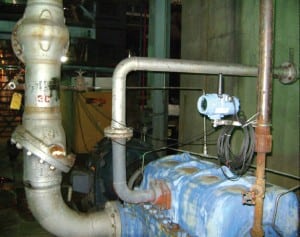
There are many reasons to anticipate that the use of wireless instrumentation in industrial settings will increase dramatically in the next few years.
-
 News
NewsNew Products (July 2013)
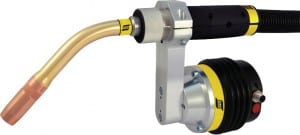
Robotic Torches for Single Arc, Tandem Applications ESAB Welding & Cutting Products launched the new Aristo RT line of robotic torches, designed for single arc or tandem applications. The Aristo RT range of robotic torches work with three different product setups: Standard (external cable), Hollow Wrist Helix (rotation +/–220o), and Hollow Wrist Infiniturn (endless rotation). […]
-
Legal & Regulatory
Exporting Natural Gas
The transformative increases in current and expected future domestic natural gas production have spawned yet another energy debate: Should the U.S. should export natural gas?
-
Commentary
Bridging the Gap Between Company and Community
In communities all across North America, environmental justice (EJ), which calls for the fair treatment of all people, including those of color and the economically deprived, remains a serious concern.
-
 Coal
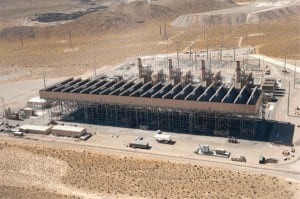
CoalWater Issues Challenge Power Generators
Drought and competing uses for water continue to challenge power plant operators worldwide. In response, innovative approaches for reducing water use are being explored from South Africa to China.
-
 Coal
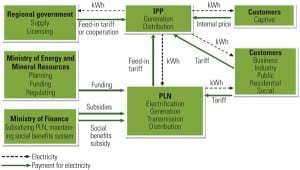
CoalIndonesia: Energy Rich and Electricity Poor
Even though it enjoys sizeable coal and natural gas reserves, Indonesia struggles to provide electricity to its growing economy. Geography is its most obvious challenge. Others include evolving international markets and an energy sector that remains highly politicized.
-
 O&M
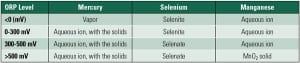
O&MORP as a Predictor of WFGD Chemistry and Wastewater Treatment
Recent studies have shown that system oxidation-reduction potential (ORP) is not only an important factor for predicting wet flue gas desulfurization (WFGD) absorber chemistry but also may be a predictor of process equipment corrosion and wastewater treatment requirements.
-
 O&M
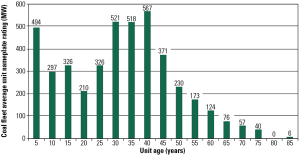
O&MThe Case for Utility Boiler Fuel Delivery System Upgrades
A vital part of any coal-fired unit is its fuel delivery system (FDS). A newly formed subcommittee of the ASME Research Committee on Energy, Environment, and Waste has investigated potential FDS upgrades on three typical 500-MW wall-, tangential-, and cyclone-fired boilers. The subcommittee has produced a series of suggested upgrades that have a simple payback of no more than two years.
-
 Smart Grid
EMP: The Biggest Unaddressed Threat to the Grid
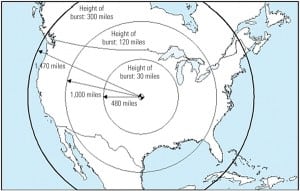
The electricity grid has been characterized as the world’s largest and most complicated machine. The grid, like all machines, requires periodic upgrades and maintenance to prevent outages during the normal course of business, and it can be brought down by various outside forces. Solar flares and cyber attacks have temporarily crippled the machine, but an electromagnetic pulse event would be the “ultimate cyber security catastrophe.”
-
 Smart Grid
Beacon Power Makes a Comeback
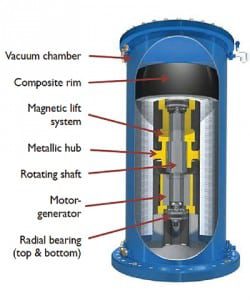
Beacon Power Corp. was founded in 1997 to develop flywheel-based energy storage technology. By 2007, the 100-kW/25-kWh Gen 4 flywheel system was commercialized and deployed in several projects. However, market conditions pushed the company into bankruptcy in late 2011. The company has since emerged, reinvigorated with new investment and a new name: Beacon Power LLC.
-
 Coal
CoalGas-Electric Integration “Swamps” All Other Issues
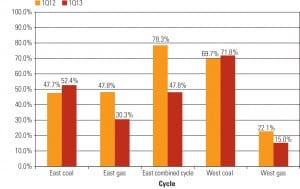
Panelists at the ELECTRIC POWER 2013 Keynote and Roundtable Discussion in Chicago in May were consumed by the need to ensure future reliability by more closely integrating the gas and electricity markets. Acknowledged less directly were distortions created by renewable energy subsidies and mandates, onerous regulations affecting coal, and “irreversible” demand destruction caused by the success of energy efficiency and demand management programs. The elephant in the room was the continued demise of electricity markets.
-
News
Four Strange-But-True Stories
Last month’s column, “Opinions à la Carte,” prompted an unusually high number of emails from readers. Unexpectedly, the responses to the different format were universally favorable.
-
 Gas
GasIs Gas Getting Too Hot to Handle?
With ever-increasing demands for fast ramping and flexibility, natural gas–fired plants are grabbing a bigger share of the generation pie. But uncertainty about future prices and concerns about overreliance on a single fuel are dampening enthusiasm during what may be the most exciting time for gas ever. Natural gas is hot—but will generators and the market get burned?
-
 Coal
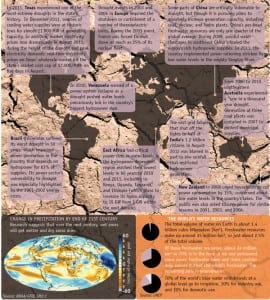
CoalTHE BIG PICTURE: Parched
Water scarcity as it relates to energy use is becoming a major concern.
-
 Gas
GasWhat Does the Market Expect from Gas Plants?
With the country awash in natural gas and new construction dominated by gas-fired plants, one would think that integrating these plants into the grid would be simple. Like politics, integration problems appear to be local.
-
 Solar
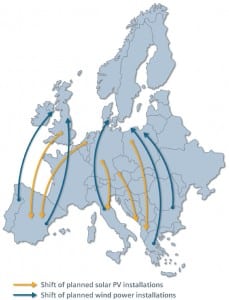
SolarPower Sector Laments Europe’s Uncertain Future Energy Policy
Energy policy in the European Union (EU) is in upheaval as concerns mount over the impact of energy costs on the competitiveness of the power industry.
-
 Nuclear
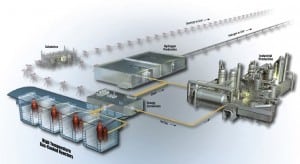
The Beguiling Promise of the HTGR
It’s easy to see why technologists fall in love with high-temperature gas-cooled reactors (HTGRs). These nuclear machines are remarkable inventions, at least on paper. But few have actually seen the real world for any length of time, and their real-world experience has been mixed.
-
Coal
Obama: Climate Strategy to Be Driven by Natural Gas, Renewables
President Barack Obama’s landmark speech on Tuesday outlining executive actions to combat and prepare for climate change backed the growth of natural gas and renewable power in lieu of carbon-heavy coal power, but he mentioned nuclear power only once—and only in the context of energy security.
-
Coal
Reactions to Obama’s Climate Action Plan Swift and Varied
Amid the deluge of reactions to President Obama’s June 25 speech announcing wide-ranging executive actions to curb carbon emissions and prepare for climate change effects were some unexpected statements.
-
Nuclear
NRC’s Update to Indian Point EIS Says Aquatic Impacts Are “Small”
An update to the Final Supplemental Environmental Impact Statement (FSEIS) issued by the Nuclear Regulatory Commission (NRC) on Tuesday finds that possible impacts on aquatic life from the Indian Point nuclear power plant in New York still do not bar it from receiving a license renewal.
-
Gas
IEA: Renewable Generation Could Surpass Global Natural Gas Share, Double Nuclear by 2016
Driven by the booming growth of generation from hydro, wind, and solar photovoltaics (PV), generation from renewables on a terawatt-hour basis is set to surpass that from natural gas and double nuclear’s share by 2016, becoming the world’s second-most important global electricity source after coal, according to a new report from the International Energy Agency (IEA).
-
Coal
USGS: U.S. Has Massive Carbon Storage Capacity in Geologic Basins
The U.S. has least 3,000 metric gigatons (Gt) of subsurface carbon dioxide storage capacity that is technically accessible below onshore areas and state waters—500 times more than previously estimated—the U.S. Geological Survey (USGS) suggests in a new assessment released on Wednesday.