Articles By

-
Solar
Tapping the western sun
In an effort to tap the significant solar energy resources of New Mexico, Arizona, Nevada, California, Utah, Texas, and Colorado, the U.S. DOE will support efforts to install a total of 1,000 MW of concentrating solar power (CSP) systems over the next five years. "This initiative will provide a substantial engine for economic development, job […]
-
 Business
Correction
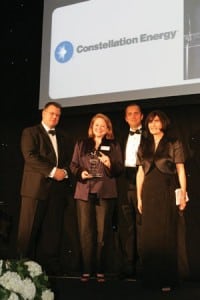
In our January/February 2005 story "The 2004 Global Energy Awards" we incorrectly identified the award received by Constellation Energy. The correct caption follows. The 2004 Energy Company of the Year Award went to Constellation Energy. Constellation is one of the largest wholesalers of electricity in the U.S. and a leading supplier of power to large […]
-
 Solar
SolarSun drives pistons and generator, GM
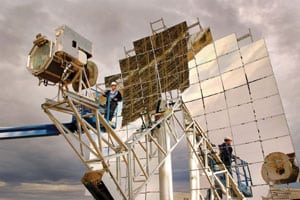
Sun drives pistons and generator Sandia National Laboratories is joining forces with Stirling Energy Systems Inc. (SES) of Phoenix to test and develop new solar dish-engine systems. Five new systems installed at Sandia’s National Solar Thermal Test Facility in New Mexico joined a prototype Stirling system that was erected earlier in 2004. The six-dish […]
-
 Hydro
HydroBig batteries blooming
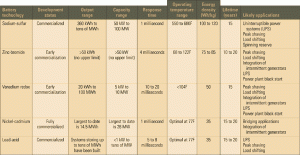
Several advanced battery technologies tailored for utility applications have doffed their white coats and donned hard hats. These new bulk energy storage devices, which can almost instantly shave peaks and shift loads, are the answer to the dreams of T&D system designers and operators. Finally, years of R&D in electrochemistry are beginning to pay dividends in the field.
-
Hydro
Promoting renewable exports
Promoting renewable exports The DOE is not the only U.S. government department promoting renewable energy. Any U.S. energy firm or supplier looking to export its goods and services can tap the services of the Energy Team at the Commerce Department’s International Trade Administration (ITA), which is part of the U.S Commercial Service (USCS). The […]
-
 Geothermal
Geothermal: Hotter than ever
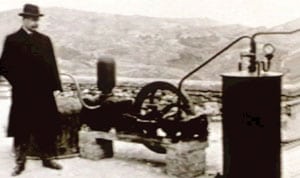
Balmy days are on the horizon for geothermal energy. The renewal of the Production Tax Credit in the U.S. and improved drilling and electricity production techniques are the two main reasons geothermal energy advocates are bullish about the industry. POWER looks at some interesting installations and explains why the optimism is well-founded.
-
O&M
Focus on O&M
Using a pump as a hydraulic turbine; Insulation and lagging fundamentals; A new way to repair concrete pipes
-
Hydro
Roadmap for the all-electric warship
One of the key projects at the U.S. Navy’s Office of Naval Research is developing an integrated ship power system capable of supplying power both to propulsion systems and to advanced electric weapons, launchers, and high-power sensors. It would be the ultimate naval power T&D system. The "all-electric warship," which some predict will have as much of an impact on navies as the nuclear submarine, is still a decade or two away. But the first generation of electric systems is already being installed on U.S. warships currently under construction.
-
 Hydro
HydroFuel cells reach MW class
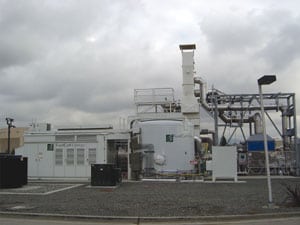
Most people think of fuel cells within a single, "not ready for prime time" context: powering tomorrow's automobiles. But stationary fuel cell power plants are beginning to power some industrial facilities today. The need for heat as well as ultraclean power, and the availability of a renewable fuel, recently came together in a Seattle suburb, site of the world's first commercial megawatt-scale fuel cell power plant—powered entirely by gas produced by anaerobic digestion of municipal wastewater.
-
 Water
WaterAlternative cooling water intake analysis under CWA Section 316(b)
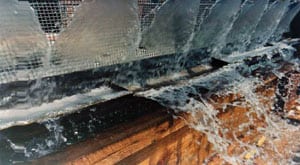
New rulemaking by the EPA has highlighted the importance of fish protection technologies and/or operational changes to improve fish survival at circulating water intake structures. In this first of three reports from Alden Laboratories, the focus is on step one of the design process: analyzing the intake system to inform development of cost-effective solutions for meeting Section 316(b) performance standards. The other two reports, to be published later this year, will explore fish protection technologies through laboratory and field evaluations, and alternative cooling water intake technologies.
-
 Hydro
HydroA new player in backup power
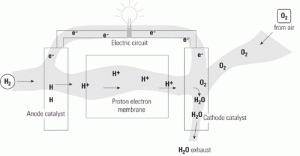
For thousands of U.S. businesses, a lesson learned the hard way over the past few years is the need for an absolutely reliable electricity source. Challenging the standard backup power options, proton exchange membrane fuel cells are making a play for this duty.
-
 Waste to Energy
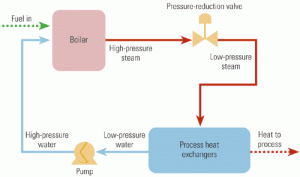
Recycling waste pressure into electricity
Combined heat and power options in most modern steam plants are an opportunity waiting to happen. Energy conservation at our nation’s colleges, mills, and hospitals goes way beyond changing light bulbs and thermostat setpoints. This exclusive report by the CEO of a member of the U.S. Combined Heat & Power Association—one of POWER’s business partners—explains why.
-
News
Power prognostications
My New Year’s resolution was to try to be optimistic about 2005—and why not? The past few years have been a roller-coaster ride for the generation industry, with a quick turn here and a negative-G drop there. Although the ride was a bit gut-wrenching the first few times, the ups and downs are now expected […]
-
 Hydro
HydroRenewable energy’s growing share
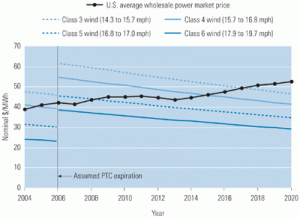
Renewable power development will continue to grow in the U.S., with the nonhydro total reaching 53,121 MW by the end of 2016. So predicts a soon-to-be-released report from Boulder, Colo.–based Platts Analytics (which, like POWER, is a part of Platts, a division of The McGraw-Hill Companies). If all that capacity goes on-line, it would […]
-
 Wind
WindBonus to Siemens
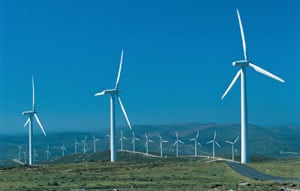
Siemens Power Generation (Erlangen, Germany) announced late last year that it had acquired wind turbine manufacturer Bonus Energy A/S (Brande, Denmark). With a market share of about 9%, Bonus was one of the top five manufacturers of wind turbines in 2004. On paper, Siemens now seems well-positioned to challenge the market leaders (GE Wind, Vestas, […]
-
 Hydro
HydroNowhere to go but up
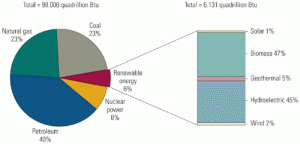
Installations of new renewable energy facilities in the U.S. slowed significantly last year. Why? The short answer is a lack of political will. Compared with the EU, the U.S. has much less progressive renewable energy policies. For example, although the Production Tax Credit was renewed last year, legislators in Washington had let it expire, and prospects for a comprehensive national energy policy are fuzzier than ever. Following is a brief roundup of what’s happening worldwide in the fields of wind, photovoltaic, and hydro power. (For a snapshot of today’s global geothermal industry, see p. 40.)