
Articles By

-
News
New Jersey newest state to select offshore wind developer
New Jersey Board of Public Utilities (BPU) on Friday awarded Garden State Offshore Energy (GSOE) $4 million to develop a 345.6-MW offshore wind farm, a project that could be the first offshore wind farm on the East Coast. GSOE’s proposal calls for building 96 wind turbines arranged in a rectangular grid 16 miles off […]
-
News
UniStar considers new reactor at Nine Mile Point station in New York
UniStar Nuclear Energy, a joint venture of Constellation Energy and France’s EDF Group, last week submitted a combined construction and operating license (COL) application to the U.S. Nuclear Regulatory Commission (NRC) for a potential new reactor at Nine Mile Point Nuclear Station in Scriba, N.Y. The final decision on whether to proceed with the […]
-
General
Iced in by global warming
Folks, this is a true story. We do not make this stuff up. As the late, great comic Steve Allen used to say, “I kid you not.” An NBC television crew, dispatched to the Arctic to show the horrendous effects of global warming – an ice-free Northwest passage – was stalled in the Arctic Sea […]
-
General
The meaning of Kyoto’s failure
Did the now-irrelevant 1997 Kyoto Protocol reduce global carbon dioxide emissions, or even slow the rate of increase? No, according to Global Carbon Project, established in 2001 to measure worldwide, man-made carbon emissions patterns. According to the project’s “Global Carbon Budget,” released Sept. 25, “Anthropogenic CO2 emission have been growing about four times faster since […]
-
News
Approval of renewable tax credit extensions blocked by political impasse
Current U.S. tax credits for renewable energy, including wind and solar energy, are set to expire on Dec. 31, 2008. Last week, both U.S. congressional houses passed versions of a bill that would extend these credits, but the House’s version of what has been called “the year’s most important tax package” prompted criticism from the […]
-
News
EDF seals British Energy acquisition deal
Nuclear energy giant Électricité de France (EDF) on Wednesday clinched a deal to acquire British Energy plc—a privatized UK company that provides almost 20% of Britain’s electricity—for £12.5 billion ($23.18 billion). On Thursday, the majority French state-owned company bought a 26% stake in British Energy through its subsidiary Lake Acquisitions as part of its […]
-
News
DOE announces $8 billion in loan guarantees for coal indust
The U.S. Department of Energy (DOE) last week announced a solicitation for up to $8 billion in federal loan guarantees for coal-powered projects that employ advanced technologies to reduce or sequester emissions of air pollutants and greenhouse gases. This marks the third round of solicitations for the DOE’s Loan Guarantee Program. The DOE said […]
-
News
RWE prepares to test CCS technologies at UK power plants
RWE npower has urged the UK government to address pitfalls in carbon capture and storage (CCS) regulation and policy that could prompt delays to vital investments. The company, which revealed it was close to completing a UK CCS facility, was responding to the government’s CCS consultation that closed last week. RWE npower, which supplies […]
-
News
First carbon dioxide emission permits auctioned in the U.S.
All 12.6 million allowances offered at the first U.S. carbon dioxide emissions auction sold on Sept. 25, 2008. The permits were bought by 59 participants from energy, financial, and environmental sectors at a clearing price of $3.07 per allowance, states participating in the Regional Greenhouse Gas Initiative (RGGI) said Monday. RGGI said on its […]
-
News
Entergy submits COL application for River Bend reactor
New Orleans-based Entergy Corp. on Thursday submitted a combined construction and operating license (COL) application to the U.S. Nuclear Regulatory Commission (NRC), selecting GE Hitachi Nuclear Energy’s next-generation ESBWR reactor design. Entergy, the nation’s second-largest nuclear plant operator, is seeking to reserve the option to build a potential new reactor at its River Bend […]
-
News
McCain, Obama supporters mostly agree on energy, climate change issues
A majority of supporters of John McCain and Barack Obama largely agree on how to deal with both the country’s energy needs and the problem of climate change, a new WorldPublicOpinion.org poll shows. WorldPublicOpinion.org, an international research project managed by the Program on International Policy Attitudes at the University of Maryland, surveyed 1,174 Americans […]
-
Coal
Who Cares about CAIR?
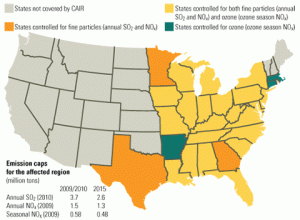
In a bid to preserve some of the health and air quality benefits of a defunct regulation, House Democrats have floated a legislative proposal to codify the near-term emission reductions required under the Bush administration’s Clean Air Interstate Rule, a regional cap-and-trade program for utility emissions that was thrown out in July by a federal appeals court.
-
O&M
Hill Backing New FERC Powers on Grid Cyber Attacks
Spurred on by a recent audit showing widespread utility noncompliance with voluntary recommendations meant to protect the grid from cyber attacks, key lawmakers have unveiled plans to give the Federal Energy Regulatory Commission (FERC) broad powers to enact new mandatory measures to close vulnerabilities in the U.S. bulk power system to potentially devastating computer-launched assaults.
-
 Coal
CoalRevived Energy Storage Technology Offers Major Grid Benefits
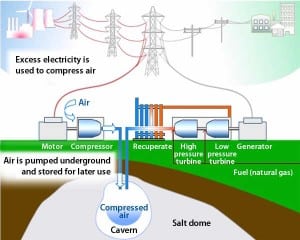
In a move that could boost the value of wind and nuclear generation, relieve stress on the nation’s transmission grid, and reduce utility carbon emissions, PSEG Global LLC and energy storage pioneer Michael Nakhamkin have announced that they have formed a joint venture to market and deploy “second generation” compressed air energy storage technology.
-
Commentary
Indecent Disclosure
Though former New York attorney general Eliot Spitzer may be remembered for one type of indecent exposure, the current New York attorney general is promoting a more damaging type of indecent exposure for coal-fired power plant owners.
-
 Coal
CoalThe Problem of Fine Particles
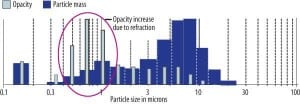
No matter what its size, fine particulate matter is a serious matter for coal-burning power plants. A process that charges those particles shows promise for mitigating the problem.
-
Commentary
A Pragmatic Energy Policy
The already razor-thin power supply margins in the UK are likely to become nearly transparent by 2012, according to a new study prepared by Fells Associates: “A Pragmatic Energy Policy for the UK” (PDF). The report notes that the UK’s electricity shortfall will blossom to between 30 GW and 35 GW by 2027, and residents should expect periods when demand exceeds supply in just three years. If you think the UK government is worried, think again.
-
 O&M
O&MAnatomy of a Boiler Failure—A Different Perspective
The power industry’s operating and maintenance practices were held up to intense regulator and public scrutiny when on November 6, 2007, a Massachusetts power plant’s steam-generating boiler exploded and three men died.
-
 O&M
O&MThe Low-Down on Low-Alloy Filler Metals
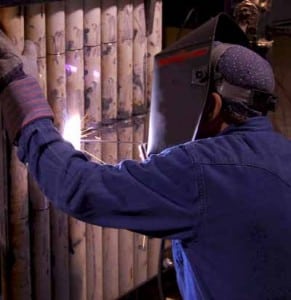
Chromium-molybdenum (chrome-moly) pipe has become a standard in the power generation industry, not only because of its corrosion resistance and high-temperature strength, but also for its cost-effectiveness. In many applications, it is a viable alternative to a more costly stainless steel pipe.
-
General
OBE: Energy policy in Washington
OBE: overcome by events. That’s the story of the nation’s energy policy agenda in the wake of the credit collapse of the past several weeks. In short, there likely will be no new major energy investments in the coming months or years, whether Congress enacts energy legislation or not, or if executive branch agencies implement […]
-
General
“Green” gasoline?
Cellulosic ethanol? How about cellulosic gasoline and diesel fuel instead? A research team from the University of Wisconsin at Madison has come up with what may be an economic way to produce what a UW press release calls “green gasoline” from the sugars in corn stalks and stover and other plant residues that the Department […]
-
Commentary
Coal Continues to Clobber Wind
Just when you thought coal was down for the count, here’s a report from London’s Financial Times. “British coal production looks set to grow for the first time since 2001, thanks to higher prices and power generators’ new-found appreciation of domestic coal supplies.” Coal production in the UK mostly has been falling since the 1950s. -
General
Where’s Sam Bodman
Where’s Sam? Energy Secretary Sam “The Sham” Bodman has been absent from the discussions in Washington in recent months about energy prices and energy policies. What does this say about Bodman? It says that neither Sam nor the Department of Energy have any influence in Bush administration energy policies. That’s not a bad thing. Energy […]
-
General
Thomas (Malthus) Friedman
New York Times columnist Tom Friedman is a Malthusian. That’s clear from his latest book – Hot, Flat and Crowded. As such, he’s a wrong-headed fool, in the camp of Paul Ehrlich (a lepidopterist by training), Lester Brown, and the Club of Rome pessimists. Their view is that the world is running out of resources, […]
-
General
Buffett buys Constellation
The Wall Street financial crisis hit Baltimore’s main street on Thursday, as Constellation Energy Group agreed to be bought by Warren Buffet’s MidAmerican Energy Holdings for $4.7 billion ($26.50 per share.) Among the victims in the sale could be Constellation’s attempt to build a new, third nuclear generating unit at its Calvert Cliffs site in […]
-
General
Coal contines to flex its muscles
More evidence that the demise of coal – Al Gore to the contrary notwithstanding – is greatly exaggerated. On Sept. 11, Tulsa-based Alliance Resource Partners announced it will open a new underground coal mine on the West Virginia-Pennsylvania border, digging high-sulfur Pennsylvania No. 8 coal for the utility market. At the same time, the U.S. […]
-
 Water
WaterAir-cooled condensers eliminate plant water use
River or ocean water has been the mainstay for condensing turbine exhaust steam since the first steam turbine began generating electricity. A primary challenge facing today’s plant developers, especially in drought-prone regions, is incorporating processes that reduce plant water use and consumption. One solution is to shed the conventional mindset that once-through cooling is the only option and adopt dry cooling technologies that reduce plant water use from a flood to a few sips.
-
 Water
WaterWet surface air coolers minimize water use by maximizing heat transfer efficiency
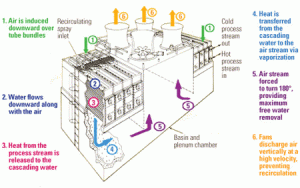
Gas-fired power plant designers and operators are increasingly challenged to reduce their plants’ water consumption and improve their thermal efficiency. Closed-loop, evaporative cooling systems (known as wet surface air coolers, or WSACs) are a cost-effective heat transfer technology that can simultaneously achieve both goals. In addition to providing lower-temperature cooling and condensing while requiring less space and horsepower than conventional systems, WSACs can use poor-quality water as spray makeup.
-
 Environmental
EPA’s air program: Still hazy after all these years
While the Bush administration is winding down during its final year, several of its major air pollution initiatives have recently unraveled. These casualties were the result of two recent federal court decisions and the Environmental Protection Agency chief’s refusal to regulate greenhouse gases under existing laws. These developments make it plain that any important new attempts to regulate air emissions will have to be made by the next president.
-
 O&M
O&MPut a lid on rising chemical costs
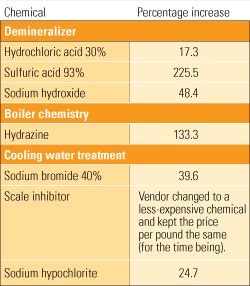
News reports tell us that rapidly growing economies, such as China’s, are importing more oil and raw materials each year, thereby pushing up commodity prices on the world market. One of the side effects of rising commodity prices is considerable increases in the cost of water treatment chemicals. Don’t be tempted to skimp on chemicals to save a buck but risk catastrophic damage. In the words of NASA’s former flight director, Gene Kranz: “Failure is not an option.”