
Articles By

-
 News
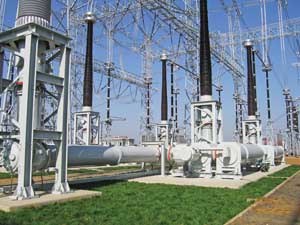
NewsSwitchgear Technology Surpasses 1 Million Volts
Swiss power technology group ABB, which pioneered gas-insulated switchgear 50 years ago, in April announced it had commissioned switchgear rated to handle 1,100 kV. The development marks the biggest leap in capacity and efficiency of AC power transmission in more than two decades.
-
 News
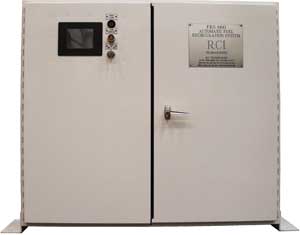
NewsTwo-Pump Fuel Recirculating System
The Duplex Pump Unit (FRS 660-11-DPU-UL) from RCI Technologies is the newest addition to that company’s line of diesel fuel purifiers and fuel recirculating systems (FRSs). Designed to automatically circulate and clean the fuel in customers’ fuel storage tanks on a preprogrammed schedule, the DPU features two fuel pumps, which operate alternately to circulate fuel through the system. Whereas RCI’s other FRS units utilize a single pump, the duplex pump offers backup in the event of a primary system failure. All FRS units employ filter-less technology. The control system is housed in a weatherproof, NEMA 4, key-lockable cabinet, and the system is equipped with alarms to alert the user in the event of pump failure, purifier high water level, system high pressure, or fuel catch basin leak. (www.rcitechnologies.com)
-
 Gas
GasGas Hydrates: Fuel of the Future?
Gas hydrates, a form of natural gas that forms when methane from the decomposition of organic material comes into contact with water at low temperatures and high pressures, could play a role — even if a small one — in future fuel supplies, researchers attending a March meeting organized by the American Chemical Society suggested.
-
Commentary
Energy Bubble, Anyone?
When the housing bubble burst, it exposed an unseemly alliance between special interests and the financial sector. Activists wanted homes for all at any cost, and lenders were happy to oblige despite the inherent risk.
-
 News
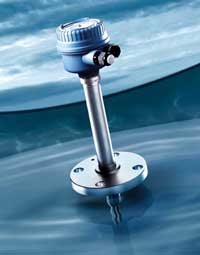
NewsExtreme Temperature Vibrating Fork
Emerson Process Management launched a new extreme temperature version of its Rosemount 2130 vibrating fork liquid level switch that is designed for use in extreme temperatures — from – 94F to 500F (–70C to 260C). The new version includes a low-density option suitable for liquids with specific gravity down to 0.5 (500 kg/m 3). In addition to built-in fault-monitoring/self-checking diagnostics to detect corrosion of the forks or any internal or external damage or breaks in the internal electrical wiring, it features a "heartbeat" LED, which provides instant visual indication that the unit is operational. The unit requires no onsite calibration and is available in 316L stainless steel, corrosion-resistant alloy C wet side, or a range of other stainless steel and aluminum options. (www2.emersonprocess.com)
-
 News
NewsAdvanced Vibration-Monitoring Technology
Sweden’s SKF Reliability Systems introduced the SKF Microlog Analyzer AX, an advanced vibration-monitoring technology. With simultaneous triaxial or four-channel vibration measurement capability, the unit speeds up data collection and saves time in monitoring rounds. The 806 MHz Xscale processor also means faster real-time rate and display updates. An available range of application modules allows users to create a custom device to perform several advanced tasks, such as impact tests, digital recording, modal analysis, transient phenomena analysis, and quality inspections.
-
 News
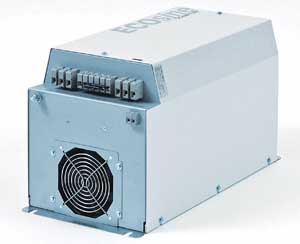
NewsDigital Harmonics Filters
Schaffner’s filter series now includes ECOsine active harmonics filters — compact, digital units that continuously measure and analyze disturbances in the power network and provide an exactly opposite compensation current. In doing so, the filters actively adapt to changing network topologies and respond in less than half a millisecond, before damage from the disturbances can occur. The improved power quality of the new filters minimizes the risk of downtime and process interruptions.
-
News
Spain Is Tilting at Windmills
President Barack Obama has praised Spain as a global leader in renewable electricity generation and has lauded its success at creating so-called "green jobs." However, a recent Spanish university study concluded that Spain’s mad rush to meet overly aggressive renewable standards has destroyed jobs and driven up the real cost of electricity, without cutting carbon emissions.
-
 News
NewsReusable Mini-Silo System
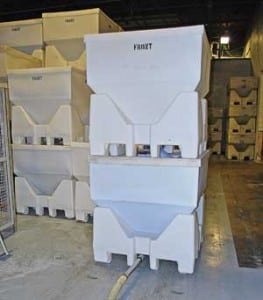
DW Global Group’s recently announced dry bulk hopper mini-silo system — comprising one or more reusable, translucent containers — is designed for companies wanting to replace fiber drums, cardboard boxes, wood pallets, and super sacks. The rugged plastic containers — lids included — multitask as shipping, storage, and dispensing systems. Each hopper has a valve at the bottom for easy flow of material from hoppers to the manufacturing machine. The system allows for stacking of up to three units with a total weight of as much as 2,400 pounds. According to DW Global, the investment for a multi-purpose dry bulk hopper system can be "as little as $5,000 to $10,000, with a return-on-investment in less than a year." (www.dwglobalgroup.com)
-
-
 News
NewsStronger Air-Powered Hoist
The "TCS Cheetah" air-powered hoist from Harrington Hoists Inc. is now available in two new capacities: the ¼-ton TCS250C/P and the 1-ton TCS1000C/P-2. Built for speed, the units are adjustable to fit all lifting requirements, particularly fast-paced or repetitive lifting applications. Additional features include a compact, lightweight aluminum body with good headroom, a disc brake for reliable load support, a vane monitor for very fine feathering control, and an unlimited duty cycle for continuous operation. (www.harringtonhoists.com)
-
 Coal
CoalNew Federal Rules for Coal Ash Storage on the Horizon
By the end of this year, U.S. power plants with coal ash surface impoundments could face new federal regulations related to the management of coal ash at their facilities. Currently, there are no federal requirements governing coal ash management because in 2000 the U.S. Environmental Protection Agency (EPA) determined it to be a nonhazardous waste under the federal Resource Conservation and Recovery Act.
-
Legal & Regulatory
Will Stars Align for Transmission Policy in 2009?
In the 1990s, alarm bells were sounded because the construction of electric transmission infrastructure was not keeping pace with the United States’ rapidly increasing electric demand. More than 10 years later, despite considerable debate and the passage of new legislation, we continue to search for ways to get transmission built. However, it now looks as if 2009 may the year in which the stars finally align to fix the transmission system.
-
 Water
WaterReconsider Start-up Controls to Avoid Boiler Deposits and Underdeposit Corrosion
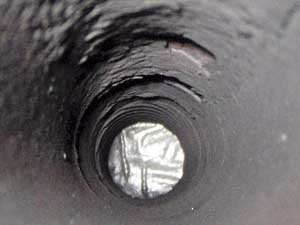
Water treatment programs for boilers and heat-recovery steam generator (HRSG) units appropriately focus on chemistry controls during normal operation. However, rates of corrosion product transport and deposition can be much greater in boilers and HRSG units during start-up than during routine operation. For that reason, in addition to standard programs for monitoring and control of corrosion product transport, deposition, and underdeposit corrosion, consider adding contingency plans for boiler water chemistry holds in the start-up process.
-
 Water
WaterHow to Measure Corrosion Processes Faster and More Accurately
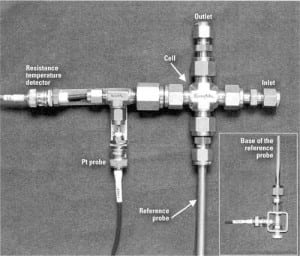
Maintaining reliable and efficient plant operations requires good control of corrosion and corrosion product transport in power plant water systems. The Electric Power Research Institute recommends oxidation-reduction potential for passivator control in feedwater systems, as do many industry experts. Here’s how to turn that recommendation into a robust feedwater monitoring program.
-
 Business
Fabulous Wealth and Fabulous Poverty
Mark Twain summed it up best when he described India more than a century ago as a place of “fabulous wealth and fabulous poverty.” Today, for all its surging economic growth, 300 million Indians still live below the poverty line.
-
 O&M
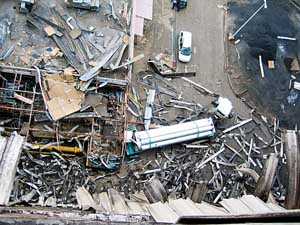
O&MLessons Learned from a Hydrogen Explosion
On January 8, 2007, a hydrogen explosion at the Muskingum River Power Plant’s 585-MW coal-fired supercritical Unit 5 caused one fatality, injuries to 10 other people, and significant damage to several buildings. The explosion occurred during a routine delivery of hydrogen when a hydrogen relief device failed, which allowed the contents of the hydrogen tank to escape and be ignited by an unknown source. This article covers the findings of the incident investigation and the actions the plant has taken to prevent a reoccurrence.
-
 Coal
CoalFirstenergy to Convert Coal-Fired Burger Plant to Biomass
Confronted with a district court ultimatum that would have forced it to install expensive pollution controls or close two coal-fired units at its R.E. Burger Plant in Shadyside, Ohio, Akron-based FirstEnergy Corp. announced in April that it would convert them to biomass. When the $200 million retrofit is complete, as is expected by 2013, the Burger Plant will likely be one of the largest biomass facilities in the U.S.
-
General
FERC’s Wellinghoff bloviates on wind
Jon Wellinghof, the latest chairman of the Federal Energy Regulatory Commission, is, by his own words, a doofus. As reported in Power News this week, Wellinghoff said the U.S. may never need new baseload electric generating capacity. Why? Because wind will be so cheap it will get sent out first in an economic dispatch regime. […]
-
News
NYPA Calls for Offshore Wind Projects in Great Lakes
Spurred by New York’s target to meet 45% of its electricity needs through renewable resources by 2015, the New York Power Authority (NYPA) last week issued a call for proposals to develop offshore wind projects of up to 120 MW in New York State waters of Lake Erie and Lake Ontario.
-
News
NERC: Misoperation of System Protection and Control Systems Leading Cause of Bulk Power Disturbances
The performance of automated systems designed to protect infrastructure from damage during severe system conditions must be addressed to limit the scope and severity of bulk power system disturbances in North America, the North American Electric Reliability Corp. (NERC) told stakeholders in a letter last week.
-
News
EPA Motions to Reconsider Granted Coal Plant Permit
The Environmental Protection Agency (EPA) wants to reconsider an air permit it awarded last July to the 1,500-MW coal-fired Desert Rock Energy Facility project proposed for construction by Sithe Global Power, LLC on the Navajo Nation tribal reservation in New Mexico.
-
News
Bill to Rebate Utilities Billions from Yucca Mountain Waste Fund
The estimated $30 billion that electric utilities have paid since 1982 to the Nuclear Waste Trust Fund for the construction and operation of the federal nuclear waste repository at Yucca Mountain could be returned to them if a Senate bill introduced on Thursday passes.
-
News
FERC Chief: U.S. May Never Need New Nuclear, Coal
The U.S. may never need new nuclear or coal-fired power plants because renewable energy and improved efficiency can meet future power demand, Jon Wellinghoff, the Federal Energy Regulatory Commission chair, last week reportedly said.
-
News
UK Energy Secretary: No New Coal Plants Without CCS
The UK will not permit new coal-fired power plants without equipment to capture and store at least 25% of carbon emissions from day one and 100% by 2025, when carbon capture and storage (CCS) technology is expected to be technically and commercially proven, the country’s climate change secretary, Ed Miliband, said last week.
-
News
AmerenUE Suspends Missouri EPR Project for Financial and Regulatory Reasons
Changes to a state bill that would have allowed AmerenUE to charge customers during the construction of a second nuclear plant at Callaway in Missouri last week prompted the company to pull the plug on the $6 billion project.
-
News
Utility Execs Foresee Higher Power Prices, More Regulation with Obama Initiatives
Executives of North American utility companies are nearly split on whether President Obama’s proposed energy initiatives will have a significant impact on the structure of the electricity sector, according to the third annual Platts/Capgemini Utilities Executive Study just released. But there is greater executive agreement that environmental regulation and electricity prices for end users will be increasing.
-
 Smart Grid
Is "Smart Grid" in the Eye of the Beholder?
Congress looks at what “smart grid” means and comes up with mixed definitions. The one thing everyone agrees on: The smart grid is going to be expensive.
-
Commentary
The Communications Failures Lessons of Three Mile Island
The most lasting effect the Three Mile Island nuclear accident had on me was what it taught me about crisis communications—lessons that served me well over the 25-plus years that followed and especially after the September 11 terrorist attack on the United States.
-
Commentary
NIMBY or Concerned Citizen?
Opponents of locating new energy facilities near where they work and live are often painted with a broad brush as activists or called some other pejorative term. How do you differentiate the professional opponents of any new development from those who have valid reasons to stand up and be heard?