
Articles By

-
News
Chu: $2.4 Billion of Stimulus Funds to Accelerate Deployment of CCS
U.S. Secretary of Energy Steven Chu on Friday announced at the National Coal Council that $2.4 billion from the American Recovery and Reinvestment Act will be used to expand and accelerate the commercial deployment of carbon capture and storage (CCS) technology.
-
News
Calvert Cliffs Unit 3 on DOE Loan Guarantee Shortlist
UniStar Nuclear Energy last week confirmed that its Calvert Cliffs Unit 3 nuclear energy facility was among four projects chosen by the U.S. Department of Energy (DOE) to enter the final phase of due diligence for a portion of $18.5 billion in federal loan guarantees for advanced nuclear projects. The selection positions UniStar to move forward with detailed negotiations leading to a conditional commitment under the program.
-
News
AEP, Allegheny File to Build W.Va. 280-Mile High-Voltage Transmission Line
American Electric Power (AEP) and Allegheny Energy on Tuesday said they had jointly filed an application seeking authorization to build a proposed electric transmission line in West Virginia.
-
General
Polling on warming no surprise
By Kennedy Maize As a democrat (that’s with a small “d” and a large “D”), I have a great deal of faith in the wisdom of the American people. That’s why I’m not surprised that the hysteria over alleged man-made global warming is in rapid decline in public opinion polls. It’s no longer in the […]
-
News
DOE Budget Favors Renewables, Makes Cuts to Coal, Nuclear Programs
President Obama’s $26.4 billion Department of Energy (DOE) budget request for fiscal year (FY) 2010 substantially increases new cash for the development of renewable energies, energy efficiency, and for measures to curb carbon dioxide emissions, but it cuts funding to coal and nuclear programs—fuels that produce 70% of the nation’s electricity. The proposed FY 2010 […]
-
News
Nuclear Projects in DOE Loan Guarantees Cut to Final Four
The Department of Energy (DOE) has reportedly dropped Luminant’s Comanche Peak Nuclear Power Plant’s expansion planned in Texas from its list of new nuclear projects being considered for the first round of federal loan guarantee. Four projects now remain on the DOE shortlist. New reactors at Southern Co.’s Vogtle plant in Georgia, Scana Corp.’s Summer […]
-
Smart Grid
IEEE Celebrates 125 Years of Engineering the Future Today
As IEEE celebrates its 125th anniversary on May 13, it is also addressing the challenges ahead. The Center for Energy Workforce Development estimates that 45% of engineers in electric utilities will be eligible for retirement, or may leave for other reasons, in the next five years. What’s more, the educators of new engineers are also […]
-
News
Kansas Senate Passes Coal Plant, RPS Standard
The Kansas Senate last week approved by a 37–2 vote an energy bill that will allow Sunflower Electric Power Corp. to build a long-delayed coal-fired power plant near Holcombe. The bill’s approval comes days after Kansas’ new governor, Mark Parkinson, and Sunflower Electric Power Corp. reached a compromise that would scale down the company’s plans […]
-
News
Montana Gov. Joins Forces on CCS with Saskatchewan, Signs Carbon Storage Bill
Saskatchewan and Montana officials last week said they would partner on the development of one of the largest international carbon capture and storage demonstration projects in the world. Saskatchewan Premier Brad Wall and Montana Governor Brian Schweitzer signed a memorandum of understanding (MOU) to collaborate on the construction of a “technology neutral CO2 plant at […]
-
News
EPA to Oversee Cleanup of TVA Kingston Coal Ash Spill
The U.S. Environmental Protection Agency (EPA) on Monday signed an enforceable agreement with the Tennessee Valley Authority (TVA) to oversee the removal of coal ash at the TVA Kingston Fossil Fuel Plant in Roane County, Tenn., where more than 5 million cubic yards of coal ash spilled last December. Under the Administrative Order and Agreement […]
-
News
UK Energy Regulator Relaxes Rules to Boost Renewable Generation
UK energy regulator Ofgem last week said it would temporarily relax the rules governing the nation’s electricity networks to speed up connections for low-carbon power generators. The temporary relaxation applies to rules for connection to and use of the high-voltage electricity networks. It means any generator (renewable or thermal) wanting to seek an earlier connection […]
-
General
Nuke Waste Confidence: A Confluence of Ironies
By Kennedy Maize Here’s an interesting set of ironies. The Republican majority on the U.S. Nuclear Regulatory Commission has taken a position that, at least formally, blocks new nuclear reactors in the U.S., while the sole Democrat on the commission, Chairman Greg Jaczko, widely viewed as opposed to the agenda of the nuclear industry, has […]
-
News
New Bill Could Tighten Grid Cybersecurity
Ramped-up concerns about the security of the U.S. power grid and media reports that said cyberspies had infiltrated it have prompted the introduction of a congressional bill that would increase the authority of the Department of Homeland Security (DHS) and the Federal Energy Regulatory Commission (FERC) to help reduce the grid’s vulnerability.
-
News
NRC Grants First Ever 40-Year Nuclear Facility License Renewal
The Nuclear Regulatory Commission (NRC) has renewed the first ever 40-year-operating license of a nuclear facility in the U.S., granting it to AREVA NP’s nuclear fabrication facility in Richland, Wash.
-
News
DOE Pours Recovery Act Funding into Wind, Laboratory Improvements
The Department of Energy (DOE) last week said it would provide $93 million from the American Recovery and Reinvestment Act to support further development of wind energy in the U.S., as well $100 million from the act for facility and infrastructure improvements at the National Renewable Energy Laboratory (NREL).
-
News
EPA Considering Rules on Coal Waste Runoff
The U.S. Environmental Protection Agency (EPA) is committed to issuing proposed regulations for the management of coal combustion waste by utilities by the year’s end, a senior agency official told the House Transportation and Infrastructure committee Thursday. Rules could include tightened restrictions on contaminants in wet scrubber wastewater streams.
-
News
LS Power Pulls Plug on 750-MW Midland, Mich., Project
LS Power has abandoned a proposed 750-MW pulverized coal power project in Midland, Mich., citing economic and regulatory uncertainties.
-
News
TVA Stands by Bellefonte COLA; Progress Energy Delays Levy County Nuke Units
The Tennessee Valley Authority (TVA) last week said it would continue pushing for regulatory approval of its proposed Bellefonte nuclear plant, though the NuStart consortium had shifted priority to another project, while Progress Energy Florida delayed the commercial start of its proposed Levy County plant by almost two years while it awaits a combined construction and operation license (COL) from the Nuclear Regulatory Commission (NRC).
-
News
Deal in Kansas Means Sunflower Will Get Coal Plant
Kansas’ new governor, Mark Parkinson, and Sunflower Electric Power Corp. have reached a compromise that would allow that company to build an 895-MW coal plant in the western part of the state in exchange for Republican support for a state bill that encourages production of more renewable energy.
-
News
Bills to Spur Marine Energy Development Introduced in Congress
Legislation introduced last week by members of the House of Representatives and the Senate could spur development of U.S. marine and hydrokinetic energy resources—a sector in which the U.S. has lagged behind other countries.
-
 News
NewsDigital Harmonics Filters
Schaffner’s filter series now includes ECOsine active harmonics filters — compact, digital units that continuously measure and analyze disturbances in the power network and provide an exactly opposite compensation current. In doing so, the filters actively adapt to changing network topologies and respond in less than half a millisecond, before damage from the disturbances can occur. The improved power quality of the new filters minimizes the risk of downtime and process interruptions.
-
News
Spain Is Tilting at Windmills
President Barack Obama has praised Spain as a global leader in renewable electricity generation and has lauded its success at creating so-called "green jobs." However, a recent Spanish university study concluded that Spain’s mad rush to meet overly aggressive renewable standards has destroyed jobs and driven up the real cost of electricity, without cutting carbon emissions.
-
 News
NewsReusable Mini-Silo System
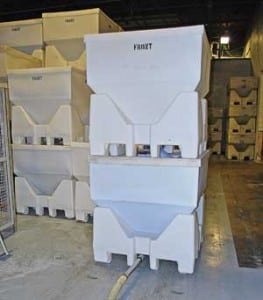
DW Global Group’s recently announced dry bulk hopper mini-silo system — comprising one or more reusable, translucent containers — is designed for companies wanting to replace fiber drums, cardboard boxes, wood pallets, and super sacks. The rugged plastic containers — lids included — multitask as shipping, storage, and dispensing systems. Each hopper has a valve at the bottom for easy flow of material from hoppers to the manufacturing machine. The system allows for stacking of up to three units with a total weight of as much as 2,400 pounds. According to DW Global, the investment for a multi-purpose dry bulk hopper system can be "as little as $5,000 to $10,000, with a return-on-investment in less than a year." (www.dwglobalgroup.com)
-
-
 News
NewsStronger Air-Powered Hoist
The "TCS Cheetah" air-powered hoist from Harrington Hoists Inc. is now available in two new capacities: the ¼-ton TCS250C/P and the 1-ton TCS1000C/P-2. Built for speed, the units are adjustable to fit all lifting requirements, particularly fast-paced or repetitive lifting applications. Additional features include a compact, lightweight aluminum body with good headroom, a disc brake for reliable load support, a vane monitor for very fine feathering control, and an unlimited duty cycle for continuous operation. (www.harringtonhoists.com)
-
 Coal
CoalNew Federal Rules for Coal Ash Storage on the Horizon
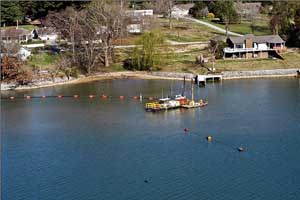
By the end of this year, U.S. power plants with coal ash surface impoundments could face new federal regulations related to the management of coal ash at their facilities. Currently, there are no federal requirements governing coal ash management because in 2000 the U.S. Environmental Protection Agency (EPA) determined it to be a nonhazardous waste under the federal Resource Conservation and Recovery Act.
-
Legal & Regulatory
Will Stars Align for Transmission Policy in 2009?
In the 1990s, alarm bells were sounded because the construction of electric transmission infrastructure was not keeping pace with the United States’ rapidly increasing electric demand. More than 10 years later, despite considerable debate and the passage of new legislation, we continue to search for ways to get transmission built. However, it now looks as if 2009 may the year in which the stars finally align to fix the transmission system.
-
 Water
WaterReconsider Start-up Controls to Avoid Boiler Deposits and Underdeposit Corrosion
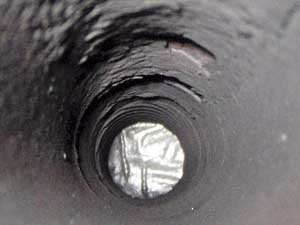
Water treatment programs for boilers and heat-recovery steam generator (HRSG) units appropriately focus on chemistry controls during normal operation. However, rates of corrosion product transport and deposition can be much greater in boilers and HRSG units during start-up than during routine operation. For that reason, in addition to standard programs for monitoring and control of corrosion product transport, deposition, and underdeposit corrosion, consider adding contingency plans for boiler water chemistry holds in the start-up process.
-
 Water
WaterHow to Measure Corrosion Processes Faster and More Accurately
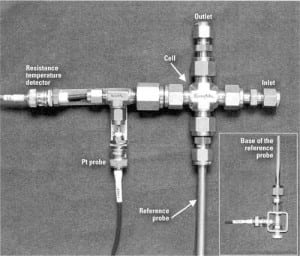
Maintaining reliable and efficient plant operations requires good control of corrosion and corrosion product transport in power plant water systems. The Electric Power Research Institute recommends oxidation-reduction potential for passivator control in feedwater systems, as do many industry experts. Here’s how to turn that recommendation into a robust feedwater monitoring program.
-
 Business
Fabulous Wealth and Fabulous Poverty
Mark Twain summed it up best when he described India more than a century ago as a place of “fabulous wealth and fabulous poverty.” Today, for all its surging economic growth, 300 million Indians still live below the poverty line.