
Articles By

-
News
"Business as Usual" Could Force UK to Rely Heavily on Gas Generation
UK business group CBI on Monday released a report warning that the country’s current policy of incentivizing investments in wind power would result in too little investment in other forms of low-carbon energy, such as nuclear and clean coal. The approach will make energy security harder to achieve, and it could jeopardize the UK’s ability to meet climate change targets, the group said.
-
News
Conservation Groups Sue Feds Over "Coal-Friendly" Transmission Plans
Fifteen environmental groups and a western Colorado county last week filed suit against the federal Departments of the Interior, Agriculture, and Energy, saying that the government’s “sprawling, hopscotch network” of 6,000 miles and 3.2 million acres of federal land designated as electricity transmission corridors promote coal- and gas-fired power generation, not renewable generation from sources like solar and wind.
-
News
DOE to Design and Build Advanced Gas Cleanup System for IGCC Plants
The U.S. Department of Energy (DOE) is preparing to conduct what it says is the world’s first large-scale project to design, build, and test a warm gas cleanup system to remove multiple contaminants from coal-derived syngas. The federal agency has teamed with Research Triangle Institute (RTI) International, a scientific research firm, to demonstrate the 50-MW system at Tampa Electric Co.’s 250-MW integrated gasification combined-cycle (IGCC) power plant.
-
General
New Yorker: Global Warming Strikes Hell
By Kennedy Maize One of funniest pieces of political satire that I have read in many years is in the current issue of the New Yorker magazine. Written by Ian Frazier, the article’s title is “The Temperatures of Hell: A Colloquium.” The premise is that temperatures in Hell have risen by 3.8 degrees since 1955 […]
-
News
Appellate Court Ruling Favors Ga. Coal Plant but Keeps Project on Hold
The Georgia Court of Appeals on Tuesday reversed a lower court ruling that had rejected an air pollution permit for the planned $2 billion Longleaf Energy Station in southwest Georgia because it did not set limits on carbon dioxide emissions.
-
News
Loan Guarantees for Beacon, Nordic; USEC Prepares for Offer
The Department of Energy (DOE) last week issued $59 million in conditional loan guarantees to Beacon Power Corp. and Nordic Windpower, while USEC said on Monday it expects to receive a loan guarantee for its American Centrifuge Plant by early August.
-
News
DOE Officially Scraps GNEP
The U.S. Department of Energy (DOE) has officially scrapped the Global Nuclear Energy Partnership (GNEP) program, a Bush administration initiative to promote nuclear technologies while reducing the impacts associated with nuclear fuel disposal and proliferation risks.
-
News
T. Boone Pickens Suspends Mega-Wind Farm in Texas
T. Boone Pickens has postponed plans for a multibillion-dollar project to build the world’s biggest wind farm in Texas, citing funding and transmission issues.
-
News
Duke Energy to Study Geologic Carbon Storage in Indiana
Duke Energy has filed testimony with the Indiana Utility Regulatory Commission for a proposed project that would store a portion of carbon dioxide emissions from its Edwardsport coal gasification power plant underground in southwest Indiana.
-
News
Senate Committee Kicks Off Hearings on Energy and Climate Legislation
The Senate Committee on Environment and Public Works kicked off efforts to pass climate change and energy legislation in a general hearing on Tuesday, presenting a variety of perspectives on a potential federal cap-and-trade program.
-
 General
Bucket Truck Dreamin’
By Kennedy Maize Since we first moved to rural America in 1972, I’ve wanted a bucket truck. What a useful tool. Tree trimming, gutter cleaning, roof repairs, high-altitude carpentry, painting. The list of uses is probably endless. But I’ve never actually plunked down the dollars necessary for a bucket truck, even a used model. Never […]
-
General
Climate bill faces uncertain future in Senate
By Kennedy Maize The slim passage in late June of the House Democrats’ global warming bill – 219-212 – reminds old-timers of the Clinton administration’s passage of a Btu tax in 1993 by a 219-213 vote in the House, only to see it crater in the Senate. Is the same result likely for the Obama […]
-
 Coal
CoalBiomass Cofiring: Another Way to Clean Your Coal
Demand for renewable power is burgeoning as state governments (and maybe soon the U.S. federal government) impose increasingly rigorous environmental and procurement standards on the energy industry. Surprisingly, biomass cofiring has yet to attract much attention, even though it could help many utilities meet their renewable portfolio requirements, reduce carbon emissions, and solve other regional environmental problems. U.S. developers, investors, and regulators should consider including cofiring as part of the energy mix going forward.
-
Business
How Company Size Affects NERC Compliance
In the world of North American Electric Reliability Corp. (NERC) Reliability Standards, each company (entity) that must comply with the standards determines for itself the scope and size of its compliance program, based on the scope and size of its operations.
-
Commentary
Managing Solar’s Revenue Impact on Utilities
Since 1882, when Thomas Edison installed the world’s first central generating plant in New York City, utility business models have varied little from the basic one: cover costs and generate profit by selling more electricity. But today, unprecedented challenges are sweeping through the industry. Soon utilities will face yet another new challenge: the large-scale implementation of distributed solar power, which can result in lower electricity sales. As solar implementation further challenges business-as-usual models, what’s a forward-thinking utility to do?
-
 O&M
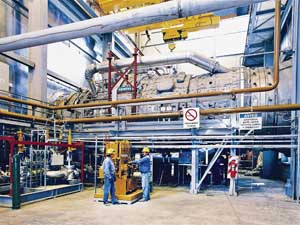
O&MOptimize Gas Turbine Performance Using Acoustic Simulation Software
Increasingly fierce competition driven by deregulation and privatization is putting downward pressure on power plant operations and maintenance (O&M) budgets. Recently, lower natural gas prices have pushed natural gas – fired combined-cycle plants higher up in many utilities’ dispatch order in some regions, a welcome change from the twice-a-day cycling experienced by some plants during the past few years. However, with more operating hours comes more interest in plant operating availability, and that means increased emphasis on reliable gas turbine operation.
-
 News
NewsCO2 Sensor/Transmitter
The recently released EX-5165 Sensor/Transmitter from ENMET Corp. is a three-wire 4-20 mA sensor for the detection of carbon dioxide in ranges from 0 to 500 ppm and 0% to 100% by volume. It also features a 24 VDC loop-powered transmitter. The nondispersive infrared sensor continuously monitors high concentrations of the gas, and it can […]
-
 News
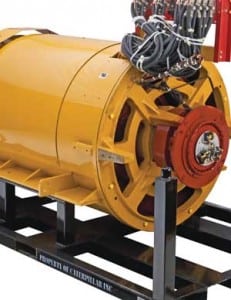
NewsRemanufactured Generator Ends
Caterpillar Inc. introduced a new family of remanufactured generator ends for standby, prime, and continuous power applications. The C32 and 3500 series Caterpillar engines have been used for applications ranging from distributed generation to prime power for remote communities. The first wave of remanufactured generator ends includes 34 part numbers, which are available worldwide in […]
-
Our Integrity Is Not for Sale
I was putting the finishing touches on this month’s editorial when I received an email from a reader who owns a company that serves the power industry. He was very complimentary of an article I recently wrote. "Goes without saying," I was thinking to myself. However, actually saying it goes a long way in my book, and I enjoy hearing from readers — at least most of the time.
-
 News
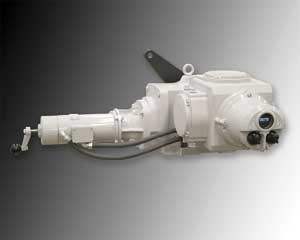
NewsHigh-Torque Electric Rotary Actuator
Rotork Process Controls introduced the SM-6000 S2, an electric rotary actuator for a wide range of heavy-duty damper drive applications found in power plants. The actuator provides high speeds and high torque for continuous modulating duty. It also offers positioning accuracy and can operate well in harsh and rugged environments. The SM-6000 S2 includes an […]
-
-
 News
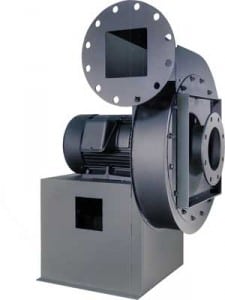
NewsPressure Blowers for High-Volume Applications
Chicago Blower has developed a series of 16 higher-pressure blowers that are suited to combustion air, aeration, cooling and drying systems, and other high-volume processes. The blowers support pressures of up to 91-inch water gauge and volumes of up to 18,000 cubic feet per minute. Features include a lightweight aluminum alloy wheel design to reduce […]
-
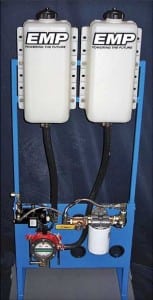 O&M
O&MExtreme Oil Changes
Performing regular oil changes on remote generators is far from simple or cost-effective. Here’s how one firm harnessed technology to extend oil change intervals from one week to two months.
-
 News
NewsTool and Equipment Management Software
Washington-based software developer Dynamic Systems Inc. launched the Basic Tool Manager, a software based on barcode technology, which has been developed for companies that want to reduce the loss of tools and save time tracking down equipment and tools. Using a wireless barcode reader, users can scan a personnel badge and then a piece of […]
-
Legal & Regulatory
Too Many Fingers in the Smart Grid Pie?
There has been much excitement about the advent of the "smart grid" recently, especially because of the strong push by the Obama administration. Despite the simple-sounding term, the smart grid is not a simple concept.
-
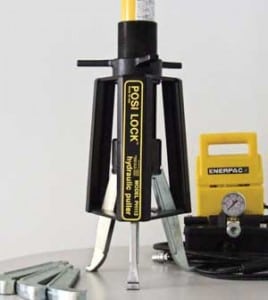 News
News25-Ton Hydraulic Internal/External Puller
Posi Lock’s hydraulic line featuring the patented "Safety Cage" has been expanded to include the PH-113IE, a three-jaw, 25-ton internal/external puller that is designed to solve problems associated with the removal of gears, bearings, and other press-fit items. The PH-113IE’s internal puller jaws have a reach from 2.5 inches to 7 inches and a spread […]
-
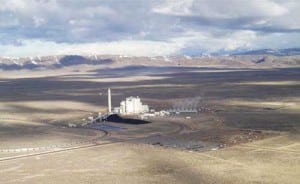 Instrumentation & Controls
Digital Networks Prove Reliable, Reduce Costs
The debate over the benefits of using digital bus networks as the communications backbone of new power plants is all but settled. The technology is maturing, and the reliability of digital hardware is superior to that of hardwired systems. Newmont Gold Mining’s 200-MW TS Power Plant is perhaps the power industry’s best example of how a plantwide digital controls architecture can provide exceptional reliability and be significantly less costly to install.
-
News
Ark. Appeals Court Blocks Turk Plant; SWEPCO Files Appeal, Will Continue Construction
An Arkansas appeals court last week overturned on technical grounds a key decision by the state regulators that authorized construction of Southwestern Electric Power Co.’s (SWEPCO’s) 600-MW John W. Turk Jr. coal-fired power plant in Hempstead County—the nation’s first ultrasupercritical project. SWEPCO on Monday filed an appeal with the Arkansas Supreme Court and said it would continue the plant’s construction because delays could prove costly.
-
 Coal
CoalDesigning an Ultrasupercritical Steam Turbine
Carbon emissions produced by the combustion of coal may be collected and stored in the future, but a better approach (in the near term at least) is to reduce the carbon produced through efficient combustion technologies. Increasing the efficiency of new plants using ultrasupercritical technology will net less carbon released per megawatt-hour using the world’s abundant coal reserves while producing electricity at the lowest possible cost.
-
 Gas
GasMitsubishi Wraps Up Development of J-Class Mega Turbine
This March, Japan’s Mitsubishi Heavy Industries Ltd. (MHI) quietly completed development of the "J-series" gas turbine — a machine that has been extolled in the turbo-machinery world for its ability to produce one of the world’s largest power generation capacities and highest thermal efficiencies.