
Articles By
-
News
New Hampshire Governor Vetoes RGGI Withdrawal Bill
New Hampshire’s Gov. John Lynch last week vetoed a bill that would have withdrawn the state from the Regional Greenhouse Gas Initiative (RGGI), a regional carbon trading program whose members include nine other Northeastern and Mid-Atlantic states. The governor said the bill would cost the state’s citizens jobs and hinder economic recovery.
-
News
AECL to Sell CANDU Division to Engineering Firm
Atomic Energy of Canada Ltd.’s (AECL’s) CANDU reactor division is to be sold to Canadian engineering firm SNC-Lavalin Group Inc. for C$15 million Canada’s natural resources minister, Joe Oliver, announced last Wednesday.
-
News
DOE Offers Conditional Loan Guarantee Commitments to Three Calif. PV Plants
Last Thursday, U.S. Energy Secretary Steven Chu announced offers of conditional commitments for loan guarantees of approximately $4.5 billion to support three alternating current cadmium telluride (Cd-Te) thin film photovoltaic (PV) solar generation facilities.
-
News
Fire and Jellyfish Threaten Plant Operations
An explosion and fire at a French nuclear plant and jellyfish clogging Scottish and Israeli cooling water intakes were added to the list of challenges faced by nuclear and coal generators in the past week.
-
News
Flooding Forces Partial Evacuation at Missouri Coal Plant
Last Wednesday, worsening flooding conditions along the Missouri River prompted the partial evacuation of nonessential workers from the Iatan Power Plant in Weston, Missouri, 40 miles north of Kansas City. The plant remains in operation.
-
News
Japan Restricts Power Usage, India Also Experiencing Shortages
For the first time in 37 years, the Japanese government ordered large customers to restrict electricity usage if they are in Tohoku Electric Power Co. Inc.’s or Tokyo Electric Power Co.’s (TEPCO’s) service territories, effective July 1. With the exception of essential services and powering cleanup operations at the destroyed Fukushima Daiichi nuclear plant, large energy users are to cut consumption 15% below last summer’s levels.
-
News
Feds: Massey Energy Misled Mine Safety Inspectors
The U.S. Mine Safety and Health Administration (MSHA) announced last Wednesday that it has determined that Massey Energy officials kept two sets of safety records for the Upper Big Branch Mine (UBB) in Raleigh County, W.Va., site of a deadly explosion a year ago. Additional details, including evidence that miners faced intimidation that prompted them to ignore safety hazards, point to the conclusion that the accident last spring was preventable.
-
News
N.J. and France Ban Fracking While N.Y. Is About to Lift Fracking Moratorium
Last week, New Jersey’s Legislature passed legislation that affirmed the state’s involvement in the Regional Greenhouse Gas Initiative (RGGI) and banned the natural gas drilling technique known as hydraulic fracturing, or fracking. Neighboring New York, meanwhile, is poised to lift a moratorium on new shale gas drilling, and France has become the first country to ban fracking.
-
News
Environmentalists Protest NRC Approval of 20-Year License Renewal for Salem Station
On June 30, the Nuclear Regulatory Commission (NRC) approved PSEG Nuclear’s request to extend the operating licenses of Salem Generating Station Units 1 and 2 an additional 20 years. The decision was met by protests from environmentalists, who say that PSEG Nuclear has done too little to address leaks at the plant.
-
News
Emergency Loans for Australian Coal Plants Hit by Carbon Tax
Australia’s coal-fired power plants will have access to emergency federal loans to prevent financial failure and ensure power supplies. The government move is in response to a carbon tax set to be announced on Sunday.
-
HR
Writing an Employee Handbook Your Employees Will Read, and Heed, Part 2
In the last issue of MANAGING POWER we looked at some of the important points to keep in mind when writing an employee handbook to ensure that employees will actually will read it and adhere to its policies. This concluding article covers 10 of the most important policies that should be included.
-
Nuclear
Germany to Shut Down All Nuclear Reactors
Germany’s Chancellor Angela Merkel at the end of May officially endorsed a plan to shut down all 17 of the nation’s nuclear power plants by 2022. The decision, which gives the power-intensive nation just over a decade to find new sources of power for 23% of its energy needs, has had reverberations all over the world, though the future of nuclear—through growth in developing nations—continues to look sturdy.
-
Business
FERC Surrenders Jurisdiction over Station Power in California
In a surprising decision, a federal agency surrendered some of its regulatory authority—and parts of the industry don’t approve. The Federal Energy Regulatory Commission declined to defend its jurisdiction over station power in the California power market, potentially giving an economic advantage to utility generators nationwide and putting merchant generators at a disadvantage.
-
 Supply Chains
IFS Study: ERP Too Complicated and Inflexible for the Electric Power Industry
Enterprise resource planning software has swept the power industry, promising to improve coordination and management. Has it lived up to the hype? One ERP vendor says the programs often underperform.
-
 Nuclear
TEPCO: Most Fuel at Daiichi 1 Melted
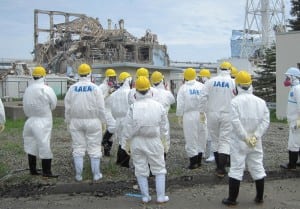
Tokyo Electric Power Co. (TEPCO) in May discovered—after calibrating water gauges—that the water level in the reactor pressure vessel of Unit 1 at the quake- and tsunami-ravaged Fukushima Daiichi nuclear plant may have dropped to such low levels that the fuel was completely uncovered. This caused almost all the fuel pellets to melt and fall to the bottom of the vessel at a relatively early stage in the accident—roughly 15 hours after the March 11 earthquake that killed an estimated 28,000.
-
 Coal
CoalConsolidation, Market Distortions Underlie Remarks by Industry Executives
If you needed additional proof that the power industry is changing, the ELECTRIC POWER keynote and panel discussions over the past few years have provided it—top-of-mind issues have been significantly different each year. For the 2011 keynote speaker and panelists, the challenges of reliability, regulatory compliance, financing, and getting the fuel mix right took center stage. In the wake of Japan’s nuclear crisis, safety also featured prominently.
-
Commentary
Planning for a Major Trading Counterparty Bankruptcy
Central banks in the past 18 months have injected a flood of money into financial markets. This liquidity in the system has allowed many marginal companies to issue bonds and avoid looming bankruptcy. Now is the time to take steps to protect yourself from the effects of a failed business relationship.
-
 Nuclear
Holtec, Westinghouse Roll Out Small Modular Reactor Designs
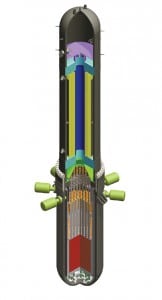
As the Daiichi nuclear crisis has governments around the world reconsidering their nuclear-heavy energy plans and scrutinizing the safety of existing reactors and third-generation designs, several developers are touting the merits of small modular reactors (SMRs).
-
 Nuclear
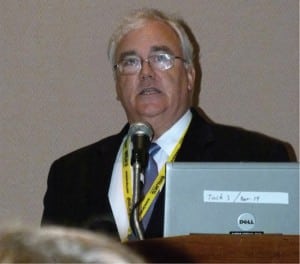
Nuclear Power in the Shadow of Fukushima
Risk, risk management, and the specter of Fukushima ran through the nuclear track at May’s ELECTRIC POWER Conference in Chicago. The reality of risk, driven home by the horrendous events in Japan, was a recurring theme in many presentations, in questions to speakers, and in the conversations among delegates during informal moments.
-
Commentary
Five Reasons Why Leaders Need a Closed Door Policy
Many leaders believe that an open door policy will improve employee communications and group productivity. On the other hand, there are five reasons why a closed-door policy may have more benefits to your organization.
-
 Hydro
HydroCarbon Trust: Marine Energy Has High Potential but Faces Several Challenges
In a an analysis released this May, nonprofit UK group Carbon Trust admits that there is “still considerable uncertainty as to whether wave and tidal systems will play a meaningful role in meeting global energy needs,” but it suggests, based on high and low scenarios, that up to 240 GW of marine capacity could be deployed globally by 2050. Roughly 75% of this capacity will come from wave and the remainder from tidal energy.
-
 O&M
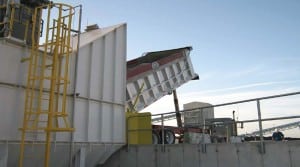
O&MSolid Fuels: Moving Material and Managing Emissions
In today’s solid-fueled power plant, managing emissions and moving materials more defines the task than the traditional work of making megawatts. That’s the message that emerged from the coal and solid fuels track at this year’s ELECTRIC POWER.
-
Commentary
How to Fix a Hiring Mistake
Have you ever made a hiring mistake? The candidate had the right credentials, experience, and the price was right. When the new employee never meets minimum expectations, what should you do?
-
Business
POWER Digest (July 2011)
Indonesia Sees Surge in Contracts for New Power Plants. Indonesia is Southeast Asia’s largest economy, but because it is stricken by chronic power shortages that limit economic growth, the nation’s government is pushing for massive infrastructure improvements. A consortium of Japan’s Electric Power Development (J-Power), Itochu Corp., and Adaro Energy, an Indonesian coal miner, on […]
-
 Solar
SolarUtilities Increase Renewable Energy Capacity
Driven by state RPS requirements and the desire to diversify their energy sources, U.S. utilities continue to add more renewable power to their generation portfolios. As a result, they must deal with a number of important issues, including resource availability that varies geographically.
-
Legal & Regulatory
California’s New RPS: Opportunity Squandered
In April, California Governor Jerry Brown (D) signed Senate Bill 2 (SB2) into law. When it becomes effective later this year, SB2 will be the primary legislation governing implementation of the California Renewables Portfolio Standard (RPS) program.
-
 Solar
SolarSunny Days Ahead for Solar
In the U.S., developers of thermal and photovoltaic solar plants face a number of challenges in their efforts to deploy more utility-scale solar power. Some trends, however, are helping solar proponents move this renewable energy source closer to becoming a mainstream generating option.
-
O&M
Texas Competitive Model Spreads to Pennsylvania and Illinois
A record 400 attendees participated in KEMA’s 22nd annual Executive Forum in San Antonio, Texas, in late April to debate and discuss the “retail resurgence” of competitive electricity sweeping America.
-
 News
NewsSpectrophotometer with Radio Frequency Identification
Hach Co. unveiled its DR 3900 spectrophotometer featuring state-of-the-art radio frequency identification (RFID) technology. Hach, which describes the device as being “similar to a GPS telling you when to turn,” also says that the DR 3900 requires less training and increases confidence in the test results. This helps water and wastewater facilities prevent measurement errors. […]
-
Business
New Opportunities Abound for Retail Electric Suppliers
Following the conclusion of the KEMA conference (see previous story), Mark Axford had the opportunity to talk with Phillip Tonge, recently appointed president of Spark Energy LP. Spark Energy is a retail energy provider (REP) of electricity and natural gas in 16 states that have opened their markets to competition for industrial, commercial, or residential customers.