
Articles By

-
News
European Transmission Operators Warn of Possible Load Shedding This Winter
An association of 41 European transmission system operators (TSOs) from 34 countries last week warned that adequacy margins in the coming winter could dip dangerously and threaten power supply for most of the continent.
-
News
U.S. Solar Panel Makers Petition Govt. to Investigate Chinese Solar Subsidies, Dumping
A coalition of seven U.S. manufacturers of solar cells and panels today petitioned the U.S. International Trade Commission (ITC) to investigate whether Chinese manufacturers are illegally dumping crystalline silicon solar cells into the U.S. market and receiving illegal subsidies from China. The measure follows a string of bankruptcy filings by several U.S. solar manufacturers in the past few months.
-
News
Stuxnet Variant Discovered in European Systems
New variants of Stuxnet—the sophisticated computer virus designed to attack control systems and which was used last year to sabotage the Iranian Bushehr nuclear power plant—has been detected in European computer systems. The malware, dubbed “Duqu” is “essentially the precursor to a future Stuxnet-like attack,” computer security firm Symantec said on Tuesday.
-
General
RFF: No Discrepancies between USGS and EIA Shale Gas Estimates
By Kennedy Maize Washington, D.C., October 18, 2011 — Remember the flap about inconsistencies between the Energy Information Administration and the U.S. Geological Survey over shale gas estimates for the Marcellus formation? Forget about it. According to a new paper from the Washington think tank Resources for the Future, there’s no discrepancy at all: the […]
-
General
The Perils of Nuclear DIY
By Kennedy Maize Washington, D.C., October 17, 2011 – To describe Progress Energy’s Crystal River nuclear power plant on Florida’s west coast as a problem unit is a substantial understatement. Commissioned in 1977, the 838-MW Babcock & Wilcox pressurized water reactor has been one of nuclear’s Poor Pitiful Pearls for the past few years. Currently, […]
-
News
EPA Eases SO2, NOx Limitations for Some States Under CSAPR
The Environmental Protection Agency (EPA) on Thursday proposed “technical adjustments” to the Cross-State Air Pollution Rule (CSAPR) finalized on July 6 that would increase statewide limitations on emissions of sulfur dioxide (SO2) and nitrogen oxide (NOx) for nine states. This proposal also amends the assurance penalty provisions for all states within the program so that they start in 2014, instead of 2012, to promote the development of allowance market liquidity and smooth the transition from the Clean Air Interstate Rule (CAIR) program.
-
News
25 States Ask Federal Court to Delay EPA Utility MACT Rule
Twenty-five states and the U.S. Territory of Guam on Monday filed an amicus brief and urged a federal court to force the Environmental Protection Agency (EPA) to delay its proposed Utility Maximum Achievable Control Technology (Utility MACT) rule by one year, until at least Nov. 16, 2012. The EPA has said it is on track to finalize the rule this November.
-
News
Finnish EPR Project Delayed Again
The start of operations at the Finnish utility Teollisuuden Voima’s (TVO’s) Olkiluoto 3 nuclear power plant, Europe’s first EPR, which is under construction in Finland, could be postponed until 2014. The $4 billion project, originally due to come online in 2009, is years behind schedule and has been consistently plagued with faulty materials and planning problems since construction began in 2005.
-
News
Georgia, Xcel Join Growing List of Entities Legally Challenging EPA’s CSAPR
Georgia Attorney General Sam Olens on Thursday filed suit against the Environmental Protection Agency’s (EPA’s) Cross-State Air Pollution Rule (CSAPR), which was finalized by the EPA this summer. On Monday, Xcel Energy also filed suit against the EPA, asking the agency to reconsider its methodology for calculating allowable emissions.
-
News
DOE Stops Short of Delegating Transmission Siting Authority to FERC
Instead of transferring to the Federal Energy Regulatory Commission (FERC) its authority to conduct congestion studies and establish a process for designating national transmission corridors under section 216 of the Federal Power Act (FPA), as it was considering last month, Energy Secretary Steven Chu said the Department of Energy would work “more closely” with FERC in reviewing new transmission projects.
-
News
New England Grid Faces Myriad Challenges Amid Changing Power Sector Landscape
An analysis released by ISO New England on Thursday identifies several challenges that could dramatically change New England’s grid, including the retirement of generators and the integration of renewable resources.
-
News
PPL to Build New Line, Substations in Pennsylvania
PPL Electric Utilities on Tuesday said it would build 57 miles of a new 230-kV power line from the Wilkes-Barre area in Pennsylvania to an area west of Hawley, Wayne County, as well as three new substations to improve service for homes and businesses in northeast Pennsylvania and the Poconos.
-
News
Consultancy Group Downgrades Coal Plant Retirement Projections
ICF International, a consultancy group that earlier this year had predicted 68 GW of coal-fired power plants could retire by 2030 as a result of finalized and proposed regulations from the Environmental Protection Agency (EPA), on Monday downgraded its retirement projections to 50 GW.
-
General
Guest Blog: Obama Administration’s Electric Transmission Announcement
By Carl Zichella Oct. 5, 2011 — The Obama administration’s Rapid Response Team for Transmission (RRTT), today announced a plan to accelerate the permitting and construction of seven transmission lines that are forecast to create thousands of operational and construction jobs. These projects are intended to serve as pilot demonstrations of streamlined federal permitting and […]
-
News
White House Likely to Veto Bills Delaying CSAPR, Boiler Rules
Just weeks ago, President Obama signaled he would veto the TRAIN Act—a bill that could indefinitely delay implementation of the Cross-State Air Pollution and the utility MACT rules. This week, the White House said that it “strongly opposed” two bills that would delay the compliance period for reducing pollution from industrial boilers, solid waste incinerators, and cement plants.
-
News
California Supreme Court Clears Way for Cap-and-Trade Rulemaking
California’s Supreme Court last week gave the state’s Air Resources Board (ARB) the green light to proceed with a statewide cap-and-trade program that seeks to cut California’s greenhouse gas emissions to 1990 levels by 2020.
-
News
NRC Extends Bellefonte Construction Permit, Issues Conditions for North Anna Restart
The Nuclear Regulatory Commission (NRC) on Friday extended a construction permit for the Tennessee Valley Authority’s (TVA’s) unfinished Unit 1 reactor at the Bellefonte site near Scottsboro, Ala. The agency last week also listed actions Dominion must take before restarting operation of the quake-hit twin-reactor North Anna nuclear power plant near Louisa, Va.
-
News
Reports: Stirling Dish Maker Is Newest Casualty of PV Price Plummet
Stirling Energy Systems, the Scottsdale, Ariz., maker of a reflective dish that concentrates sunlight onto a Stirling engine, has reportedly filed for Chapter 7 bankruptcy—making it the fourth solar company to fall this year amid the plummeting price of solar photovoltaic (PV) panels.
-
News
DOE Finalizes Seven Loan Guarantees Before Program Deadline
Hours before the Department of Energy’s (DOE’s) controversial advanced energy loan guarantee program (funded under the 2009 American Recovery and Reinvestment Act) expired on Friday, the agency finalized seven loan guarantees totaling more than $5.9 billion. Projects include solar power facilities in California, Nevada, and Arizona, and a bioenergy project in Kansas.
-
News
DOE Grants Push Energy Storage, Renewables Integration
Sixty projects in 25 states were awarded a total of $156 million on Thursday under the Department of Energy’s Advanced Research Projects Agency-Energy (ARPA-E) agency. They focus on accelerating innovations in clean technology while increasing America’s competitiveness in rare earth alternatives and breakthroughs in biofuels, thermal storage, grid controls, and solar power electronics.
-
News
Ameren to Shutter Two Ill. Coal Facilities on CSAPR Cost Concerns
Ameren Energy Resources (AER) Co. on Tuesday announced it would shutter its coal- and oil-fired Meredosia and Hutsonville energy centers in Illinois by 2011, citing concerns about rising costs related to the compliance of the Environmental Protection Agency’s (EPA’s) Cross-State Air Pollution Rule (CSAPR).
-
 Nuclear
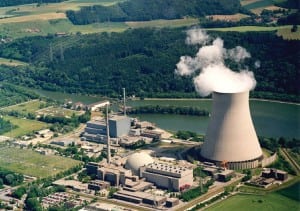
Germany’s Nuclear Phase-Out Has Widespread Implications
The German government in July finalized a package of bills that will phase out nuclear’s 23% contribution to the country’s power supply by 2022 and increase renewable generation from the current 17% to 35%. In August, the Federal Network Agency ( Bundesnetzagentur) said it wouldn’t rely on power from seven of the nation’s oldest reactors […]
-
 Coal
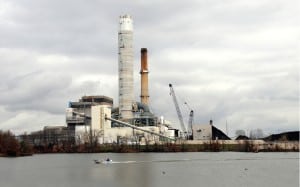
CoalTop Plant: Coffeen Energy Center, Montgomery County, Illinois
Situated in predominantly rural central Illinois, the 1,000-MW Coffeen Energy Center has installed a number of controls in recent years and achieved significant environmental performance. For example, in 2010 a new scrubber facility was added that reduces SO2 from combustion gases coming from the plant’s two coal-fired boilers. The plant personnel’s continuing commitment to protecting the environment helps to promote a strong relationship between the plant and the local community.
-
 News
NewsHigh-Horsepower, High-Pressure Water Jet Pumps
The new NLB 605 series of water jet pump units from NLB Corp. gives users a powerful combination of ultra-high pressure and high horsepower in a rugged unit they can convert to a variety of operating pressures. The range of the NLB 605 Series has been expanded to include eight operating pressures from 4,000 psi […]
-
 Nuclear
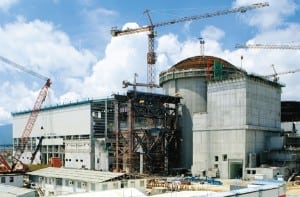
Ling Ao 4 Starts Up While Sanmen Gets First AP1000 Reactor Vessel
In China this August, as Ling Ao Unit 4—the second unit of the Ling Ao Phase II nuclear plant—started commercial operation, Westinghouse and its consortium partners marked the milestone of receiving the reactor vessel for the Sanmen nuclear power plant—the world’s first AP1000—in China’s Zhejiang province. The start-up of Ling Ao Unit 4 in Guangdong […]
-
 Coal
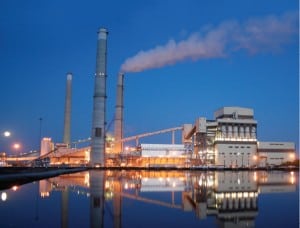
CoalTop Plant: J.K. Spruce 2, Calaveras Power Station, San Antonio, Texas
CPS Energy, the largest municipally owned utility in the U.S. providing both natural gas and electric service, implemented an energy plan in 2003 that required energy conservation measures, use of available renewable energy sources such as wind and solar, and additional coal-fired generation. The $1 billion 750-MW Spruce 2 fits into that plan by being one of the cleanest coal-fired plants in the country.
-
 News
NewsHigh-Flow Gas Regulators for Pipeline Monitoring
The BelGAS division of Marsh Bellofram Corp. introduced Type P627, a high-performance, spring-loaded, direct-operating high-flow gas regulator that is designed to control both low- and high-output pressure in oil and gas applications. Designed for maximum durability, Marsh Bellofram BelGAS Type P627 regulators are compact and offered in multi-position body and spring case configurations. Units offer […]
-
 O&M
O&MEnhanced Capture of Mercury Using Unique Baghouse Filter Media
Several states have already instituted mercury emission limits in expectation of tightening mercury emission rules that will require reductions of up to 91%. Coal-fired plants searching for an economical way to meet the new limits may need to look no further than replacing their baghouse filter elements.
-
 Gas
GasNew Peaking Plant to Balance California’s Renewables
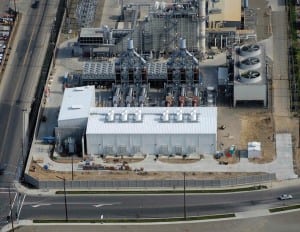
As utilities in California are scrambling to meet the state’s 33% renewable mandate by 2020, a 49.6-MW peaking plant in Modesto, Calif., built by Finnish firm Wärtsilä for the Modesto Irrigation District, has been commissioned to provide flexible, fast-start peaking generation to balance the state’s increase in intermittent renewable generation (Figure 4). 4. Flexible peaking. […]
-
 Coal
CoalTop Plant: John Twitty Energy Center Unit 2, Springfield, Missouri
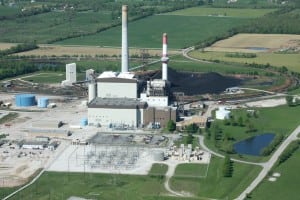
Utilities of Springfield elected to add a 300-MW coal-fired plant to its fleet to meet rising demand for electricity. It was the first coal plant constructed by the utility since 1976. An extremely competitive construction market required the utility to adopt new contracting practices to meet a tight project schedule, an approach that proved very successful. The $555 million plant commissioned in January 2011 is expected to cover system growth at least through 2024.