
Articles By

-
 Solar
SolarU.S.-China Solar Trade Dispute Gets Thornier
A trade row between the Chinese government and solar panel makers around the world intensified in December. As China’s Ministry of Commerce refuted allegations that the Chinese government uses illegal subsidies, discounts for raw materials, preferential loans, tax incentives, and currency manipulation to drive down prices and amplify exports of Chinese solar photovoltaic (PV) panels, the U.S. International Trade Commission (ITC) affirmed the U.S. solar industry is “materially injured” by imports, at “less than fair value,” of Chinese crystalline silicon PV cells and modules.
-
Business
POWER Digest (January 2012)
South Korea, China Poised to Make Colossal Investments in Wind Power. South Korea, a nation that recently announced it would spend 1 trillion won ($884 million) on feed-in tariffs for wind and solar projects, on Nov. 10 said it planned to invest 10.2 trillion won ($9 billion) in a 2.5-GW offshore wind farm that could […]
-
 News
NewsAdvanced PV Tracking System
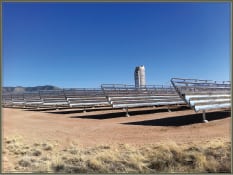
SunPower has introduced the SunPower C7 Tracker, a solar photovoltaic (PV) tracking system that concentrates the sun’s power seven times to achieve what the company claims could be “the lowest levelized cost of electricity (LCOE) for utility-scale solar power plants available today.” The C7 Tracker combines single-axis tracking technology with rows of parabolic mirrors, reflecting […]
-
 O&M
O&MLevel Switches Keep Electrostatic Precipitators Online
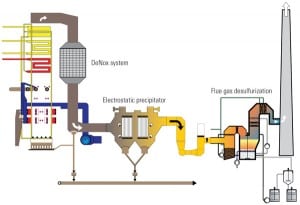
Measuring the level of dust and fly ash collected in electrostatic precipitators (ESPs) is a very difficult technical problem. At one utility, level switches were so unreliable that operators could not trust their readings because failures were so frequent. When a switch did fail, the precipitator would often clog up, costing the utility up to $100,000 in downtime and repair costs.
-
 News
NewsHandheld Vibration Meter
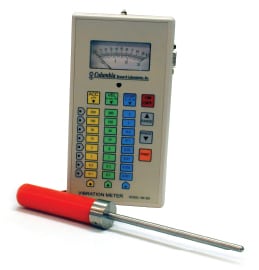
Columbia Research Laboratories has introduced the Model VM-300 vibration meter, a general purpose vibration-measuring instrument designed for periodic routine checks of industrial equipment where portability and ease of use are required. Acceleration, velocity, and displacement measurement modes are provided, along with a number of value-enhancing features. Dual power allows the VM-300 to be powered from […]
-
 Commentary
The Boss and Leadership
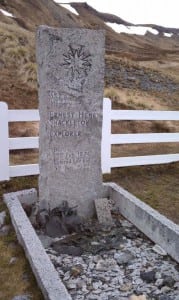
Friends, colleagues, and co-workers uniformly called him "The Boss." His life was a story of failure after failure. His greatest fame was his greatest failure—a journey begun nearly 100 years ago, in 1914, to cross the desolate Antarctic continent by land. His doughty ship Endurance became trapped by the encroaching ice in the Weddell Sea north of the continent, isolating Sir Ernest Shackleton and his 27-man crew.
-
 Coal
CoalAsian Sub-Bituminous Coal Users’ Group Formed
Over the past 11 years, the Powder River Basin Coal Users’ Group (PRBCUG) has grown to become the voice of North American generating companies that are dedicated to the safe and efficient use of PRB coal. POWER, the group’s media sponsor, has reported on the PRBCUG’s annual meetings, which are colocated with the ELECTRIC POWER Conference & Exhibition each year. POWER also reports annually on the group’s coal plant of the year award. For 2011, in the large plant category the award went to Kansas City Power & Light’s Iatan Unit 2 (see our August 2011 issue); the small plant category winner, Muscatine Power & Water, is profiled in this issue, beginning on page 56.
-
HR
TREND: The Cutting Edges of Human Resource Management
There is a fine line between personnel management and intruding into the personal lives of employees. Staying on the right side of that line is challenging, particularly when prior legal decision are mixed.
-
 O&M
O&MMarmaduke Award Trophy Presented
The 2011 Marmaduke Award winner was CTG Universidad, a two-unit combustion turbine plant built in the early 1970s in Monterrey, Mexico. The award was made to the plant in recognition of its upgrade of one 14-MW unit to operate as a synchronous condenser, thus relaxing power restrictions caused by a lack of sufficient reactive power production in the north of the city. More reactive power production by this urban plant also allows delivery of more power produced by efficient combined cycle plants located outside the city, because it reduces the amount of reactive power that must be moved over transmission lines.
-
Supply Chains
Bulls Beating Bears in Shale Gas Inquiry
As the resource gets increased and more sophisticated scrutiny, natural gas from shale looks increasingly like a revolutionary force in energy markets. Most recently, the Washington-based environmental and energy think tank Resources for the Future rolled out a serious analysis of the new method of developing gas, and the issues it presents. The preliminary results look very positive for gas.
-
News
Correction
In “Siemens Releases ‘ShapingPower’ Option for Renewables Integration” (December 2011), the Figure 3 callouts for wind and solar were reversed. POWER regrets the error. A corrected version can be found in the online version of the article. â–
-
Smart Grid
New Technology Enhances Grid Stability
For power providers, grid stabilization has been a rising concern in recent years, especially because of the increasing use of intermittent energy sources such as wind turbines. Maintaining a stable electricity grid is difficult because of the unpredictability of intermittent energy sources. If wind turbines, for example, are supplying 5% of the overall power for the grid and the turbines stop moving because the air grows still, the grid has to find a way to kick into overdrive to compensate for this sudden decrease in energy. It’s not as easy as it sounds.
-
Legal & Regulatory
Green Technology = Green Jobs?
In discussing implementation by the California Public Utilities Commission (CPUC) of California’s new renewable energy law, CPUC Commissioner Timothy Alan Simon urged consideration of the economic, technical, and political consequences of the CPUC’s actions: “Renewable energy is a fuel source—it’s not a religion.” The promotion of renewable energy remains critical, but as Commissioner Simon admonishes, […]
-
Legal & Regulatory
Getting Peak Returns out of Peaking Turbines
Gas turbines are expensive. Although peaking units aren’t as costly as baseload units, letting them sit idle is still a waste. Yet that is what peaking units spend nearly all their time doing. Some operators only fire up their units a few days a year. That is like putting money in the bank and collecting interest a few hours at a time, rather than all year round. That strategy only works when the payback is extremely high for those short periods.
-
 Coal
CoalU.S. Confronts Pipeline Gaps While Europe Juggles Renewables and Debt
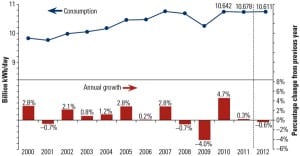
U.S. optimism has been restored by reports of abundant, reasonably priced natural gas to fuel most new generation; however, huge gaps in the fuel delivery system (thousands of miles of pipelines are needed) will soon challenge gas plant development. Meanwhile, the cloud of sovereign debt hangs over all major capital projects in Europe, where the UK moves ahead with new nuclear projects while many of its neighbors shut the door on nuclear and struggle to finance their commitment to renewables.
-
Business
Social Media and Disaster Management
As demonstrated by last fall’s unexpected snowfall in New England and the Mid-Atlantic states, and the ensuing lengthy outages and public outrage, crisis communications is a hot topic for power utilities. And in addressing that topic, the role of social media is getting attention as a tool for disaster management.
-
 O&M
O&MEPRI Bridges Industry R&D Gaps
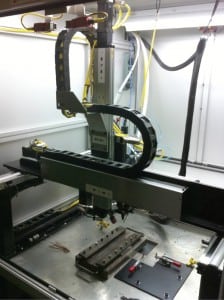
The technologies used to generate and distribute electricity will be radically transformed during the coming decade. Amid that change, the power industry must continue to meet customer reliability, safety, and cost-of-service expectations. Achieving the right balance among these often-conflicting goals is the primary focus of every utility. The Electric Power Research Institute is helping utilities achieve that balance with R&D programs for many new and emerging technologies.
-
HR
Workplace Drama: How to Define It and Identify It
Welcome to "Workplace Drama," a new, regular MANAGING POWER column by noted communications and human resources expert Marlene Chism. Her column will appear in each issue, and as the column progresses, we hope to hear from you with real-world situations and questions, to which Marlene will respond.
-
News
My Top 10 Predictions for 2012
The New Year will be pivotal for the power generation industry, as you will read in our 2012 Industry Forecast (p. 26) and my list of predictions below. Looking back over the past year, I again gave myself a B+ on my 2011 predictions (see p. 33 for a rundown of my individual scores).
-
 Coal
CoalChina’s 12th Five-Year Plan Pushes Power Industry in New Directions
The Five-Year Plan is the expression of the centralized planning goals for China’s economy. The 12th Five-Year Plan, approved by the Chinese Government on March 14, 2011, established many social and economic goals, including significant expansion of the country’s power generation industry in many new directions.
-
Commentary
How Much Should Government Subsidize Energy Projects?
How much taxpayer money should be used to support renewable and clean energy projects? And is federal government getting a good deal for its money? In a time of fiscal distress, with the government facing a huge debt and deficit, policy experts (and the public) are increasingly taking a closer look at these important issues.
-
-
 Coal
CoalPRBCUG Small Plant of the Year: Muscatine Power & Water
Employees at the 293-MW Muscatine Power & Water plant combine a positive attitude with an aggressive focus on workplace safety, inspired by the motto: “We all can adapt, adopt, and improve to meet the challenges head on to provide our customers with reliable power.” The facility began using Powder River Basin coal in 1993, and the staff have learned effective techniques to use it safely.
-
News
Condenser Life Cycle Seminar
The November issue of POWER featured a special section titled “Condenser Life Cycle.” That set of four articles covered topics including condenser performance, operation and maintenance (O&M), failure mechanisms, and retubing—topics you will surely find useful at some time in your career. The authors of those four articles work for companies that are part of […]
-
Commentary
Keys to Improving Customer Communication
Utility organizations are struggling to find a way to more effectively and efficiently communicate with their customers about basic information, including their amount due, ways to lower energy usage, and promotions.
-
 Coal
CoalTHE BIG PICTURE: Gas Taxes
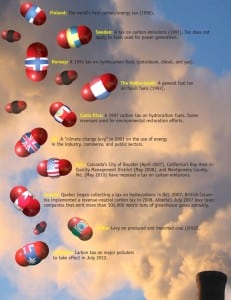
After years of political wrangling, coal-rich Australia in November passed legislation that will require the nation’s top 500 polluters, starting in July 2012, to pay a tax at a fixed price of A$23 (US$23.50) per ton of carbon. The tax increases 2.5% annually until 2015, when an emissions trading program will begin. With the Kyoto […]
-
 Coal
CoalNavigant Announces Coal-Fired Generation Operational Excellence Awards
Navigant’s Operational Excellence Awards are presented annually to those North American coal-fired generation plants that have demonstrated excellence in cost-efficient reliable plant performance over the preceding five-year period. The data used to select the winners derives from Navigant’s Generation Knowledge Service fossil database.
-
Commentary
Power Grid Cyber Security Strategies
This is the second of two articles addressing the security of the U.S. power grid. Part one outlined the nature of the cyber threat, described the existing regulatory framework for protecting the grid against cyber threats, and identified the uncertain legislative and regulatory future for additional protection. This article presents 10 strategies that grid infrastructure owners can take now to help ensure greater security of the grid.
-
 Coal
CoalWorld Energy Outlook Forecasts Great Renewables Growth
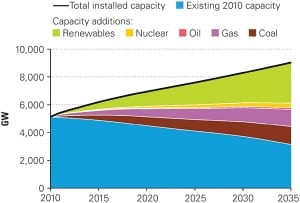
Driven by policies to limit carbon emissions, as well as government subsidies, the share of worldwide nonhydro renewable power is set to grow from just 3% in 2009 to 15% in 2035, the International Energy Agency (IEA) forecasts in its recently released World Energy Outlook 2011. Under the same scenario—which assumes that carbon pricing, explicit […]
-
 O&M
O&MReal-time Proactive Safety in Construction
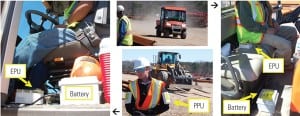
For each of the past 10 years, nearly 1,200 U.S. construction workers have died as the result of injuries received on the job. Of these fatalities, 25% involved heavy equipment—most categorized as struck-by incidents. Remote sensing and visualization technology promises to improve worker situational awareness on congested and busy work sites.