
Articles By

-
General
Say Goodbye, Commissioner Svinicki
By Kennedy Maize Washington, D.C., 19 April 2012 — Advice to NRC commissioner Kristine Svinicki: it’s time to start polishing that resume. Your days on the regulatory commission are over. The term of Republican Svinicki, who led an unsuccessful attempted regicide of NRC chairman Greg Jaczko last year, expires June 30. Under the law, the […]
-
News
Research Firm: Federal Clean Energy Standard Unlikely in Near Future
Passage of the a federal Clean Energy Standard (CES) or Renewable Energy Standard (RES) in the near future is highly unlikely given the current political climate and upcoming election cycle, an analysis from research consulting firm Wood Mackenzie shows.
-
News
Mercury and Air Toxics Standard Takes Effect amid Mounting Legal Pushback
The Environmental Protection Agency’s (EPA’s) final Mercury and Air Toxics Standards (MATS) quietly took effect on Monday, kicking off the three-year compliance period mandated under the Clean Air Act. Several more groups filed suit before the filing deadline for legal challenges on April 16, including the Utility Air Regulatory Group (UARG), Colorado’s Tri-State Generation and Transmission Association, and the American Public Power Association (APPA).
-
News
Federal Court Panel Hears Cross-State Rule Arguments
A three-judge panel at the U.S. Court of Appeals for the District of Columbia Circuit on Friday heard oral arguments in a case challenging the Environmental Protection Agency’s (EPA’s) Cross-State Air Pollution Rule (CSAPR). A decision in the case—which stayed implementation of the first phase of the rule on Jan. 1—is expected as early as June or July.
-
News
EPA Finalizes First Federal Standards for Gas Fracking
The Environmental Protection Agency (EPA) on Wednesday finalized the first federal standards that will curb smog-forming chemicals and other substances that may be released into the air during fracking, the increasingly popular drilling technique that promises to revolutionize natural gas production.
-
News
Maryland PSC Directs State Utilities to Buy Power from New 661-MW Gas Plant
In a move that has been seen as the first step toward partially re-regulating Maryland’s power market, state regulators last week ordered CPV Maryland to build a new $500 million gas-fired power plant in the Charles County town of Waldorf and directed three of the state’s largest power companies to buy power produced from the plant.
-
News
Wind Industry Groups Brace for Downturn in Market Growth Starting in 2013
Last week saw the release of three reports from influential wind industry groups. The Global Wind Energy Council (GWEC) foresaw annual global market growth rates of about 8% for the next five years, though it cautioned of a “substantial dip” in 2013. The American Wind Energy Association (AWEA) urged congressional renewal of wind tax credits, and the European Wind Energy Association (EWEA) called for more binding post-2020 policies to ensure sector growth in the European Union.
-
News
DOE: 12 GW Lies Unexploited in Non-powered Dams Across U.S.
More than 2,500 dams in the U.S. provide 78 GW of conventional and 22 GW of pumped-storage hydropower. But the nation also has more than 80,000 dams that do not produce electricity—facilities that, if outfitted with hydroelectric power plants, could generate an estimated 12 GW and increase existing U.S. conventional hydropower capacity by roughly 15%, the Department of Energy (DOE) says in a new report,
-
Gas
LCRA Moves to Replace Aging Thermal Plant as Texas Struggles with Energy Future
The Lower Colorado River Authority (LRCA) is slated to replace an aging gas-fired thermal plant outside Austin with a modern combined cycle facility. It’s an upgrade sure to be welcomed as the Texas electric market faces an increasingly murky future.
-
Gas
Wärtsilä’s Latest Combustion Engine Offers New Options for Intermediate Capacity
Once primarily deployed for peaking and industrial use, gas-fired combustion engines are becoming an increasing part of the baseload fleet because of their flexibility and ease of operation. Wärtsilä’s latest engine offers a new level of power and efficiency that can compete with gas-fired combustion turbines in baseload operations.
-
 Gas
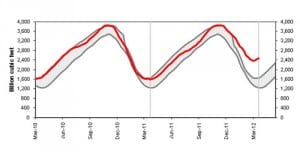
GasWill U.S. Natural Gas Inventories Hit Their Caps This Fall?
A mild winter and surging shale production have gas inventories at record highs. Absent major production cutbacks, the industry is facing the near-certain prospect of major amounts of gas being dumped on the market later this year.
-
 Gas
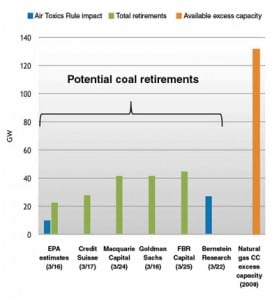
GasEPA Regulation of the Electricity Sector: The Sky Is Not Falling
New regulations from the EPA have created alarm in some corners of the electricity sector. A fair review of the state of the industry indicates that most stakeholders are well-positioned to comply without sacrificing reliability.
-
Gas
Fracking Industry Braces for a Wave of Regulation
The explosion of public attention directed at hydraulic fracturing in 2011 has led to heightened regulatory scrutiny. This year will likely see a range of new regulations rolling out at the federal, state, and local levels. Will this new oversight help clean up the industry—or choke it off?
-
Gas
Git-R-Done! It Is Time to Break Down the Barriers Between Natural Gas and Electric Power
The gas business and electric business have been joined at the hip for decades, despite numerous artificial barriers preventing an efficient coordination of resources. It’s past time to rethink the relationship.
-
 Gas
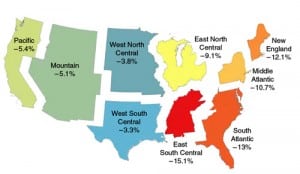
GasReduction in U.S. Carbon Emissions Attributed to Cheaper Natural Gas
Lower emissions from U.S. power plants in 2009 were driven by competitive pricing of natural gas versus coal.
-
Gas
Mixed Messages
However bright the future of gas-fired power may appear to be, the industry still needs good leadership to get there. It’s not clear we’re getting it, at least from Washington.
-
Gas
Saudi Arabia Makes Huge Push to Expand Gas Turbine Generation Capacity
A fast-growing population means skyrocketing electricity demand for the desert Kingdom of Saudi Arabia. The government is trying to meet this demand head-on with a massive build-out of gas turbine generation capacity, but long-term success will hinge on its ability to produce reliable domestic supplies of natural gas—a problem for a country whose existence has long been tightly tethered to crude oil production.
-
General
How About ‘None of the Above?’
By Kennedy Maize Washington, D.C., 16 April 2012 — So clever of the White House. President Obama says his administration’s latest energy strategy — mimicking his GOP adversaries — is “all of the above.” This is the “welcome ever more trotters into the trough” approach. And most everybody who makes energy loves the free lunch. […]
-
News
EPRI Report Examines Technical Factors Leading to Cooling Loss at Fukushima
A report released by the Electric Power Research Institute (EPRI) on Tuesday examining the underlying technical factors leading to the loss of critical systems at the Fukushima Daiichi reactors concludes parameters set for tsunami flood protection were inadequate and that this led to the eventual loss of all practical cooling paths for the reactors.
-
News
China Completes and Commissions Fourth Qinshan Unit
China’s state-owned China National Nuclear Corp. (CNNC) on Monday announced it had fully completed and commissioned the fourth unit of the Qinshan Nuclear Power Phase II expansion nearly 60 days ahead of schedule. The domestically engineered unit is China’s 15th operating nuclear power reactor.
-
News
Tube Wear at San Onofre May Stem from Multiple Causes, NRC Head Says
Southern California faces a grim summer with electrical generation capacity stretched to the limit, as any prospects for a quick restart of the idled San Onofre Nuclear Generating Station (SONGS) now appear all but dead.
-
News
TVA: Watts Bar 2 Cost Overruns Soar by $2B; Operation Delayed to 2015
Completion of the Tennessee Valley Authority’s (TVA’s) second Watts Bar reactor will cost nearly double the $2.49 billion price estimated in 2007 and take much longer than the projected 60-month completion timeframe, a construction review undertaken by the federally owned corporation has revealed. TVA management pointed to mismanagement and faulty execution as reasons for the discrepancy.
-
News
Settlement Forces Cancellation of Georgia Supercritical Coal Plant
Under a settlement agreement reached between environmental groups on Tuesday and Power4Georgians, the consortium of four electric membership cooperatives (EMCs) in Georgia will continue development of its $2.1 billion coal-fired Plant Washington but will shelve plans for its proposed 850-MW supercritical Ben Hill plant.
-
News
Okla. Attorney General Challenges Legality of EPA’s Regional Haze Rule
Oklahoma’s Attorney General Scott Pruitt last week filed a motion with a federal appeals court on behalf of the state, Oklahoma’s largest generator Oklahoma Gas & Electric (OG&E), and Oklahoma Industrial Energy Consumers to stay the Environmental Protection Agency’s (EPA’s) regional haze rule.
-
News
Order 1000 Prompts AEP-Great Plains Joint Venture to Develop More Transmission Projects
A new joint venture between American Electric Power (AEP) and Kansas City–based Great Plains Energy seeks to reap advantages from the Federal Energy Regulatory Commission’s (FERC’s) Order 1000 and develop competitive transmission projects in the PJM Interconnection, Southwest Power Pool (SPP), and Midwest ISO transmission regions.
-
News
DOE Announces $30 Million Research Competition for Energy Storage Technologies
U.S. Energy Secretary Steven Chu on Wednesday announced a $30 million research competition intended to improve the performance and safety of energy storage devices, including hybrid energy storage modules being developed by the Department of Defense for military applications.
-
News
Federal Court Vacates EPA’s Disapproval of Texas SIP Plan
A federal appeals court last week vacated the Environmental Protection Agency’s (EPA’s) Sept. 15, 2010 disapproval of Texas’ State Implementation Plan (SIP), saying the federal agency overreached in its interpretation of portions of Texas state rules used to implement the Clean Air Act.
-
News
RWE, E.ON Scrap Key Plans to Develop New Reactors in the UK
German utilities RWE and E.ON, parent companies of the Horizon joint venture, last week said they would not proceed with key plans to develop two new reactors in the UK. The decision could put the UK’s plans to stake its energy future on nuclear power in disarray.
-
News
Miss. PSC Votes to Allow Continued Construction of Kemper IGCC
Days after the Mississippi Supreme Court reversed an order by the Mississippi Public Service Commission (PSC) granting a key permit to Mississippi Power’s 582-MW integrated gasification combined cycle (IGCC) Kemper power plant, the PSC voted to temporarily allow the Southern Co. subsidiary to continue construction of the plant in Kemper County, Miss.
-
News
Great Lakes States, Federal Agencies Sign MOU for Orderly Evaluation of Offshore Wind Proposals
A memorandum of understanding (MOU) signed by 10 federal agencies and the governors of Illinois, Michigan, Minnesota, New York, and Pennsylvania on Friday seeks to promote the efficient and orderly evaluation of offshore wind proposals for the Great Lakes.