Emerson’s Rosemount Annubar technology preserves valuable process energy by delivering reliable flow measurement in demanding liquid, steam, and gas applications.
Differential pressure (DP) flow measurement remains one of the most widely used technologies in power generation, utilizing the pressure difference created by a primary element installed within a pipe. Various DP technologies are available, each offering unique advantages and tradeoffs in accuracy, pressure loss, installation requirements, and cost. Among these, averaging Pitot tubes have gained increasing adoption due to their exceptionally low permanent pressure loss (PPL) and economy in large diameter piping.
Unlike a single-point Pitot tube—which measures velocity at a single location and therefore, has potential for accuracy degradation in non-ideal flow profiles—an averaging Pitot tube integrates pressure measurements from multiple sensing ports distributed across the pipe diameter. This design improves accuracy in large pipes and non-ideal flow conditions while maintaining low PPL compared to traditional DP primary elements, such as flow nozzles or orifice plates.
Modern Approach to Traditional Flow Measurement
DP flow measurement requires the creation of a restriction within the flowing fluid. Traditionally, this was achieved using a primary element, such as an orifice plate, which introduces a restriction that generates a measurable pressure differential. Orifice meters are widely used due to their simplicity, proven performance, and high accuracy. However, creating this restriction permanently removes energy from the process. Every pound per square inch (psi) of pressure loss represents energy that the plant has already paid to create through pumps, fans, or steam generation. Once that pressure is dissipated across the primary element, it cannot be recovered and is no longer available to move fluids, transfer heat, or support downstream processes.
In steam lines, this also means less energy available to the turbine, which raises heat rate. To maintain required operating conditions, the lost pressure must be restored through additional pumping or fan power, increasing auxiliary power consumption, fuel consumption, and net plant heat rate. In effect, PPL not only reduces the useful energy available, but it also creates an ongoing energy penalty that the plant must continually pay for over the life of the installation. In many applications, removing this energy penalty can offset the initial investment in the Rosemount Annubar flow meter (Figure 1).
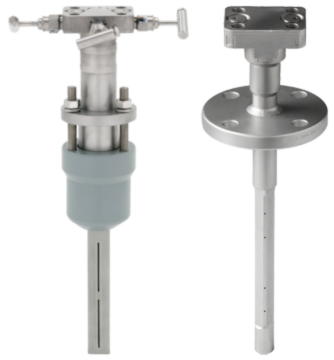
Many power applications—such as circulating and cooling water, steam lines, combustion air, flue gas, and gas turbine inlet ducting—involve large pipe diameters, where minimizing pressure loss is critical to reducing operating costs. As line sizes increase, an integrated Annubar flow meter becomes an attractive alternative to traditional DP solutions. Conventional solutions require cutting the pipe, welding flanges, and installing impulse piping, increasing procurement and installation complexity as well as maintenance needs.
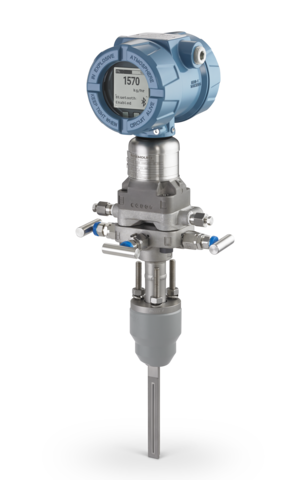
In contrast, an integrated Annubar flow meter combines the averaging Pitot tube (APT) primary element and DP transmitter into a complete, factory-assembled solution that simplifies installation and commissioning. In addition, installation can become expensive in large diameter piping systems, and achieving accurate measurements typically requires long lengths of straight pipe both upstream and downstream of the meter. Unlike many traditional flow technologies, the Annubar multi-port design averages the flow profile across the pipe diameter. This reduces its sensitivity to flow disturbances caused by elbows, dampers, valves, and other upstream piping or ductwork, allowing accurate measurement with shorter straight-run requirements, and providing greater installation flexibility.
The Rosemount 485 Annubar Primary Element has a distinctive T-shaped profile (Figure 2), engineered to deliver reliable performance in demanding process conditions. The flat leading edge creates a stable impact pressure zone that deflects particles away from the slots, reducing the risk of plugging and maintaining measurement in applications with entrained particulates, such as fly ash.
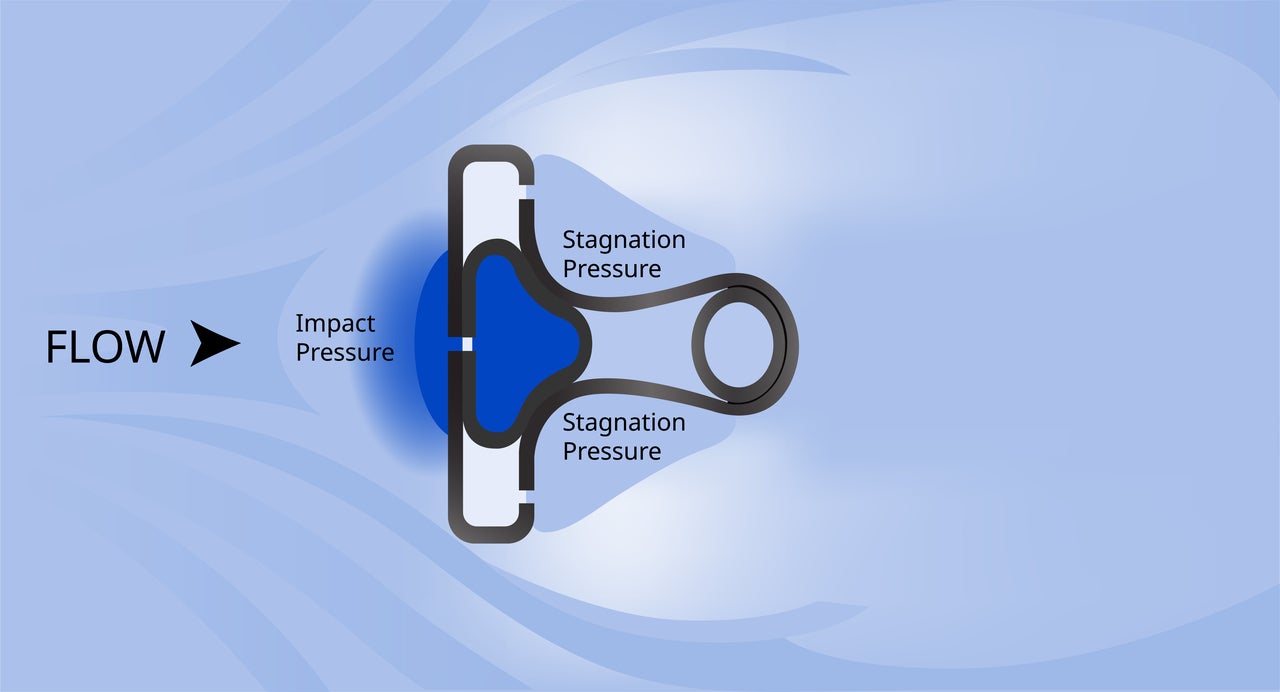
Unlike traditional APT designs that rely on a single low-pressure port that is susceptible to fouling and flow disturbances, the Annubar utilizes multiple stagnation ports. This design improves measurement accuracy, enhances signal stability, and makes the Annubar less sensitive to flow irregularities than cylindrical shapes. For gas and steam applications, the integrated thermowell allows direct installation of a resistance temperature detector (RTD) within the assembly, providing an accurate process temperature measurement at the same location as the flow measurement. By combining flow and temperature sensing into a single pipe penetration, the integrated 485 Annubar flow meter simplifies installation, reduces leak points, lowers installation costs, and improves mass flow accuracy through more precise temperature compensation.
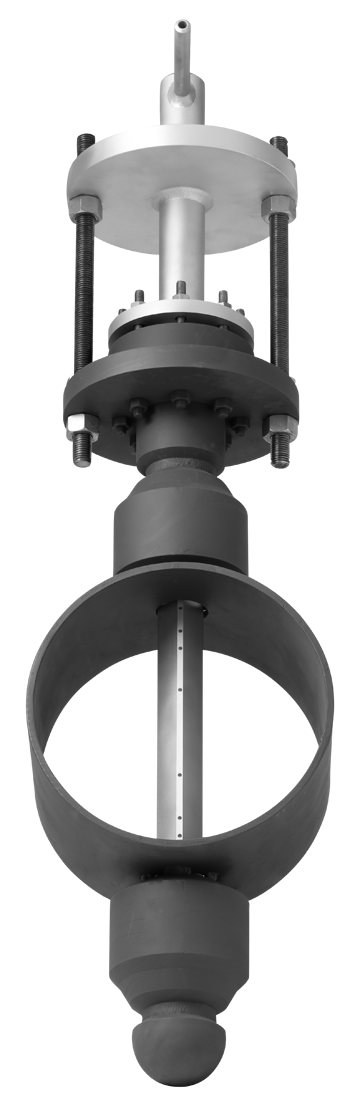
For more severe applications, such as main steam lines, the Rosemount 585 Annubar Primary Element for Severe Service (Figure 3) extends Annubar technology to the high-temperature, high-pressure, and high-velocity conditions found between the boiler or heat recovery steam generator (HRSG) and the steam turbine. Its robust construction is designed for severe service, while retaining the core advantages of direct flow measurement, low PPL, and ease of installation.
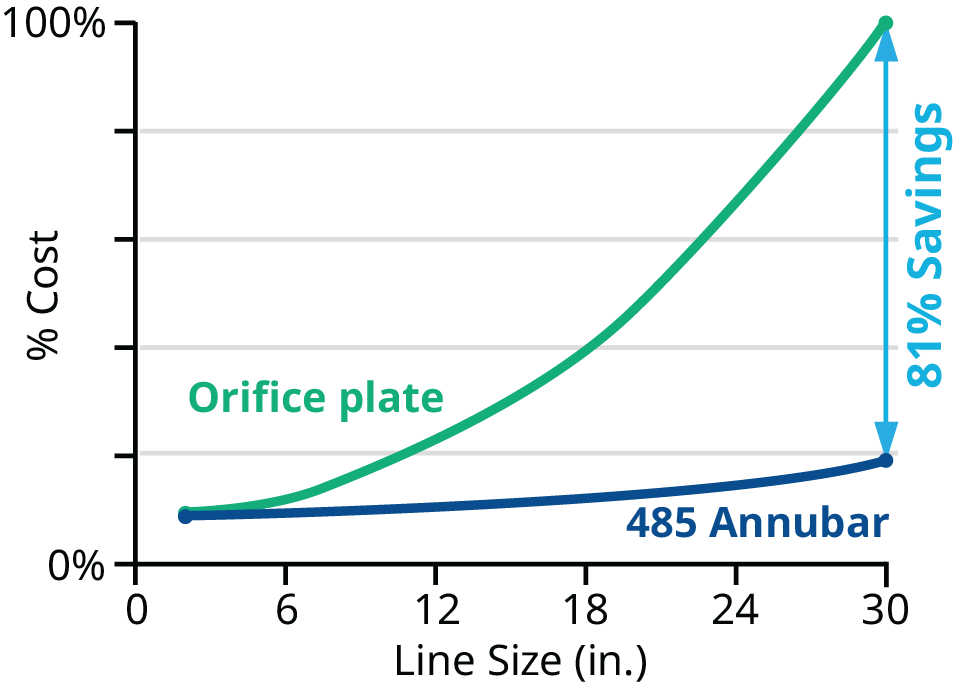
While conventional DP or other flow technologies may be more practical in small line sizes, the advantages of the Annubar increase significantly as pipe diameter grows. As line size increases, the combined impact of lower installation costs and reduced energy losses make the Annubar increasingly cost effective (Figure 4).
The Annubar is particularly attractive for large-diameter-pipe, balance-of-plant, and utility systems; steam distribution networks; circulating and cooling water systems; and combustion air or flue gas flow measurement in ducts or stacks. Available for line sizes up to 96 inches, the Annubar is an effective and economical solution in applications where installation constraints, pressure loss, or pipe size limit the viability of alternative flow technologies.
The Annubar simplifies installation through its insertion style design, requiring only a single pipe penetration rather than pipe cutting, flanges, and extensive impulse piping. A variety of mounting configurations allow installation flexibility, including flanged, Pak-Lok compression, and Flo-Tap retractable designs to accommodate different process conditions and piping requirements.
Flo-Tap designs can be installed or retracted under pressure without a unit outage. No spool section is required, although Emerson offers one for a drop in solution. Together, these installation options reduce engineering complexity, minimize outage time, and lower total installed cost compared to conventional DP flow meter designs (Figure 5).
To illustrate these advantages in practice, the following three power plant case studies show how Annubar flow meters improved measurement performance while reducing installation, maintenance, and lifecycle costs.
Optimizing Combustion Air Flow Control
A coal-fired power plant was working to improve combustion efficiency, reduce emissions, and lower fuel consumption, but it had no reliable method for measuring combustion air flow. Instead, operators estimated airflow from induced draft (ID) fan performance curves, producing errors of ±25% to 30%. In a balanced-draft pulverized-coal boiler, combustion air is supplied by the forced draft (FD) fan and primary air (PA) fans. FD air feeds the furnace as secondary combustion air, while PA air dries and conveys pulverized coal to the burners.
The ID fan, located downstream of the furnace, pulls flue gas through the boiler and out the stack, maintaining a slightly negative furnace pressure. Thus, air-side fans (FD/PA) handle combustion air intake, while the ID fan handles exhaust flue gas. As engineers worked to optimize combustion by balancing air flow, fuel flow, flue gas oxygen levels, and stack emissions, the absence of accurate airflow measurement limited their ability to precisely control the process and achieve peak boiler performance.
The main combustion air inlet is delivered through a 4-ft x 5-ft duct, creating a significant flow measurement challenge. The plant required an accurate and economical method to measure airflow across this large cross-sectional area without adding significant pressure loss. Complicating matters further, the duct contained multiple elbows and limited straight-run piping, resulting in a highly disturbed flow profile, making conventional point measurement techniques unreliable. Obtaining an accurate airflow measurement required a technology capable of averaging velocity across the duct, while maintaining low PPL.
Emerson engineers recommended a pair of Rosemount 485 Annubar Primary Elements as a cost-effective way to solve the challenge. The sensors were installed parallel to one another across the short dimension of the duct, allowing them to sample a broad portion of the velocity profile. By averaging pressure measurements from multiple sensing points, the Annubar provided a representative flow measurement despite the disturbed flow conditions created by the duct’s multiple elbows and limited straight-run length.
Because the installation did not provide the straight-run lengths typically required for a fully developed flow profile and the large 4-ft × 5-ft duct exhibited significant velocity variations across its cross section, Emerson also recommended performing a Pitot tube traverse to characterize the flow profile. Engineers used a single-point Pitot tube to measure velocity at multiple locations throughout the duct and under a range of operating conditions, creating a detailed map of the airflow distribution.
This data was then used to establish a site-specific flow coefficient (K factor) that accounted for the unique installation effects. By combining the dual Annubar installation with the flow profile characterization, the plant achieved airflow measurement accuracy of approximately ±5%, a substantial improvement over the previous ±25% to 30% estimates. With reliable airflow data available, engineers were able to more effectively optimize the air-to-fuel ratio, improve combustion efficiency, and reduce emissions.
With improved data, the plant achieved many positive results:
- Verified 10% reduction in fuel consumption.
- Reduced combustion air flow lowered stack losses, improving boiler efficiency and net heat rate.
- Reduced demand on the FD and ID fans, lowering auxiliary (parasitic) power consumption and increasing net unit output.
Preserving Main Steam Pressure
During a combined-cycle upgrade at a power plant, traditional flow nozzles on the main steam lines were replaced with Rosemount 585 Annubar Primary Element for Severe Service flow meters. The primary drivers were easier maintenance and significantly lower PPL. Unlike flow nozzles, which can be difficult to remove and often require spool piece modifications during maintenance, Annubar sensors can be inserted and retracted more easily, reducing maintenance complexity and downtime.
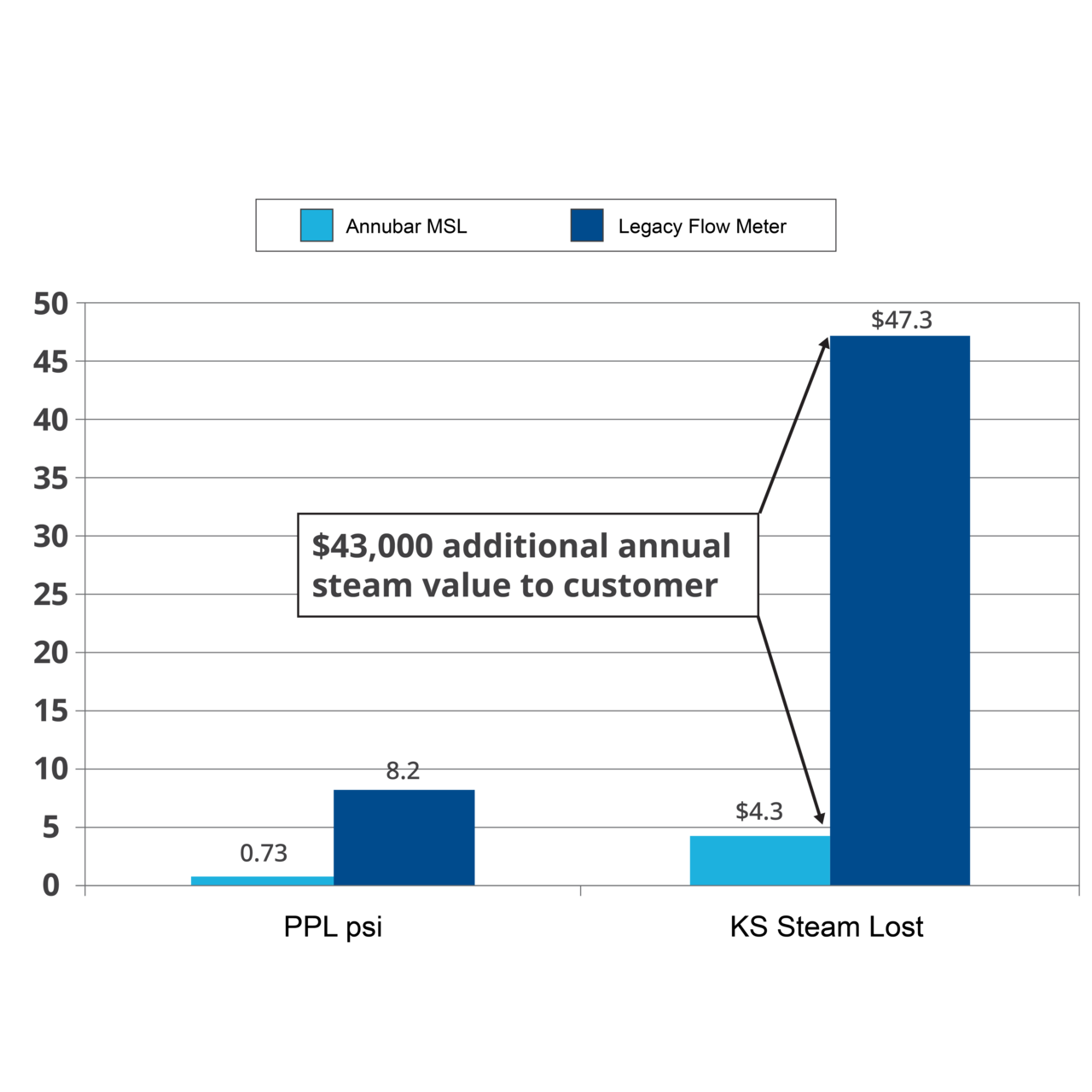
The most significant benefit, however, was the reduction in PPL. The existing flow nozzles created a permanent pressure loss of approximately 8.2 psi of steam pressure, while the Annubar reduced this to just 0.73 psi, an improvement of more than 11:1. Because steam pressure represents energy the plant has already paid to generate, preserving that pressure leaves more energy available to drive the turbine, improving heat rate and net output rather than pressure being lost across the flowmeter.
After one year of operation, the customer determined the reduction in PPL delivered approximately $43,000 in annual savings through increased power generation and improved efficiency (Figure 6).
Local Steam Distribution
A power plant that supplies steam to a nearby industrial park needed an accurate and reliable method to measure steam mass and energy flow for revenue-grade billing. Their customers pay according to use, requiring metering that both sides accept as valid for billing. As the steam distribution network expanded in size and complexity, maintaining measurement while minimizing pressure loss and installation costs became an increasingly significant challenge.
This power plant had been using DP flow meters of its own design, but they tended to be maintenance-intensive due to frequent impulse line leaks. These flow meters were positioned at customer sites, frequently miles from the source, making real-time delivery of consumption data dependent on long and maintenance intensive cables. Recognizing the importance of accurate steam energy measurement for customer billing, the utility elected to modernize the entire infrastructure serving all 20 customers to improve reliability, accuracy, and long-term operating efficiency.
To address these challenges, Emerson engineers developed a comprehensive metering solution featuring the Rosemount 3051SFA MultiVariable Flow Meter. The integrated design eliminated the impulse lines that had been a frequent source of maintenance and reliability issues, while providing accurate measurements of flow, pressure, and temperature required for steam energy calculations. The remaining challenge was collecting data from customer sites distributed throughout the industrial park without relying on extensive cabling infrastructure.
The need for cables was eliminated by adding an Emerson Wireless 775 THUM Adapter, enabling WirelessHART communication to a centralized gateway. Each metering assembly combined a Rosemount 485 Annubar Primary Element with a Rosemount 3051S MultiVariable Pressure Transmitter, measuring differential pressure, static pressure, and process temperature in a single device while dynamically calculating steam mass flow 22 times per second within the transmitter.
All measurement data was transmitted through a single WirelessHART signal and routed via General Packet Radio Services (GPRS) to the utility’s distributed control system (DCS), creating a robust wireless steam metering network, with minimal infrastructure and maintenance requirements. By consolidating real time flow and energy consumption data from all 20 customers, the utility gained greater visibility into steam distribution, improved billing accuracy, and enhanced overall management of steam energy resources.
Evaluating Flow Measurement Opportunities
When analyzing the lifecycle costs of a flow measurement solution, end users should consider not only the initial purchase and installation costs, but also the ongoing energy costs associated with PPL. While some pressure loss is unavoidable with most flow measurement types, selecting technologies that minimize flow disruption can significantly reduce operating expenses over the life of the installation. The applications presented in this article demonstrate how Rosemount Annubar flow meters provide accurate and reliable flow measurement, while reducing installation complexity, maintenance requirements, and energy consumption.
Due to its inherently low pipe blockage, the Rosemount Annubar flow meter can significantly improve system efficiency when replacing traditional technologies. By preserving valuable fluid and steam energy that would otherwise be lost across restrictive primary elements, the Annubar reduces fuel consumption, pumping and fan power costs, and overall operating expenses. These energy savings, combined with simplified installation and reduced maintenance requirements, often result in a substantially lower total cost of ownership, while helping plants improve heat rate and maximize available net output.
—Kassandra McDougall is a global product manager at Emerson. She is responsible for managing Emerson’s DP Flow portfolio.