Battery energy storage systems are becoming essential infrastructure for a grid that increasingly depends on variable renewable generation. Their ability to respond quickly to changes in supply and demand makes storage uniquely valuable: batteries absorb excess generation, discharge when demand rises, and provide balancing services that help keep the grid stable. But as storage takes on a larger role, the definition of a successful project is changing with it.
 |
|
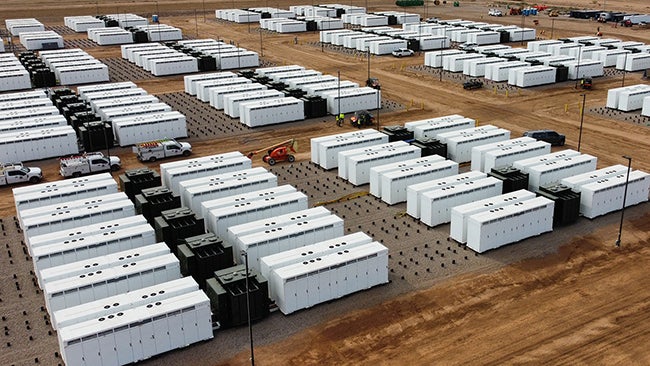
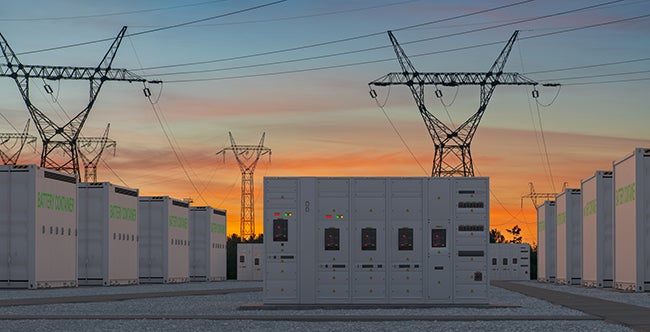
1. Modern BESS projects rely on an interconnected ecosystem of hardware, software, communications infrastructure and third-party systems to remain operational. Source: Centrii/Shutterstock |
A battery energy storage system is no longer just a collection of batteries, inverters and electrical equipment. Modern BESS projects (Figure 1) run on software platforms, remote connectivity, operational technology (OT), market interfaces and a growing web of vendors and contractors. Any one of those systems or relationships can determine whether an asset is actually available when it’s needed.
COMMENTARY
That makes resilience part of the economics of storage, not just an engineering concern. Developers, owners and operators now have to ask not only whether a system can deliver its rated capacity, but whether they can maintain visibility into the asset, keep control of it, and restore operations quickly when something goes wrong.
Availability is a Business Metric
For storage, availability has direct financial consequences. Assets increasingly participate in energy and ancillary services markets where operators commit to delivering power at specific times. Miss that commitment, and the cost isn’t just lost production—depending on the market and contract structure, it can mean penalties or having to buy replacement energy at whatever the market is charging at that moment.
That reframes how owners and operators need to think about resilience. Preventing an incident matters, but so does how fast an organization can detect a problem, understand its impact, regain control and bring the asset back online.
No connected infrastructure is immune to equipment failure, software bugs, communications outages, human error or cyber incidents. Operators should plan on disruptions happening at some point in an asset’s operating life, not treat them as a remote possibility.
The first hours after an incident matter most. Teams need to figure out what happened, which systems or accounts are affected, and how to restore the asset safely—and every hour of uncertainty adds to both the operational and financial exposure.
Visibility is the Blind Spot
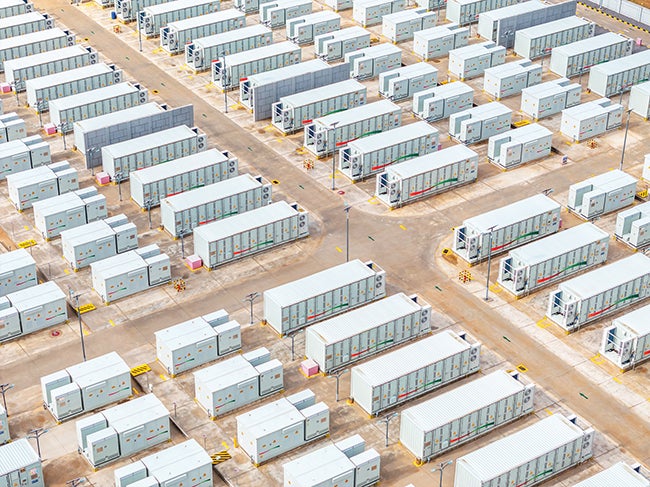
One of the largest operational blind spots in battery storage today is visibility (Figure 2): who can access what, and what can they actually do once they’re connected?
 |
|
2. Real-time visibility and control are critical to keeping storage assets available when the grid and market need them most. Courtesy: Centrii/Shutterstock |
A modern BESS environment typically involves an asset owner, an operator, OEMs, integrators, software providers, maintenance teams and other contractors—often with dozens of people across multiple organizations holding some form of access to the systems around a single asset. That access is usually necessary; specialists need it to diagnose problems, perform maintenance and manage different parts of the system. But it raises a question that operators don’t always have a ready answer to.
That question matters most for assets that can be dispatched remotely. The same speed that makes batteries valuable to the grid means the credentials and systems capable of changing their behavior need to be tightly controlled. With the right access, charging or discharging behavior can be changed in seconds. If that access is compromised, the consequence isn’t confined to an IT environment—it becomes a physical, operational event.
The December 29, 2025 attack on Poland’s grid is a preview of what that looks like at scale. According to CERT Polska’s incident report and a joint alert from CISA and the Department of Energy, attackers used compromised edge devices to reach operational technology at more than 30 wind and solar sites and a combined heat and power plant serving nearly half a million customers. They deployed wiper malware, damaged remote terminal units and other field equipment, and severed the communication link between the sites and their grid operators. Generation itself was never interrupted—CERT Polska was explicit that current electricity production was not affected—but operators lost the ability to see and remotely control a fleet of distributed assets for a period of time.
That distinction is the whole point. An asset doesn’t have to be physically damaged or taken offline to become an operational problem. If operators lose visibility into what an asset is doing, or lose the ability to control it as intended, its value to the grid is compromised regardless of whether the battery itself is fine.
The risk also compounds at the fleet level. Grid stability increasingly depends on how many separate resources are coordinated and dispatched together. A problem at one small battery is a limited event. The Poland incident shows what coordinated disruption across dozens of sites in the same region looks like—which is why resilience has to be assessed at both the asset and the portfolio level, not asset by asset in isolation.
Third-Party Access Needs an Owner
BESS projects rarely operate within the boundaries of a single company, which makes third-party access one of the most important—and most neglected—parts of this problem.
Vendors and contractors need access throughout the asset lifecycle, from commissioning and integration through routine maintenance and emergency troubleshooting. The trouble is that access granted for commissioning often stays active long after the project is in normal operation, unreviewed and unrevoked.
Owners and operators should be able to answer, at any time: which external organizations have access to a given asset, which individuals within those organizations are authorized, what privileges they hold, and whether those privileges are still needed. They also need the ability to revoke or restrict that access immediately, not after a review cycle.
The same discipline applies internally. A credential that lets someone dispatch an asset or change operating parameters is not the same as one that lets someone view performance data, and they shouldn’t be governed the same way.
When an incident occurs, the first hours shouldn’t be spent figuring out which vendors are connected, which accounts have privileged access, or who has the authority to shut them off. Those answers should already exist before the incident does.
Plan for the Break-Glass Moment
Resilience also means preparing for the point where normal operating procedures stop working.
Every storage operator needs a defined break-glass process for major incidents—what happens if a critical platform goes down, communications with a site are cut, or credentials are suspected of being compromised. At minimum, that plan should answer:
• Who has the authority to isolate a system, and how quickly can they act without waiting on approval chains?
• Who can disable third-party access, and is that a single point of failure?
• Can the asset keep operating safely if a remote platform is unavailable, or does it fail closed?
• Is there a fallback path to control the site if the primary one is gone?
• Which vendors have to be part of recovery, and how are they reached outside normal business hours?
These are project-planning and commissioning questions, not post-incident ones. They also need to be tested, not just documented. A response plan that has never been rehearsed tends to reveal its gaps for the first time during a real incident—usually the worst possible moment to discover that two teams assumed the other one had authority to act. Periodic simulations involving software, connectivity, credentials and third-party systems are what actually expose those dependencies, particularly when responsibility is spread across several vendors.
Build Resilience Before the Battery Goes Online
Most of these decisions are cheaper and easier to make during design and deployment than to retrofit after commissioning.
Operational resilience belongs alongside engineering, interconnection, safety and commercial requirements from the start of a project, not as a later addition. That means understanding the asset’s digital architecture, identifying every system that can influence physical operation, and defining access requirements for every party that will touch them—along with the dependencies between those systems. A battery can be physically healthy and still be commercially unavailable because a communications link, software platform or third-party service failed. Mapping those dependencies is how organizations find out where redundancy is actually needed, versus where a single failure could take the asset offline.
This gets harder, not easier, as operators scale from individual sites to portfolios. Processes that rely on one person’s knowledge, shared credentials or informal vendor relationships hold up at one site and break at fifty. Visibility, access control and recovery processes have to be built to scale with the portfolio from the outset.
Storage’s Growing Grid Role Raises the Stakes
Battery storage is well suited to an increasingly dynamic electricity system precisely because it can respond quickly to changes in supply and demand. That’s its greatest strength—and it’s also why the systems controlling those batteries have to be treated as critical operational infrastructure, not as IT overhead.
The industry has put enormous effort into battery chemistry, system design, fire safety, degradation management and project economics, and that work remains foundational. But there’s another layer of performance that’s becoming inseparable from it: whether the digital and operational environment around the battery is resilient enough to keep the asset available when it’s called on.
Capacity on paper has limited value if an operator can’t reliably see, control and dispatch it in practice. As BESS becomes a larger share of the power system, the operators who treat access governance and incident readiness as core infrastructure—not an afterthought to the electrical build—will be the ones whose assets are actually there when the grid needs them. That is quickly becoming the real measure of a successful storage project.
— Rafael Narezzi is founder and CEO of Centrii.