
ferc
-
 Legal & Regulatory
Action Needed Now to Support New Power Transmission Capacity
The Federal Energy Regulatory Commission (FERC) in its March 2024 open meeting made clear that successful energy transition requires immediate action. With the Inflation Reduction Act (IRA) as a benchmark, the U.S. will need to expand its electrical transmission capacity at an annual rate double that seen between 1978 and 2020, as reported by the […]
-
 Legal & Regulatory
FERC Proposal Would Cut Reactive Power Compensation, a Potential Hit to Independent Power Producer’s Revenue Mix
In a time where capacity revenues are pricing lower and many generation owners find that their facilities are not being dispatched for energy on a consistent basis, reliable revenue streams are increasingly important. In addition to selling energy and capacity, many generation facilities collect fixed, monthly payments for the provision of “reactive power,” which are […]
-
 Commentary
What FERC Order 2023 Means for the Interconnection Queue
In recent years, concerns about the lengthy interconnection queue have dominated headlines. This queue has emerged as a major obstacle to adding new generating facilities to the U.S. power grid. It is primarily caused by grid congestion, permitting issues, extensive infrastructure project delays, and the traditional interconnection study approaches used in many states. To address […]
-
 Legal & Regulatory
PJM Capacity Market Reforms Shake Up Resource Accreditation, Impose New Offer and Testing Requirements
The Federal Energy Regulatory Commission (FERC), in Docket No. ER24-99-000, recently approved a suite of tariff revisions submitted by PJM intended to “accommodate the energy transition while maintaining resource adequacy.” Although the reforms affect many aspects of PJM’s Reliability Pricing Model (RPM), this commentary highlights: The transition from capacity accreditation using Equivalent Demand Forced Outage […]
-
 Commentary
FERC Approves MISO Interconnection Queue Reforms, Rejects Overall Queue Cap
The Federal Energy Regulatory Commission on Jan. 19 approved most of the Midcontinent Independent System Operator’s (MISO) proposed revisions to its Generator Interconnection Procedures (GIP) designed to reduce the submission and negative impacts of speculative interconnection requests. The changes apply prospectively, starting with the DPP-2023 queue cycle, which has not yet entered the Definitive Planning […]
-
 T&D
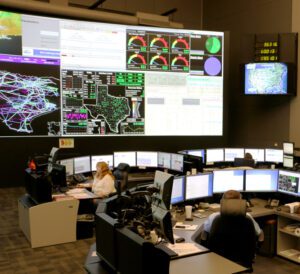
T&DWhat Is ERCOT and What Does It Do?
To understand what the Electric Reliability Council of Texas (ERCOT) is, it helps to understand how the North American electric power system is configured. The contiguous U.S. is comprised of three power grids or “interconnections.” The Eastern Interconnection reaches from central Canada eastward to the Atlantic coast (excluding Québec), south to Florida, and west to […]
-
Legal & Regulatory
FERC’s Enforcement in Demand Response Case a Lesson for Utilities
For energy consumers that have flexibility to modify their energy use in response to direction from a utility or the relevant transmission operator (i.e., to reduce load by changing or rescheduling what they are doing), selling demand response (DR) can be a lucrative additional revenue stream. Depending on the location, such consumers may have multiple […]
-
 Energy Security
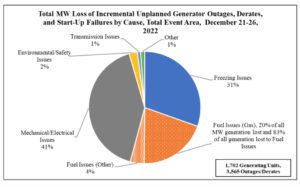
FERC, NERC Reveal Disturbing Details from Winter Storm Elliott Inquiry
Incremental unplanned generation outages triggered during Winter Storm Elliott spiked to 90.5 GW—significantly more than the 61.8 GW during Winter Storm Uri in 2021—representing 13% of the U.S. portion of anticipated resources in the Eastern Interconnection. That finding, one of many disturbing details unveiled by the Federal Energy Regulatory Commission (FERC) and North American Electric […]
-
Commentary
FERC’s Queue Reform an Improvement, but Devil Is in the Details
The Federal Energy Regulatory Commission (FERC) on July 28 issued a landmark order that reforms the generator interconnection process. The order is in response to a clear need for nationwide improvements due to a rapidly changing resource mix, market forces, and emerging technologies for power generation. Order No. 2023, Improvements to Generator Interconnection Procedures and Agreements, […]
-
 Legal & Regulatory
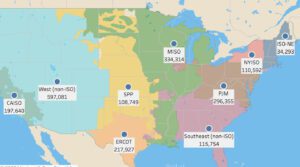
FERC Adopts ‘Historic’ Reforms to Ease Nationwide Generation Interconnection Backlog
The Federal Energy Regulatory Commission (FERC) has approved key transmission reforms aimed at clearing a staggering backlog of more than 10,000 generation and storage projects—more than 2,000 GW—stalled in interconnection queues across the country. Order 2023, a final rule unanimously adopted by FERC’s four commissioners at a July 27 open meeting and posted in full […]
-
Commentary
Beware Unbridled Enthusiasm—Recent FERC Settlements Hold Lessons for Aggregators
In more than one RTO market, aggregators may find themselves in the position of making capacity offers for future delivery periods based on projections of how much aggregated capability they will have available in the future. This presents somewhat of a dilemma, as there are financial incentives to project aggressively. COMMENTARY Capacity revenues may play an […]
-
 Legal & Regulatory
FERC Can Support Hydrogen by Taking Jurisdiction Over Interstate Pipelines
As the U.S. moves toward decarbonization, hydrogen is expected—in its green, blue, and grey varieties—to increasingly be an alternative to conventional fossil fuels. It can be produced in abundance from
-
 Energy Security
Rethinking Energy Reliability with Modern Power Systems
As the energy transition to inverter-based resources continues, reliability risk increases and requires additional investment to mitigate threats. But what measures should be put in place, what are the
-
 Commentary
More Than Statistics: Maximizing Value From FERC OE’s Annual Report on Enforcement
Each year, pursuant to the Federal Energy Regulatory Commission’s (FERC or Commission) Revised Policy Statement on Enforcement, FERC’s Office of Enforcement (OE) publishes “annual statistical reports” summarizing its enforcement activities during the preceding fiscal year (FY). Consistent with that directive, OE’s Annual Report on Enforcement (Annual Report) contains a range of statistical information about the […]
-
 News
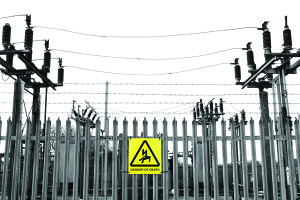
NewsThird North Carolina Power Substation Targeted by Gunfire as BPS Physical Security Concerns Mount
A third power substation has been damaged by gunfire in North Carolina, prompting an FBI investigation. The incident on Jan. 17 is part of a spate of gunfire vandalism that has renewed physical security concerns at a federal level. The Randolph County Sheriff’s Office in Thomasville, central North Carolina, said the latest incident, believed to […]
-
 Energy Security
Bulk Power System Deficiencies During Winter Storm Elliot Prompt Inquiries
Assessments are underway to pin down factors that prompted emergencies, tight grid conditions, and even load-shedding by major entities as Winter Storm Elliot bore down on the North American bulk power system (BPS) this past week. The Federal Energy Regulatory Commission (FERC), the North American Electric Reliability Corp. (NERC), and regional entities affiliated with […]
-
Legal & Regulatory
FERC: Investors with Utility Board Members are Affiliates
Building on analysis in its February 2021 Public Citizen, Inc. v. Centerpoint Energy, Inc. opinion, the Federal Energy Regulatory Commission (FERC) recently issued decisions in Evergy Kansas, Inc. (Evergy) and Transalta Energy Marketing (U.S.), Inc. (Transalta) analyzing whether investments that were under 10% of outstanding voting shares, but were paired with appointment of directors that […]
-
 Legal & Regulatory
Are PJM’s Plunging Capacity Prices a Harbinger of Power Markets’ Demise?
Few observers outside the electric utility industry understand the U.S. power grid, often called the world’s largest machine. It’s three grids, actually—the Eastern Interconnect, the Western Interconnect, and the Texas Interconnect. Much of the Eastern and Western Interconnects are subdivided regionally into independent organizations—independent system operators (ISOs) or regional transmission operators (RTOs)—that monitor, coordinate, and […]
-
 Cybersecurity
Goldman Sachs Stake in Fortress Underscores Supply Chain Cybersecurity Priority
A Goldman Sachs private equity business is taking a stake in critical industry cybersecurity firm Fortress Information Security. The $125 million investment underscores a heightened awareness of supply chain vulnerabilities within the investor community. Fortress, which announced the investment from Goldman Sachs Asset Management Private Equity on April 19, said it also highlights a wider […]
-
 Legal & Regulatory
SCOTUS Reinstates Trump-Era Environmental Certification Rule
The U.S. Supreme Court on April 6 reinstated a Trump-era environmental rule that limited state and tribal roles in enforcing a section of the Clean Water Act (CWA) related to project certification. The order is a temporary triumph for eight states and three energy trade associations, including the National Hydropower Association (NHA). The high court’s […]
-
Markets
Market Transitions: The MOPR Merry-Go-Round
The PJM Interconnection’s Minimum Offer Price Rule (MOPR) was introduced in 2006 as a floor to bar new generators from artificially depressing capacity auction clearing prices through below-cost bids.
-
 Legal & Regulatory
Former FERC Commissioner Says ‘Market Design Problem’ Was a Leading Cause of February 2021 Texas Power Crisis
In February 2021, a severe cold weather event, known as Winter Storm Uri, caused numerous power outages, derates, or failures to start at electric generating plants scattered across Texas and the south-central U.S. The Electric Reliability Council of Texas (ERCOT), which manages the power supply for about 90% of the load in Texas, ordered a […]
-
 Commentary
How FERC Can Have a Positive Impact on Grid Reliability
As the regulator for much of our nation’s wholesale electric and natural gas markets, actions by the Federal Energy Regulatory Commission (FERC) directly impact the U.S. economy. The agency’s response to
-
 Gas
GasISO-NE Move Puts New Gas-Fired Plant in Doubt
The future of a natural gas-fired power plant planned in northeastern Connecticut is in jeopardy after regional grid operator ISO-New England (ISO-NE) asked the Federal Energy Regulatory Commission (FERC) for permission to end a capacity contract with the project. Florida-based NTE Energy’s plan to build the 650-MW Killingly Energy Center has been delayed due to […]
-
 Markets
FERC Tackles Modernization of U.S. Power Markets
The seven major organized electricity markets scattered across the U.S. account for roughly two-thirds of all power generated in the country. Most of these markets are made up of Independent System Operators (ISOs) and Regional Transmission Organizations (RTOs) that were created more than twenty years ago. The primary mission of the markets is to neutrally […]
-
Press Releases
FERC Approves Giving a Vote for the Coal-Supply Chain Within MISO’s Advisory Committee
Washington, D.C. – Today, the Federal Energy Regulatory Commission (FERC) approved a proposal from the Midcontinent Independent System Operator (MISO) to give voting rights to the recently created Affiliate Sector within MISO’s Advisory Committee. By providing a vote to the Affiliate Sector, currently made up by entities representing coal producers, electricity generators, railroads, barge operators and […]
-
 Legal & Regulatory
Is America Ready to Take a ‘Baby Step’ Toward Carbon Pricing?
Most people recognize that carbon dioxide (CO2) is a greenhouse gas (GHG), and while not everyone agrees, a majority of climate scientists believe increasing concentrations of GHGs in the atmosphere are causing climate change on Earth. Carbon pricing is a market-based strategy for reducing CO2 emissions. The goal of carbon pricing schemes is to place […]
-
 Distributed Generation
A Brave New World of Reliability: ELCC, EIMs, and DERs
Market forces and government policy are driving clean energy deployment across the U.S. at a level that could impact reliability if not carefully implemented. State regulators, independent system operators
-
Press Releases
FERC approves major Tri-State wholesale rate settlement with members
WESTMINSTER, CO (August 3, 2021) – On August 2, 2021, the Federal Energy Regulatory Commission approved a settlement in the first major rate case filed by Tri-State Generation and Transmission Association since the power supplier became subject to FERC jurisdiction in September 2019. The landmark uncontested settlement resolves key issues from regulatory filings that Tri-State […]
-
 Solar
SolarLeveling the Market Playing Field for Hybrid Power Plants
The Federal Energy Regulatory Commission (FERC) is an independent agency that, among other things, regulates the interstate transmission of electricity. Its ultimate mission is to “Assist consumers in obtaining economically efficient, safe, reliable, and secure energy services at a reasonable cost through appropriate regulatory and market means, and collaborative efforts.” In the past, FERC has […]