As we move further into 2026, the global energy landscape is increasingly defined by divergence. Oil and natural gas fundamentals are separating, geopolitical volatility remains elevated, and across the industrial economy, execution speed is becoming the defining competitive variable.
Nowhere is that shift more visible than in power markets.
The collision between rising demand and constrained capacity is reshaping how energy decisions are made. In AlphaSense’s 2026 Energy & Industrials Outlook, I describe this moment as a “dirty pivot,” a pragmatic move away from longer-dated zero-carbon strategies toward immediately dispatchable power.
COMMENTARY
For utilities, independent power producers, original equipment manufacturers, and engineering, procurement, and construction firms, the defining question of 2026 will be how to deliver dependable megawatts quickly enough to support AI’s uninterrupted growth curve, with net-zero ambitions less prevalent in driving decisions.
Why Speed-to-Power is Driving Energy Decisions
Over the past several years, nuclear, particularly small modular reactor concepts, has gained traction as a long-term solution for large load data center campuses. But in 2026, hyperscalers are favoring power-now strategies over zero-carbon sequencing.
The reason is timing.
Large-frame gas turbines remain heavily backlogged, with availability stretching toward 2027–2028, according to the outlook report. Generator lead times are exceeding two years, in some cases approaching three. These delays are forcing developers to rethink traditional build timelines.
In response, the market is shifting toward modular, flexible gas solutions:
- Solid oxide fuel cells (SOFCs) that can ship within months to roughly a year if manufacturing slots are secured.
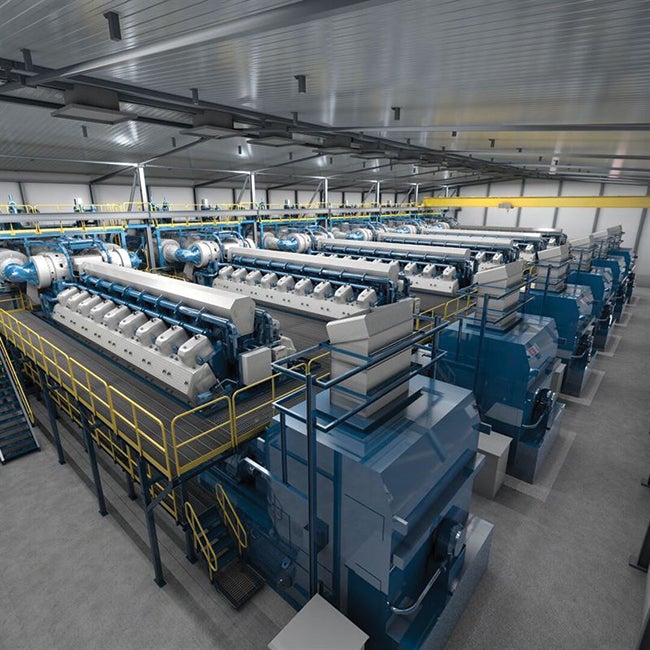
- Large reciprocating gas and dual-fuel engines deployed in flat-load tranches where gas supply and siting allow.
- Conventional gas generator fleets configured for redundancy and rapid deployment.
- Aeroderivative gas turbines, or repurposed aircraft engines adapted for power generation.
Aeroderivative units offer a compelling combination of fast ramp rates, modular installation, and shorter delivery timelines compared to large-frame turbines. For hyperscalers prioritizing phased energization, these systems provide a bridge between traditional utility-scale assets and distributed generation.
Developers are prioritizing speed-to-power, modularity, and redundancy amid grid interconnection backlogs and turbine delays. Smaller 10–15 MW engine blocks allow campuses to scale incrementally rather than wait for a single 500 MW asset to come online.
Fuel cells may carry near-term cost premiums, with pricing above $3,000/kW and estimated levelized costs modestly higher than turbines, but hyperscalers have demonstrated a willingness to pay for compressed timelines.
Behind-the-meter generation, once viewed as a hedge, is becoming strategic infrastructure.
This does not signal the abandonment of decarbonization. Rather, it reflects sequencing under constraint. When interconnection queues stretch years and turbine capacity is locked up, reliability and delivery speed take precedence.
Natural Gas as the Reliability Backbone for the AI Grid
The pivot toward gas-powered solutions is unfolding against a broader divergence between oil and natural gas markets.
While oil markets face supply overhang and pricing pressure, natural gas is exhibiting structurally stronger demand fundamentals. Natural gas is positioned to anchor grid reliability in 2026 as power systems contend with interconnection bottlenecks and renewable intermittency.
Several structural forces reinforce this trend:
- Continued coal-to-gas switching in power generation.
- Expanding liquefied natural gas export capacity.
- Inelastic industrial thermal demand.
- The increasing need for firm, dispatchable power to support high-density computing loads.
Projected U.S. natural gas power demand shows material gains tied to data centers, as they require 24/7 power, as well as coal retirements and broader electrification trends. The trajectory suggests that gas demand growth is becoming structural rather than cyclical.
Industry commentary suggests pricing sustained in the $3–$5/MMBtu range, with possible seasonal spikes higher. That environment supports disciplined upstream investment and midstream expansion without a return to shale-era overspending.
For power-sector stakeholders, the debate is shifting from whether gas is transitional to how durable its role will be in an AI-centric grid.
Gas-fired generation is increasingly viewed as the reliability hedge against renewable intermittency and connection delays. Capital allocation decisions are being recalibrated around firm capacity and dispatchability, not emissions intensity alone.
Navigating Equipment and Resource Constraints
The constraints shaping 2026 extend beyond fuel choice.
Equipment Availability: Installed turbine costs are rising toward $1.6K–$1.7K/kW, coinciding with tight supply through 2027–2028, according to AlphaSense data. Developers are increasingly designing projects around what equipment they can secure, rather than what is theoretically optimal.
This dynamic is reshaping competitive positioning among OEMs and EPC contractors. Visibility into order books may be strong, but delivery sequencing, and access to modular alternatives such as aeroderivative and reciprocating engines, is determining near-term market share.
Execution risk now separates strategies more than technology preference.
Water and Cooling: Water is emerging as a strategic constraint. In hot, arid climates, a 100-MW campus can evaporate nearly 900,000 gallons per day, intensifying permitting scrutiny and community pushback.
Operators are placing greater emphasis on water usage effectiveness alongside power usage effectiveness. Direct-to-chip liquid cooling now dominates adoption, while immersion systems continue to face operational and warranty hurdles.
Some hyperscalers are shifting builds toward water-advantaged regions or dry-cooling designs, introducing a new siting calculus for utilities and planners.
Cooling architecture is influencing where load materializes and, by extension, where gas infrastructure expands.
Execution and Energy Security Will Define 2026
Across the energy value chain, 2026 is characterized by capital discipline, operational efficiency, energy security prioritization, and execution speed.
The companies best positioned are those that have secured gas supply, generation equipment, cooling solutions, and siting optionality.
AI will continue to reshape procurement economics, generation mix decisions, and infrastructure investment cycles, but the defining variable won’t just be ambition but execution. The next phase of the transition will be spearheaded by those who can translate strategy into dependable energy at scale, and on time.
–Xavier Smith is director of Research, Energy & Industrials, with AlphaSense.