
POWERnews
-
 Interview
The POWER Interview: Challenges and Opportunities for DERs
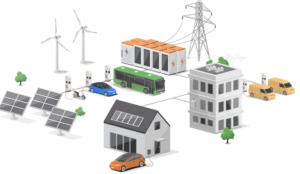
Akshai Baskaran is VP and GM, Energy Management, for Gravity, a San Francisco, California-based company that helps enterprises and their supply chain partners manage their carbon footprint. Baskaran provided POWER with his take on the challenges and opportunities for distributed energy resources in the current regulatory landscape.
-
 Interview
The POWER Interview: Investing in Energy Solutions for the Data Center Boom
The race to lead when it comes to artificial intelligence (AI) is becoming more about securing the power necessary for data centers and other AI infrastructure. In this POWER Interview, Andrejka Bernatova, founder, chairman, and CEO of Dynamix Capital Partners, discusses Dynamix’s belief that the energy and infrastructure industry is in the early phases of a decades-long transition to a low-carbon, sustainable future.
-
 Nuclear
Commonwealth Fusion Systems, Siemens, NVIDIA Will Develop Fusion Digital Twin
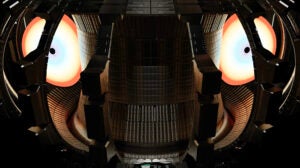
Nuclear energy company Commonwealth Fusion Systems (CFS) said it would collaborate with chipmaker NVIDIA and energy technology group Siemens to develop a digital twin of its SPARC fusion machine. The companies said their work will apply artificial intelligence (AI) and data and project management tools to accelerate commercial fusion.
-
 Nuclear
DOE Backs Terrestrial Energy Molten Salt Reactor Project
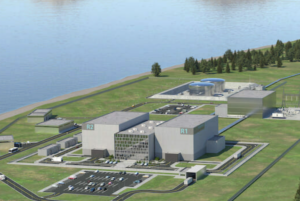
A North Carolina-headquartered developer of small modular nuclear power plants announced it has an agreement with the U.S. Dept. of Energy (DOE) for an initiative to build and operate a molten salt reactor.
-
 Press Releases
HASI, Sunrun Expand Business with $500 Million Joint Venture
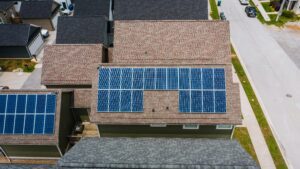
HA Sustainable Infrastructure Capital (HASI), a leading investor in sustainable infrastructure assets, and Sunrun, a provider of home battery storage, solar, and home-to-grid power plants, announced the closing of an innovative joint venture to finance distributed energy assets. The partnership announced January 6 is expected to ultimately finance more than 300 MW of capacity across […]
-
 Legal & Regulatory
DOE Issues $2.7B Orders to Scale Domestic Nuclear LEU and HALEU Enrichment
The U.S. Department of Energy (DOE) has issued its first production-scale task orders under a $2.7-billion uranium enrichment program launched in 2024, awarding $900 million each to Centrus Energy Corp., General Matter, and Orano Federal Services to expand domestic capacity for conventional low-enriched uranium (LEU) and high-assay low-enriched uranium (HALEU) over the next decade. The […]
-
 Data Centers
Liberty Energy Will Develop Gas-Fired Power for Data Center Group
Two Colorado-based groups are partnering to develop power generation solutions for data centers. Liberty Energy, the Denver-based oil and gas company founded by U.S. Energy Secretary Chris Wright, and Vantage Data Centers (also headquartered in Denver) on January 5 announced a partnership to “develop and deliver utility-scale, high-efficiency power solutions,” presumably natural gas-fired units, for Vantage’s continued expansion of its North American portfolio.
-
 Renewables
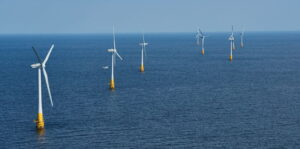
First Japanese Floating Offshore Wind Farm Comes Online
Japanese officials announced the start of commercial operation of a 16.8-MW floating offshore wind farm, a first for that country. The project partners, a consortium that includes some of the biggest names in Japanese energy, on January 5 said the Goto Floating Wind Farm also represents the first commercial application of a hybrid SPAR-type floater technology.
-
 Gas
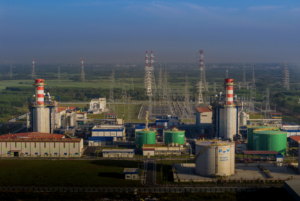
GasGE Vernova Deploys Vietnam’s First HA Turbine at LNG-Powered 1.6-GW Plant
A major independent power producer in Vietnam said its 1.6-GW Nhon Trach 3&4 Power Plant has entered commercial operation. PetroVietnam Power Corp., a subsidiary of the state-owned PetroVietnam (PVN) Group, on January 5 said the facility is the first in the country to be powered by liquefied natural gas (LNG).
-
 Trends
The Age of Electricity and 5 Other Forces Reshaping the Global Energy Outlook
The world has firmly crossed into the “Age of Electricity.” That is a unifying finding in the International Energy Agency’s (IEA’s) 2025 edition of the World Energy Outlook (WEO), which shows a global
-
 Distributed Energy
Grid Edge DERMS: The Ultimate Enabler of the Decentralized Grid
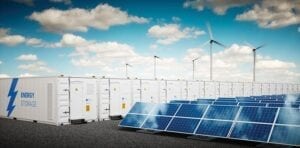
Electricity management is undergoing a fundamental shift. The traditional model of one-way power flows is giving way to a dynamic system shaped by distributed assets and active consumer participation. Renewables are proliferating, distributed energy resource (DER) adoption is accelerating and assets are emerging at the grid edge.
-
 Renewables
Reimagining the Grid: How Microgrids Can Strengthen Utility Resilience
Microgrids have long been viewed as bespoke energy systems mostly deployed by universities, hospitals, and corporations looking to ensure power reliability and reduce costs. Widespread outages caused by major named storms, such as Sandy in 2012 and Maria in 2017, demonstrated the essential role microgrids can play in maintaining service continuity, with some communities sustaining power through local generation even as millions lost power.
-
 Gas
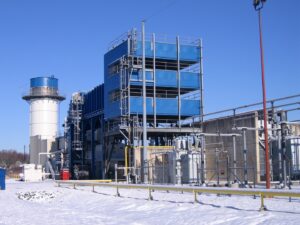
GasMaryland Regulators Support Fast-Tracking New Gas-Fired Plants
Utilities regulators in Maryland are prepared to expedite reviews of two natural gas-fired power plants proposed by Baltimore-based Constellation Energy. The state’s Public Service Commission on December 30 issued a 14-page order in which the group approved Constellation’s request to fast-track the facilities in the regulatory process.
-
 Legal & Regulatory
DOE Uses Emergency Powers to Freeze More Than 2 GW of Coal Retirements as Opposition Intensifies
A rapid succession of Section 202(c) emergency orders has forced utilities to keep more than 2 GW of coal capacity online in December alone, marking an unprecedented federal intervention in grid operations and triggering legal challenges from states and environmental groups. Across all orders issued since May 2025, the DOE has now stalled the retirement […]
-
 Coal
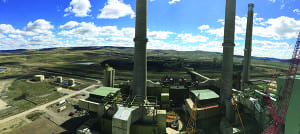
CoalOne Day Prior to Planned Closure, DOE Orders Colorado Coal-Fired Unit to Keep Running
The U.S. Department of Energy (DOE) has issued another emergency order to keep a coal-fired power plant operating, this time saying a Colorado facility must remain online at least another three months.
-
 Commentary
Power Generation in the Age of AI: Year-End 2025 Outlook
In early 2020, the prevailing narrative in the power sector was a continuation story of the developments from the decade before: renewable buildout will keep compounding, thermal capacity will keep retiring (albeit at a slower rate), markets will evolve to compensate for flexible generation products, capital will keep moving earlier in the development value chain […]
-
 Gas
GasLebanon, Egypt Sign Deal to Supply Natural Gas for Lebanese Power Plant
Officials from both Egypt and Lebanon have signed a memorandum of understanding (MoU) to deliver Egyptian natural gas to the Deir Ammar power plant in Lebanon.
-
 Research and Development
DOE’s ‘Genesis Mission’ Enlists AI to Double U.S. Research Productivity in a Decade
The U.S. Department of Energy (DOE) has launched the “Genesis Mission,” a national effort to build an integrated artificial intelligence (AI) platform across its 17 national laboratories. According to The White House, the initiative will “accelerate scientific discovery, strengthen national security, secure energy dominance, enhance workforce productivity, and multiply the return on taxpayer investment into […]
-
 Gas
GasEntergy Arkansas Adding New Gas-Fired Power, Extending Nuclear as Part of Investment Plan
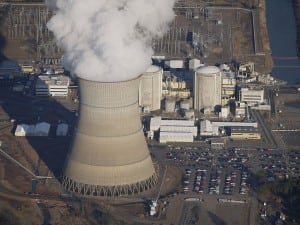
Entergy Arkansas, the utility that provides electricity to about 735,000 customers in 63 counties in that state, announced a plan to add about 2.6 GW of new power generation capacity, in part by converting old coal-fired units to burn natural gas. It also is renewing the operating license for the 1.8-GW Arkansas Nuclear One power plant, the state’s only nuclear power station, with plans to invest in new equipment that would increase the facility’s output.
-
 Nuclear
Japan Prepares to Restart Unit at World’s Largest Nuclear Power Plant
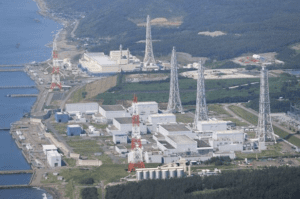
Local government officials in Japan have given approval for the restart of a reactor at the world’s largest nuclear power plant. The Kashiwazaki-Kariwa facility, where seven reactors have total generation capacity of nearly 8,000 MW, has sat idle since early 2012 in the wake of the Fukushima nuclear disaster in 2011, which caused Japan to shut down its nuclear power industry.
-
 Data Centers
Alphabet Buying Clean Energy Developer to Support Data Centers
Alphabet, the parent of technology giant Google, has announced a definitive agreement to acquire Intersect, which provides data center and energy infrastructure solutions, for $4.75 billion in cash, plus the assumption of debt. Google already owns a minority stake in Intersect from a previously announced funding round.
-
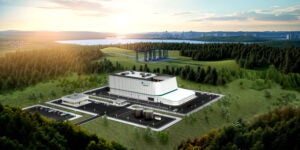 Nuclear
Bulgarian Group Has Deal to Build Up to Six BWRX-300 SMRs
A Bulgarian energy company, along with a European project developer, has signed a letter of intent for a joint venture (JV) that could build a fleet of as many as six small modular reactors (SMRs) in the country. Blue Bird Energy AD and SGE S.A. on December 22 announced the JV would deploy BWRX-300 SMRs from GE Vernova Hitachi (GVH).
-
 Commentary
Trump Media—TAE Merger: Fusion’s Public Market Leap
The fusion industry just achieved a major milestone—and this time, it’s not about science.
-
 Legal & Regulatory
Federal Court Strikes Down Trump’s Wind Energy Moratorium
On Dec. 8, 2025, U.S. District Court Judge Patti B. Saris of the District of Massachusetts granted summary judgment against the Trump administration declaring that the Jan. 20, 2025, executive memorandum directing federal agencies to halt wind energy development (and all related agency actions to implement the memorandum) were unlawful. Wind Energy in the U.S. […]
-
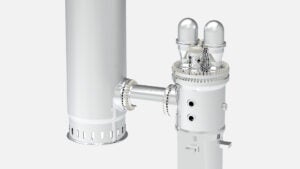 Nuclear
X-energy, Doosan Lock In 16-Unit Xe-100 Component Reservation as Doosan Commits to New SMR Factory
Small modular reactor (SMR) developer X-energy has secured a binding reservation agreement with South Korean power-generation equipment giant Doosan Enerbility to manufacture main power system steel components for 16 Xe-100 SMRs. As part of the decisive move to industrialize the supply chain for advanced nuclear energy, Doosan has also committed to building a new dedicated SMR […]
-
 Nuclear
Trump Media Group, Fusion Company TAE Merging in $6-Billion Deal
The Trump Media & Technology Group (TMTG) is merging with a California-based company focused on development of nuclear fusion in a $6-billion deal. The all-stock transaction announced December 18 would create one of the first publicly traded fusion companies.
-
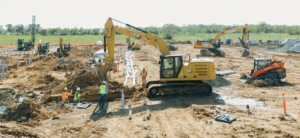 Energy Storage
Companies Announce Major Energy Storage Projects in Texas
A Colorado-based company focused on utility-scale battery energy storage has partnered with global technology group Wärtsilä and others for construction of a 500-MWh project near the Dallas-Fort Worth area in Texas, the latest of several major battery energy storage installations being built in the state.
-
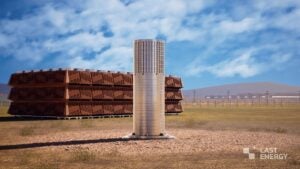 Trends
Advanced Nuclear Developers Raise New Capital as 2025 Investment Hits Record Levels and Demonstrations Near
Three advanced nuclear developers—Radiant, Last Energy, and ARC Clean Technology—announced the closing of major private funding rounds in mid-December 2025, signaling renewed investor momentum behind microreactors and small modular reactors (SMRs) as the companies move from design and licensing into pilot deployment and early commercialization. The announcements—which span a new $300-million-plus round at Radiant, an […]
-
 Coal
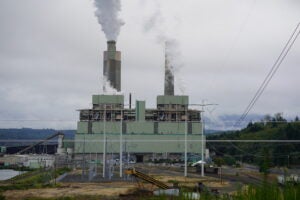
CoalDOE Orders Last Coal-Fired Unit in Washington State to Remain Online
The last coal-fired power generation unit in Washington state, scheduled to close by year-end, is the latest U.S. coal facility ordered to remain in operation by the Trump administration. The U.S. Dept. of Energy (DOE) on December 16 told TransAlta, a Calgary, Canada-based independent power producer (IPP), to keep the 730-MW, coal-fired Centralia Unit 2 […]
-
 Commentary
The Long Arc of Efficiency: What Refrigerators Teach Us About the Future of AI Data Centers
As AI demand accelerates, the race is on to bend the power curve before it bends the grid. The first electric refrigerators were mechanical curiosities—loud, bulky appliances that consumed staggering amounts of electricity. But they spread anyway, because the productivity gains were too great to ignore. Daily habits shifted. Food systems reshaped. Household labor changed […]