
Focus on O&M
-
 O&M
O&MNew Enclosure Solution Enables Remote Monitoring of Battery Backup Systems
With 4.4 million customers and nearly 46 GW of generating capacity, Atlanta-based Southern Co. has doubled the size of its supervisory control and data acquisition (SCADA) system in the past three years and
-
 O&M
O&MRobust Bearings Tested for Brazil’s Belo Monte Hydro Project
Brazil’s Belo Monte hydropower project includes a complex of dams, numerous dikes, and a series of canals supplying two different power stations with water. With a rated capacity of 11,233 MW, it will be the
-
 Renewables
Himalayan Run-of-River Project Depends on New Component Types
The Himalayan Mountains tower over some of the most rugged terrain and harshest climate conditions on the planet. Melting snows from Mount Everest, K2, and hundreds of other snow-capped peaks carve out more
-
Supply Chains
3D-Printed Turbine Replacement Parts Could Cut Repair Times by 90%
3D metal printing is still an experimental process in nearly all industries, used primarily for prototypes and test products. But if Siemens and GE have their way, it will soon become a standard means of
-
O&M
3D Visualization Could Benefit Plant Inspection Programs
Taking a cue from the petrochemical sector, power plants may be on the cusp of applying high-fidelity 3D models of the as-built plant environment to streamline flow-accelerated corrosion (FAC) and other
-
 O&M
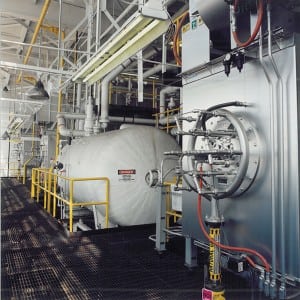
O&MPractical Considerations for Converting Industrial Coal Boilers to Natural Gas
Increasing Environmental Protection Agency (EPA) restrictions pertaining to emissions from coal-fired power plants, the increasing cost of coal operations, and the decreasing cost of natural gas provide strong
-
 O&M
O&MCustomized Storage Solution Improves Efficiency
Omaha Public Power District (OPPD) operates four baseload plants in the state of Nebraska. In 1993, when the North Omaha Station added a new warehouse, OPPD sought help from Vidmar to create effective storage
-
 O&M
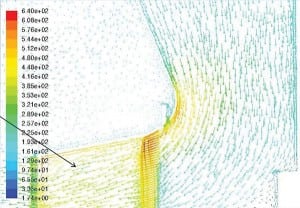
O&MRetrofitting Mechanical Draft Fans to Optimize System Performance
Mechanical draft fans are used exclusively in power generation to move air and gas from one point to another. They create draft in a process system so that fluid media can be induced, forced, and boosted
-
O&M
Upgraded Control Room Consoles Improve Ergonomics
Great River Energy (GRE) is a not-for-profit electric cooperative that generates and transmits power for 28 member cooperatives throughout southern, central, and northern Minnesota and northwestern Wisconsin
-
 O&M
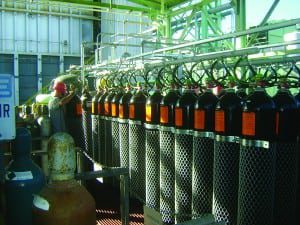
O&MReliable Fire Protection for Turbine Rooms
Fire protection for power plant turbine rooms has typically been a game of tradeoffs. Enclosure integrity issues in older facilities can render CO2 and halon systems ineffective. In new and old facilities
-
 O&M
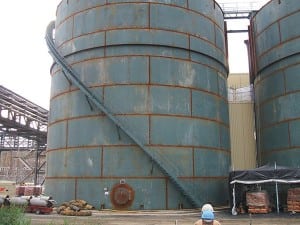
O&MCorrosion Protection for FGD Vessels
Roughly five years ago, the power industry readily embraced the new Alloy 2205 metal as a more lightweight and cost-effective substrate for the construction of flue gas desulfurization (FGD) absorbers and
-
 O&M
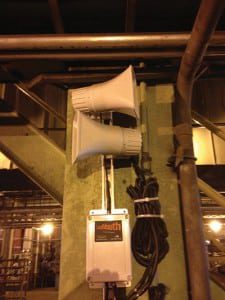
O&MUpgrading a Wired Public Address System with a Wireless Option
The management at a 1,094-MW coal-fired power plant in the Midwest sought to augment their hardwired public-address (PA) system. With hundreds of employees working in varied conditions, a means of
-
 O&M
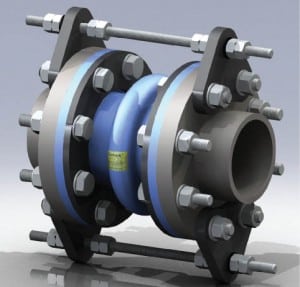
O&MPreventing Failure of Elastomeric Expansion Joints in FGD Systems
Fossil-fuel-based power generation plants with wet scrubbing systems use slurries of sorbents to remove sulfur dioxide from their emissions. These highly abrasive slurries accelerate wear on the expansion
-
 Renewables
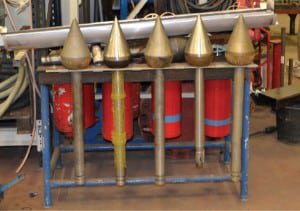
New Design Solves Scaling Problems on Geothermal Control Valves
Scaling is one of the most frequently occurring problems in geothermal power plants and can prohibit the control of well flow if it builds in the well or wellhead. At HS Energy on the Reykjanes Peninsula in
-
 O&M
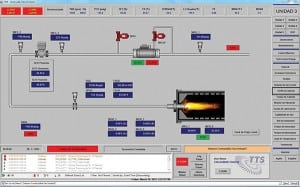
O&MFocus on O&M: Replacing Multiple Turbine and BOP Control Systems with a Single Platform
Termoyopal, a utility based in Bogota, Colombia, recently repowered its power plant at Yopal, Colombia, by replacing three gas turbines with refurbished units and upgrading the remaining two turbines. The
-
 O&M
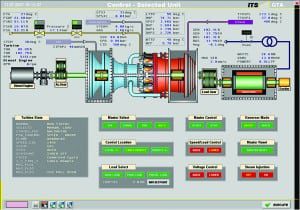
O&MConsiderations When Upgrading Gas Turbine HMIs
Aging human machine interface (HMI) hardware will eventually become a burden on plant operation. Obsolete HMIs can cause problems with connectivity, historical data loss, and hardware failure. As the hardware
-
O&M
Improve Plant Heat Rate with Feedwater Heater Control
Meaningful, yet often hidden thermal performance losses occur in feedwater heaters.
-
 O&M
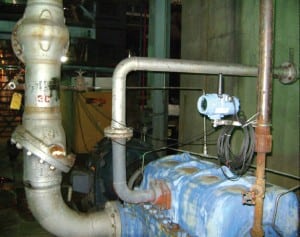
O&MIndustrial Wireless Sensors: A User’s Perspective
There are many reasons to anticipate that the use of wireless instrumentation in industrial settings will increase dramatically in the next few years.
-
 O&M
O&MLADWP Harnesses LMS100 to Solve Once-Through Cooling Dilemma
Los Angeles sits alongside the world’s largest body of water, and naturally the city’s Department of Water & Power (LADWP) placed its generating stations along the shoreline to take advantage of that abundant resource for cooling. The LADWP built three coastal generating stations that provide the city with 2,162 MW, about 35% of the peak annual demand.
-
 O&M
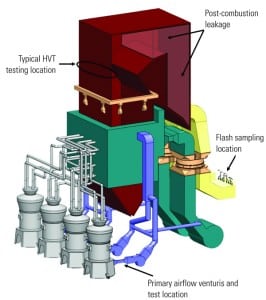
O&MPerformance-Driven Maintenance
My career began as a results engineer testing large utility boilers. Ever since that first assignment, I have remained interested in the details of how the measurement and control of the furnace fuel and air inputs can make a huge difference in overall boiler performance. Given that plant operations and maintenance (O&M) budgets are slimmer today than in recent memory, my experience is that targeted performance testing can provide important feedback for prioritizing maintenance expenditures. The combination of plant testing and targeted O&M expenditures provide the best opportunity for efficient and reliable plant operations. I call this approach to plant efficiency improvement “performance-driven maintenace.”
-
 O&M
O&MLithium-Ion Batteries: A Potential Fire Hazard
The proliferation of battery technologies in modern industry is presenting fire professionals with new sets of challenges. Confusion exists as to the correct approach for protecting industrial batteries from fire, whether that be in battery manufacturing, battery storage, or battery-powered applications.
-
 O&M
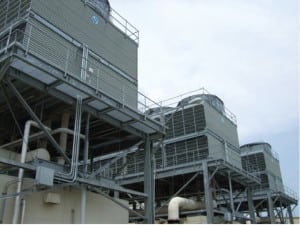
O&MBattling White Rust
Does your power plant use a chiller for combustion turbine inlet air cooling or other processes that reject heat? If so, there is a good chance you also have an auxiliary cooling tower or a wet surface air cooler to cool these systems.
-
 O&M
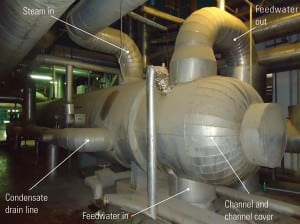
O&MHow to Avoid Feedwater Heater Drain Design Pitfalls
Feedwater heaters are used to preheat boiler feedwater by condensing steam extracted from several stages of the steam turbine. Feedwater heaters enhance the thermal efficiency of the power plant by reducing the amount of fuel burned in the boiler to produce a specified power. At the same time, the steam energy extracted from the turbine by the feedwater heater helps to reduce the rate of energy rejection to the environment via the condenser.
-
 Instrumentation & Controls
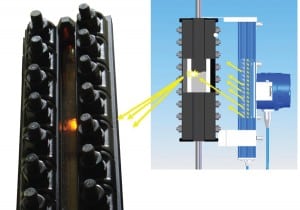
Drum Level Instrumentation Update
Accurate knowledge of the water level in any boiler drum application is an absolute necessity. While operating a boiler with low water level is one of the leading causes of boiler failure, operating with a high water level may produce less-than-optimal steam, as well as damage to the steam turbine by moisture carryover.
-
 Coal
CoalSafety a Main Theme at Asian Coal Users’ Meeting
Power plant operators, managers, and other professionals from across Southeast Asia met in Hong Kong in early November for the second annual Asian Sub-Bituminous Coal Users’ Group meeting, created to share information and best practices related to safety, handling, combustion, characteristics, and risk management of the fuel.
-
 O&M
O&MControlling Fugitive Combustible Coal Dust
Regardless of how much prevention is employed to mitigate combustible dust in coal-fired power plants, fugitive coal dust is pervasive and can be dangerous. In coal-fired power plants, mechanical transfer points are leading sources for airborne fugitive dust. However, because coal dust travels quickly over large areas with minimal airflow, fugitive combustible dust settles in many areas.
-
Smart Grid
Conference Report: 12th ICS Cyber Security Conference
The 12th ICS Cyber Security Conference was held at Old Dominion University’s Virginia Modeling Analysis and Simulation Center (VMASC) October 22–25, 2012. There were approximately 150 attendees from multiple industries, universities, government, and vendors as well as consultants from the U.S., South America, Europe, and Asia.
-
 O&M
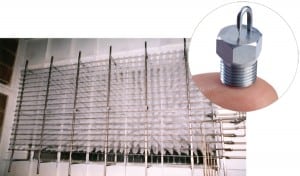
O&MUsers Return to Fogging on Frame 7FAs
It has been a decade since an R0 compressor blade was liberated on one of the eight Frame 9FA combustion turbines at CLP Power Hong Kong’s Black Point Power Station. This catastrophic failure eventually led to GE’s recommendation that operators severely limit or cease using online water wash (OLWW), inlet fogging, wet compression, and evaporative coolers on F-Class turbines.
-
 Nuclear
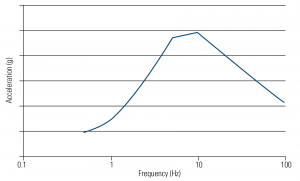
Seismic Instrumentation at Nuclear Power Plants
When a nuclear power plant experiences ground motion due to an earthquake, an evaluation may be needed before allowing the plant to continue operating or to resume operating if it has been shut down, as was the case after the seismic event that shut down both units at Dominion’s North Anna Power Station on August 23, 2011.
-
 O&M
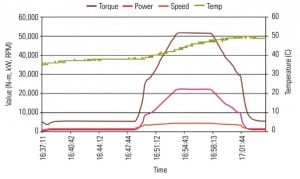
O&MMaximizing Steam Turbine/Compressor Performance with Precise Torque Monitoring at the Coupling
All turbo machinery is subject to degradation that, over time, will affect the system’s efficiency and operational performance. Precise monitoring of turbo machinery performance with continuous torque-monitoring systems can be used to identify gradual efficiency loss. That, in turn, allows a more focused maintenance scope to be developed that can return the system to its optimum operation and efficiency.