
Focus on O&M
-
 O&M
O&MKeeping Condensers Clean
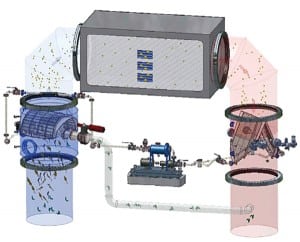
The quality of the cooling water intake and the amount of debris in that water affects the operation and performance of the condenser and therefore the thermal performance of the typical steam plant.
-
 O&M
O&MExpanding the Use of Predictive Maintenance as a Business Strategy
The Linde Group is a world-leading gases and engineering company operating in more than 100 countries. It’s no surprise that the company uses a variety of advanced monitoring techniques and equipment to keep its plants operating reliably. In the U.S. and UK particularly, Linde plants have used online machine condition monitoring for a number of years. At its Shanghai headquarters, Linde has formed a large and impressive remote operations center where it monitors and tracks the process operations of all its major gas plants in China 24 hours a day.
-
 O&M
O&MCSB Releases Hot Work Safety Notice
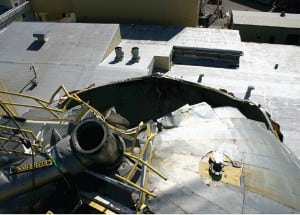
The Chemical Safety Board (CSB)—an independent federal agency charged with investigating serious chemical accidents such as equipment failure, as well as inadequacies in regulations, industry standards, and safety management systems—recently released multiple reports that should be made part of every power plant’s safety training program.
-
O&M
NFPA Gas Purging Rules Updated
The CSB has made urgent recommendations to the NFPA and the International Code Council to prohibit indoor purging and require companies and installers to purge flammable fuel gases to safe locations outdoors, away from workers and ignition sources.
-
 O&M
O&MAbrasion-Resistant Pipe Handles Ash Slurry
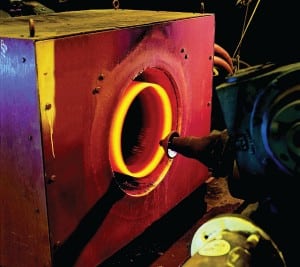
Steel piping systems are widely used at coal-fired power plants for a variety of purposes, including the conveying of coal ash slurry to nearby settling ponds, the transfer of limestone slurry to absorber spray towers for removal of SO2 and dilute hydrochloric acid from flue gases, and for transporting away the calcium sulfate by-product of the flue gas desulfurization process.
-
 O&M
O&MAir Casters Speed Equipment Moves
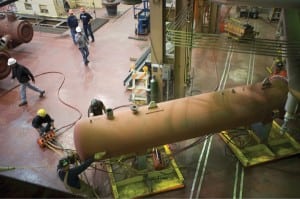
When it comes to moving megaton items like feedwater heaters or recirculating pumps, conventional moving tools such as wheel rollers, cranes, hoists, and come-alongs may be virtually useless. In some cases, moving large components is dangerous in a space-constrained location surrounded by delicate process control equipment. Feedwater heater and recirculating pump removal and replacement are […]
-
 Nuclear
NRC Confident in Long-Term Dry Cask Storage
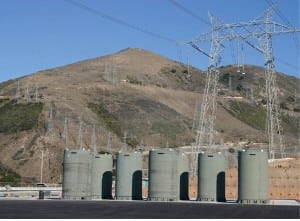
The U.S. Nuclear Regulatory Commission (NRC) approved an updated “waste confidence” rule in mid-September that reflects the agency’s confidence that spent nuclear fuel (SNF) can be safely stored for at least 60 years beyond the closing date of any U.S. nuclear plant. Approval of this rule was required before the NRC can license any new reactors that will be required to store SNF on site indefinitely.
-
Nuclear
EPRI Updates Spent Nuclear Fuel Storage Handbook
EPRI recently issued a handbook on nuclear spent fuel storage that examines regulatory trends affecting used fuel storage, describes available dry storage technologies, reviews planning considerations for spent fuel storage installations, and discusses technical issues affecting dry storage.
-
Business
Lessons Learned in Reliability Standards Compliance
It has been three years and a few months since the North American Electric Reliability Council (NERC) Reliability Standards (Standards) became mandatory and noncompliance became subject to sanctions by the Federal Energy Regulatory Commission (FERC). You might assume that because we have had no further instances of widespread cascading outages that the Standards are working. You may also assume that—considering the database of documented noncompliance with the Standards—the industry as a whole is puzzled, unprepared, or negligent in carrying out its responsibility to keep the high-voltage electric grids reliable and secure. The truth likely lies somewhere in the middle.
-
Smart Grid
Smart Grid Cyber Security Guidelines Released
The National Institute of Standards and Technology (NIST) has finalized its initial set of smart grid cyber security guidelines. NIST’s Guidelines for Smart Grid Cyber Security (NISTIR 7628) includes high-level security requirements, a framework for assessing risks, an evaluation of privacy issues in personal residences, and other information for organizations to use as they craft strategies to protect the modernizing power grid from attacks, malicious code, cascading errors, and other threats, according to NIST’s press release.
-
O&M
Innovative Cleaning of Air Preheater Coils with Pressurized Liquid Nitrogen
Cleaning air heaters in power plants or recovery boilers has traditionally involved using high-pressure water, chemicals, or steam. These techniques, though effective on moderate airside fouling of heat exchange surfaces, are usually ineffective on the more tenacious deposits that can develop in coal-fired plants. If these deposits are not removed by periodic cleaning, heat transfer in the heaters is reduced, which in turn reduces boiler efficiency and increases a unit’s heat rate. Severe fouling on air preheaters (APHs) can even reduce a unit’s power output.
-
 O&M
O&MTen Years of Experience with FAC in HRSGs
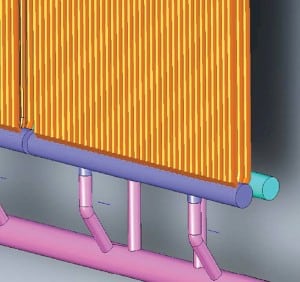
We first reported on combined-cycle plant reliability concerns due to erosive wear and flow accelerated corrosion (FAC) in heat-recovery steam generator (HRSG) pressure parts at the 1999 EPRI Maintenance Conference. More than 10 years later, these damage mechanisms remain significant contributors to forced outages, pressure part repairs, and major component replacement.
-
 Water
WaterMine Drainage: An Alternative Source of Water
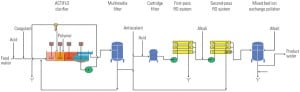
Although mining practices often vary greatly according to the material produced and the value of the deposit, one common denominator is that mining of materials containing sulfide minerals creates acid mine drainage (AMD). AMD is one of the mining industry’s major environmental challenges.
-
 Coal
CoalBreathing Added Life into Failing Heat Exchangers
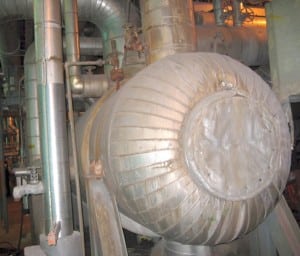
When heat exchanger tubes—sometimes numbering a thousand or more per unit—begin to crack or wear, the effects can lead to a cascade of subsequent failures in adjacent tubes. If too many tubes are plugged, heat exchanger effectiveness is compromised, and power generation may be curtailed. If conventional mechanical plugs are used, they can break loose, leak, and fail. At that point, the replacement of a very costly heat exchanger is imminent.
-
 Gas
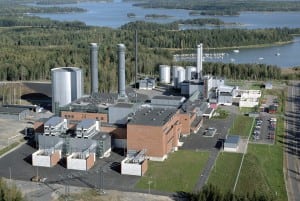
GasLocal Warming: Helsingin Energia Uses CHP to Heat a City
Power plant operators, especially those located in countries with enforceable carbon emissions standards, are concerned about their CO2 emissions. But for Helsingin Energia—which provides power, heating, and cooling for Helsinki, Finland’s 300,000 residents—the main concern is local warming, not global warming. In Helsinki, temperatures on midsummer afternoons only reach an average 21C, and for half the year daytime temperatures are below 10C.
-
 Coal
CoalProtect Your Stack Linings from Corrosion
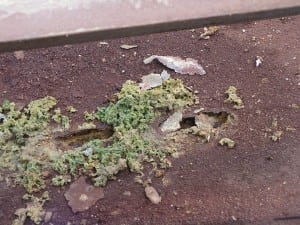
Stacks at power generating stations may be low maintenance, but they are not no maintenance. The cost of preventing corrosion may be as little as $10,000, but the cost of repair or replacement could be many times that or even put your plant out of commission until the stack problem is corrected.
-
 O&M
O&MNew Coating System Extends Life of Cooling Tower
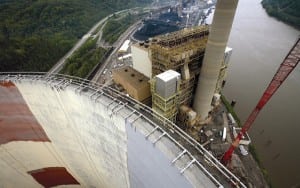
American Electric Power’s (AEP’s) Cardinal Power Plant Unit 3 cooling tower in Brilliant, Ohio, was coated and lined in the spring of 2008 by a team of coatings professionals that included the plant’s project and coatings engineering staff, Sherwin-Williams (coatings supplier), Cannon Sline Industrial (contractor), and OTB Technologies (third-party inspector). The team completed the project in just 11 weeks through damp springtime conditions in the Ohio River Valley.
-
 O&M
O&MNew Process Transforms Waste into Product for Controlling Emissions
In April, Solvay Chemicals Inc. commissioned a new facility that uses an innovative process to recover and transform sodium carbonate waste streams into a market-grade sodium bicarbonate used in air emissions control.
-
 News
NewsShoring System Uses First Built-In Ladder Supports
Safety is the imperative for any construction project, and Duke Energy’s 630-MW Edwardsport integrated gasification combined-cycle station in Knox Country, Ind., is no exception.
-
 Business
KEMA Conference Report: Competition Strengthens as Wholesale Power Prices Fall
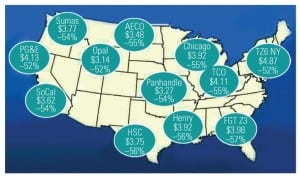
Since the collapse of Enron and the wholesale power markets, the vitality of competition in retail markets for electricity has waned in most regions of the U.S., with the exception of Texas. At KEMA’s 21st annual Executive Forum in late March, 300 attendees converged on Dallas to discuss and debate the dynamics and changes now facing residential and commercial customers in most regions of the U.S. and Canada. Founded in 1927, KEMA is a global provider of business and technical consulting, operational support, measurement and inspection, and testing and certification for the energy and utility industry. A summary of the many presentations follows.
-
 News
NewsDesign of Experiments Reduces Time to Market
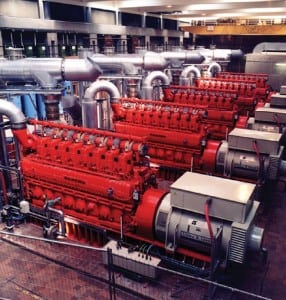
Dresser Waukesha is a familiar name associated with large, gas-fueled stationary engines for power generation and gas compression applications around the world. Each new project location presents a unique set of site variables that must be taken into consideration—such as fuel quality, air/fuel ratio, temperature, humidity, altitude, load, and exhaust after-treatment—when providing the customer a meaningful performance guarantee. To fully characterize every engine option with such a wide range of fuel types and quality and in widely varying environmental conditions across the global is an impossible chore.
-
 News
NewsKeep Oil Leaks Under Control
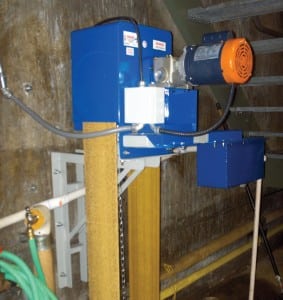
An oil skimmer could simplify your plant water maintenance activiites.
-
 O&M
O&MVariable-Frequency Drives Upgrade Reactor Circulating Pumps
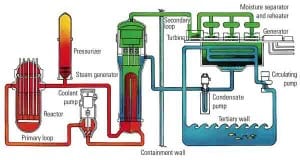
A recent trend in nuclear power plant upgrades has been the replacement of the motor-generator (MG) sets that drive the reactor circulating pumps with variable-frequency drives (VFD). Siemens’ first application of VFDs in this industry began in 2000 with an installation of six VFDs at the Browns Ferry Nuclear Plant. The use of the VFD continues to expand, and upgrades were recently completed at several U.S. plants, including the Hatch Nuclear Plant in Georgia.
-
O&M
Competitive Maintenance Strategies, Part III
This third and final installment addresses three more areas where an investment in good maintenance practices pays operating availability dividends.
-
 O&M
O&MLaser Hole-Shaping Improves Combustion Turbine Efficiency
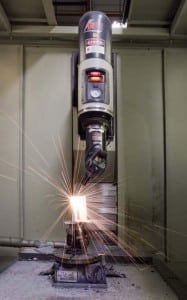
Laser shaping technology has evolved from a two-step process into a single process that drills and shapes holes through a TBC, bond coat, and airfoil base metal to create a finished product.
-
O&M
Competitive Maintenance Strategies, Part II
Nearly every combined-cycle operator recognizes that cycling reduces the life expectancy of hot-gas-path components in combustion turbines. Often overlooked, however, is that the same phenomenon affects the heat-recovery steam generator (HRSG).
-
O&M
Deciphering Desuperheater Failures
The "combined" portion of a combined-cycle plant is the heat-recovery steam generator (HRSG) that generates high-pressure and high-temperature steam and the steam turbine generator that expands the steam to produce electricity. Integrating the HRSG and steam turbine with the combustion turbine is a key challenge for plant designers, as each system has differing operating profiles, operational constraints, and design requirements.
-
O&M
Competitive Maintenance Strategies
Many consultants are prospering today by creating "new" maintenance strategies. What they’re really creating is new buzzwords.
-
 O&M
O&MRestraining Torsional Vibration
All rotating equipment power trains found in a power plant have some amount of vibration, usually caused by mechanical unbalance of the rotating system, shaft misalignment, or weakness in the bearing support.
-
 O&M
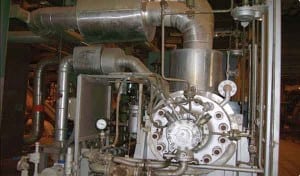
O&MCan Your Boiler Feed Pump Handle a Deaerator Pressure Transient?
In a typical steam power plant, the boiler feedwater (BFW) pump takes suction from the deaerator (DA) and discharges high-pressure water to the boiler through the feedwater heaters. During normal operation, the DA is supplied with steam turbine extraction steam to mix with and heat the feedwater.