A new generation of nuclear projects is advancing toward construction, as the industry works to develop the engineering, commercial, and industrial capabilities needed to deliver power plants predictably and at scale. From design maturity and contracting to qualified suppliers, regulatory oversight, and construction execution, POWER examines the requirements for turning today’s nuclear ambitions into repeatable commercial projects.
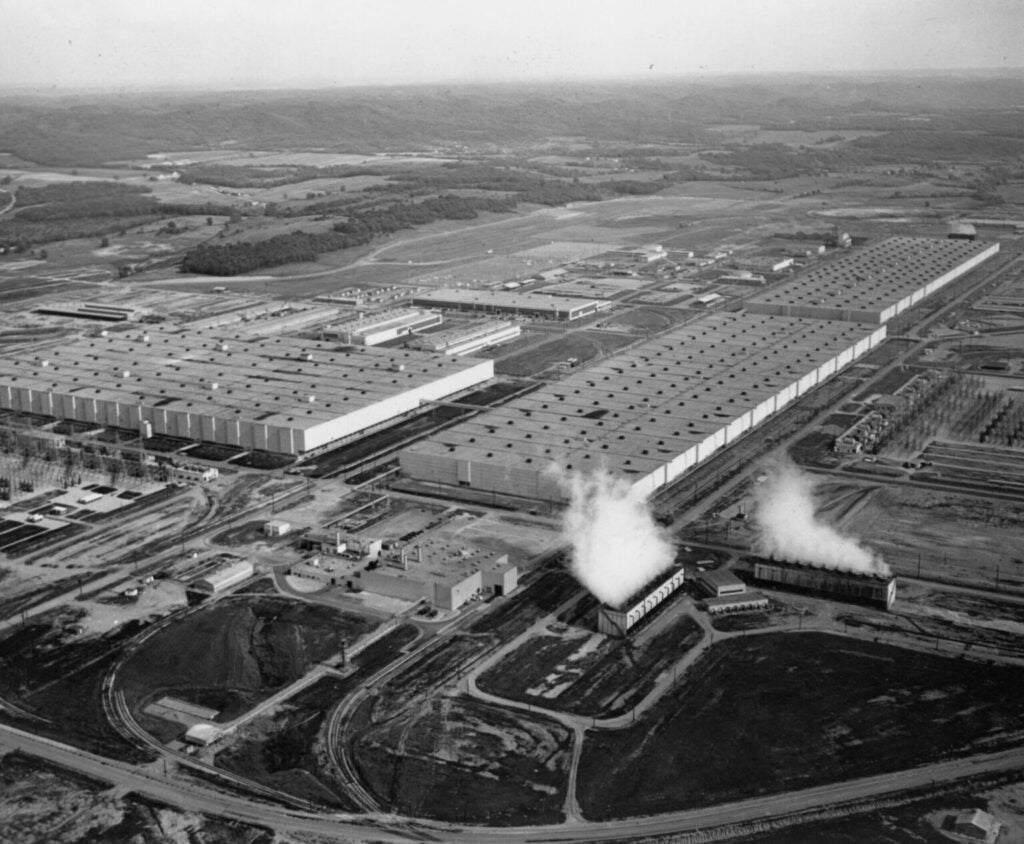
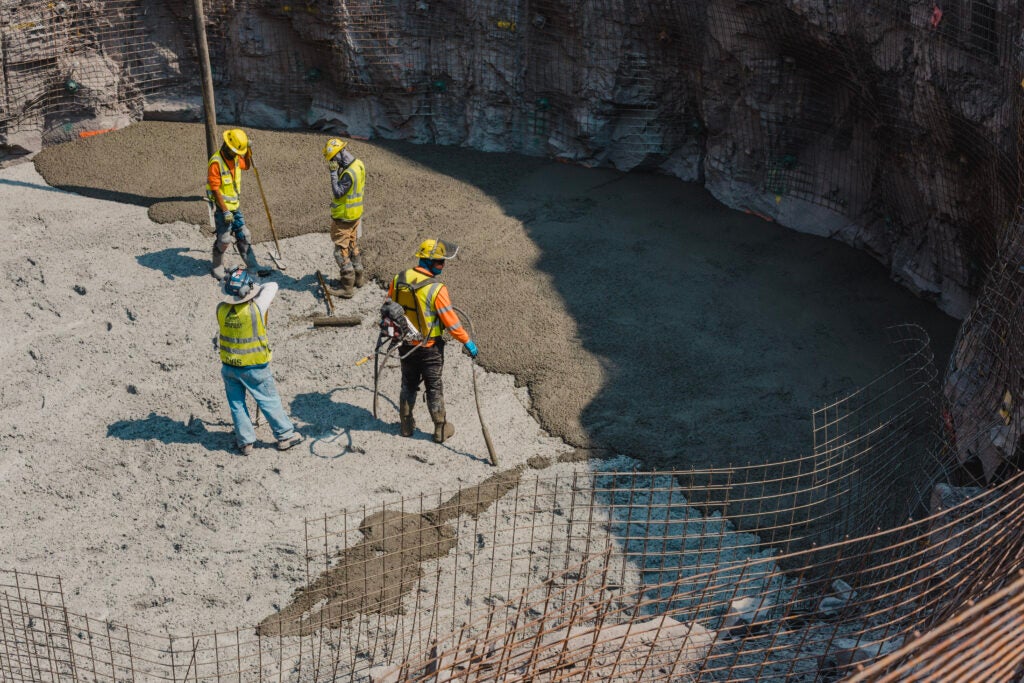
In 1952, in an extraordinary industrial undertaking at the dawn of the nuclear age, Peter Kiewit Sons’ Co. took on construction of the Portsmouth Gaseous Diffusion Plant for the U.S. Atomic Energy Commission (AEC), a project President Harry S. Truman had signed into law that July at an estimated cost of $1.2 billion. Conceived to supply enriched uranium for the nation’s atomic program, the pioneering project was ambitious for its scale and speed. At its peak in 1954, the workforce numbered 22,500. Crews moved more than 4.5 million cubic yards of earth, working from more than 68,000 engineering drawings and logging 69 million labor-hours. By March 1956, the uranium enrichment complex was complete—six months ahead of schedule, at a final cost of $750 million, $450 million below the original estimate (Figure 1).
For Kiewit, Portsmouth marked an early milestone in a construction history that already stretched back nearly seven decades. Founded in Omaha, Nebraska, in 1884 as a family masonry business, the company had established itself as a major infrastructure contractor through Depression-era highway projects and the construction of military bases, airfields, and shipyards during World War II. Its nuclear involvement subsequently extended to the AEC’s Hanford production complex in Washington state, commercial reactor projects during the industry’s expansion in the 1970s and 1980s, and exploratory tunnel construction at Nevada’s Yucca Mountain in the early 1990s. By then, however, the market for new U.S. nuclear power plants had contracted sharply, leaving some of Kiewit’s earlier commercial projects unfinished and prompting the company to scale back its involvement. “We weren’t very engaged with it, and we backed away,” recalled Mike Rinehart, president of Kiewit Nuclear Solutions Co.
Kiewit’s broader construction business continued to thrive, building an increasingly sophisticated engineering and industrial construction enterprise during the decades when commercial nuclear development languished. The company established a major fabrication yard in Ingleside, Texas, in 1984 and brought engineering capabilities in-house through its 1998 acquisition of Bibb and Associates, strengthening its ability to undertake integrated engineering, procurement, and construction (EPC) projects across power generation and other industrial markets. Those projects also yielded extensive construction data, relationships across the building trades and supply chain, and experience coordinating engineering, procurement, and field execution. Today, Kiewit is responsible for more than 30 GW of gas-fired power construction scheduled to reach commercial operation by 2030, according to Josh Patterson, senior vice president of markets and strategy at Kiewit Nuclear Solutions Co.
As another wave of commercial nuclear development appeared imminent in the late 2000s, Kiewit moved to rebuild qualifications that had lapsed during the industry’s construction downturn. In 2010, it established Kiewit Power Nuclear, developing a nuclear quality assurance program under the American Society of Mechanical Engineers (ASME) NQA-1 standard and securing certifications needed to pursue new reactor projects. Rinehart recalled that Kiewit had already secured substantial commercial nuclear work when the Fukushima accident in 2011 disrupted those plans. This time, however, the company retained its certifications, continuing to support operating reactors through maintenance, modifications, and post-Fukushima upgrades while pursuing opportunities in the federal nuclear complex.
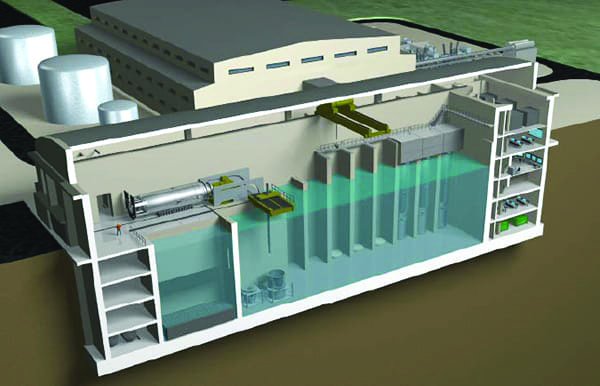
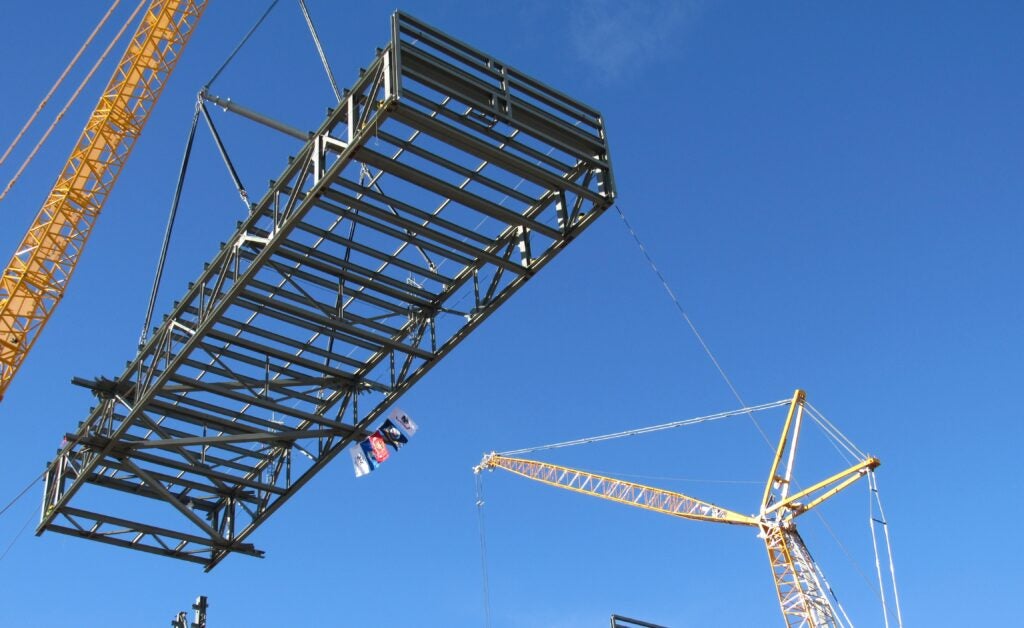
Those federal projects eventually became an important part of Kiewit’s preparation for a new commercial construction market. Work at Department of Energy (DOE) facilities—including the Pantex Plant, Waste Isolation Pilot Plant, and Y-12 National Security Complex—allowed the company to expand its nuclear quality assurance program through increasingly substantial construction assignments. At Idaho National Laboratory (INL), Kiewit installed approximately 17,000 tons of nuclear-qualified structural steel for the Navy’s Spent Fuel Handling Recapitalization Project (Figure 2). By 2023, when the company established Kiewit Nuclear Solutions Co., it had assembled specialized nuclear construction capabilities alongside engineering, fabrication, and project execution experience developed across its wider business.
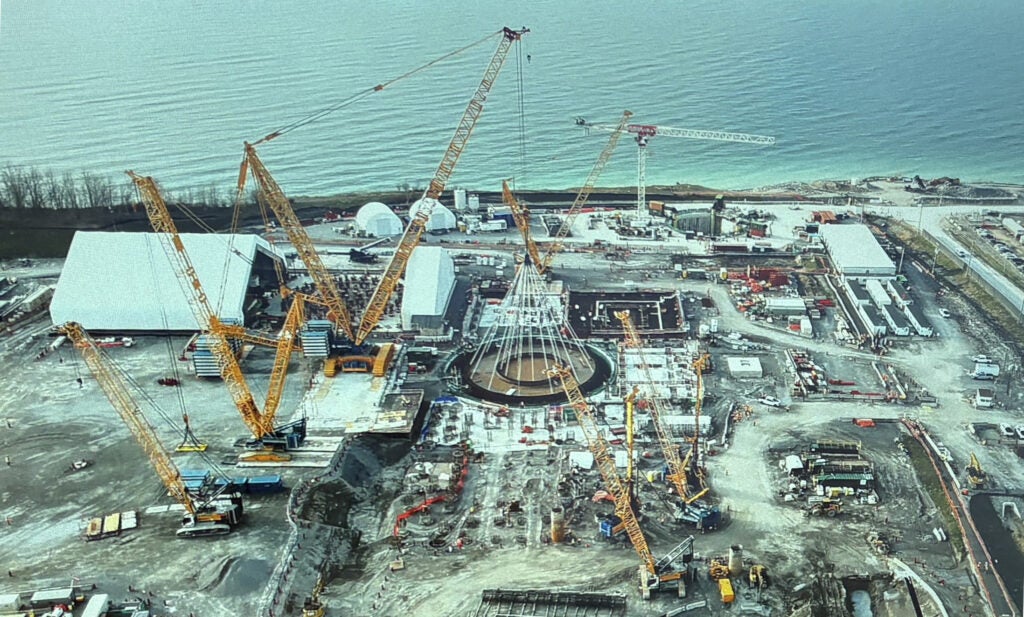
Kiewit’s expanding commercial nuclear portfolio is already testing those capabilities across markedly different technologies and construction arrangements. At INL, the company is lead constructor for Oklo’s planned 75-MWe Aurora powerhouse, a sodium-cooled fast reactor whose development draws on the legacy of the site’s Experimental Breeder Reactor-II (EBR-II). In Utah, Valar Atomics selected Kiewit for engineering and construction of its helium-cooled Ward 250 test reactor, which achieved zero-power criticality under the DOE’s Reactor Pilot Program in June 2026. At Ontario Power Generation’s (OPG’s) Darlington site in Canada, Kiewit Nuclear Canada is working alongside Aecon on the first of four planned 300-MWe BWRX-300 reactors. Meanwhile, at Energy Northwest’s proposed Cascade Advanced Energy Facility in Washington, Kiewit has joined Black & Veatch and Aecon in a joint venture selected for negotiations on the first four planned Xe-100 high-temperature gas-cooled reactors. That site, at the DOE’s Hanford complex, also returns Kiewit to a nuclear installation it first worked at more than six decades earlier.
Still, Rinehart cautions against assuming that repeatability in nuclear construction will mean building identical plants. Even across Kiewit’s extensive gas-fired power portfolio, he noted, differences in seismic requirements, wind loads, equipment availability, and plant configurations mean that “no two are the same.” Although standardized reactor designs remain essential to nuclear licensing and safety, he argues that the greater opportunity for replication lies in the processes governing how projects are engineered, constructed, and managed. “The replication, the repeatability that has to happen is going to be in the behavioral space, in the data space, in the design process space, and how we do business,” Rinehart said.
What Does Readiness Actually Look Like?
So far, 21 U.S. nuclear operators surveyed by the Nuclear Energy Institute (NEI), the industry’s principal trade association, are contemplating 33.6 GW of additional nuclear generating capacity through 2039—a 44% increase over the capacity projected in the NEI’s 2025 survey (Figure 3). Although the September 2026 findings suggest considerable momentum, most of the anticipated capacity additions are concentrated in the latter half of the 2030s: roughly 28 GW is projected to enter service between 2035 and 2039 alone, a deployment pace approaching 6 GW annually. The survey identifies three planned reactor restarts totaling about 2.2 GW before 2030 and just over 3 GW of new capacity, mostly small modular reactors (SMRs), from 2030 through 2034. Notably, respondents also anticipate approximately 15 early site permit applications, eight construction permit applications, and 30 combined license applications through 2039, including updates to existing permits and licenses, though NEI cautioned that these are not firm commitments.
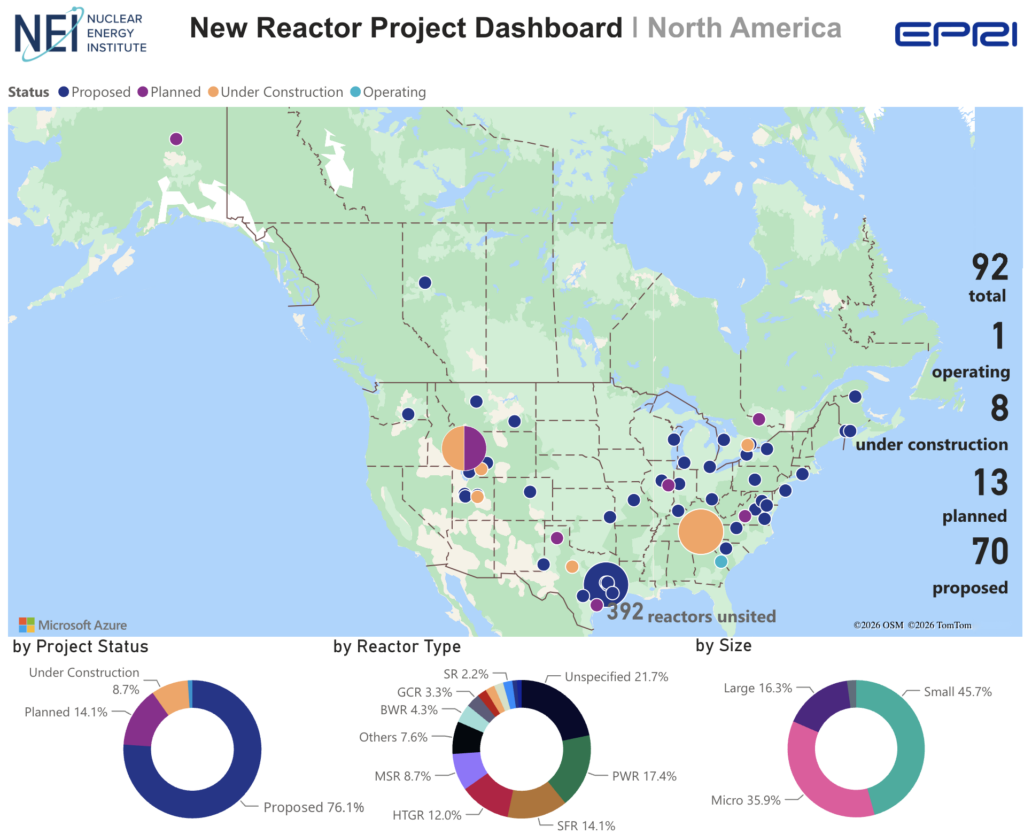
“The nuclear industry is well along the path to commercial maturity,” Marcus Nichol, vice president of nuclear deployment and fuel cycle at NEI, told POWER. Recent construction permits, projects advancing into construction, and federal and state policies supporting deployment all point to that progress, as does a prospective project pipeline extending beyond utilities that operate existing reactors, he said.
In 2026, the Nuclear Regulatory Commission (NRC) issued construction permits for two commercial power reactors. The first, in March, authorized TerraPower’s Natrium reactor at Kemmerer, Wyoming—the NRC’s first construction permit for a commercial non-light-water reactor. The second, in September, authorized the Tennessee Valley Authority’s (TVA’s) 300-MWe BWRX-300 at Clinch River, Tennessee, the first construction permit for a U.S. commercial SMR. While TerraPower began nuclear construction in April 2026, in September, its longtime EPC contractor, Bechtel, told Virginia workforce officials in a layoff notice that “TerraPower and Bechtel were unable to reach an agreement on the next phase of the project and have decided to move forward separately.” TerraPower has since indicated it will rebid the EPC contract and maintain its current construction schedule, while Bechtel said it will remain on site to complete the project’s sodium test and fill facility. TVA, meanwhile, had not announced the final board authorization required to begin construction at Clinch River as of October.
NRC staff completed the final safety evaluation for a third project in late October, recommending that the Commission make the findings needed to issue a construction permit for Dow subsidiary Long Mott Energy’s four-unit, 320-MWe X-energy Xe-100 plant at Dow’s Seadrift Operations in Texas. In its application, Long Mott Energy said it aims to begin nuclear construction in the first quarter of 2028 and expects to complete construction no later than 2033.
Still, regulatory milestones alone do not establish readiness for the next stage of construction. NEI’s construction guidance notes that even a completed design may be insufficient to proceed with construction unless engineers have incorporated vendor details, completed constructability reviews, established construction sequencing, and resolved engineering interfaces. Subsequent design changes can trigger additional procurement, labor, and regulatory work, increasing costs and disrupting schedules, the report warns.
Robin O’Callaghan, executive vice president of nuclear engineering at Kiewit Nuclear Solutions Co., pointed to the limitations of conventional design-completion metrics in determining whether a project is prepared for the next stage of work. “There are these gated processes where you talk about a 30, 60, 90 type percent complete of design, and that gives you a number, but it doesn’t necessarily mean that you’re really ready to perform the next stage of work,” she explained.
O’Callaghan stressed the importance of resolving—or explicitly accounting for—decisions concerning plant configuration, equipment requirements, engineering interfaces, construction sequencing, procurement and licensing strategies, and nuclear quality requirements. That assessment also involves weighing the consequences of delaying work against the risks of proceeding before all assumptions are resolved. “To move ahead with any of those being unknown is a significant risk, and it’s not that we’re incapable of moving those projects through some of those risks, but it has to be done very deliberately with eyes wide open from all the stakeholders. There has to be awareness of the risks that you’re taking and understanding what contingency or what the range of outcomes could be for those decisions,” she said.
Critical long-lead equipment is one example. Equipment selection can determine substantial portions of the surrounding plant design, including foundations and structural arrangements, piping and electrical routing, and the clearances needed for installation and maintenance, O’Callaghan said. If those components have not been sufficiently defined, engineering could advance on assumptions that later require revision, she warned. “Without having at least some commitment to those specific critical key components, you do continue to have risks around the design, the layout,” she said. Safety-significant equipment introduces additional design-control requirements, she noted, particularly when changes affect the inputs and outputs necessary to demonstrate that the plant’s licensing basis and applicable quality requirements are met.
The level of design detail needed to begin work may also vary by activity. Hadron Energy, for example, has engaged GSE Solutions to develop a simulator alongside engineering for its planned Halo light-water microreactor. “We don’t need a completed reactor design to begin simulator development,” Sam Gibson, Hadron’s founder and CEO, told POWER, although he noted that the work requires sufficiently mature reactor physics, thermal-hydraulic models, plant configurations, and equipment specifications. While Gibson noted the simulator has yet to inform Halo’s design, the company expects it to help evaluate plant responses to load changes, equipment failures, and other transients, particularly the interaction between Halo’s natural-circulation primary system and its steam generators. “If these evaluations identify opportunities to improve control logic, operator interfaces, alarm management, or operating procedures, we can address them during engineering rather than discovering them during plant startup. That’s the real value of developing the simulator in parallel with the reactor itself,” he said.
From Design Maturity to Construction Decisions
As a plant’s design advances, decisions about its configuration and systems shape the quantities of material and installation work—and, in turn, its cost, according to Rinehart. “Quantities are the foundational element of cost,” he told POWER. When evaluating emerging reactor technologies, Kiewit considers whether developers understand how those quantities affect a project’s overall cost, he said. “Some things may not be able to get there if you just have too many yards of concrete, too many tons of steel, too many feet of pipe, too many cables to pull, and circuit terminations to do.”
Those quantities underpin the estimates used to secure financing and negotiate construction contracts. Generally, AACE International’s nuclear-specific guidance identifies Class 3 estimates for budget authorization or control and Class 2 estimates for control or bidding, classifying them according to the maturity of the underlying project-definition deliverables.
Recalling the lessons of Vogtle and V.C. Summer, Rinehart questioned whether design inputs are sufficiently mature to support the estimates on which major project decisions depend. “What class of estimate is the project really at when critical decisions are being made?” he asked, warning that other pressures can influence those decisions before the engineering has reached the necessary level of definition. “I don’t think we [the industry] are going to repeat the same sins of just forging forward when we don’t have that maturity,” he added.
For contractors, the execution strategy must also fit the project’s financing and owner readiness, according to Jason Bargender, executive vice president of markets and strategy at Kiewit Nuclear Solutions Co. “Kiewit has found that as a project matures the cost and schedule commitments commensurately increase. The level of maturity of cost and schedule commitments must sync with the nature of the capital that drives the current state of a project,” Bargender said. He identified completed licensing, offtake agreements, interconnection arrangements, and appropriate capitalization for the entire project, alongside sufficient design maturity to support an appropriate allocation of performance, schedule, and cost risks, as typical requirements for advancing toward a construction commitment.
And for reactor developers, meeting those requirements demands capabilities beyond research and development. Many reactor developers still approach projects from a laboratory-scale perspective, although advancing a project through an investment decision into construction requires experience in project development, financing, licensing, and major infrastructure construction, O’Callaghan said. “To commercialize this technology requires a whole different set of knowledge and skills, and I think that’s where they need to identify the right partners that have done large mega projects like this,” she noted.
Organizing the Project: Many Firms, One Plant
However, those specialized engineering and construction capabilities often reside in different organizations, which makes the allocation of responsibilities and coordination of their work central to project execution. Across Kiewit’s nuclear portfolio, those arrangements vary considerably. Kiewit draws on a common set of integrated engineering, procurement, and construction practices across these arrangements, which Rinehart refers to as the company’s “EPC Playbook.”
“When we say EPC within Kiewit, it has a very profound meaning, and it’s not used loosely,” Rinehart stressed. “In our world, that means a deeply integrated process, construction-driven engineering, fully integrated procurement, and how the data flows for all that work. It is a continuous one-team approach, and I know, [at] a high level, that’s how a lot of other people may define it. But when you get down into the details of how that really works, it’s where I think you start seeing the stark differences.”
At Oklo’s Aurora-INL project (Figure 4), Kiewit’s master services agreement, announced in July 2025, covers support for design, procurement, and construction. Oklo also expanded its in-house machining, prototyping, fabrication, and inspection capabilities through its June 2026 acquisition of ARMEC, an Oak Ridge, Tennessee–based precision manufacturing and engineering firm. ARMEC is also contributing to Aurora-INL engineering and procurement. Oklo has said the firm helped advance nozzle manufacturing from early test-fit hardware into controlled workflows involving drawing development, inspection planning, quality assurance procedures, and supplier process troubleshooting.
Oklo and Kiewit, meanwhile, recently entered into a memorandum of understanding (MOU) to support engineering, procurement, construction, and execution planning for the initial phase of Oklo’s planned 1.2-GW Ohio campus intended to supply Meta. “That continuity is important,” Oklo CEO Jacob DeWitte stressed in August. “We are working with Kiewit to carry forward lessons across design, procurement, constructability, scheduling, cost reduction and control, and field execution. The objective is to establish repeatable approaches that can support multiple Aurora powerhouses rather than one stand-alone facility.”
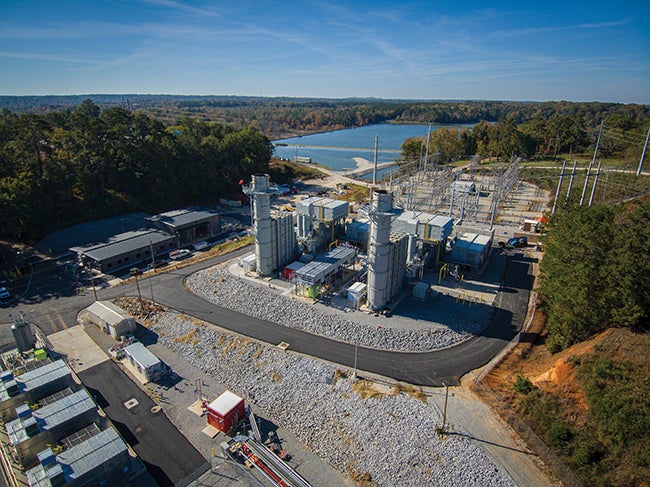
Energy Northwest’s Cascade Advanced Energy Facility is planned under a progressive design-build model encompassing planning, design, and construction. The development phase would bring the delivery team’s input into defining the project’s scope, schedule, and cost before full execution, according to Energy Northwest. Darlington (Figure 5), meanwhile, uses an integrated project delivery (IPD) model. OPG is the owner and license holder, while Aecon Kiewit Nuclear Partners, an Aecon-led construction partnership, is responsible for project management, construction planning, and execution. GE Vernova Hitachi Nuclear Energy provides the reactor technology, and AtkinsRéalis serves as architect-engineer. At Valar’s Ward 250 project, Kiewit served as construction manager, while the developer selected Goree for architecture and design, and Sprung to supply the buildings. Sprung supplied the Reactor Complex and Fuel Labs, providing approximately 45,000 square feet for specialized equipment, overhead cranes, and mechanical systems supporting negative-pressure environments. Prefabricated components and minimal foundation requirements helped complete both structures within seven months, Sprung said. Kairos Power has taken a different route, building an integrated EPC organization with strategic partners (see sidebar “Kairos Power: Learning Through Hardware”).
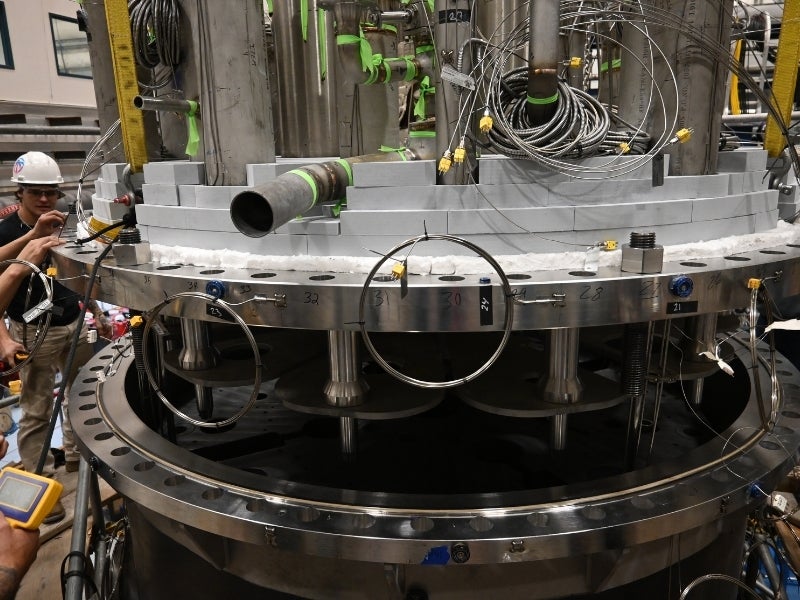
Kairos Power: Learning Through HardwareA crucial challenge facing advanced reactor developers is establishing that they can manufacture components, assemble systems, and construct plants reliably before committing to commercial deployment. California-based Kairos Power is pursuing that objective through an iterative development program built around successive non-nuclear, reactor-scale demonstrations of its fluoride salt-cooled, high-temperature reactor technology. Its Engineering Test Units (ETUs) reproduce key dimensions and operating conditions of the company’s Hermes 1 demonstration reactor, which allows engineers to test integrated equipment, molten-salt circulation, component handling, and operating procedures before introducing nuclear fuel. The program has already influenced how Kairos manufactures major reactor components. During construction of ETU 1, which Kairos commissioned in 2023, an externally fabricated reactor vessel arrived outside specified dimensional tolerances. The discrepancy prevented the graphite reflector blocks from fitting correctly inside the vessel. “Kairos re-machined the graphite in-house rather than replacing the vessel, avoiding months of delay at a fraction of replacement cost,” the company told POWER. “That experience contributed to Kairos’ decision to bring graphite machining and vessel manufacturing in-house.” For ETU 2, Kairos manufactured its first in-house reactor vessel at its Albuquerque, New Mexico, campus, and the vessel earned an American Society of Mechanical Engineers (ASME) U2 stamp. Engineers also reduced the number of graphite reflector blocks and machined them to match the vessel’s internal dimensions. ETU 2 marks Kairos’ first fully modular build (Figure 6) and incorporates more than 30 factory-fabricated equipment skids. The company plans to manufacture similar skids in Albuquerque for installation at its Hermes nuclear demonstration projects in Oak Ridge, Tennessee. 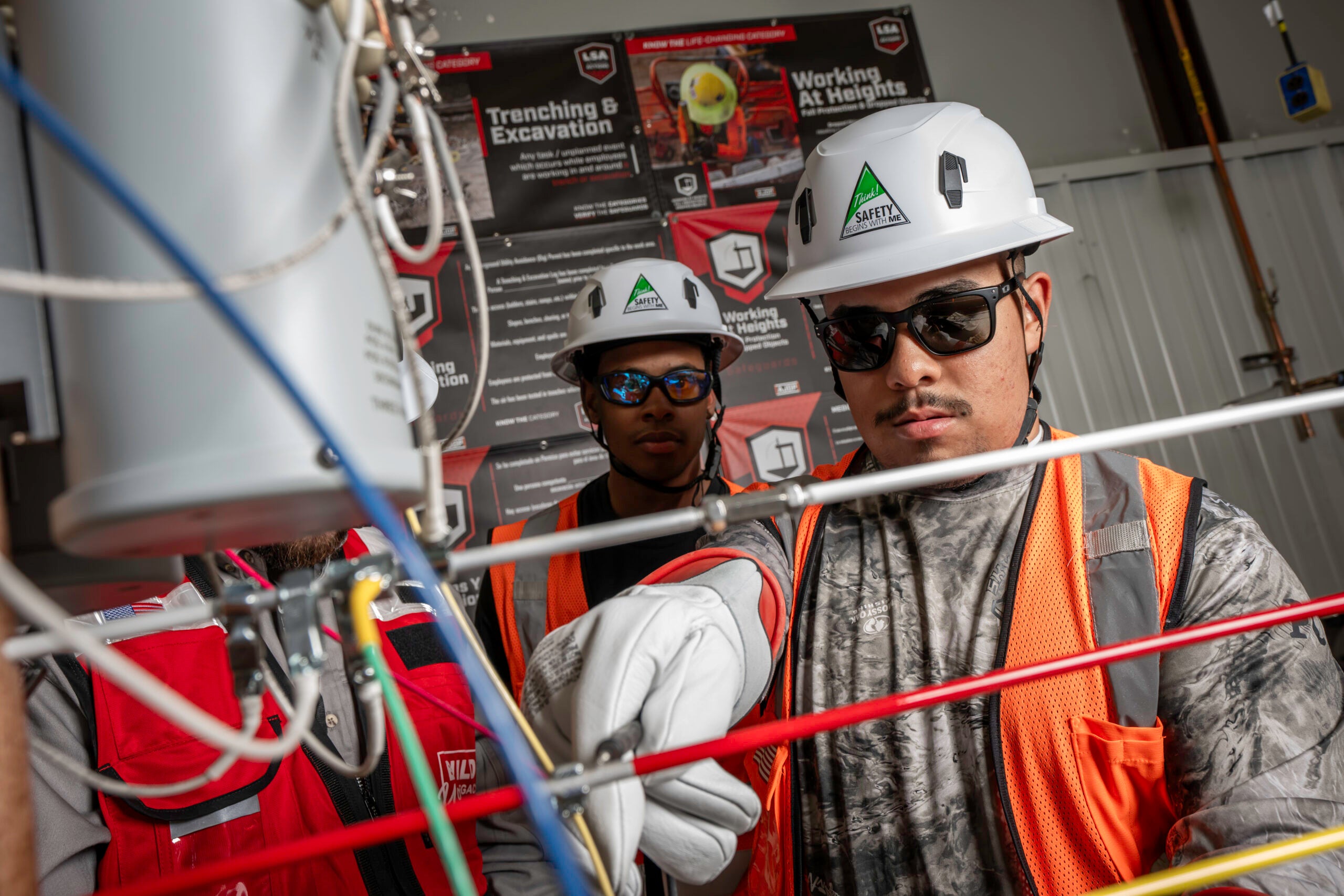 At Oak Ridge, Kairos and Barnard Construction used ETU 3 to test drilled-pier foundation installation and quality controls before beginning work on nuclear-safety-related foundations for Hermes 1. Kairos also joined Cambridge Vacuum Engineering and the University of Sheffield Advanced Manufacturing Research Centre to fabricate the ETU 3 reactor vessel using electron beam welding, a method that could improve manufacturing consistency and shorten fabrication times. To coordinate engineering, procurement, and construction (EPC) across its nuclear projects, Kairos is “building an integrated EPC organization with strategic partners, rather than transferring delivery to a single external EPC contractor,” the company told POWER. Its Hermes Delivery Alliance comprises Samsung C&T, which contributes engineering and construction management for power-generation systems, balance of plant, and modularity, and Barnard Construction, which serves as general contractor and incorporates construction experience into design and installation planning. Kairos retains responsibility for reactor engineering, critical manufacturing, procurement, and nuclear-island construction delivery. Kairos intends to apply the experience from its test units and Hermes projects to commercial deployment under its Google multi-plant order-book agreement, which targets up to 500 MWe by 2035. Hermes 2 and subsequent projects will test whether the company can achieve predictable costs and schedules. “Meeting targets for labor costs, manufacturing cycles, procurement reliability, installation productivity, rework, and milestone achievement will be key,” Kairos said. |
O’Callaghan emphasized the need to identify gaps and overlaps among engineering scopes and reconcile designers’ assumptions before construction. Mapping interface points helps align design inputs and outputs and identify how changes to one scope affect adjacent work, she explained.
To coordinate engineering inputs originating in different organizations, Kiewit is adapting the common data environment it developed largely through self-performed fossil power work. “We know what we need in terms of the data. We know the structure of that data. It’s about working with our partners to go identify the data that they have in their systems, be able to integrate it with our system, and have it feed everything else through the entire life cycle of the facility,” O’Callaghan said. She also described how information for a piping system can be tracked from engineering through procurement and installation, then connected to construction and quality records. That level of integration allows the participants to work from the same design information while maintaining records of the work performed.
But when a design change affects several engineering disciplines or procurement packages, the interfaces between them must also be reassessed. Patterson said the company follows the same process whether a regulator or reactor vendor initiates a change. “We would look at what the requirements are. We would look at the ripple effect and the flows. We would look at the procurement stream,” he said. Kiewit then incorporates the changes, assesses their effects, and informs project stakeholders before proceeding. For safety-significant systems, O’Callaghan noted, the review must also account for applicable nuclear design controls and any implications for the licensing basis.
Rinehart emphasized that the arrangements also depend on the ability to resolve issues as they arise, particularly when decisions involve several firms. He warned that allowing issues to accumulate or decisions to stall can undermine project execution, while clear decision-making authority and access to current information help participants respond. “Even though all these jobs have fairly different arrangements, they do have very clear decision-making processes, which is important,” he said. That ability, he explained, “is directly correlated to the information that’s available to make that decision, and so it goes back to that EPC playbook and that full integration of having real-time current information when you’re making decisions versus, ‘Hey, this is from six months ago.’ ” He added, “If it’s not set up and engineered that way from the beginning, it’s impossible to catch up.”
Who Owns the Risk?
For Kiewit, one of the central challenges in commercial nuclear construction will be to determine which project risks a contractor can reasonably assume, especially when reactor designs, equipment requirements, and delivery schedules remain uncertain. Rinehart argues that the answer is rooted in breaking down overall project risk into individual exposures, identifying how each can be managed, and assigning responsibility to the party best equipped to do so.
“Is there alignment from a commercial perspective on what risk looks like, how we would go through and identify risk, how we quantify it, and how we’re going to allocate it? That’s kind of the big crux of the challenge in the industry right now is managing that first-of-kind risk,” he said.
The division may prove especially important between construction activities and equipment supplied by reactor vendors and other original equipment manufacturers (OEMs). Kiewit can manage construction productivity, Rinehart said, and could reasonably assume the associated risk. However, contractors have far less control over specialized reactor equipment they are not procuring. “When it comes to OEM designs and OEM delivery dates on core process equipment or those kinds of things, those are things that I think it would be unjustified or unwise to expect the EPC to take risk on equipment that we’re not procuring,” he said.
Federal financing has begun to address some of that equipment exposure for large reactors. In June 2026, the DOE’s Office of Energy Dominance Financing issued a $17.5 billion conditional loan commitment to finance long-lead equipment for up to 10 Westinghouse AP1000 reactors, including reactor pressure vessels, steam generators, prefabricated structural modules, and reactor coolant pumps. Westinghouse and up to five utility or energy company partners would procure the equipment at fixed prices, according to the DOE, although the financing remains subject to technical, legal, environmental, and financial conditions. “I think it’s out there in the public domain of the federal government supporting long-lead components for some of the large reactor technologies out there, and I think that’s a very smart play that helps retire some of what I would call the major EPC risks that we have,” Rinehart said.
For newer technologies, contract terms are evolving alongside the design. Bargender said early engagement generally proceeds on a time-and-materials basis before a final investment decision (FID), when project definition and financing arrangements are still developing. “This aspect of the industry has been maturing quickly out of necessity for successful deployment. Early engagement tends to be largely time and materials ahead of financial investment decision, with a conceptual framework for appropriate risk sharing at financial investment decision agreed to in advance, subject to definitive EPC contract. These risk-sharing constructs must be tailored specifically to the sources of capital required and are significantly different between different technology readiness levels,” he said.
Those staged arrangements may also give owners flexibility to determine how much uncertainty they are prepared to accept in exchange for an accelerated schedule. Patterson said Kiewit helps its partners assess risk profiles according to their objectives, including the potential budget and rework implications of prioritizing schedule.
Kiewit’s longer-term ambition, notably, is to establish sufficient cost and schedule certainty to offer firm pricing, as it does across much of its conventional power business. “And so, in our fossil world, that’s really what’s led us to take on most of our large programs on a fixed-price lump-sum basis. And candidly, a lot of our peers won’t, or they exited that market because it was too risky,” Rinehart said. In nuclear, however, he acknowledged that fixed-price contracting remains an aspiration. “I think in the nuclear industry, talking about doing an SMR on a fixed-price lump-sum basis, some might label me a heretic or something along those lines, or that I’m crazy. But if we’re here and we’re trying to make this industry better, then if we’re not working to that, what are we doing?” he said.
“To achieve this ambition, Kiewit believes that an incremental step up on fixed-price scope unit after unit of successful deployment must be achieved. The early units must depend on fixed-price scope that is associated with conventional systems based on appropriate design maturity with subsequent units relying on completed projects and a fixed design basis,” Bargender explained.
Rinehart also identified the boundary between reactor-specific and conventional plant systems as an opportunity to limit the scope subject to nuclear quality assurance requirements. Many developers are already seeking to keep portions of the Rankine-cycle power-conversion system sufficiently independent of the reactor to permit conventional construction and contracting practices where appropriate, he noted. “Maybe a lot of conventional systems don’t require NQA-1 and generally shouldn’t, and so then you just have a basic, very normal commercial approach,” he said. The approach would allow contractors to assume more conventional construction risk without extending nuclear-specific requirements to equipment that does not warrant them.
Patterson, however, cautioned that even repeated construction will require a more clearly established allocation of risk. “I’m not convinced that for repeatable construction, that the risk-share models are clearly understood in a way that the right owner owns the risk, and so right now, the federal government is underwriting these risks to move these jobs forward,” he said.
Building Nuclear-Qualified Capacity
Beyond the commercial arrangements, another serious constraint that could hamper the industry’s nuclear construction ambitions spans the availability of qualified suppliers, craft workers, and engineers to execute the growing number of projects. Rinehart warned that nuclear developers will be competing for conventional equipment already facing long lead times, while nuclear-specific quality requirements and domestic-content provisions further narrow the available supplier base. Of particular concern is ASME NQA-1, the quality assurance standard for nuclear facilities. “I think it would be foolish for anybody to expect the existing NQA-1 supply base to be able to support what the industry is talking about doing,” he said.
Commercial-grade dedication offers one way to expand the available supply base. Rinehart said Kiewit, like most of its peers, uses engineering and “the lab capability to be able to qualify commercial-grade material for NQA-1 scopes.” Under NRC rules, dedication is “an acceptance process” undertaken to provide reasonable assurance that a commercial-grade item to be used as a basic component will perform its intended safety function. “So, I think that’s going to be important, but doing that at scale will require even the commercial side to be able to support that,” Rinehart said.
O’Callaghan traced the decline in nuclear-qualified suppliers to decades of attrition. “What we recognized as we were starting to dabble in nuclear is the significant limitations of the supply chain. It has eroded a tremendous amount over the last several decades, with a lot of companies not continuing to spend the time, money, and effort in order to keep their qualifications active, and so now it’s depleted, and we need additional supply chain support,” she said. Kiewit is consequently moving supplier qualification and commercial-grade dedication activities earlier in its nuclear execution plans than it typically would on a fossil power project.
The extent of a plant’s nuclear quality requirements may also depend on how its structures, systems, and components are classified. “So, understanding what portions of the facility are safety significant has to be defined from the beginning. By moving ahead, not understanding what processes you have to follow, you are creating unnecessary risk for the job, and it’s also not advantageous for anyone to consider the whole plant safety significant. That’s not the right solution for the developer, and so it just adds cost. It adds documentation requirements. It adds schedule. It’s not optimal for the total project viability,” O’Callaghan said. On DOE-authorized projects employing quality levels 1, 2, and 3, a graded quality approach allows requirements to be tailored to the safety significance of individual structures, systems, and components, she explained.
For now, NEI’s Marcus Nichol expects the pressure on suppliers and workers to intensify as more reactor projects advance. “As new nuclear deployments proceed, the workforce and supply chain will become a growing focus for the industry. While initial projects will be able [to] manage with the existing supply chain and workforce, the growing scale and diversity of deployments will also require their growth,” he said.
The proliferation of reactor technologies may also complicate efforts to establish a dependable order book for manufacturers. “We see almost as many technologies vying for market space today as there are deployed reactors in North America, think about that. There’s 90-plus technologies trying to deploy in a constrained supply chain, all with different owners. And we said that an order book of consistency was needed,” Patterson said.
“One of the biggest challenges in establishing a supply chain is bridging what I call the financial valley of death between first of a kind and [nth] of a kind,” Scott Nagley, vice president of business development for BWX Technologies’ Nuclear Operations Group, said at NEI’s International Uranium Fuel Seminar in October (see sidebar “The Nuclear Fuel Supply Clock”). Bridging that gap requires developers to commit to orders large enough to justify supplier investment, he explained. He also suggested that developers could pool orders “in order to entice a potential supplier to create a capacity.”
The Nuclear Fuel Supply ClockEven as reactor developers and construction contractors work to compress project schedules, the nuclear fuel supply chain is grappling with a different set of lead times, investment requirements, and manufacturing constraints that could determine when completed plants are ready for startup. At the Nuclear Energy Institute’s International Uranium Fuel Seminar in Houston in October, a recurring concern among uranium and advanced nuclear fuel producers, utilities, and reactor developers was whether sufficient investment and long-term customer commitments would materialize in time to expand uranium production, conversion, enrichment, and qualified fuel fabrication capacity to support reactor construction and startup schedules. The conventional fuel cycle involves uranium mining and milling, conversion to uranium hexafluoride (UF6), enrichment, and fabrication into reactor-ready fuel. Each stage requires specialized facilities and capital, but investment has not progressed evenly. “We’ve seen a lot of investment come in the enrichment space, but we have not seen investment coming to uranium or conversion,” said Nima Ashkeboussi, vice president of government relations and communications at Global Laser Enrichment. Bob Rose, branch manager for nuclear fuel contracts at Talen Energy, similarly identified conversion as a particular concern, citing the possibility of supply shortfalls in the early 2030s. Expanding upstream capacity will also require investment decisions well ahead of reactor startup. Tim Shirkey, Cameco’s vice president of marketing, said developing a new uranium mine in Saskatchewan’s Athabasca Basin can take 10 to 15 years from exploration to production. New conversion capacity faces its own development and licensing requirements. Mike Chilton, CEO of Fluxpoint Energy, outlined plans to begin construction of a conversion facility in 2028 and start operations in 2030 or 2031, but he stressed that both schedules will depend on securing financing and sufficient customer demand. Yet fuel suppliers must also judge how much of the anticipated reactor pipeline will actually proceed. Olga Skorlyakova, vice president of market strategy at Bannerman Energy, recalled the difficulties previously operating uranium mines encountered when restarting production in 2024 and 2025. “This was an important reminder that forecast production does not always become actual production,” she said. Rose similarly questioned whether new reactor construction would advance as quickly as projected, while stressing that developers must help establish the demand necessary to finance fuel infrastructure. “They have to do their share too,” he said, referring to the importance of signing contracts that could incentivize new facilities. For advanced reactors, those calculations become more complicated because fuel requirements extend beyond conventional low-enriched uranium (LEU). High-assay low-enriched uranium (HALEU), enriched to more than 5% but less than 20% uranium-235, must be available in the appropriate chemical and physical form and manufactured into qualified fuel. Marcia Leonard, head of business development at TRISO-X, identified domestic HALEU deconversion as a major gap, even as enrichment and fabrication projects advance. While TRISO-X had completed construction of its TX-1 fuel fabrication building in Oak Ridge, Tennessee, and was installing process equipment, targeting an initial core load for Dow’s planned Xe-100 project in 2028, that target may be contingent on further manufacturing progress and fuel availability. Finally, fuel qualifications introduce another source of uncertainty. Stephanie Bruffey, senior technical advisor for fuel cycle science and technology at Idaho National Laboratory, noted that some advanced reactor developers are still establishing feedstock specifications, complicating efforts to standardize supply and manufacturing processes. |
For craft labor, Rinehart stressed the importance of Kiewit’s established relationships with the building trades, particularly as nuclear construction competes with other major projects for skilled workers. “Having the relationship with the building trade leaders across all of the different disciplines or trades themselves is important,” he said. Kiewit also supports workforce development through training programs and facilities at union halls and its own project sites, where apprentices can receive additional training. Rinehart expects those efforts to require greater scale as nuclear construction expands.
But engineering talent may present a different challenge. After two to three decades of limited new reactor construction in the U.S. beyond the Vogtle and V.C. Summer expansions, “there just isn’t the depth of experiences in this generation of engineers and designers,” O’Callaghan noted. “Everybody is interested in building up their teams today with this new renaissance in nuclear that’s happening. And so, everybody’s competing for those same skill sets with a very limited talent pool,” she said.
Kiewit has responded by identifying a core group of nuclear-experienced specialists in each engineering discipline and training personnel from fossil power, oil and gas, and industrial construction in nuclear quality, safety, regulatory oversight, and documentation (Figure 7). For staff personnel, Patterson also pointed to Kiewit University, the company’s established training and development program for project engineering, quality, management, and other disciplines.
O’Callaghan suggested that bringing expertise from other construction sectors could also help challenge longstanding assumptions about how nuclear facilities must be built. “I think ‘new nuclear’ is going to look very different than ‘old nuclear,’ and while it’s great to have all those experiences of old nuclear, in some ways, it can be baggage as well, because you think that’s the only way that these facilities can be built is the way that they’ve always been built for the last 30, 40 years, and we do believe that it will look different going forward,” she said. New approaches will be necessary to make the next generation of plants financially and economically viable, she added.
From Construction Site to Factory
The transfer of capabilities from other industrial sectors is also shaping Kiewit’s approach to fabricating nuclear plant components. Although SMRs promise more standardized construction, Rinehart questions whether the designs now advancing have fully embraced modularization. “SMRs, small modular reactors—they’re not small, and they’re not modular right now, and so I think we are very much keen on figuring out how to break that barrier,” he said.
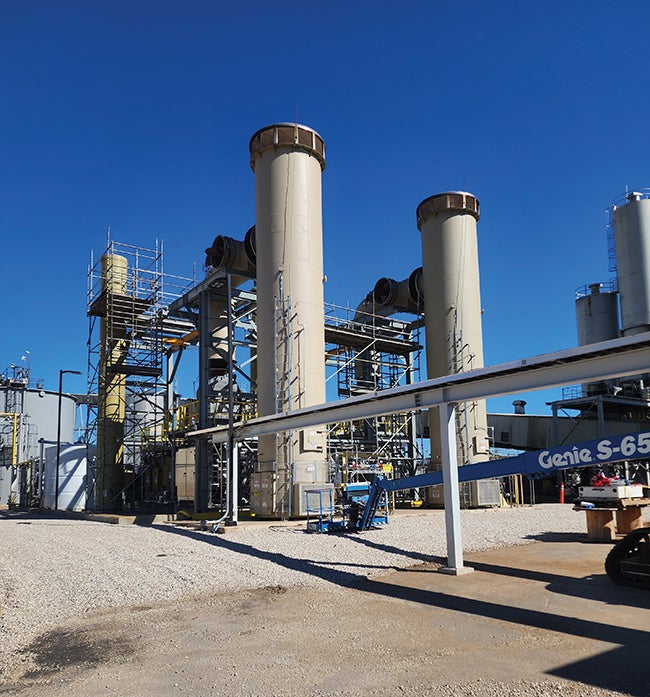
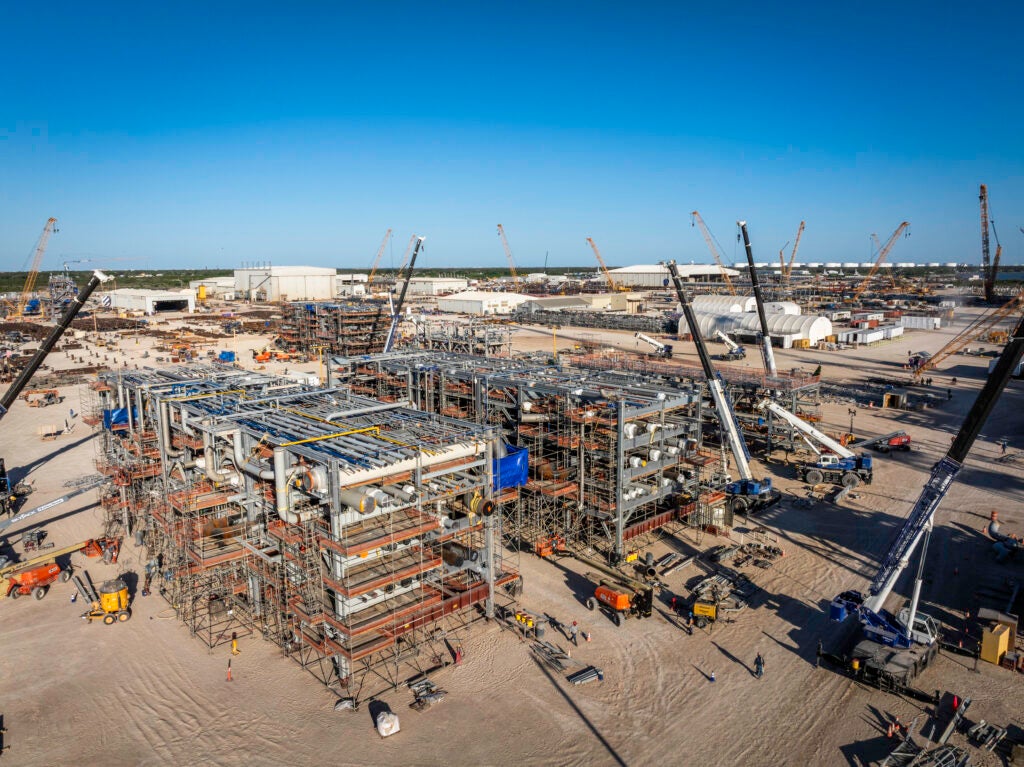
Part of Kiewit’s response is taking shape at its 550-acre fabrication yard in Ingleside, Texas, outside Corpus Christi (Figure 8). Originally developed for offshore oil and gas work, the facility has produced large modules, including offshore topsides, for decades. Its heavy-lift equipment and access to water transportation provide the capacity to fabricate and ship exceptionally large assemblies. O’Callaghan identified an opportunity to extend those capabilities to nuclear construction, potentially shifting substantial component fabrication from project sites to controlled industrial facilities, even where complete reactor assemblies are too large to transport as modules.
Adapting the Ingleside operation for nuclear work, however, has required additional workforce training, procedures, and quality assurance capabilities. O’Callaghan said Kiewit has spent the past 12 to 18 months strengthening the facility’s nuclear fabrication qualifications, including its NQA-1 quality program, personnel training, and documentation practices, to prepare it for manufacturing nuclear-qualified modules.
At Ingleside, Kiewit aims to expand domestic nuclear fabrication capacity by concentrating trained fabricators, dedicated equipment, and consistent quality and documentation practices at a fixed facility rather than establishing those capabilities at successive construction sites, O’Callaghan explained. “We’ve done NQA-1 work there today, and we are supporting the market for nuclear fabrication there today,” Rinehart said. Further development of the yard’s nuclear capabilities is tied to the timing of major U.S. reactor projects, he indicated.
“I see modularization as a strategy, not necessarily a solution for all projects at all times at all sites. It really needs to be evaluated on a case-by-case basis. You’ve got to look at module boundaries. You’ve got to look at design maturity. You’ve got to look at the fabrication sequence. You’ve got to look at your transportation route. You know how you’re going to lift and place some of these large modules. All of that strategy needs to come together in order to say, ‘Yes, this is the right fit for these jobs,’ ” O’Callaghan said.
Off-site fabrication can reduce congestion at construction sites and provide more consistent working conditions for fabrication, particularly when weather or space restrictions complicate field work, O’Callaghan said. However, the savings must be weighed against transportation, fit-up, preservation, and site-access risks, which she said can affect the construction sequence through startup and commissioning.
Likewise, Rinehart emphasized that modular construction cannot be treated as an afterthought. “Now the challenge is that modularity needs to be considered before design, in design, as design occurs. You design to be modular. You don’t do a design and then try to figure out how to modularize it,” he stressed.
That emphasis on early integration also extends to the information accompanying each component through engineering, fabrication, and installation. O’Callaghan illustrated Kiewit’s common data environment through a piping system, whose information begins in a piping and instrumentation diagram (P&ID) and accumulates through detailed isometric drawings, procurement, fabrication, and field installation.
Rather than maintaining disconnected records of those activities, Kiewit’s system brings the information into a three-dimensional model that can track the status of individual components. “And so, if you’re looking to understand what’s been released for fabrication, or what’s been received at site, or what’s been installed, you can go look at that visually across your entire 3D model,” O’Callaghan said. Rinehart described the goal as “an open and one version of the truth digital environment” extending from design through procurement, material management, and the field installation work package into the commissioning and turnover, and ultimately the operation of the facility and asset management. “That data stream needs to be continuous. It needs to be digital the entire way, and that’s one that is probably one of the key features that’s allowed us to do a lot of the things that we do in other markets on a fixed-price lump-sum basis that others have not been able to,” he said.
Rinehart also considers detailed construction records fundamental to improving productivity on subsequent nuclear projects. He questioned whether earlier U.S. nuclear construction programs generated the consistent, sufficiently detailed data necessary to establish reliable benchmarks for new builds. “What data is there may not be reliable enough or at the right resolution or granularity that it needs to be, and so when you talk about going to scale for some of these first-of-a-kind programs, I think that’s one of the most valuable things that will come out of these first programs,” he said.
While Kiewit can already draw on extensive self-performed construction data from conventional power, oil and gas, and other industrial projects to inform its estimates and productivity assumptions, Rinehart acknowledged that nuclear-specific work introduces activities for which comparable historical data are limited. He described self-performed work by the contractor’s own trades as an important source of detailed construction data that can help the industry scale.
Licensing, Oversight, and Construction Reality
Still, construction data that will be essential to repeatable nuclear delivery has an important regulatory dimension. Even when reactor designs are standardized, individual plants must account for site conditions and other differences that can affect their licensing basis.
To date, U.S. commercial reactors have relied on two licensing frameworks. Part 50, adopted in 1956, provides for a construction permit followed by an operating license, while Part 52, adopted in 1989, allows applicants to obtain a combined construction and operating license that can reference a certified standard design. Both accommodate design changes, although departures from the approved licensing basis may require NRC review and license amendments. During construction and startup of Vogtle Units 3 and 4, licensed under Part 52, the NRC reviewed and approved nearly 200 license amendments. The experience has since informed the AP1000’s design certification: On Oct. 14, the NRC issued a direct final rule, scheduled to take effect Dec. 28 unless significant adverse comments prompt its withdrawal, incorporating Revision 20 of the design control document to provide “a current, construction-validated design” for subsequent projects.
“Look at the way that, although the first AP1000 took a good while to construct and get authorization for, now they’ve taken all these lessons learned during that process into what is now the model going forward for how to construct an AP1000,” Andrew Averbach, a partner at Womble Bond Dickinson and the NRC’s former solicitor, told POWER.
The NRC is also pursuing extensive changes to its licensing frameworks as developers prepare to deploy a wider range of reactor technologies. Executive Order 14300, issued in May 2025, directed the agency to complete a wholesale regulatory overhaul by Nov. 23, 2026, although its published schedule extends some final actions into early 2027, including amendments to Parts 50 and 52. Adam Stein, director of nuclear energy and innovation at the Breakthrough Institute, linked the broader shift partly to the Accelerating Deployment of Versatile, Advanced Nuclear for Clean Energy (ADVANCE) Act, which clarified the NRC’s responsibilities concerning efficient regulation and the societal benefits of nuclear technology.
The simultaneous rulemakings, however, have introduced uncertainty for applicants making engineering and commercial commitments as requirements continue to change. Stein said the Breakthrough Institute has identified issues crossing regulatory boundaries in nearly every rulemaking comment it has submitted. “Applicants can’t apply based on a proposed rule, and even when rules are finalized there will be follow-up rulemakings to address some of the cross-rule issues. On the other hand, once most of the rules are finalized next year, there will be more regulatory certainty and efficiency than before,” he told POWER.
Two alternative frameworks may also affect new construction (Figure 9). Part 53, the NRC’s risk-informed, technology-inclusive framework, took effect April 29, 2026. “Under older licensing frameworks, even minor adjustments during construction could require pauses, re-review, or even license amendments. These amendments typically have no impact to plant risk, but require a small change to the wording of the license or permit. Focusing on the outcomes means trivial changes that don’t affect the outcome can be resolved quickly,” Stein said.
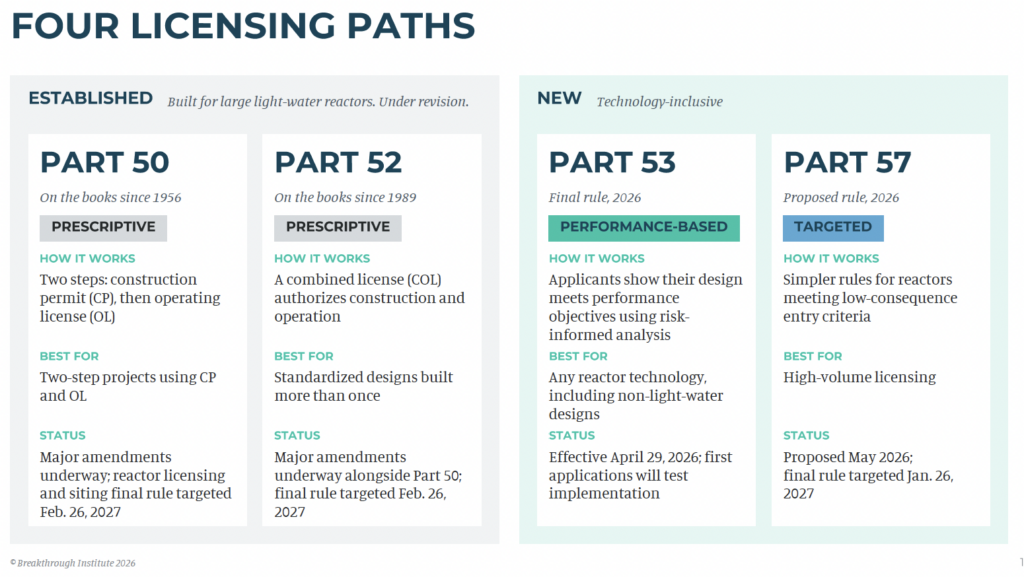
Part 57, proposed in May 2026, would establish another licensing pathway for microreactors and other small designs meeting specified risk criteria. The NRC envisions certain operating-license reviews taking six to 12 months, although a joint construction-permit and operating-license application would require a final design and final safety analysis report. “This is most likely to be used for scaling up the deployment of a design that has already been built, tested, and improved,” Stein said.
Existing procedures, however, have demonstrated that faster reviews are possible—when applicants have completed substantial preparatory work. The TVA’s Clinch River construction permit, issued under Part 50 in September, followed a review of approximately 14 months, aided by preapplication engagement dating to February 2022, an early site permit secured in 2019, and the absence of contested hearing petitions. Averbach also credited the TVA’s experience as an NRC licensee and the technology’s similarity to traditional light-water reactors, though he cautioned that applicants lacking comparable preparation and regulatory experience may not achieve similar review schedules.
Environmental permitting changes are, meanwhile, progressing on a separate track. The NRC’s proposed Part 51 revisions, published in July, respond to the Supreme Court’s 2025 decision in Seven County Infrastructure Coalition v. Eagle County and seek to narrow environmental analysis under the National Environmental Policy Act (NEPA). At the same time, the Senate’s Bipartisan American Affordability and Jobs Act of 2026, introduced Sept. 30, is poised to establish new deadlines for environmental decisions and substantially revise judicial review of NEPA challenges. In an Oct. 16 analysis, Averbach and Womble colleague Thomas Dougherty identified a potential conflict between the bill’s requirement to issue a record of decision within 45 days of completing a final environmental impact statement and NRC procedures that allow contested environmental issues to remain before licensing boards. Reconciling the two could require the NRC to reconsider the timing of environmental decisions or send NEPA challenges directly to judicial review, they wrote. Averbach also cautioned that the NRC’s interpretation of Seven County could face litigation, which could, in turn, potentially delay implementation of the Part 51 revisions.
Separately, a final rule announced on Oct. 30 establishes three tracks for contested licensing hearings based on complexity, allows proceedings to begin once contentions are admitted, and sets schedules intended to resolve most cases within approximately a year. Still, whether the NRC can retain schedules across a larger and more diverse application pipeline remains uncertain. “I think we all can see that there’s going to be a crush of license applications in the not-too-distant future, which will occupy NRC staff time, and whether or not the NRC can handle all of those simultaneously, and whether or not the licensing boards can handle contentions that come in simultaneously and still adhere to the more rigid schedule remains to be seen,” Averbach said.
During an Oct. 15 NRC meeting, Commissioner David Wright acknowledged increasing pressure on the agency’s preapplication engagement resources: “We’ve been preaching a couple years, early engagement is key, right? But it’s now getting to where everybody’s coming in for early engagement, and we’re not really ready to do it the way we would like to do it.”
At the same meeting, which examined the agency’s recent reorganization, Commissioner Bradley Crowell questioned whether staffing adjustments intended for today’s operating reactor fleet might leave the NRC short of inspectors as new projects advance, while Acting Chief Nuclear Reactor Inspector Jeremy Groom said current staffing projections concerned existing reactors and would need to change as new facilities entered the system. Executive Director for Operations Mike King, notably, suggested that projected construction inspection needs had informed hiring, although the agency’s longer-term workforce planning remained unfinished.
Stein cautioned against expanding staffing too far ahead of uncertain demand, noting that while the NRC significantly increased staff during the last expected nuclear revival, the measure raised costs for existing licensees when projects failed to materialize. “The improvements in licensing and oversight efficiency should help the NRC to keep up with applications at least until it is clear that there will be a new wave of demand that justifies additional staff. Balancing the timing and rate of staff growth is difficult with limited information. The NRC won’t get it perfect, and they shouldn’t be expected to,” he told POWER. Stein also noted that more developers are recruiting experienced NRC staff to lead their licensing work.
Yet another major NRC rule, published Oct. 26 and effective Nov. 25, allows applicants under Parts 50, 52, and 53 to reference reactor designs previously authorized and tested by the DOE or the Department of War (DOW) that have demonstrated the ability to function safely, although the NRC must independently determine whether those findings satisfy its requirements. Averbach called the rule “a wild card in all this,” reflecting uncertainty over how extensively applicants could rely on earlier federal reviews. A preliminary NRC staff analysis identifies differences in design maturity, safety analyses, and nuclear quality assurance requirements that could limit reliance on DOE findings. It also notes that DOE applicants “may begin construction at risk before the DSA [Documented Safety Analysis] is approved.”
However, in a Sept. 21 letter concerning Oklo’s Aurora powerhouse at INL—a Kiewit-supported project advancing under the DOE’s authorization process—NRC staff said the agency lacks authority to inspect construction performed under DOE authorization. The NRC intends to review, as appropriate, “the complete and auditable record of construction activities” and relevant documentation to make its safety finding.
From First-of-a-Kind to Demonstrated Performance
The next measure of commercial nuclear progress will come as developers and contractors begin comparing actual results from their initial projects against the costs, schedules, and construction requirements of subsequent units.
Industry group NEI has been developing guidance on nuclear construction practices since at least 2020. Nichol pointed POWER to NEI 20-08, revised in November 2025, which identifies 89 lessons learned and 59 best practices drawn from more than 100 reference documents. NEI also examined 11 completed major first-of-a-kind projects, ranging from Palo Verde and the United Arab Emirates’ Barakah plant to Canada’s Muskrat Falls hydropower project, to assess and reinforce those findings. Its identified keys to success include owner-led integrated project teams, completed design and vendor information before construction, realistic cost and schedule baselines, and aggressive risk management. NEI, however, advises treating every new nuclear project as having first-of-a-kind aspects “unless it is the same design, at the same site, with the same project participants.”
But in its Fast Follower Framework, NEI cautions that “it should not be assumed that learning will occur automatically.” Drawing on DOE estimates, the framework suggests that installation costs on a second-of-a-kind project could decline by as much as 50%, while turbine island equipment costs might fall by 20%. However, those projections depend on continuity in design, project teams, and construction practices, as well as deliberate incorporation of lessons from earlier builds. The framework also recommends sequencing successive projects carefully. Starting too soon may leave insufficient time to incorporate improvements, while lengthy intervals risk eroding workforce proficiency and institutional knowledge, it warns.
Achieving predictable costs and schedules across successive reactor deployments will also require greater standardization in engineering, supply chains, and commercial arrangements, according to Bargender. He cited the need for engineering designs refined incrementally toward nth-of-a-kind, suppliers able to invest against “a business case over many orders,” experienced project teams, consistent commercial frameworks capable of supporting fixed-price commitments, and cost-effective capital.
Rinehart extended that argument to the industry’s longer-term dependence on federal support. “If the market’s not able to take over when we get to nth-of-a-kind, then it’s probably not a viable market,” he said. He expects participants in today’s programs to be “gearing up to be able to support nth-of-a-kind units not requiring that much federal support.”
Finally, and perhaps most significantly, pressure to secure project approval and demonstrate construction progress can push decisions ahead of engineering and procurement, according to NEI’s assessment of historical construction experience. NEI 20-08 identifies optimism bias and unrealistically low early estimates among the factors that have contributed to unrealistic schedules, unworkable contracts, and go/no-go decisions based on “a purely theoretical cost estimate.” The report cautions against premature construction commitments, warning: “Political, human nature, and publicity pressure to ‘get shovels in the ground’ to show progress need to be pushed back.”
Overly optimistic assessments of project risk remain a concern across the developing nuclear market, according to O’Callaghan, who said some projects she has observed since joining Kiewit’s nuclear business have not evaluated worst-case outcomes as thoroughly as they could. She characterized the concern as industry-wide. To scrutinize critical assumptions and go/no-go decisions, Kiewit has established an interdisciplinary challenge board intended to ensure those risks are properly evaluated, she said.
The ultimate test may be performance, she said. “Delivering results is what this market needs more than anything.”