A new Texas-based startup has launched an effort to build what would be the first U.S. uranium conversion facility in more than seven decades to restore a domestic capability it says has become “an unacceptable chokepoint” in America’s nuclear fuel supply chain.
FluxPoint Energy made its public debut this week at CERAWeek by S&P Global, announcing plans to convert uranium oxide into uranium hexafluoride (UF₆) at a Texas facility. Headquartered in Houston and McLean, Virginia, the company was founded by Mike Chilton, an industry veteran who has more than 30 years of experience in uranium processing and nuclear fuel development.
“America cannot lead in nuclear energy while relying on foreign-controlled fuel processing,” said Chilton, FluxPoint’s Founder and CEO. “FluxPoint was created to restore a critical piece of our nation’s energy infrastructure—ensuring that U.S. reactors have access to a secure, domestic fuel supply.”
Why Conversion—and Why Now
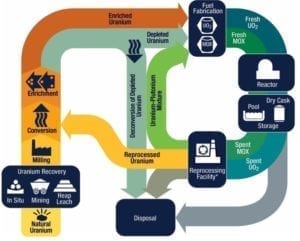
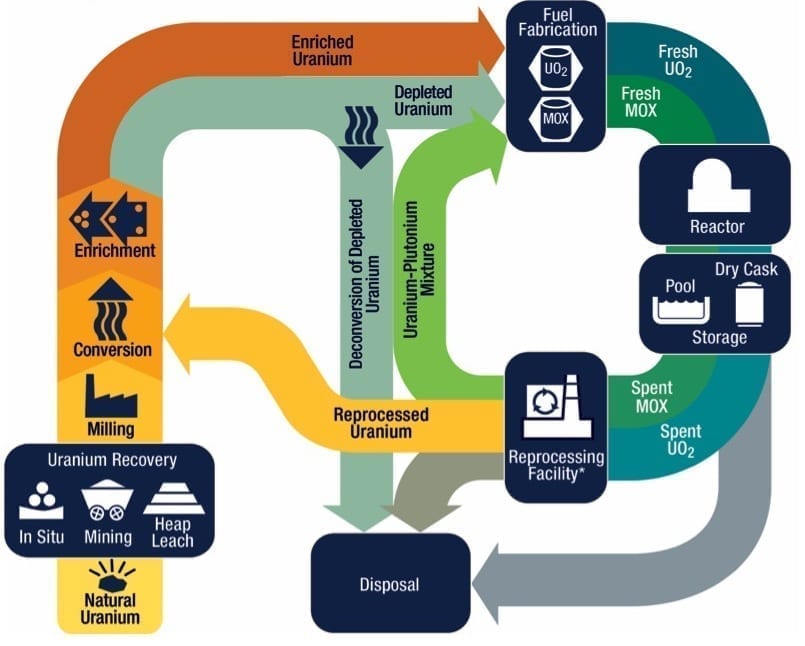
The nuclear fuel cycle typically includes four steps from mine to reactor: uranium is mined, converted, enriched, and fabricated into fuel. Nuclear plant operators typically purchase the yellowcake, then separately purchase conversion services, enrichment services, and fuel fabrication services from different vendors along the chain.
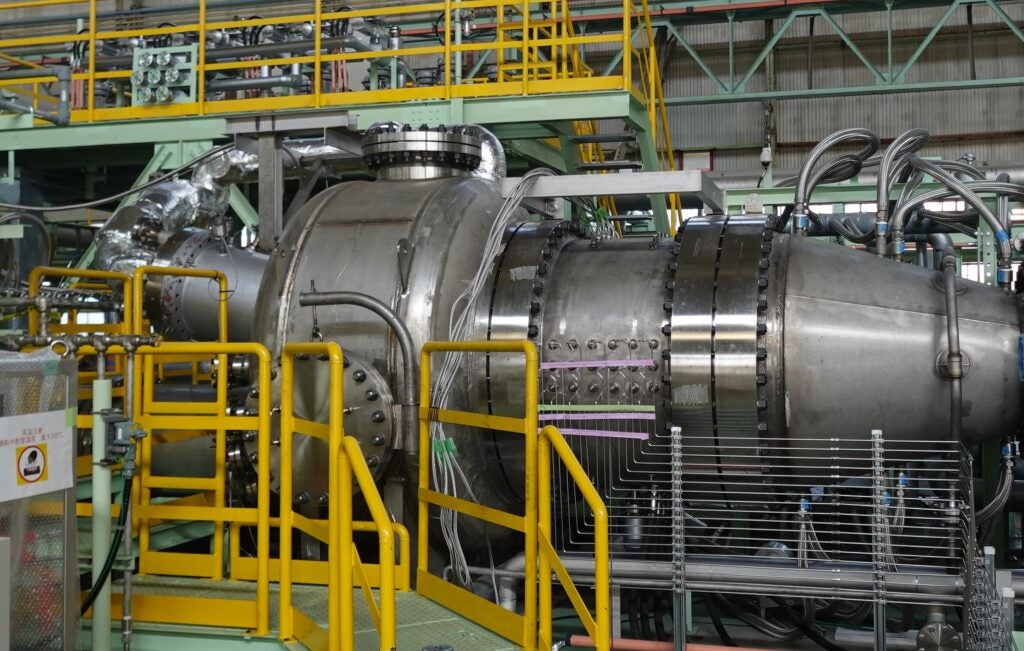
In conversion, yellowcake (U₃O₈) arrives at a processing facility in 55-gallon drums, is reacted with fluorine to produce uranium hexafluoride (UF₆), and exits as a gas before being cooled, liquefied, and drained into 14-ton cylinders that solidify over five days and are shipped to enrichment plants. At enrichment plants, the concentration of the fissile isotope uranium-235 is increased to the level required for reactor fuel.
The U.S. has just one commercial conversion facility: Metropolis Works in southern Illinois. As previously reported by POWER, Honeywell idled the plant in 2017 amid a global oversupply of UF₆ and restarted it in 2023. The facility, which first began operating in 1958 and has been the subject of multiple environmental lawsuits, has since changed hands. Honeywell spun off its specialty materials business as Solstice Advanced Materials in late 2025, and Metropolis Works is now a Solstice asset. Solstice announced in February that it expects the facility to produce more than 10 kilotonnes of UF₆ in 2026, roughly a 20% increase over the planned 2024 capacity, backed by a $2 billion order backlog and Department of Energy support. The company has retained an engineering, procurement, and construction firm to analyze further capacity expansion.
In May 2024, Congress passed the Prohibiting Russian Uranium Imports Act, banning imports of Russian-origin low-enriched uranium, a supply source that had accounted for roughly 24% of U.S. enriched uranium demand as recently as 2023. As POWER reported, the ban takes full effect in 2028 and runs through 2040.
U.S. utilities have been drawing down inventories in the interim and contracting for alternative supply, but a gap in domestic conversion capacity is expected to open in the early 2030s. The federal government has moved to address the enrichment side of the equation, issuing $2.7 billion in task orders in January 2026 to Centrus Energy, General Matter, and Orano Federal Services to expand domestic LEU and HALEU capacity. No comparable federal program yet exists for conversion.
“We have one chance to get this right again—and we rarely get that,” said Chris Rimel, FluxPoint’s chief of staff and chief communications officer, in an interview at CERAWeek.
The Technology: Volatility Process, Modular Design
During a CERAWeek panel on the uranium supply chain, Chilton laid out the company’s technical approach. Three conversion processes exist: the wet process (using nitric acid, producing sludges), the volatility process (roasting U₃O₈ and converting it to uranium tetrafluoride before distilling to UF₆), and the direct process (reacting U₃O₈ directly in fluorine gas—single-step, but electricity-intensive). FluxPoint is pursuing the volatility process as its primary path and has optionality built in for the direct process if economics favor it, he said.
Crucially, FluxPoint is designing the plant as a modular facility with two to four conversion trains—or more, depending on market conditions—rather than a single large unit. Chilton and Rimel said the first train would be sized at about 2,500 metric tonnes of uranium per year as UF₆, while additional trains would be added on separate development tracks as market demand materializes. The approach intends to keep safety manageable at the unit level and to allow capacity to scale in step with long-term utility contracts, they said.
The Texas plant will also incorporate primary and secondary containment, scrubbers, and robotics for the most hazardous process steps involving anhydrous hydrofluoric acid, hydrogen, and fluorine gas. “You would design a plant today quite differently than you did when the Metropolis plant was built,” Chilton said on the panel.
Project Status and Financing
So far, FluxPoint has secured the land, initiated front-end engineering design (FEED) studies, completed technical feasibility and market studies, and begun engagement with the Nuclear Regulatory Commission (NRC). The company is targeting first production in 2030–2031.
FluxPoint is expanding its investment base and is engaged in active discussions with prospective investors, including parties focused on national security interests. On the customer side, Rimel said interest is coming from major nuclear plant operators, which are already contracting above-market for long-term domestic supply, having concluded that conversion prices will not return to pre-2022 lows.
FluxPoint’s economics do not depend on the construction of advanced reactors, Chilton said. The existing U.S. fleet’s post-Russian-ban needs alone justify the investment. New reactor deployments would only expand the upside, he said. The company has said its mission aligns with national priorities, including energy security and Defense Production Act authorities.
Licensing, Chilton said, does not appear to be on the critical path. Conversion facilities are regulated under 10 CFR Part 40—the NRC’s materials licensing framework—rather than the reactor licensing rules under 10 CFR Parts 50, 51, and 52, which govern nuclear power plants. The regulatory pathway for a conversion facility is narrower in scope and, in the current environment, potentially faster, he suggested. The NRC has been directed by the Trump administration to rewrite its licensing regulations within 18 months—a sweeping overhaul Chilton described as “the single biggest cultural philosophical change the NRC has undertaken since it was formed in 1974.”
However, FluxPoint will not be alone in targeting the conversion gap. Uranium Energy Corp (UEC), America’s largest domestic uranium producer with licensed production capacity across Wyoming and South Texas, is pursuing its own conversion facility through a wholly owned subsidiary, United States Uranium Refining & Conversion Corp (UR&C).
On March 18—just days before CERAWeek—UR&C received a docket number from the NRC for its planned conversion facility under 10 CFR Part 40, its first formal licensing milestone. UEC is working with Fluor on engineering and design and has identified several potential sites across multiple states, though no location has been selected. The planned facility is targeting a designed capacity of approximately 10,000 metric tonnes of uranium per year as UF₆—representing a substantial share of the estimated U.S. annual demand of 18,000 metric tonnes. The company is notably pursuing the effort to become the only American vertically integrated nuclear fuel supplier, from mining to conversion.
Chilton acknowledged that UEC would be FluxPoint’s most direct domestic competitor. “So, for us, it’s all speed,” he said.
—Sonal Patel is a POWER senior editor (@sonalcpatel, @POWERmagazine).
Editor’s note: This story is being actively updated with additional details. Please check back for updates.