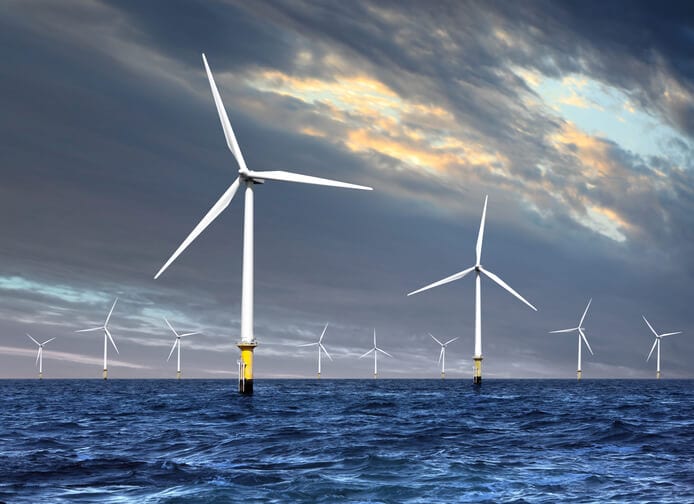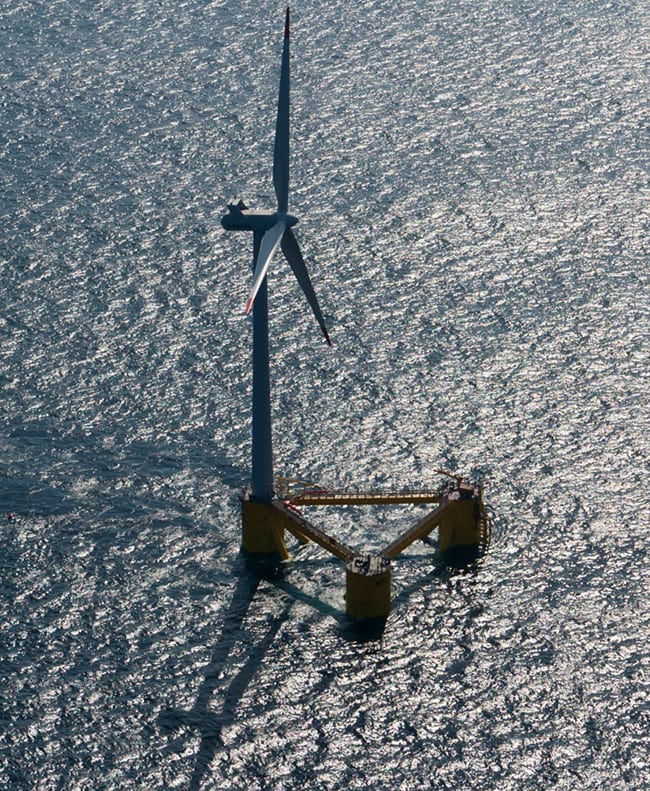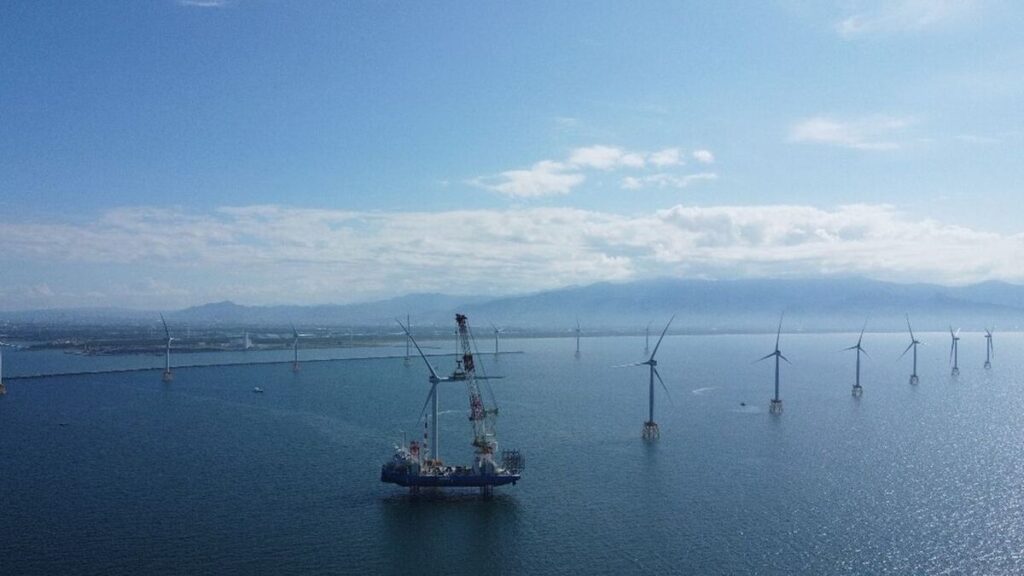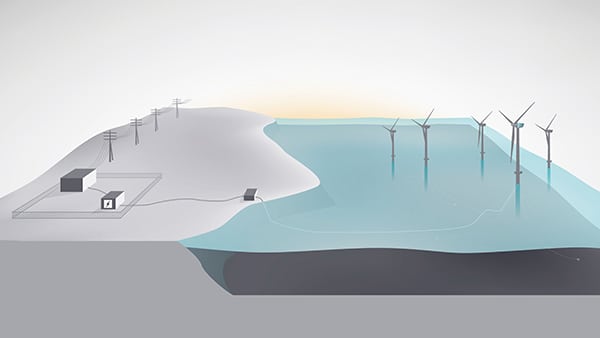
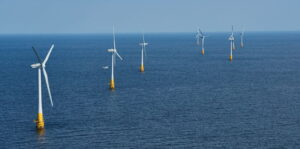
Japanese officials announced the start of commercial operation of a 16.8-MW floating offshore wind farm, a first for that country. The project partners, a consortium that includes some of the biggest names in Japanese energy, on January 5 said the Goto Floating Wind Farm also represents the first commercial application of a hybrid SPAR-type floater technology.
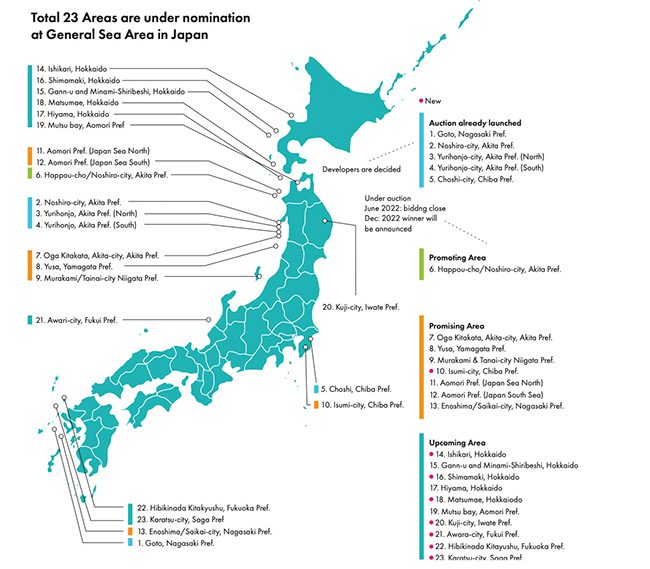
The Goto Floating Wind Farm LLC consortium was selected as the winner of Japan’s first offshore wind auction, which was established as part of the Renewable Sea Area Utilization Law that took effect in April 2019. Officials said Goto is the first facility of its kind to be certified by Japan’s Minister of Economy, Trade and Industry, and Minister of Land, Infrastructure, Transport and Tourism, under the law.
The offshore wind industry in Japan, as in other areas including the U.S., has faced challenges due to cost increases for equipment, along with regulatory hurdles. Mitsubishi Corp. last year said it was ending development of three projects due to rising costs.
Japanese officials last year reiterated the country’s goal of at least 10 GW of installed offshore wind generation capacity by 2030, and 45 GW by 2040.
Construction Began in 2022
The Goto offshore area was designated as a promotion zone for energy in December 2019. A public tender was launched in June 2020, and the consortium for the project was selected as the preferred bidder in June 2021. The sea-area permit was granted and construction began in August 2022, with offshore construction beginning in October of that year.
The installation features eight Hitachi 2.1-MW wind turbines, which are installed on a SPAR-type foundation. That technology is a stable, deep-draft floating structure for offshore platforms, primarily wind turbines, and features a large vertical cylinder with ballast at the bottom for stability. It is anchored to the seabed by mooring lines, which makes the structure ideal for deep waters where fixed foundations aren’t feasible. Officials said the design provides stability against wind, waves, and currents, allowing offshore energy to be harnessed in deeper ocean areas.
Headquarters for the project are in Goto City, in Nagasaki Prefecture. The consortium involved with the Goto wind farm includes Toda Corp., ENEOS Renewable Energy Corp., Osaka Gas, INPEX Corp., Kansai Electric Power Co. (KEPCO), and Chubu Electric Power. The groups in announcing the start of commercial operation said in a statement: “In keeping with the principle of local energy production for local consumption, the electricity generated will be supplied preferentially to local retail electricity providers.”
Toda Corp. is considered the lead company in the consortium. Toda designed and built the SPAR-type foundations, which feature a steel upper section and concrete lower section. The groups on Monday added that several local companies assisted in construction of the project, and that local groups are expected to be involved in the wind farm’s operations and maintenance.
—Darrell Proctor is a senior editor for POWER.