The U.S. Energy Department on Friday announced it would grant $62 million to 13 concentrating solar power (CSP) projects. The funds are expected to support improvements in CSP systems, components, and thermal energy storage and accelerate the market-readiness of the renewable energy technology.
The grantees will “seek to improve component and system designs to extend operation to an average of about 18 hours per day, a level of production that would make it possible for these plants to displace traditional coal-burning power plants,” the DOE said in a statement.
CSP technologies concentrate the sun’s energy and capture that energy as heat, which then drives an engine or turbine to produce electrical power. CSP plants can include low-cost energy storage, allowing them to provide electricity even when the sun is not shining.
Of the 13 awardees, three will evaluate the feasibility of a complete CSP baseload power system and support the development of prototype systems for field-testing.
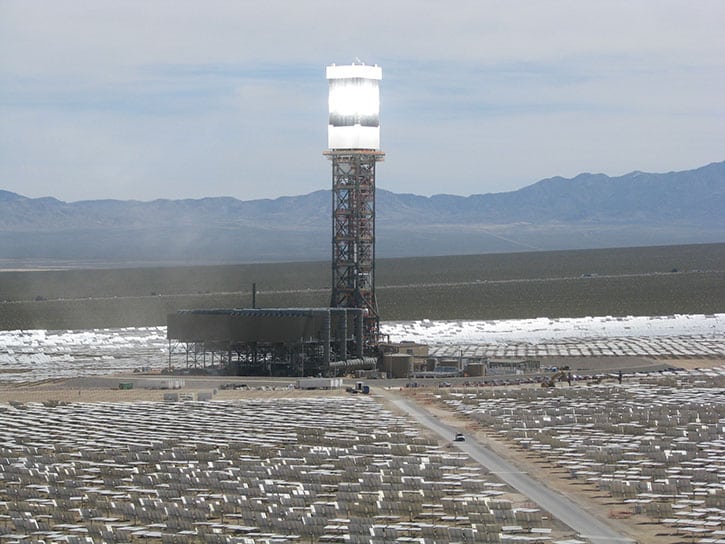
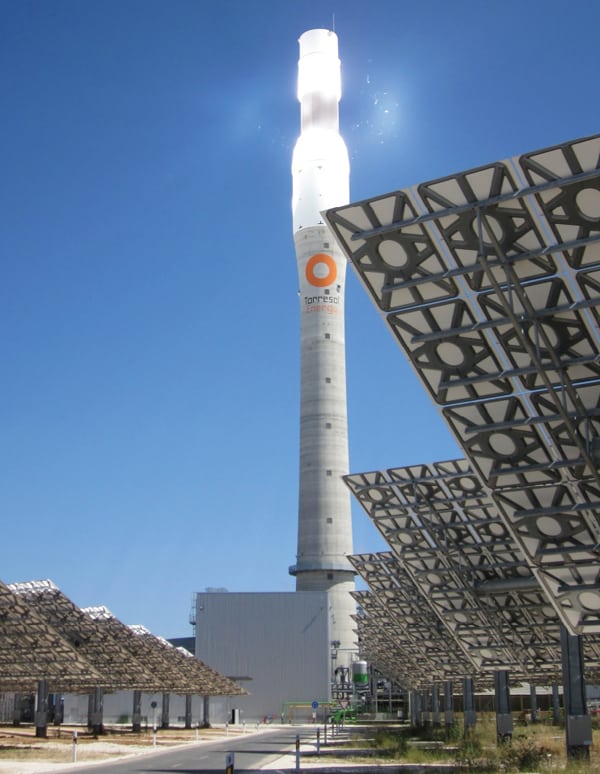
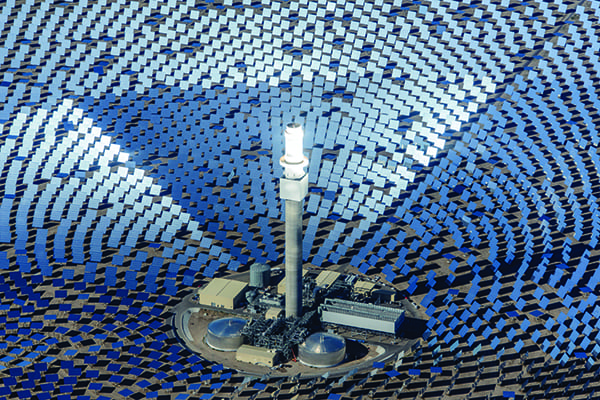
Agengoa Solar Inc. and eSolar Inc. will both investigate molten salt as a working fluid with thermal storage capabilities for solar power towers, which use a field of flat mirrors, called heliostats, to concentrate the sun’s heat on a central tower. The eSolar project will employ multiple modular towers. Molten salt was tested by the DOE at Solar Two, a demonstration solar power tower project that was operated in Southern California in the late 1990s. Pratt & Whitney Rocketdyne will investigate a novel approach to thermal storage for solar power tower facilities.
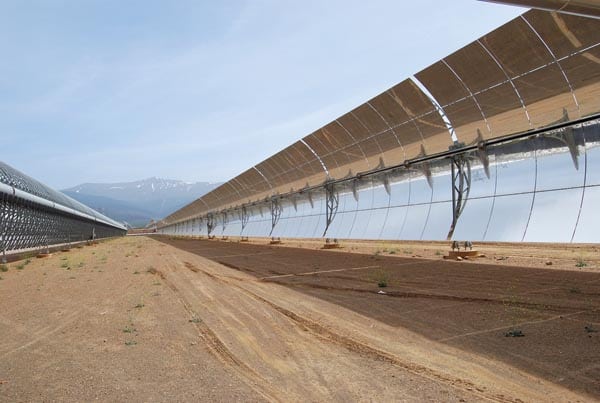
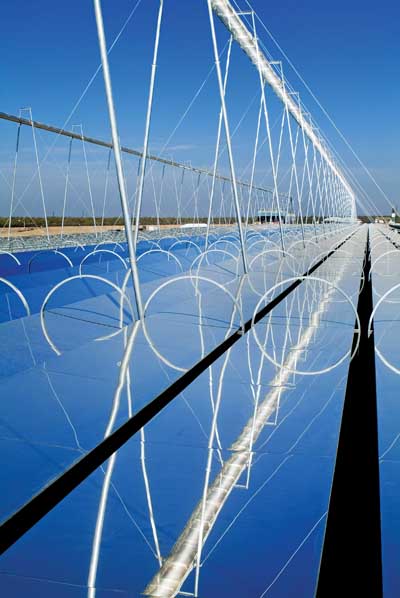
The remaining 10 projects will study concepts and devices that could be part of a CSP baseload system. These include a thermal energy storage system based on a phase change from solid to liquid; a sulfur-based energy storage system that uses a chemical reaction to store energy; optimization of heliostat arrays to drive down the up-front costs of solar power tower plants; a modular solar power tower system that can be partially assembled in a factory; large-scale thermal storage for use with solar dishes; next-generation, low-cost reflectors with increased reflectivity and durability; and low-cost approaches to parabolic trough systems, which use long lines of trough-shaped mirrors to concentrate the sun’s heat on a tube that carries a heat-transfer fluid.
For more on CSP and other solar technologies see “The Power of Light: U.S. Solar Energy Trends” in POWER’s December 2009 issue.
Sources: EERE, DOE