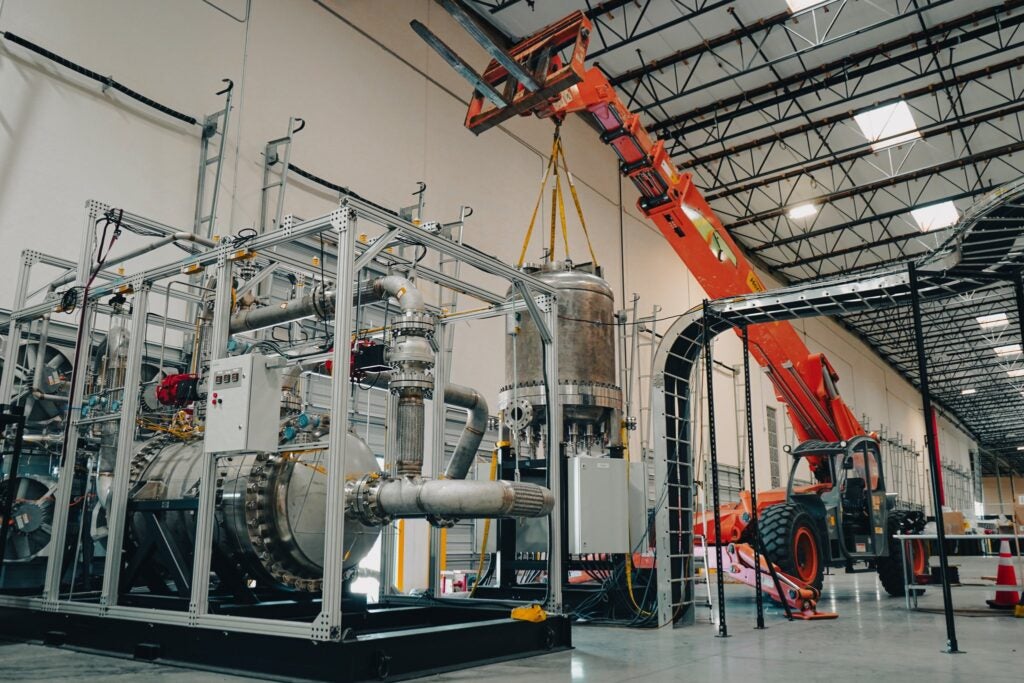

Curtiss-Wright Corp. will invest $30 million to expand its manufacturing facility in Round Rock, Texas, to increase production capacity for pressure and temperature sensors used in commercial nuclear reactors and industrial applications. The investment is part of the company’s broader effort to expand its nuclear supply chain capabilities as existing reactors undergo modernization and new nuclear projects advance toward construction.
The Davidson, North Carolina-based company announced the expansion Oct. 29, saying the project would support its Naval & Power segment by increasing manufacturing capacity for pressure and temperature sensors and providing space for additional instrumentation and control (I&C) technologies, including radiation monitoring systems.
The project will enlarge the facility’s manufacturing footprint, improve production flow, and create additional space for an Advanced Innovation Center (AIC), a metrology testing laboratory, and a project management office. Curtiss-Wright also expects to increase employment at the site, although it did not disclose the planned floor-space addition, production capacity increase, construction schedule, or number of new positions.
“This expansion and investment in our Round Rock operations positions Curtiss-Wright to meet growing customer demand for our critical temperature and pressure sensors supporting the safe and reliable operation of existing and new-build commercial nuclear reactors,” said Lynn M. Bamford, chair and CEO of Curtiss-Wright. “As investments in reliable energy infrastructure and advanced nuclear technologies continue to create opportunities across the supply chain, Curtiss-Wright is prepared to support our customers with the manufacturing capacity, technical capabilities, and product portfolio to effectively meet anticipated market growth.”
Pressure and temperature instrumentation is essential to nuclear plant operation, providing measurements used to monitor process conditions, support reactor control, and detect abnormal operating conditions. Radiation monitoring systems similarly support radiological surveillance and plant safety. The proposed metrology laboratory would strengthen the site’s measurement and testing capabilities, while the AIC would provide engineering space for product development.
The Round Rock investment follows a larger manufacturing expansion Curtiss-Wright disclosed in July at its Cheswick, Pennsylvania, facility. That $80 million project is intended to support increased production for U.S. Navy programs and commercial nuclear applications, including future Westinghouse AP1000 and small modular reactor (SMR) projects.
During a Sept. 15 Morgan Stanley investor conference, Chief Financial Officer Christopher Farkas said the Cheswick investment would create approximately 150 jobs over three years. Funding would come from Curtiss-Wright, the Navy’s Maritime Industrial Base initiative, and Pennsylvania state support.
Farkas said Curtiss-Wright’s capital spending had increased approximately 30% in 2024 and 50% in 2025, and was expected to rise another 30% in 2026. He linked the spending increases to anticipated manufacturing demand and said the company expected profitable growth to support its investments while continuing to generate additional free cash flow.
Advanced Nuclear Projects Expand Equipment Opportunities
Curtiss-Wright’s nuclear business supplies equipment and services to operating reactors, plant life-extension projects, reactor restarts, and new-build facilities. Its portfolio includes reactor coolant pumps, valves, I&C systems, and other specialized equipment used in nuclear applications.
The company’s second-quarter Form 10-Q reported that Naval & Power segment revenue increased 7% year over year to approximately $410 million during the quarter ended June 30. Growth included an additional $10 million in its power and process business, primarily from commercial nuclear products supporting next-generation reactors and higher government nuclear sales. For the first six months of 2026, Naval & Power revenue reached approximately $813 million, up 13% from the comparable period of 2025.
During the September conference, CEO Bamford and Farkas outlined how Curtiss-Wright is positioning its manufacturing operations to capture nuclear equipment demand across several markets. Bamford said its reactor coolant pump technology originated in U.S. naval nuclear propulsion programs before being adapted for commercial nuclear plants and subsea pumping applications. The company has similarly developed valve technologies that can serve industrial process and nuclear markets.
That crossover supports a strategy of extending established engineering capabilities into additional applications, company executives suggested. Bamford acknowledged that naval business carries some of the lower return-on-sales margins within the Naval & Power segment, although she characterized it as strongly cash-flow positive. Curtiss-Wright did not provide a separate commercial nuclear profit margin.
The company is also pursuing additional naval manufacturing work through government-supported industrial base investments. Bamford said Curtiss-Wright’s cumulative Maritime Industrial Base funding had increased from approximately $15 million at its 2024 investor day to nearly $100 million by September 2026. The funding supports increased production, repair capacity, and potential second-source manufacturing work for existing naval platforms.
For commercial nuclear, Curtiss-Wright has been preparing for prospective reactor coolant pump orders associated with Westinghouse’s AP1000 program. Bamford said the company remained engaged with Westinghouse multiple times a week, sometimes daily, and had undertaken extensive capacity planning, commercial negotiations, and supplier preparations.
Curtiss-Wright had been working with its supply chain for approximately two years to prepare for the anticipated orders. During the September conference, Bamford said the company still expected an initial AP1000 pump order in 2026, although the timing depended on Westinghouse securing a corresponding reactor order from a utility or an international project, potentially in Poland.
The potential equipment value extends beyond reactor coolant pumps. Bamford estimated that Curtiss-Wright’s equipment content on an AP1000 could exceed $150 million once additional plant equipment selected by Westinghouse is included. She suggested equipment content for Westinghouse’s proposed AP300 SMR could be approximately half that amount.
Curtiss-Wright, notably, is also building relationships across six major SMR technology providers, targeting potential equipment content ranging from $20 million to $120 million depending on the reactor design and equipment requirements. Bamford identified X-energy and Rolls-Royce SMR as particularly substantial opportunities, with projected content toward the upper end of that range.
The company has worked on equipment design with X-energy since approximately 2020 or 2021 and has advanced into prototyping, Bamford said. That work supports development of X-energy’s Xe-100 reactor technology, including the first planned deployment at Dow’s industrial complex in Texas. Curtiss-Wright expects prototype testing to support the transition toward commercial manufacturing.
Bamford also identified significant potential equipment opportunities with Rolls-Royce SMR as the developer advances projects in Europe. She placed prospective equipment content for TerraPower and NuScale Power closer to the middle of Curtiss-Wright’s target range, while suggesting lower potential content for GE Vernova Hitachi Nuclear Energy.
The company nevertheless remains selective about capital deployment. During the September conference, Farkas said acquisitions must support Curtiss-Wright’s long-term financial objectives, including its 19% return-on-sales target, revenue growth, cash generation, and return on invested capital. Bamford said the company had declined potential acquisitions carrying excessive valuations, even as commercial nuclear remained among its areas of interest.
The Round Rock expansion adds manufacturing capacity for instrumentation used across operating and future nuclear facilities, complementing Curtiss-Wright’s larger equipment manufacturing investments in Pennsylvania. However, the company has not identified specific reactor programs or customer orders tied directly to the Texas investment.