
Wind
-
 Wind
WindEurope’s Offshore Wind Race
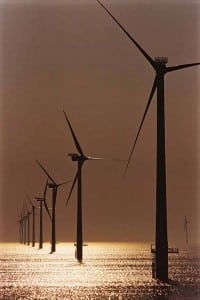
Denmark in September inaugurated a 209-MW offshore wind park — the world’s largest to date — off the west coast of Jutland, in the North Sea.
-
 Gas
GasTop Plants: Goodman Energy Center, Hays, Kansas
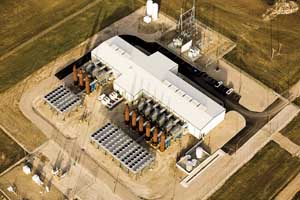
Midwest Energy has a history of thinking and acting independently, especially since breaking away from the Rural Utilities Service almost 15 years ago. Two years ago, when its board of directors grappled with finding a balance between purchasing and generating electricity, it decided to construct its first power plant in 37 years. A matched set of nine 8.4-MW gas engines at Goodman Energy Center now provides efficient peaking electricity, improved overall system reliability, and backstop capacity for a 325-MW electrical system that features 16% wind power generation.
-
 Wind
WindFloating and Flying Wind Turbines
After months of preparation, Norway’s StatoilHydro and Germany’s Siemens in June erected the world’s first large-scale floating deepwater wind turbine some 7 miles offshore Karmøy, southeast Norway, on the 720-feet-deep waters of the Amoy Fjord. The developers are now gearing up to connect the Hywind turbine to the local grid, and it could begin producing power as early as mid-July.
-
 Solar
SolarThe Odd Couple: Renewables and Transmission
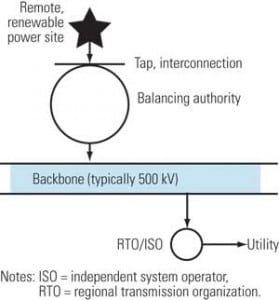
The tension between the growing number of renewable energy projects and limited transmission capacity is reflected in Washington’s legislative agenda of establishing a national renewable portfolio standard and new transmission lines dedicated to moving renewable energy coast-to-coast. Even if those ideas become law, hurdles to the happy marriage of renewables and transmission remain.
-
 Wind
Wind"Smart Turbine Blades" to Improve Wind Power
Engineers at Purdue University and Sandia National Laboratories have developed a technique that uses sensors and computational software to constantly monitor forces exerted on wind turbine blades. Their achievement could one day improve the efficiency of wind turbines by providing the blades’ "smart" structure with necessary data to adjust to rapidly changing wind conditions.
-
Wind
Gone with the Wind
Secretary of the Interior Ken Salazar, speaking in Atlantic City on April 6, added more hot air to the discussion about offshore wind when he stated that windmills off the East Coast could generate enough electricity to replace most, if not all, of the coal-fired power plants in the U.S. I’m disappointed Salazar didn’t take a few minutes for fact-checking and back-of-the-envelope ciphering before his speech.
-
 Coal
CoalCanada Moves to Rebalance Its Energy Portfolio
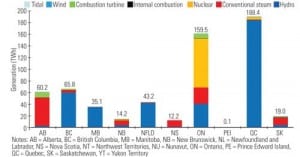
Though Canada is rich in fossil fuels, nuclear power may fuel a significant portion of the nation’s future electrical generation needs, especially in provinces that have traditionally relied on hydropower and fossil fuels.
-
 O&M
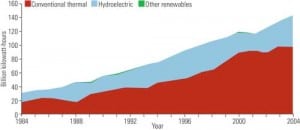
O&MTurkey Opens Electricity Markets as Demand Grows
Turkey’s growing power market has attracted investors and project developers for over a decade, yet their plans have been dashed by unexpected political or financial crises or, worse, obstructed by a lengthy bureaucratic approval process. Now, with a more transparent retail electricity market, government regulators and investors are bullish on Turkey. Is Turkey ready to turn the power on?
-
 Coal
CoalRecession Reduces Demand for Electricity
When roving Contributing Editor Mark Axford attended several recent energy conferences, he found the same questions asked at each one about new U.S. generation sources and consumption patterns. Unfortunately, the experts had few good answers to those questions.
-
-
 Coal
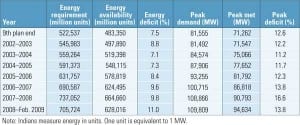
CoalPowering the People: India’s Capacity Expansion Plans
India has become a global business power even though hundreds of millions of its citizens still live in poverty. To sustain economic growth and lift its people out of poverty, India needs more — and more reliable — power. Details of government plans for achieving those goals demonstrate that pragmatism may be in shorter supply than ambition and political will.
-
Hydro
Renewable Project Finance Options: ITC, PTC, or Cash Grant?
Dozens of institutional investors in U.S. renewable energy projects pulled out of the market when the nation’s liquidity reserves dried up late last year. Some left the renewable market sector in search of more lucrative investment opportunities. Others found themselves unable to take advantage of the attractive tax credits because they themselves lacked profits against which to use the credits. The American Recovery and Reinvestment Act of 2009, approved February 13, changed the investor ground rules — again.
-
 Wind
WindTurbines Spinning at Antarctica’s First "Zero-Emissions" Station
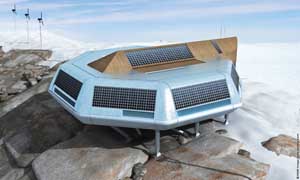
About 110 years after the Belgica expedition — a polar voyage organized by the Geographical Royal Society to establish the world’s first Antarctic scientific research program — a new, unique research station sponsored by the Belgian Federal Government has been commissioned. Inaugurated on Feb. 15 after two years of construction, the Princess Elizabeth Station (Figure 4) is the only polar base to run entirely on renewable energies.
-
Hydro
International Organization to Push Renewable Energy
Seventy-five countries from around the world joined a new political agency dedicated to the acceleration of green energy this January, but several notable nations — including the U.S., Canada, Australia, UK, Japan, and China — were not among them.
-
Solar
President Obama Signs Orders Aimed at Energy Independence and Economic Recovery
Following a press briefing this morning, President Barack Obama signed new executive orders intended to spur “swift action” on both U.S. economic recovery and American energy independence.
-
 Gas
Gas2009 Industry Forecast: New Power Politics Will Determine Generation’s Path
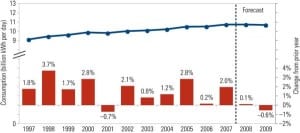
The U.S. power industry’s story in 2009 will be all about change, to borrow a now-familiar theme. Though the new administration’s policy specifics hadn’t been revealed as POWER editors prepared this report, it appears that flat load growth in 2009 will give the new administration a unique opportunity to formulate new energy policy without risking that the lights will go out.
-
 Wind
WindBanking Wind
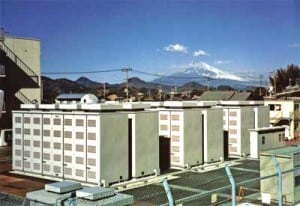
This spring, Xcel Energy, along with state and technology partners, is set to test what the utility says is the first battery capable of storing wind energy. The ability to store energy from renewable generation sources with variable output is key to maximizing the value of renewable power in general and to Xcel’s “smart grid” plans in particular.
-
Wind
UK takes offshore wind capacity crown from Denmark
Opening of the 194-MW Lynn and Inner Dowsing wind farms built by UK energy company Centrica off the coast of Skegness, in Lincolnshire, this October made the UK the worldwide king of installed offshore wind capacity. The farms raise the total electricity generated from offshore wind in the UK to 590 MW, beating Denmark’s 423 […]
-
 Wind
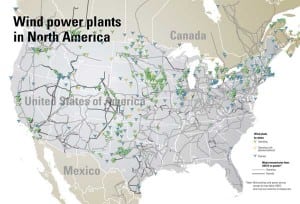
WindMap of wind power plants in North America
Courtesy: Platts Data source: Platts Energy Advantage and POWERmap. All rights reserved.
-
 Wind
WindTop Plants: La Collada Wind Farm, Tarragona Province, Spain
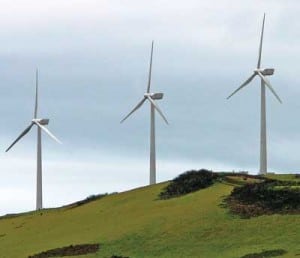
Ironically, the Spanish province of Tarragona — well known for its many Roman and Medieval ruins, archeological digs, and multiple World Heritage Sites — now has one of the most cutting-edge wind farms in the world. This wind farm recently added an innovative 3-MW wind turbine, which stands 140 meters (459 feet) high and is the largest nationally manufactured wind turbine installed in Spain to date.
-
 Wind
WindTop Plants: San Cristobal Wind Project, Galapagos Islands, Ecuador
The Galapagos Islands, home of the unusual flora and fauna that inspired naturalist Charles Darwin’s groundbreaking work on evolution, are striving to promote clean energy that protects the area’s unique biodiversity. Part of that effort is the 2.4-MW San Cristobal Wind Project, which displaces diesel-powered electricity generation. This new energy source will cut greenhouse gas emissions and reduce the risk of devastating diesel-fuel tanker spills in a highly protected environment.
-
 Wind
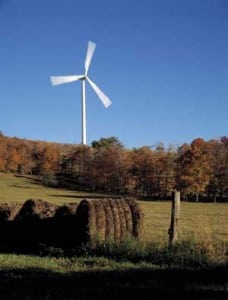
WindPrevailing winds: Trends in U.S. wind energy
Wind power is becoming a mainstream energy source that U.S. utilities are tapping into nationwide as a means of adding clean, domestically sourced energy to balance their generating portfolios. To identify where wind will take us,POWER’s senior editor talked to experts from diverse industry stakeholders about current and future developments.
-
 Wind
WindThe return of the Clipper Liberty wind turbine
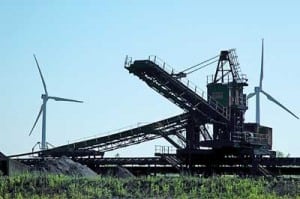
The Steel Winds project in Lackawanna, New York, was selected as a POWER 2007 Top Plant because of its unusual location (a former steel mill and Superfund site) and because it was the first commercial deployment of the Clipper Windpower 2.5-MW turbine. That report was written just as the project entered commercial service but before a major gearbox problem was identified. For many new designs, it isn’t a question of if problems will occur but of how the manufacturer responds when problems inevitably do occur. For its handling of Liberty’s problem, Clipper Windpower gets an "A."
-
Commentary
Commentary: Renewable energy lessons from Europe
Europe has seen tremendous activity in the development of renewable energy as a response to climate change. As a result, some of the most important renewable energy firms operating in the U.S. are based in Denmark, Germany, and Spain. Stable, high-level policy is one reason Europe dominates this sector.
-
O&M
Oregon wind turbine loses its bearings
The generator bearings on a wind turbine located in Oregon (Figure 1) first failed in May 2006, only 11 months after the tower was brought on-line. The company that owns and operates the wind farm replaced the bearings and slip rings, but the new bearings failed only five months later. Once again, new bearings and […]
-
 Coal
CoalUnder construction in South Africa
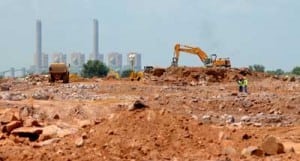
This summary of power generation projects is a web-only supplement to the November 2008 special report titled “Whistling in the dark: Inside South Africa’s power crisis.”
-
Legal & Regulatory
California’s GHG plan gives power heaviest load
On Sept. 12, the California Public Utilities Commission (CPUC) and California Energy Commission (CEC) took the next step in the implementation of Assembly Bill (AB) 32, California’s ambitious greenhouse gas (GHG) emissions – reduction initiative, with the release of a 300-page proposed decision on GHG regulatory strategies.
-
 Coal
CoalGlobal Monitor (September 2008)
Cost hikes for all things nuclear in the U.S. and UK / North Americans plan liquid makeover for coal / California balloon bill deflates in legislative process / The Lego skyscraper / Of manure and methane / U.S. small wind turbine market moving slowly / Israeli desert center tests solar thermal tech for California desert / POWER digest / Correction
-
 Coal
CoalGlobal Monitor (July 2008)
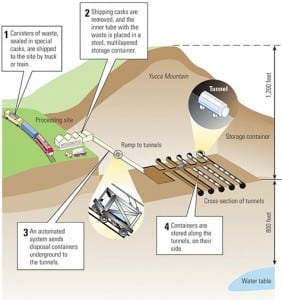
Yucca Mountain plan sent to NRC/ CPV cells get cooling chips from IBM/ StatoilHydro to pilot test first offshore floating wind turbine/ U.S. rivers next massive power source?/ Siemens delivers 500-MW gasifiers/ Algae: A green solution/ POWER digest
-
 Coal
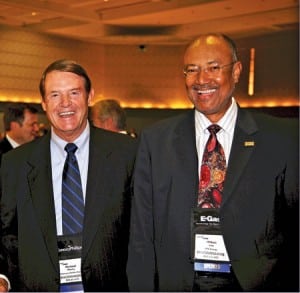
CoalWoods and power company CEOs agree: “The state of the industry is cautious”
It is rare indeed to witness, at an otherwise staid industry forum, the public rebuke of the country’s most prominent supplier to the electric power industry. But at the Keynote session and Power Industry CEO Roundtable of the 2008 ELECTRIC POWER Conference & Exhibition in Baltimore this May, Milton Lee, general manager and CEO of […]