
O&M
-
 Legal & Regulatory
Best Practices for Aligning Safety Metrics, Incentives, and Performance
The Occupational Safety and Health Administration requires certain incidents to be recorded and reported, which generates a set of statistics that many companies use to gauge safety performance. However, other metrics may be better predictors. The Occupational Safety and Health Administration (OSHA) requires all employers with more than 10 employees, and whose establishments are not […]
-
 O&M
O&MOperational Considerations When Burning Higher-Chlorine Coal
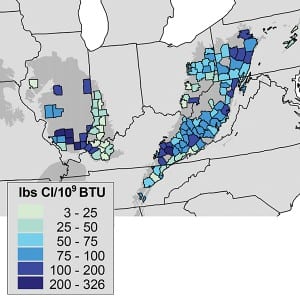
An increasing supply of low-cost higher-chlorine coal is prompting many U.S. generators to give the fuel serious consideration in spite of its reputation for causing corrosion. Though corrosion can be a consideration, it’s not always caused simply by the fuel switch. Understanding the various chemical interactions, as well as operational and emissions pros and cons, […]
-
 O&M
O&MUnderstanding Coal Power Plant Heat Rate and Efficiency
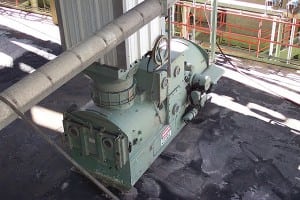
Proposed U.S. standards for reducing carbon emissions from existing coal-fired power plants rely heavily upon generation-side efficiency improvements. Fuel, operations, and plant design all affect the overall efficiency of a plant, as well as its carbon emissions. This review of the fundamentals of coal plant efficiency, frequent problems that reduce efficiency, and some solutions for […]
-
 Legal & Regulatory
How U.S. Power Generators Are Preparing for 2015
In mid-November, members of the POWER Generating Company Advisory Team responded via email to the following set of questions. Their comments have been edited for style. POWER: What changes in your fleet’s
-
 O&M
O&MPrimer on Fuel Quality Analysis
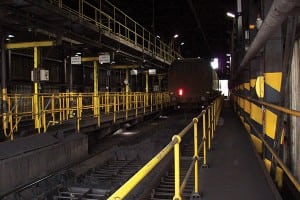
Back in the “good old days” of the power industry, fuel was cheap, fuel supplies were fairly constant, air emissions regulations were loose, and power plant coffee was as dark as sin and worse for you
-
 O&M
O&MGlobal Water Outlook for Power Generation
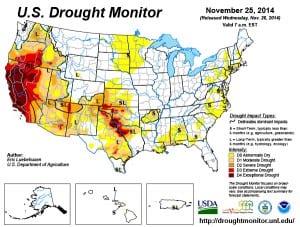
Water and energy are intimately linked. Water is necessary for the production, distribution, and use of energy. Energy is needed for the withdrawal and delivery of water. The two are inseparable. Several
-
 O&M
O&MInspecting Aberrant P91 Components for Integrity
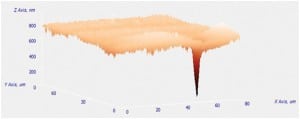
Many utilities around the world have been discovering abnormal or aberrant P91 base and weld metal microstructures in their plants, leading to, or with a potential to lead to, early cracking and failure in
-
 O&M
O&MWind Turbine Generator Maintenance: What to Expect and Why
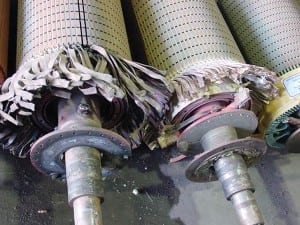
Over the past few years, wind generation projects have become prominent features of the North American landscape and of the utility infrastructure. In spite of their variable production load onto the grid
-
 O&M
O&MCoal-Fired Power Plant Heat Rate Improvement Options, Part 2
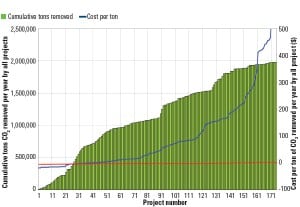
In recent years several EPRI projects have explored different aspects of heat rate improvements. This article, following Part 1 in the November 2014 issue of POWER , reviews results of implementing heat rate
-
 O&M
O&MAssessing and Prioritizing Structural Repairs to Material-Handling Systems
Material-handling systems at coal-fired power plants operate nearly continuously in harsh conditions for decades. Temperatures, moisture, overload conditions, and collisions from equipment can take a toll on
-
 O&M
O&MPoint Level Capacitance Switch for Fly Ash Hopper Measurement
If you’re the person tasked with controlling the level of fly ash in collection hoppers, you know how difficult the application can be. What at first looks like a simple measurement quickly proves to be much more demanding in actual execution. The first problem is the environment inside the collection hoppers, which is extremely challenging […]
-
 O&M
O&MBoosting Efficiency with a Sootblowing Optimization System
Too-frequent sootblowing can damage boiler components and place a big load on plant efficiency, but not enough of it can be just as big a problem. A sootblowing optimization system can help you find the “sweet spot.” With the increasing demands placed on today’s coal-fired power plants worldwide, operators are continuously looking for the best […]
-
 O&M
O&MCoal-Fired Power Plant Heat Rate Improvement Options, Part 1
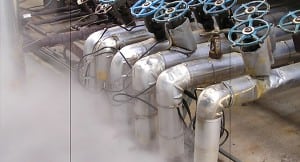
Even without regulatory considerations, there are good reasons for virtually every coal-fired power plant to improve its heat rate. The Electric Power Research Institute (EPRI) has looked at dozens of methods for improving heat rates and evaluated their applicability and costs. Part 1 of this two-part series explains the basics of heat rate improvements and […]
-
 O&M
O&MPortable Oil Analysis Tools Reduce Routine Maintenance Costs
What do a power plant, a hospital, a police station, and a remote mine have in common? They all have essential assets requiring uninterruptible power, commonly powered by an engine generator as primary or backup power. Engine generators, often termed “gensets,” combine an electrical generator and an engine. They supply electrical power where normal utility […]
-
 O&M
O&MGaining Control with Electraulic Actuators
Plant engineers at Eskom’s Majuba Power Station in South Africa have been continuously looking for ways to improve efficiency and reliability. The six-unit, 4,000-MW, supercritical coal-fired plant was experiencing an efficiency decrease of 5% to 7%, which plant engineers determined was caused by poor performance of the actuators on their condensate level control valves (CLCVs). […]
-
 O&M
O&MPrepare Your Coal Plant for Cold Weather Operations
Cold temperatures are nothing new, but extreme winter weather has been in the headlines more and more in recent years. Many of us had never heard the term “polar vortex” before last winter, but earlier
-
 O&M
O&MPrepare Your Gas Plant for Cold Weather Operations
A sustained Arctic blast composed of freezing rain, record snowfalls, and high winds hit 22 states, from Mexico to New England in early February 2011. The extreme weather severely affected the power generation
-
 O&M
O&MPrepare Your Nuclear Plant for Cold Weather Operations
During the Jan. 3–12, 2014, polar vortex that brought record-setting cold temperatures and severe winter weather to much of the U.S., nuclear plants not only survived, but thrived. According to the Nuclear
-
 O&M
O&MQuickly Boost Your Combustion Turbine Response
Twice this year, PJM flirted with blackouts when brutal winter storms (dubbed a polar vortex) struck the Eastern U.S. in January. The cold weather set a new winter peak demand record of 141,500 MW on Jan. 7
-
 O&M
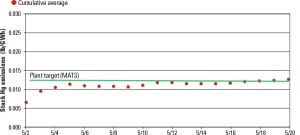
O&MNon-Carbon Reagent Injection for MATS Compliance
The upcoming implementation of the Environmental Protection Agency’s (EPA’s) Mercury and Air Toxics Standards (MATS) is putting pressure on coal-fired power plants to develop and implement compliance
-
 O&M
O&MProper Lubrication Practices Improve Plant Operations
Although industrial lubricants typically account for only 1% of plant operational costs (Figure 1), the lack of proper lubrication products, techniques, or applications can have a much more severe effect on
-
 O&M
O&MTwo Units at Coal Power Plant Back Online Following Spring Fire
With Units 6 and 7 back in operation, Colorado Springs Utilities (CSU) has restored 80% of the generation capacity at its Martin Drake Power Plant located in downtown Colorado Springs. The plant was taken offline after sustaining significant damage during a May 5 fire. Most of the damage occurred in the area surrounding Unit 5, […]
-
 O&M
O&MBoiler Chemical Cleaning: Doing It Correctly
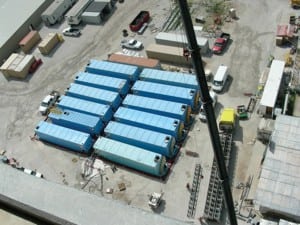
Like some of those tests your doctor is always after you to get, boiler chemical cleaning is something that most of us would rather not think about but that we all agree is necessary. Adding to our general discomfort with the process are new Environmental Protection Agency regulations, which make the disposal of chemical cleaning […]
-
 O&M
O&MNew Disaster Preparedness Approaches for Nuclear Plants
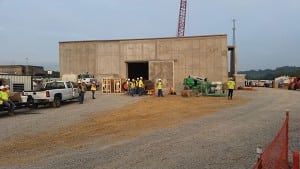
To ensure that its nuclear plants do not meet the same fate as those damaged and destroyed by the March 2011 events at the Fukushima Daiichi plant—should they be hit by similarly severe natural disasters—Tennessee Valley Authority (TVA) is using multiple new approaches to enhance safety. First Installation of New Spent Fuel Pool Instrumentation Spent […]
-
 O&M
O&MDigital Writing Solution Allows Timely Updates to Drawings and Field Reports
Skilled maintenance and service teams inspect critical infrastructure, perform preventive maintenance, and quickly respond to issues to keep service levels high. It is critical that such teams work with as-built drawings that reflect original plans along with the cumulative changes. Armed with the current drawings, service teams can avoid surprises. The challenge is that drawings […]
-
O&M
More Strategies for Inspecting HRSGs in Two-Shift and Low-Load Service
This supplement to “Strategies for Inspecting HRSGs in Two-Shift and Low- Load Service” in the August issue includes additional discussion of the heat recovery steam generator (HRSG) Inspectors Toolkit and HRSG Inspection Guide sections of the main article plus additional photos of damage caused by rapid startups and two-shifting of units over time. More Tools […]
-
O&M
Rapid Cycling: The Human Factor
A combination of falling natural gas prices, greater integration of renewable generation, and advancing technology has meant changing roles for many plants, particularly gas turbine combined cycle plants. (See “Managing the Changing Profile of a Combined Cycle Plant” in the June 2014 issue.) The added wear and tear on plant equipment, and the changing maintenance […]
-
 O&M
O&MStrategies for Inspecting HRSGs in Two-Shift and Low-Load Service
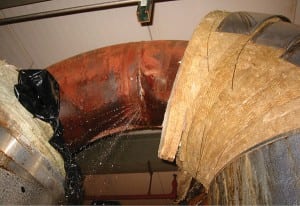
Aheat-recovery steam generator (HRSG) is much like other power generation equipment—run it at design conditions and chances are it will run with high availability and require only routine maintenance for
-
 O&M
O&MTrackers Optimize Yield of Utility-Scale Solar Plants
The utility-scale solar market is rapidly growing in North America, representing a large area of opportunity for project and product developers alike. The market more than doubled in size between 2012 and 2013
-
 O&M
O&MIntelligent Monitoring of Distribution and Emergency Power Systems Improves Availability
Problematic power plant systems diminish availability and directly affect plant productivity and efficiency. In order to maintain availability, electrical testing and maintenance services are imperative. Two