
Nuclear
-
 Nuclear
Are Smaller Reactors Better?
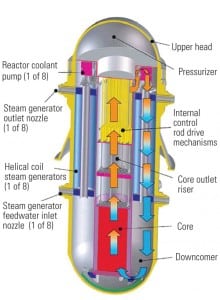
Is a paradigm shift—an economic and engineering earthquake—in nuclear power plant design on the horizon? For most of the past 50 years, the mantra in planning new nuclear plants has been “bigger is better.” But a growing number of nuclear power engineers and designers are contemplating a world where small is beautiful.
-
 Nuclear
Benchmarking Nuclear Plant Capital Requirements
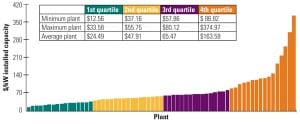
The EUCG Nuclear Committee’s primary goal is to optimize the costs and reliability performance of participating plants by publishing for its members a comprehensive database of performance metrics and best practices derived through surveys of its membership. Earlier reports examined staffing and performance data. In this exclusive EUCG report, we examine nuclear plant capital requirements.
-
 Nuclear
The Best of U.S. Nuclear Developments 2010: Uprates and Loan Guarantees
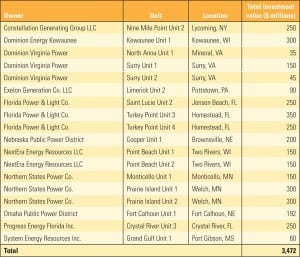
Utilities are spending billions of dollars on nuclear plant uprate projects, and Southern Company has been offered $8.3 billion in federal loan guarantees to build Vogtle Units 3 and 4 (although the final deal has yet to be signed). Meanwhile, other nuclear developers have slashed preconstruction spending as the cost of the “nuclear renaissance” becomes evident.
-
 O&M
O&MRetrofitting BWR Recirculation Pumps with Adjustable-Speed Drives
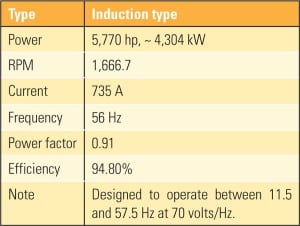
Exelon Nuclear recently replaced the original motor-generator sets for its boiling water reactor (BWR) recirculation pumps at its Quad Cities Generating Station Unit 1 with adjustable-speed drives. We examine the actual energy savings, motor-starting characteristics, control accuracy and stability, and motor and cable thermal behavior of this retrofit project.
-
 Nuclear
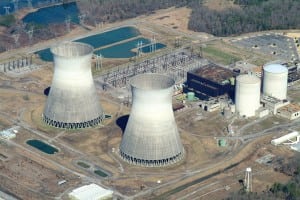
TVA to Complete Bellefonte Unit 1
Thirty-six years after work first began at the 1,600-acre site housing the Bellefonte Nuclear Power Plant in Hollywood, Ala., the Tennessee Valley Authority (TVA) in August said it plans to invest $248 million to maintain the option to complete the 1,260-MW Unit 1 reactor. The announcement was made as the nation’s largest publically owned utility […]
-
Nuclear
India Kicks Off Construction of Indigenous Nuclear Fleet
India in August began building two 700-MW indigenous nuclear power reactors at Rawatbhatta, in the desert state of Rajasthan. The two pressurized heavy water reactors (PHWRs), which will use uranium as fuel and heavy water as both moderator and coolant, are the largest to be built by the central government–run Nuclear Power Corp. of India […]
-
 Nuclear
Russia’s Nuclear Mission
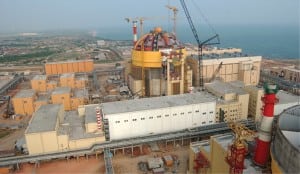
Nearly a quarter-century after the Chernobyl nuclear power station disaster in Soviet Ukraine, Russia has been making deals with energy-starved nations all over the globe to help them build new nuclear power plants using Russian second-generation reactor technology.
-
 Nuclear
AREVA Installs Finnish EPR Reactor Vessel
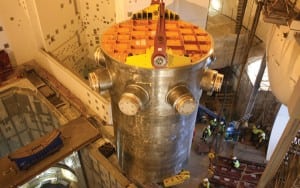
This June, AREVA installed the reactor pressure vessel (Figure 6)—the core of the unit—at the world’s first EPR project, which is under construction in Finland. Now the company will engage in a flurry of installation activities for heavy nuclear components, including lifting into the reactor the first of the four steam generators. Most of the work is expected to be completed by the end of 2012, with power production beginning in 2013.
-
 Nuclear
Bruce A Proves There Are Second Acts in Nuclear Power
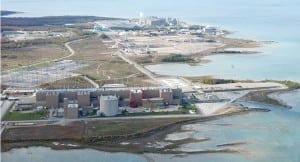
The refurbishment and restart of all four CANDU reactors at Bruce A may be Ontario’s most significant and complex power generation project since the first phase of the Bruce Nuclear Generating Station was built more than 30 years ago. Units 1 and 2 are expected to be synchronized in 2011 and return to commercial service by early 2012, joining Units 3 and 4, which restarted in 2004 and 2003 respectively. POWER visited Bruce A in April to witness the project’s progress.
-
 Coal
CoalLean Construction Principles Eliminate Waste
Eliminate waste in coal, gas, or nuclear power plant construction through a holistic application of lean principles.
-
 History
China: A World Powerhouse
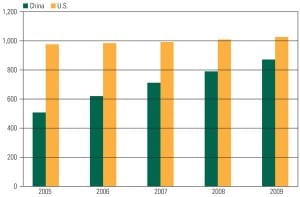
It’s no surprise that China leads the world in recent power capacity additions. What may surprise you is the precise mix of options this vast country is relying upon to meet its ever-growing demand for electricity. As a result, this ancient civilization is fast becoming the test bed and factory for the newest generation and transmission technologies.
-
 Nuclear
A Slow Slog Ahead for U.S. Nukes
There is a certain tentativeness about new nuclear power in the U.S. these days, a low-grade anxiety, as demonstrated by the comments made by electric utility representatives at May’s ELECTRIC POWER Conference in Baltimore.
-
 Nuclear
Finnish Government OKs Two Nuclear Plant Proposals
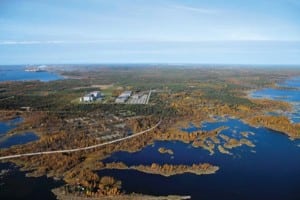
Finland’s government in April approved two of three proposals for the construction of new nuclear reactors in an effort to rid the country of its dependency on electricity imports from other countries—especially Russia—as well as to decrease carbon emissions.
-
 Nuclear
The U.S. Spent Nuclear Fuel Policy: Road to Nowhere
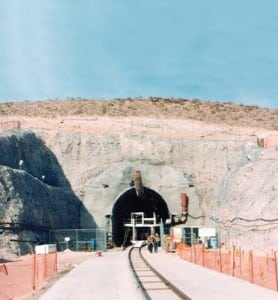
The Nuclear Waste Policy Act and Amendments of 1982 and 1987 established a national policy and schedule for developing geologic repositories for the disposal of spent nuclear fuel and high-level radioactive wastes. Those deadlines have come and gone; the cancellation of Yucca Mountain was only the latest failure of this policy to become reality. The task of finding a new storage location is now a political committee’s homework assignment. History tells us that committee members have been given an impossible task.
-
 Nuclear
Resurrecting Nuclear: "We Have to Get It Right"
Offers of nuclear loan guarantees are pending, construction permit applications are at an industry high, and the political stars seem to be properly aligned. However, there remains one obstacle in the development path of the next-generation of nuclear plants: How will these plants be financed?
-
 Nuclear
Benchmarking Nuclear Plant Staffing
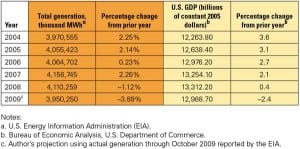
The EUCG Nuclear Committee has collected benchmarking data of U.S. nuclear plant staffing for many years. A summary of this highly desirable data was gleaned from EUCG databases and is now, for the first time, made public through an exclusive agreement with POWER.
-
 Nuclear
U.S. Spins Nuclear Wheels as Other Nations Roll Out New Plants
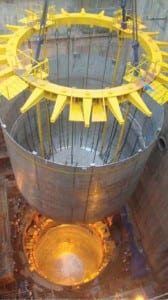
President Barack Obama’s January State of the Union speech called for incentives to make clean energy profitable — mainly through the construction of a new generation of nuclear power plants. That comment, an apparent effort to reach out to Republican members of Congress, drew furious applause. Within three weeks, the president’s backing of nuclear power had already made a significant impact on the U.S. nuclear sector.
-
 Nuclear
Initial Experiments Meet Requirements for Fusion Ignition
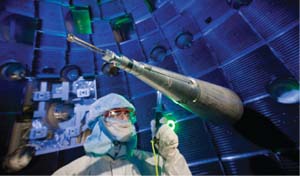
Scientists at Lawrence Livermore National Laboratory’s National Ignition Facility (NIF) in California speculate that a prototype nuclear fusion power plant could be operational within a decade, thanks to a test of the world’s largest laser array that confirmed a technique called inertial fusion ignition is feasible. Their first experiments have demonstrated a unique physics effect that bodes well for NIF’s success in generating a self-sustaining nuclear fusion reaction. Fusion energy is what powers the sun and stars.
-
 Nuclear
China Nuclear Plant Construction Gets Boost—With Technology Transfer
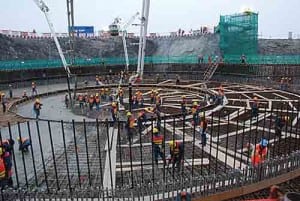
China’s nuclear power plant building spree got a little more frenzied this January, as the country kicked off its 21st project at Ningde 3.
-
Coal
Digital Plant Controls Provide an Essential Edge
It’s a digital world, and even aging power plants are experiencing the benefits of digital controls technologies. The following cover stories provide insight into the latest options and inspiration for your own plant controls projects.
-
 Nuclear
Concerns About Electromagnetic Interference in Nuclear Plants Related to Digital Upgrades
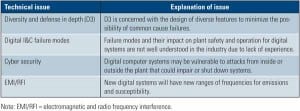
In order to operate aging nuclear power plant instrumentation and control systems for up to 60 more years or longer, there must be a smooth transition from existing analog technologies to advanced digital platforms. For this to occur, electromagnetic compatibility concerns related to both qualification testing and the electromagnetic environment must be addressed to ensure safe and reliable operation of these systems within the plant’s electromagnetic and radio frequency interference environment. By understanding the regulatory requirements and sharing implementation experience, digital system upgrades can be installed successfully.
-
 Nuclear
The Advanced Digital Fieldbus Option for Nuclear Plants
Digital fieldbus technologies, including Foundation fieldbus and Profibus, are increasingly being used with success in the nuclear and fossil fuel power industries. This article compares a conventional control system with a Foundation fieldbus – based digital control system used in a typical circulating water system in a nuclear power plant. As shown in this example, using digital fieldbus technologies can result in significant savings in terms of installation and hardware costs.
-
 Nuclear
The Value of a Knowledge-Based Culture Grows in Lean Times
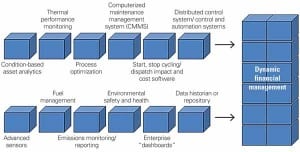
Given delays and cancellations of new generating capacity, pushing the existing power generation fleet is more important than ever. At ELECTRIC POWER 2009, multiple presentations explored the premise that an active knowledge management strategy — requiring a blend of digital and human elements unique to each power plant — will help you extract the most productivity from your assets.
-
Nuclear
Nontechnical Issues Affecting Digital Upgrades at Nuclear Power Plants
Existing nuclear power plants are increasingly facing the conversion to digital instrumentation and controls technology. Meanwhile, new nuclear designs have digital technology integrated throughout the plant. Digital controls will soon be inevitable, so how do we make the transition as smooth as possible? Without losing focus on the technical solutions, organizations have to pay attention to the nontechnical issues as well.
-
 Coal
CoalThe Impact of Carbon Trading on Performance: What Europe’s Experience Can Teach North American Generators
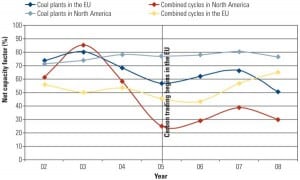
The European carbon trading system experience suggests that North American generators should expect severely altered coal-fired power plant operating profiles if cap-and-trade legislation becomes law. In a groundbreaking study, Solomon Associates predicts the reduction in mean run time that North American generators should expect. The trends outlined in this study provide an overview of some of the broad challenges facing generators in moving to a carbon-constrained market environment.
-
 Nuclear
Japan Launches Commercial Operation of MOX-Fueled Reactor
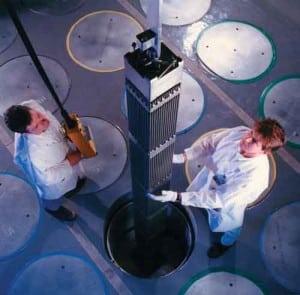
Japan began operating a nuclear power reactor using plutonium-uranium mixed oxide (MOX) as fuel for the first time last October. About 16 MOX-containing fuel assemblies were loaded during a scheduled outage to replace a portion of the 193 fuel assemblies at the No. 3 reactor at Kyushu Electric Power Co.’s Genkai nuclear power plant. The utility eventually plans to triple the number of fuel assemblies at the 1,180-MW reactor in Saga Prefecture to 48. The Ministry of Economy, Trade and Industry conducted its final inspection of the reactor and issued its certification on Dec. 2.
-
 Nuclear
High-Temperature Gas-Cooled Reactor Concept Moves Forward
Researchers from the Idaho National Laboratory (INL) say they have developed a new type of nuclear fuel for use in next-generation high-temperature gas reactors that produces less waste — a major step forward for the Next Generation Nuclear Plant (NGNP).
-
 Nuclear
NRC Concerns About AP1000 Structural Strength Could Delay Projects
Concerns raised by the U.S. Nuclear Regulatory Commission (NRC) about the structural strength of Westinghouse Electric Co.’s AP1000 reactor could cause delays for several nuclear plants that planned to use the design in the U.S. — and it raises questions for new builds started or proposed in China and the UK.
-
 Nuclear
Top Plants: Oconee Nuclear Station Oconee County, South Carolina
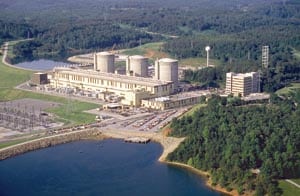
Duke Energy’s nuclear fleet provides electricity to approximately half of the utility’s customers in the Carolinas. The 2,538-MW Oconee Nuclear Station is part of that fleet and has been a pacesetter among U.S. nuclear plants since it began operation in 1973. In order to maintain the plant’s productivity and reliability, its staff implemented a comprehensive controls modernization project that spanned a decade. With its new state-of-the-art upgrades, the facility has become a leader in applying digital electronic technology in the nuclear power industry.
-
 O&M
O&MBenchmarking Nuclear Plant Operating Costs
In an exclusive agreement with the EUCG Nuclear Committee, POWER was provided access to some key, high-level performance and operational data from the group’s nuclear industry benchmarking database. All U.S., and many international, nuclear power plants are members of the committee and have contributed to its database for many years. This month we introduce you to the EUCG Nuclear Committee and share sample nuclear operating costs. Look for future reports on other key performance benchmarking metrics during 2010.