
Legal & Regulatory
-
 Commentary
FERC Opens Electricity Markets to Distributed Resource Aggregators
By Bud Earley and Mark Perlis, Covington & Burling LLP The Federal Energy Regulatory Commission (FERC) on Sept. 17, 2020, approved a final rule that will enable distributed energy resource aggregators to compete in organized wholesale electricity markets. Distributed energy resources (DERs) are located on the electric distribution system or behind the customer meter and […]
-
 News
News2020 Voters Cement Nevada’s 50% RPS, Shakeup of Energy Oversight in New Mexico
Though vote-counting continued in the tight presidential race on Nov. 5, voters in Nevada and New Mexico appear to have made headway on crucial energy initiatives on the ballot. Nevada Approves a 50% by 2030 RPS In Nevada, the presidential race remained closely contested on Thursday morning with pundits predicting that a victory there for […]
-
Legal & Regulatory
In Search of Middle Ground Between State Public Policy and Federal Regulation
The tension between state and federal lawmakers is ages old, with a history marked by periods of outright assault or relative peace. On Dec. 19, 2019, the quiet in the energy sector was broken by an order from
-
 Renewables
New York Reforms Clean Energy Standard
An expansion of New York’s Clean Energy Standard (CES) approved by the state’s Public Service Commission (PSC) adopts several measures that will help the state meet its new, more ambitious 70%-by-2030 renewable power target. In an Oct. 15 order, the PSC adopted several changes proposed by the New York State Energy Research and Development Authority […]
-
Press Releases
Baker Botts Launches Carbon Capture, Utilization and Storage Practice Group
The decision to formalize the firm’s offering follows the establishment of the firm’s Global Hydrogen Practice Group back in June WASHINGTON, D.C. and LONDON, October 13 2020 – Baker Botts L.L.P., a leading international technology and energy law firm, has launched a dedicated Carbon Capture, Utilization and Storage Practice Group within the firm’s Energy sector. […]
-
 Supply Chains
Mixed Reactions on Looming DOE NOPR for Bulk Power System Security
The Department of Energy (DOE) will issue a notice of proposed rule-making (NOPR) to implement President Trump’s broad bulk power system (BPS) security executive order (EO) “later this fall,” a DOE official confirmed to POWER on Oct. 5. Though the NOPR is delayed beyond the 150-day timeframe set by the EO, various BPS stakeholders are […]
-
 Commentary
Industry Wants Clarity on Trump Order About Foreign Equipment
President Trump on May 1, 2020, issued Executive Order (EO) 13920, titled “Securing the United States Bulk-Power System.” Trump said that the unrestricted foreign supply of certain electric equipment
-
 Nuclear
Versatile Test Reactor Moves into Engineering Design Phase
The Versatile Test Reactor (VTR), a planned experimental fast neutron reactor that the Department of Energy (DOE) says is crucial to support domestic advanced nuclear reactor research and development has cleared “Critical Decision 1,” paving the way for the engineering design phase to begin. Critical Decision 1—also known as “Approve Alternative Selection and Cost Range”—is […]
-
 Smart Grid
Leaders in the Smart City Movement
What is a “Smart City”? According to one definition, it’s an urban area that uses different types of electronic methods and sensors to collect data, with insights gained from that data used to manage assets, resources, and services efficiently. Clint Vince, chair of Dentons’ U.S. Energy Practice and co-chair of Dentons’ Global Energy Sector, was […]
-
 Cybersecurity
Power Sector, Federal Entities Scramble to Close Supply Chain Security Gaps
Marking another major federal effort to address potential supply chain risks to the bulk power system (BPS), the Federal Energy Regulatory Commission (FERC) on Sept. 17 sought industry’s perspective on a number of important considerations, including possible actions the regulatory body could take to address security gaps. The U.S.-based power sector, meanwhile, has moved quickly […]
-
 News
NewsFERC Order Backs Grid Market for DERs
The Federal Energy Regulatory Commission (FERC) issued an order that advocates for distributed energy resources (DERs) say will enable DERs, including renewable energy such as solar, wind, and battery storage, to compete on a more-level playing field in the organized capacity, energy, and ancillary services markets run by regional grid operators. FERC Order No. 2222, […]
-
 Markets
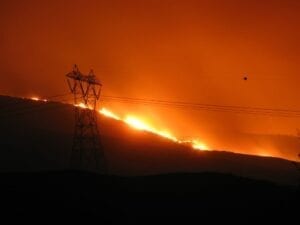
DOE Issues Emergency Order to Alleviate California Power Crisis
The U.S. Department of Energy (DOE) on Sept. 6 took the rare but drastic action of issuing an emergency order under the Federal Power Act (FPA) to authorize the maximum operation of three natural gas–fired facilities on the California Independent System Operator’s (CAISO’s) grid whose full capability had been stranded by federal air quality and […]
-
 Nuclear
Age-Old Problem in Search of a Solution
Industry experts agree that deep geological repositories are needed for long-term storage of spent reactor fuel. They’re also digging for alternative methods. The U.S. Department of Energy earlier this year
-
 Legal & Regulatory
Fixed-Volume Hedges Help Bring Revenue Certainty
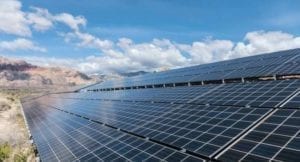
With a lack of attractive solar power purchase agreements (PPAs) available in the market, project owners have been seeking alternative arrangements to secure long-term revenue certainty. One alternative is a
-
 News
NewsEPA Loosens Limits on Coal Plant Effluent Discharges
The U.S. Environmental Protection Agency (EPA) has finalized a rule that revises regulations for coal-fired power plants, a move that will limit the number of generation facilities that could incur costs for failing to comply with pollution limits. The action on Aug. 31 revises a rule established in 2015, when the EPA issued an order […]
-
 Nuclear
NRC Gives Final Approval to NuScale’s SMR Design
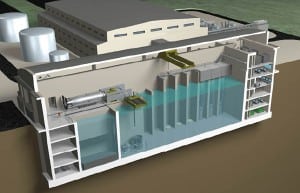
NuScale Power said the U.S. Nuclear Regulatory Commission (NRC) has completed its Phase 6 review of the Design Certification Application (DCA) of the company’s small modular nuclear reactor (SMR), and said the company’s SMR is the first such reactor to receive NRC approval of its design. NuScale on August 28 announced that with the DCA […]
-
 Nuclear
Exelon Makes Plans to Retire Byron and Dresden Nuclear Plants in 2021
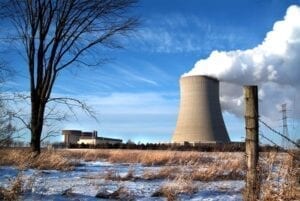
In a stunning announcement, Exelon Generation, which operates the largest U.S. fleet of nuclear plants—21 reactors at 12 facilities in Illinois, Maryland, New York, and Pennsylvania—said it will retire the Byron and Dresden generating stations next fall for economic reasons. “Although we know in our heads that shutting down the uneconomic Illinois plants is necessary […]
-
 Nuclear
How to Build an On-Time, On-Budget Nuclear Power Plant
Building a new nuclear power plant is challenging. Nuclear construction projects always seem to be behind schedule and over budget. Even in the late 1960s and early 1970s—arguably nuclear power’s
-
 Legal & Regulatory
Supreme Court Revives Most Uses of NWP 12, Amid Uncertainty
In a one-paragraph, unsigned order issued July 6, the U.S. Supreme Court reinstated most uses of the U.S. Army Corps of Engineers’ Nationwide Permit 12 (NWP 12) for pipeline and utility trenching and
-
 Nuclear
License Renewals Could Modernize U.S. Nuclear; Supply Base Will Need to Keep Pace
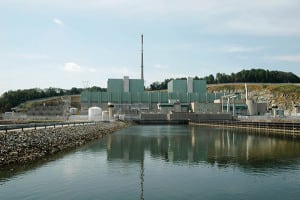
Nuclear power plants approaching license expiration are faced with three options: obtain initial license renewal to continue operations (nine U.S. units have not yet received an extension of their initial
-
 Coal
CoalEPA Changes Closure Requirements in Coal Ash Rule
The U.S. Environmental Protection Agency (EPA) on July 29 finalized several changes to the regulations for disposal of coal combustion residuals (CCRs), or coal ash, from electric utilities. The changes include giving utilities more time to design clean-up and closure plans for their coal ash storage sites. The changes stem from an opinion issued Aug. […]
-
 International
Rains Complicate Ethiopian Hydro Dam Dispute
Ethiopia says it had reached a “major common understanding” with Egypt and Sudan related to the first filling and annual operation of the 6.4-GW Grand Ethiopian Renaissance Dam (GERD), paving the way to a “breakthrough agreement” in the contentious dispute that is primarily about use of the River Nile’s waters. As POWER reported in […]
-
 News
NewsDOE Seeks Power Sector’s Input on Bulk-Power Foreign Adversary Rules
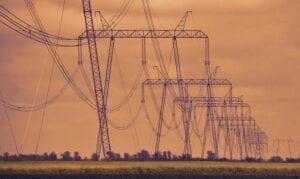
The Department of Energy (DOE) wants the electric power industry to help the DOE draft rules that will prohibit the U.S. bulk-power electric system from using equipment sourced from, or otherwise susceptible to, harmful influence by “foreign adversaries.” Asset owners, utility operators, equipment vendors, and other interested parties can voluntarily provide information to the DOE […]
-
 Legal & Regulatory
FERC Finalizes PURPA Rule Reforms
The Federal Energy Regulatory Commission (FERC) finalized a long-awaited rule revising regulations that govern qualifying small power producers and cogenerators under the Public Utility Regulatory Policies Act of 1978 (PURPA). While FERC said the rule was necessary to respond to significant market changes, the action drew mixed reactions from industry. FERC’s final rule issued on […]
-
 Renewables
Keeping the ‘Clean’ in Clean Energy
Authored by Bryan Sillaman and James Alford of Hughes Hubbard In the midst of the global COVID-19 crisis, another unprecedented event took place that was largely overshadowed by more urgent, and life-threatening, circumstances. On April 20, 2020, the price of U.S. West Texas Intermediate crude oil dropped below zero dollars per barrel (bbl), plunging past […]
-
 Business
The Evolution of Power Business Models
Traditional models have been upended by recent disruptions, including decarbonization, decentralization, and even the COVID pandemic, but new ones are replacing them that focus on customer preference
-
 Hydro
HydroRethinking Hydropower Eligibility for State Renewable Incentive Programs
In the absence of a comprehensive federal renewable energy policy, many states have established regulatory frameworks that incentivize or require utilities to purchase or develop a percentage of renewable
-
 Commentary
Competitive Markets and Environmental Goals—Yes, They Can Coexist
While the nation is rightfully consumed with responding to the COVID-19 crisis, other battles are being fought that also will have decades-long consequences. One of those involves states seeking to override
-
 Energy Storage
Hybrid Power Plants Are an Inefficient Usage of Battery Technology
Hybrid power plants, also known as solar plus storage or wind plus storage projects, have gained significant traction in recent years. These projects combine solar energy or wind energy with battery energy storage. The result is a somewhat dispatchable renewable energy power plant, which can provide smoother (less-volatile) energy, and can shift time of delivery […]