
Instrumentation & Controls
-
 O&M
O&MImprove Power Plant Heat Rate with a Pulverizer Performance Program
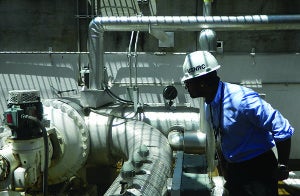
Associated Electric Cooperative has spent a decade building a pulverizer performance program for its Thomas Hill Energy Center. The effort, combined with a sharp focus on maintaining proper air/fuel ratios
-
 Legal & Regulatory
ASME Operation and Maintenance lnservice Testing Program Ensures Nuclear Component Operational Readiness
Originally embedded in the American Society of Mechanical Engineers (ASME) Boiler and Pressure Vessel Code , today the Operation and Maintenance of Nuclear Power Plants standard for inservice testing of pumps
-
 Connected Plant
Utilities Prepare for Simulated Attack on U.S. Power Grid
Utilities across the country are gearing up for an attack on the power grid November 15 and 16. Thankfully, it’s only a drill. But in the event of an actual emergency, a real physical and cyberattack on the U.S. electricity infrastructure, GridEx IV—a biennial exercise conducted by the North American Electric Reliability Corp. (NERC)—will help […]
-
 Gas
GasPlant Converts to Combined Cycle Operation with Help of Thermal Mass Air/Gas Flowmeter
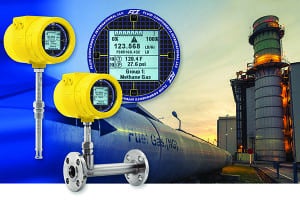
Process engineers at a power plant in Western Europe were upgrading the facility with new combined cycle gas turbine (CCGT) technology. CCGT power plants operate with both gas turbines and steam turbines
-
 O&M
O&MImprove Power Plant Efficiency Using Design Documents and Five Basic Parameters
Power plants are designed to operate at their highest efficiency. Once a plant goes into operation, however, real life takes over and sometimes design outcomes are not regularly realized. Improving plant
-
 IIOT Power
DHS, FBI Identify Tactics in Cyberattack Campaign Targeting Industrial Control Systems
The Department of Homeland Security (DHS) and Federal Bureau of Investigation (FBI) warned in an e-mail on October 20 that an ongoing cyberattack campaign is targeting the nuclear, energy, and other critical infrastructure sectors since at least May 2017—with results ranging from cyber espionage to the ability to disrupt energy systems in the event of […]
-
 Gas
GasTackling NERC CIP and Cybersecurity at America’s Largest Gas-fired Cogeneration Plant
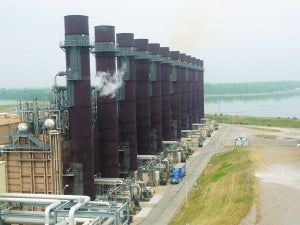
The Midland Cogeneration Venture (MCV) in Midland, Michigan, is the largest natural gas-fired combined electrical energy and steam energy generating plant in the U.S. It is capable of continuously producing
-
 O&M
O&MFour Tips for Protecting Power within One of the World’s Most Critical Industries
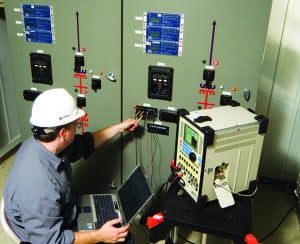
New report highlights criticality of utilities. As more and more industries increasingly rely on information technology (IT), the ability to ensure IT systems stay up and running is more critical than ever. But which industries absolutely, positively must stay up and running? Which industries are most critical? That’s the question answered by a team of […]
-
 O&M
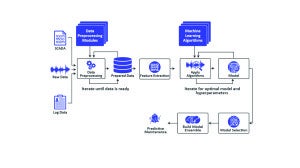
O&MConsider Automated Machine Learning for Wind Turbine Asset Maintenance
The potential financial benefits from Industry 4.0 are apparent to plant owners in almost all sectors. The wind power industry is no exception, and existing vendors such as GE (Predix/Digital Windfarm)
-
 Research and Development
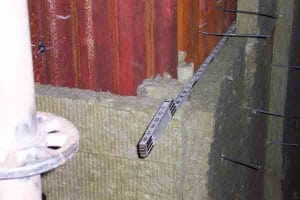
Useful Tips for Designing Thermal Insulation Systems
Thermal insulation is installed on almost every piping system and much of the plant equipment at power generation facilities. It not only saves energy, but also protects workers, reduces noise, helps protect
-
 O&M
O&MStepping Up Cybersecurity: Power Producers Move Ahead
The energy sector has been hit with almost one-third of the cyberattacks against U.S. industrial facilities in recent years. It is among the top issues, along with reliability, environmental regulations, and
-
 O&M
O&MA Proactive Program to Mitigate Coal Dust Reduces the Risk of Explosions
Coal, by its very nature, is a dusty fuel. That poses a serious risk at coal-fired power plants, because coal dust can be highly explosive. However, actions can be taken to reduce the risk. Implementing strict
-
 O&M
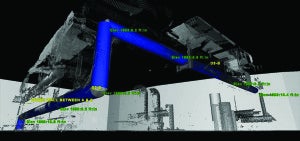
O&M3-D Laser Scanning of Nuclear Plant Piping Systems Reduces Radiation Exposure
It’s no secret that high-radiation areas are scattered throughout nuclear power plant facilities. The challenge is getting work done in those areas while keeping exposure to workers as low as possible. On
-
 O&M
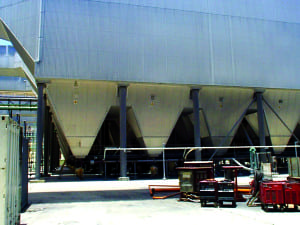
O&MThe Importance of Maintaining Fly Ash Hopper Bin Level Monitoring
The power industry has a critical need to measure the bin level inside fly ash hoppers under electrostatic precipitators (ESPs). The inherent problem associated with these hoppers is that they are usually
-
 O&M
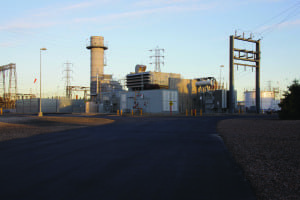
O&MClosed Circuit Reverse Osmosis System Squeezes Money Savings Out of Water Management
In water-strapped California, managing power plant water usage is more important than ever. Southern California Edison implemented novel closed circuit reverse osmosis systems at five of its gas-fired
-
 O&M
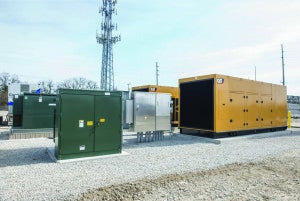
O&MAmeren’s TAC Microgrid Seamlessly Integrates Distributed Energy Resources
The microgrid installation at the Ameren Illinois Technology Applications Center (TAC) near the University of Illinois campus in Champaign—designed, engineered, and constructed by S&C Electric Co. of
-
 O&M
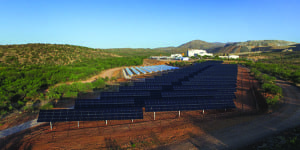
O&MCollaboration and Innovation Produce a Powerful Microgrid Solution
The challenge was to take a facility that was far off the grid, and move it forward as an energy self-sufficient complex while also turning an idea into a commercially viable product. That was the impetus
-
![Microgrid_Infographic[3]](https://www.powermag.com/wp-content/uploads/2017/08/fig-2_how-microgrids-work-300x162.jpg) History
HistoryMicrogrids: An Old Concept Could Be New Again
Self-contained, small islands of electric generation, storage and distribution inside the existing grid–microgrids–could be the next big thing in electricity. But some argue they may be just another
-
 Infographics
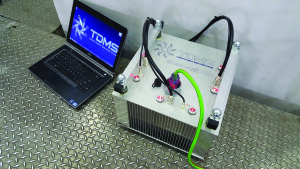
Advanced Turbine Dynamics Monitoring System Proven Effective
Grid behavior in today’s power generation environment is a stochastic system that is more variable than in the past. One common issue is the response to economic dispatch, in which formerly baseload thermal
-
 Coal
CoalImproved Maintenance Strategy and Excellent Planning Turns Coal Plant into a Top Performer
Southern Co.’s Plant Scherer was chosen as the 2017 Powder River Basin Coal Users’ Group Plant of the Year based on a rigorous selection criteria, including safety, fire protection, and risk reduction
-
 Coal
CoalRetrofitting Electrostatic Precipitators to Meet Current Emission Limits
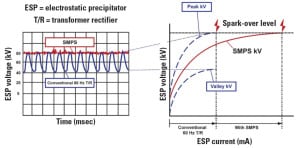
Electrostatic precipitators (ESPs) offer a tried-and-true technology for particulate matter control. However, existing ESPs can be challenged to meet the latest regulatory requirements. Retrofitting power
-
 Infographics
New Capture Technology Holds Key to Reaching Carbon Emissions Targets
Some naysayers have argued that developing carbon capture technology for use on fossil-fueled power plants is pure folly. But research and pilot tests have continued nonetheless, and various solutions have
-
 Legal & Regulatory
Particle Sizing in Emissions Samples by Scanning Electron Microscopy
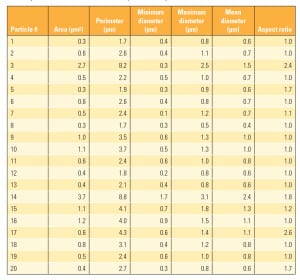
With low particulate loading common in stack emissions these days, particulate matter measurement can be difficult using traditional techniques. Microscopical measurement of particle-size distributions offers
-
 Infographics
Technological Advancements in Cooling Water Treatment
Regulatory agencies are becoming more and more critical of phosphorus-based water treatment chemicals because they can have a negative impact on lakes and waterways. In the past, treating cooling water with
-
 Infographics
How China Is on the Leading Edge of Environmental Technologies
Coal proponents and climate skeptics often cite China’s current and future reliance on coal power to bolster talking points. What is little discussed is the recent, massive transformation of China’s vast
-
 Connected Plant
PID Loop Tuning Pocket Guide Released
Proportional-integral-derivative (PID) control is one of the most common types of automatic control used in the power industry. A PID controller continuously calculates an error value as the difference between
-
 O&M
O&MStrategies for Small Hydro Upgrades
Small hydro is becoming big business as ongoing technological advances make more small sites economic to exploit. Older plants can also see substantial output and efficiency gains by upgrading from decades-old
-
 Connected Plant
Cybersecurity: Keeping Current on a Moving Target
What it means to have a secure energy generating facility has changed in recent years as the threat of cyberattacks grows. As the nation’s energy sector becomes increasingly interconnected, it is more
-
 IIOT Power
New Approaches for Transformer Operation and Maintenance
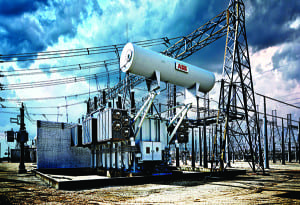
Technology advancements and new regulatory requirements could reshape how power plant owners operate and maintain large power transformers. Experts outline emerging strategies and call attention to overlooked
-
 Connected Plant
The Future Is Now: Connected Power Plants Are Here
New technology is being used throughout the power industry to improve plant efficiency, predict trouble with degrading equipment, forecast weather trends, and train workers. A recent conference hosted by POWER