
Full Coverage
-
 Commentary
The World Wants Nuclear Power Again—America Can Lead
After a decades-long slowdown marked by fits and starts, the U.S. is once again building and innovating in nuclear power. In April, the second of two new nuclear units went into service at Georgia Power’s
-
 Wind
WindCoating Technologies Crucial for Offshore Wind Farms
Efforts to combat climate change drive the growth of renewable energy technologies as governments and utility companies increase investments in solar and wind installations to meet rising electricity demands. Onshore wind is a well-developed market, while offshore wind is beginning to expand due to its high production efficiency and significant energy production potential. According to […]
-
 O&M
O&MRugged Mobile Devices Enhance OPPD Operations
Many power companies have turned to digital technology to streamline operations and improve worker efficiency. One example is Omaha Public Power District (OPPD), the 12th-largest public power utility in the U.S. OPPD recently decided to deploy hundreds of semi-rugged TOUGHBOOK 55 devices across multiple units, including meter technicians, troubleshooters, line crews, and system protection and […]
-
 Legal & Regulatory
Supreme Court Halts EPA’s ‘Good Neighbor Plan’
The U.S. Supreme Court in a 5–4 vote blocked enforcement of the Environmental Protection Agency’s (EPA’s) final “Good Neighbor Plan,” a rule intended to significantly cut smog-forming nitrogen oxide (NOx) pollution from power plants and other industrial facilities in 23 states. In the meantime, the applicants, which include the states of Ohio, Indiana, and West […]
-
 T&D
T&DStrengthening America’s Electric Power Grid: How the Government and Industry Are Improving T&D Systems
The U.S. transmission and distribution (T&D) network is reliable and well-maintained, but as renewable energy continues being added to the grid, and demand increases due to growing data center needs and the electrification of transportation and manufacturing processes, work is necessary to keep up with the changing times. The U.S. government understands the need for […]
-
 Nuclear
First-Ever Additively Manufactured Debris-Filtering Bottom Nozzles Installed at Farley Nuclear Plant
Southern Nuclear, a subsidiary of Southern Company and operator of more than 8.2 GW of nuclear power capacity, said it has completed the installation of lead test assemblies with additively manufactured debris-filtering bottom nozzles (AMBN) at Alabama Power’s Joseph M. Farley Nuclear Plant. The AMBN assemblies are a new technology manufactured by Westinghouse Electric Co. […]
-
 Energy Security
Mitigating EMP and GMD Risks for Power Grid Resilience
Risks posed by geomagnetic disturbance (GMD) and electromagnetic pulse (EMP) events add challenges to an already complex power system environment. But they remain crucial to address. How prepared is the power grid to withstand these powerful natural and man-made disturbances? On the evening of May 10, grid operator PJM Interconnection activated a rare geomagnetic disturbance […]
-
 T&D
T&DBuilding a Better Grid—Infrastructure Upgrades Require Ingenuity, Innovation, and Investment
The need for more reliability and resilience of power delivery, both in the U.S. and worldwide, has utilities and grid operators looking for solutions to the challenge of bolstering the electricity supply. Electric grid infrastructure, both in the U.S. and other parts of the world, needs an upgrade. Increased power demand from energy-intensive industries such […]
-
 T&D
T&DThe Transformer Crisis: An Industry on the Brink
Facing unprecedented lead times and skyrocketing costs, the transformer supply chain crisis threatens the backbone of the electric power industry, driving urgent calls for increased manufacturing capacity and innovative solutions. Can the industry rise to the challenge? For several years now, the power sector has frantically raised the alarm about an impending transformer supply chain […]
-
 Distributed Energy
Microgrids Take Major Role for Reliability, Resiliency
An array of technologies, both thermal and renewable, are being used in the design of microgrids, supporting distributed power generation across several sectors. The use of microgrids to provide reliable power for critical infrastructure is growing, and these off-grid installations also are becoming more prevalent as part of commercial and industrial (C&I) enterprises and residential […]
-
 T&D
T&DHigh-Voltage Power Transmission Projects Are Booming Around the World
High-voltage power transmission systems are more important today than ever before because power generated at renewable energy sites in remote locations must often be transmitted to distant load centers. Several state-of-the-art projects being done around the world are reviewed below. The majority of major electric power transmission lines in the U.S. are 115-kV, 230-kV, or […]
-
 T&D
T&DPlanning for a Reliable and Resilient Electric Power Grid
In the U.S., regional transmission organizations (RTOs) and independent system operators (ISOs) are responsible for overseeing the reliable operation of the high-voltage transmission system within their respective regions. In other countries, transmission system operators (TSOs) perform similar roles. In most cases, the primary objectives of these entities are to ensure the reliable and efficient operation […]
-
 T&D
T&DWhat Does It Take to Bring Stability to a Renewable-Focused Grid?
As coal, gas, and nuclear plants are retired, and wind and solar resources are added to the power grid, stability can become a problem. Understanding the solutions that are available to help manage potential issues is important for decision-makers so they can select the best options for their system. Grid stability and system strength have […]
-
 Legal & Regulatory
The ADVANCE Act—Legislation Crucial for a U.S. Nuclear Renaissance—Clears Congress. Here’s a Detailed Breakdown
The U.S. Senate has passed the Accelerating Deployment of Versatile, Advanced Nuclear for Clean Energy (ADVANCE) Act, sweeping legislation that seeks to promote U.S. nuclear leadership, accelerate advanced nuclear technology development while preserving existing nuclear generation, bolster national security measures, and enhance regulatory efficiency to support new nuclear deployment. The Senate passed the bill on […]
-
 Hydrogen
Ensuring Electrical Safety in Hydrogen Operations
In this article we explore the current use of hydrogen in industrial processes, as well as its role in the ongoing global transition to a net-zero economy. We’ll provide insights into market opportunities and challenges, the latest processing technologies, and best practices in safety to help industry stakeholders as they face mounting pressure to scale […]
-
 Hydrogen
Japanese Firms Collaborate on Green Hydrogen Project in Hokkaido’s Chitose Area
Mitsubishi Corp. (MC), Takasago Thermal Engineering Co. Ltd. (TTE), Hokkaido Electric Power Co. (HEPCO), and Air Water Hokkaido Inc. (AWH) announced the signing of a joint development agreement to supply green hydrogen in Hokkaido’s Chitose area. Hydrogen can be produced by electricity and other sources of energy, and because it does not emit CO2 when […]
-
 Hydrogen
Green Hydrogen Delivered to French Salt Cavern Storage Facility for Testing
Lhyfe, a pioneer in the production of green and renewable hydrogen, delivered 350 kilograms of green hydrogen (Figure 1) to natural gas expert Géométhane, on June 13, for it to test injecting hydrogen into salt caverns at its Manosque site in the south of France. The injection, which was completed within the day, is a […]
-
 Nuclear
Kemmerer 1 Breaks Ground: A Look at TerraPower’s Natrium Fast Reactor Nuclear Power Plant
Bill Gates’ nuclear innovation firm TerraPower has broken ground on the non-nuclear portion of Kemmerer Unit 1, a 345-MW Natrium sodium-cooled fast reactor (SFR) power plant. The groundbreaking on June 10 makes the federal demonstration project the first advanced nuclear reactor project to move from design into construction in the Western Hemisphere, the company noted. […]
-
 Commentary
It’s Time for Utilities to Back Smart Grid Optimization with the Right Tech
The utility industry is an unsung hero for nearly every community—until the power falters. A prime example is the extreme weather that passed through much of the central U.S. this spring. In Houston, where my company is based, we recently experienced severe storms that left around a million businesses and homes without power. These acts […]
-
 T&D
T&DU.S. Power Distribution System Reliability Has Declined Over the Past Decade: How to Make It Better
SAIDI (System Average Interruption Duration Index) and SAIFI (System Average Interruption Frequency Index) are widely used reliability indices that measure the performance of power distribution systems. SAIDI represents the total duration of interruptions for an average customer over a given time period, typically a year. It is calculated by taking the sum of all customer […]
-
 Hydrogen
Advancing Ceramic Matrix Composites and Environmental Barrier Coatings for Hydrogen Turbines: Challenges and Opportunities
Decarbonization goals call for advancing high-impact energy technologies. The U.S. has pledged to achieve net-zero emissions by 2050, a goal that presents both challenges and opportunities in the field of advanced materials. This ambitious goal requires a wide range of technological advancements to enable the shift from fossil fuel-based systems to more sustainable and low-carbon […]
-
 Legal & Regulatory
GOP Lawmakers Aim to Protect Coal and Gas-Fired Power Plants from EPA Rules
Forty-three Republican senators (along with one Independent) introduced a Congressional Review Act (CRA) resolution of disapproval on June 5 to overturn emissions rules issued by the Environmental Protection Agency (EPA), which they say target existing coal-fired power plants and new gas-fired plants. The action was led by U.S. Sen. Shelley Moore Capito (R-W.Va.), Ranking Member […]
-
 Sustainability
Michigan Coal Plant Eyes BECCS Retrofit: Could Become First U.S. Facility with ‘Carbon-Negative’ Power
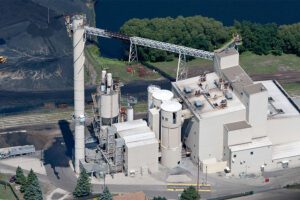
CMS Energy’s subsidiary NorthStar Clean Energy has given Babcock & Wilcox (B&W) the green light to start initial work on converting a 73-MW coal-fired power plant in Michigan into a bioenergy with carbon capture and storage (BECCS) facility that could send “carbon-negative” power to the grid. B&W on June 3 said the limited notice to […]
-
 Cybersecurity
Why the U.S. Government Should Fund Cybersecurity Efforts of Private Companies Protecting the Power Grid
FBI Director Christopher Wray, while speaking at the Vanderbilt Summit on Modern Conflict and Emerging Threats in Nashville, Tennessee, in April, warned that U.S. critical infrastructure is a prime target of the Chinese government. “The fact is, the PRC’s [People’s Republic of China’s] targeting of our critical infrastructure is both broad and unrelenting,” he said. […]
-
 Gas
GasNew Gas-Fired Power Plants Proposed in Southeast Texas
Entergy Texas filed an application with the Public Utility Commission of Texas (PUCT) for approval to build two natural gas power plants—one in Jefferson County and the other in Liberty County. “The Legend and Lone Star Power Stations will address the critical need for increased power generation capacity, support increased economic activity throughout the region, […]
-
 Press Releases
Yokogawa Acquires BaxEnergy, a Provider of Renewable Energy Management Solutions
Proven results across 120 GW+ of renewable energy operations in over 40 countries Yokogawa Electric Corporation (TOKYO: 6841) announces that it has acquired BaxEnergy, a leading provider of renewable energy management solutions (REMS). This acquisition will provide Yokogawa with a proven range of solutions that have already been adopted by major power companies throughout Europe. […]
-
 Commentary
EPA’s No-Win Rule for the Electricity Grid
Recently, the Environmental Protection Agency (EPA) issued a 1,020-page rule to control carbon dioxide emissions from existing coal-fired power plants and new natural gas-fired power plants. The rule is part of the administration’s plan to shut down coal-fired power plants in the U.S. and impose its will on the nation’s electricity system. This is the […]
-
 Nuclear
Framatome, TerraPower to Develop HALEU Deconversion Pilot Line
(Updated—June 1, 2024): Framatome and TerraPower will team to design and develop a pilot line for high-assay low-enriched uranium (HALEU) metallization, a crucial deconversion process, at Framatome’s nuclear fuel manufacturing facility in Richland, Washington. The pilot line, which will convert uranium oxide into HALEU metal, is scheduled to be ready for testing in early 2025, […]
-
 Trends
2024 Shaping Up to Be Dramatic for Transmission and Distribution
In a significant push toward modernizing America’s aging grid infrastructure, the Biden administration, in partnership with 21 states, has launched the Federal-State Modern Grid Deployment Initiative. The measure marks the latest triumph for transmission and distribution (T&D), which has seen “lumpy” progress in recent decades. The initiative unveiled on May 28 essentially seeks to establish […]
-
 Nuclear
White House Launches Initiatives to Bolster New Nuclear Deployments
The White House has unveiled a suite of new measures aimed at slashing risks associated with new nuclear reactor development and construction, underscoring its policy push to champion nuclear. At a May 29 White House summit that showcased recent policy developments and industry investments, the Biden administration announced the formation of a nuclear working group […]