
Full Coverage
-
 Supply Chains
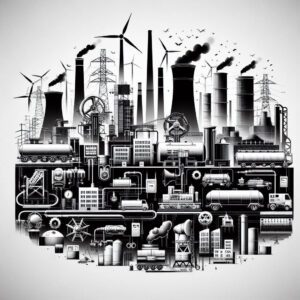
Five Dynamic Factors Reshaping the Power Sector Supply Chain
The shift to clean energy is triggering growing concerns about the sustainability, resilience, and integration of the power sector’s complex supply chains. Here are five trends to watch. The power sector’s
-
 Hydrogen
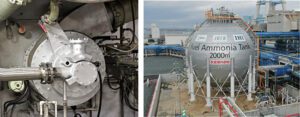
Global First: JERA, IHI Launch Testing of Fuel Ammonia at Coal Power Plant
Japanese firms JERA and IHI Corp. have launched the world’s first large-volume fuel ammonia demonstration testing at JERA’s 1-GW Unit 4 of its 4.1-GW Hekinan Thermal Power Station in Aichi Prefecture
-
 Solar
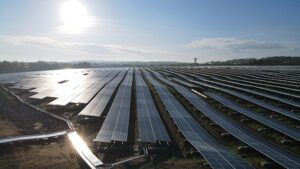
How the Massive Growth in Solar Power Is Affecting Power Grids
The Solar Energy Industries Association (SEIA) reported in March that the U.S. solar industry installed 32.4 GWdc of capacity in 2023, a remarkable 51% increase compared to 2022. It was the industry’s
-
 Hydrogen
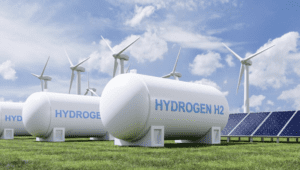
Navigating Challenges in Green Hydrogen and Derivatives Project Execution
Energy transition is the “new normal” (or the only way forward in some peoples’ minds), which aims to reduce emission levels through various forms of decarbonization. Some of the key drivers are increased penetration of renewable energy into the energy supply mix and battery energy storage systems. While these measures contribute incrementally to decarbonization, the […]
-
 Energy Security
Steps Utilities Can Take Now to Prepare for Future Extreme Weather Events
How can a utility, or any organization for that matter, prepare for the unexpected, especially when it comes to the volatility of weather? This question is increasingly coming to the forefront of risk
-
 Hydrogen
Decarbonizing the Power Industry with Low-Carbon-Intensity Hydrogen
Transformational changes in the energy space will need to occur to meet the current global community’s decarbonization and climate protection commitments. Low-carbon-intensity hydrogen could provide valuable
-
 Energy Security
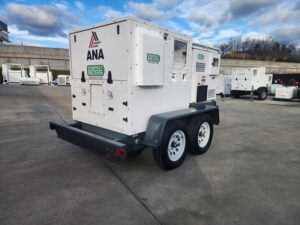
Extreme Weather Preparedness: Scalable Power Generation
Help customers stay resilient with clean propane power generation. Power outages caused by extreme weather events continue to cause environmental and economic stress throughout the country. Because of this, finding more reliable power options is a top priority for power professionals. In a recent episode of the Path to Zero podcast, Tucker Perkins, president and […]
-
 Coal
Coal-Fired Mill Creek Generating Station Readies for New 7HA.03 Gas-Fired Unit
Louisville Gas and Electric Co. and Kentucky Utilities Co. (LG&E and KU) will replace two aging coal generation units at Mill Creek Generating Station in Kentucky—a combined 600 MW—with a 645-MW GE Vernova hydrogen-ready 7HA.03 gas turbine. GE Vernova announced the order for the heavy-duty gas turbine—the most advanced of its HA-class models—from the two […]
-
 Energy Security
FERC: Improved Preparations Mitigated January Winter Storms, Resulting in No Load Shed
Reliability measures implemented after Winter Storm Uri and Elliott were largely effective at averting distress on the power and natural gas systems during two severe arctic storms that swept across North America in quick succession in January, staff from the Federal Energy Regulatory Commission (FERC) and the North American Reliability Corp. (NERC) have reported. During […]
-
 Nuclear
 Supply Chain for the BWRX-300 SMR Takes Shape
GE Hitachi Nuclear Energy (GEH) is forming a group of qualified supply chain companies to help ensure the deployment of its BWRX-300 small nuclear modular reactor (SMR). The move comes as power companies vie for components amidst a supply chain strain that has led some sectors to delay critical infrastructure projects and ramped up competition […]
-
 Legal & Regulatory
Planning for ‘Flip Dates’ in Tax Equity Partnerships
The U.S. government offers certain benefits to renewable energy projects, primarily in the form of tax credits and depreciation. But the reality is that a growing number of tax-equity partnerships are reaching the end of their lifespan, and the sponsors and tax-equity investors in these projects need to be preparing for the future. In fact, […]
-
 Nuclear
Vogtle Unit 4 Achieves Commercial Operation, Now Largest Nuclear Power Plant in the U.S.
The road was long and the challenges difficult, but Plant Vogtle is now the largest nuclear power plant in the U.S., as Unit 4 was declared commercially operational on April 29. With four units now available, Plant Vogtle has the capacity to generate a total of about 4,664 MW of electricity. “The completion of the […]
-
 Legal & Regulatory
EPA Unleashes Four-Pronged Assault on Fossil Fuel Power Pollution
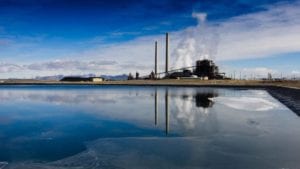
In an unprecedented move, the U.S. Environmental Protection Agency (EPA) on April 25 simultaneously finalized four major environmental rules covering greenhouse gases (GHG), air toxics, wastewater discharges, and coal combustion residuals from fossil fuel-fired power plants. Among the rules is the EPA’s final Carbon Pollution Standards, which marks the agency’s third attempt to broadly curb […]
-
 Legal & Regulatory
Federal U.S. Power Sector Initiatives Went Full Throttle in April: Here’s the List
The Biden administration has unveiled several sweeping actions over the past month aimed at boosting clean energy deployment, enhancing manufacturing jobs, and reducing pollutant emissions across the power sector. The measures—many announced as part of a comprehensive Earth Week agenda on April 25—are notable for their strategic push in an election year, highlighting the administration’s […]
-
 Commentary
The Cobra Effect of Fly Ash from Coal Power Plants in India
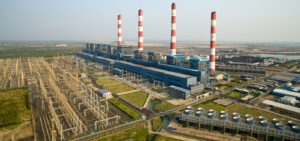
Have you heard about the cobra effect? During the colonial era, Delhi had a major cobra issue. The then-British government announced a bounty for dead cobras to reduce the number of snakes on the streets. Entrepreneurial spirits rose as people started breeding cobras and offered a dead one on the bounty. Money given on bounty […]
-
 Legal & Regulatory
NRC Advances Rule to Streamline Advanced Nuclear Reviews
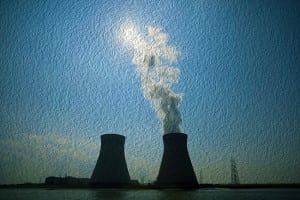
The Nuclear Regulatory Commission (NRC) has voted to codify proposed changes to streamline a key environmental review process for advanced nuclear reactors. Nuclear advocates lauded the measure as one of the regulator’s most important actions in 2024. The NRC on April 17 approved its staff’s recommendation to publish a proposed rule that would amend […]
-
 Hybrid Power
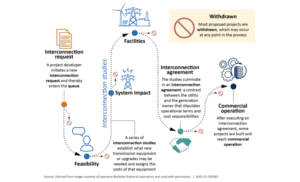
Navigating the Interconnection Queue Is One of Many Challenges Clean-Energy Projects Face
There are several obstacles to overcome when building a clean-energy project, but perhaps the biggest is getting through the generator interconnection queue (GIQ). Every regional transmission organization (RTO) and independent system operator (ISO) in the U.S. has a significant backlog in its GIQ and processing interconnection requests can take years to complete. This has created […]
-
 Cybersecurity
McCrary Institute, ORNL Launch First U.S. Regional Cybersecurity Center to Protect Grid
A $12.5 million project to establish the first U.S. regional cybersecurity research and operations center focused on grid protection has garnered a $10 million Department of Energy (DOE) grant. Auburn University’s McCrary Institute for Cyber and Critical Infrastructure Security is partnering with Oak Ridge National Laboratory (ORNL) to create the Southeast Region Cybersecurity Collaboration […]
-
 Legal & Regulatory
EPA Denies Industry Petition to Delist Stationary Combustion Turbines as Hazardous Pollutants
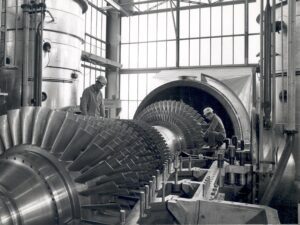
The U.S. Environmental Protection Agency (EPA) has denied an industry petition seeking to delist stationary combustion turbines from the agency’s list of hazardous air pollutants (HAP) major source categories regulated under section 112 of the Clean Air Act (CAA). The agency’s final action on April 11 responds to an August 2019 petition filed by several […]
-
 Full Coverage
South Korean Nuclear Power Plant Will Assess Feasibility of Medical Isotope Production
Framatome and Korea Hydro & Nuclear Power (KHNP) have signed a memorandum of understanding (MoU) to demonstrate the feasibility of producing non-carrier added lutetium-177, a medical isotope used for a variety of lifesaving cancer treatments, at the Wolsong nuclear power plant in South Korea. Under this MoU, Framatome and KHNP will jointly perform a technical […]
-
 Hydro
OPG Embarks on Major Refurbishment of Niagara Falls Hydropower Stations
Ontario Power Generation (OPG) will partner with GE Vernova to complete a 15-year project to refurbish the iconic 1.7-GW Sir Adam Beck I and II hydroelectric complex near Niagara Falls. The C$1 billion ($724 million) project unveiled on April 16 will comprise the first phase of OPG’s larger plans to overhaul all five of its […]
-
 Nuclear
Massive Electrical and Instrumentation Contract Awarded for Hinkley Point C Nuclear Power Project
BGEN, one of the UK’s largest engineering firms, has been awarded an £84 million project by GE Steam Power Systems to provide electrical and instrumentation solutions to Hinkley Point C (HPC), which is a two-unit EPR nuclear power station under construction in Somerset, England. When complete, Hinkley Point C is expected to deliver 7% of […]
-
 Solar
Clean-Energy Companies Urge Congress to Pass Siting, Permitting, and Transmission Reform
Nearly 200 solar and storage companies sent a letter to congressional leaders on April 17 calling for legislation to improve permitting, project siting, transmission, and public lands access for solar and solar plus storage projects. Market forecasts show that a range of policy and economic outcomes will determine the volume of solar deployment over the […]
-
 Energy Security
Dependable Backup Power System Provides Peace of Mind for Cheese Business
Cheese Merchants uses close collaboration with Charles Equipment to power its mission to deliver fresh, premium cheese products to vendors across the U.S. Volvo Penta’s D16 engine serves as a key ingredient for standby power systems designed to drive quality and customer service. Cheese Merchants has come a long way since Pasquale Greco founded the […]
-
 Energy Security
Eight Critical Reliability Challenges NERC Is Confronting for Grid Stability
The “hypercomplex” risk environment in which the North American power sector operates is underscoring the urgency for strategic initiatives to enhance grid reliability and security across North America, the head of the North American Electric Reliability Corp. (NERC) told reporters on April 4. NERC CEO Jim Robb, in a briefing, said the hypercomplex risk environment […]
-
 T&D
Harnessing Heat Vision for Smarter Substation Monitoring
As decision-makers look for practical and worthwhile ways to improve substation monitoring, they often turn to heat-vision applications, such as infrared thermography. Such methods allow people to use specialized equipment to see abnormal temperature patterns—such as hot spots or unusual coolness—within industrial assets. This approach supports substation reliability by reducing outages and warning people earlier […]
-
 Connected Plant
A Generational Turnover Could Jeopardize the Nuclear Industry’s Recent Momentum
In the coming decade, the nuclear industry faces the daunting prospect of seeing one in four employees retire. According to the 2022 Global Energy Talent Index, 25% of its current workforce is over 55, compared to 20% in the oil and gas industry, and only 10% in the renewable energy sector. And, at age 65 […]
-
 Legal & Regulatory
DOE Eases Requirements in Final Transformer Efficiency Standards Amid Supply Chain Strain
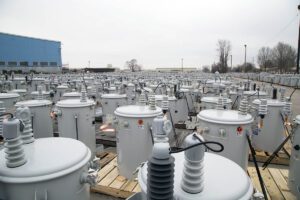
The U.S. Department of Energy’s (DOE’s) final energy efficiency standards for distribution transformers appear to strike a compromise with industry, softening the agency’s stance on steel requirements for essential transformer components and extending compliance deadlines to five years. The DOE’s final standards issued on April 4 seek to reduce losses in three types of distribution […]
-
 Nuclear
Molten Salt Reactor Technology Solves Several Nuclear Industry Problems
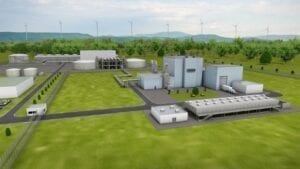
Molten salt reactors (MSRs) represent a fascinating intersection of nuclear history and modern innovation. The concept of using molten salts as both a coolant and fuel carrier dates back to the 1950s, with the pioneering work of Alvin Weinberg and his team at Oak Ridge National Laboratory (ORNL). In 1965, ORNL successfully operated the Molten […]
-
 Trends
Grids Brace for Solar Eclipse, Totality Poised to Test Ramping
Grid operators across the U.S. report they are largely prepared for the total solar eclipse that will pass over a large swath of North America on April 8, though they remain vigilant, monitoring for any unexpected shifts in power generation or demand that could test the power system’s resilience. The much-anticipated solar eclipse will begin […]