
Environmental
-
Coal
China Looks to Curb Carbon Emissions by Diversifying Power Portfolio
China will reduce the nation’s carbon emissions and energy use per unit of gross domestic product (GDP) by at least 3.7% this year and perform trials for a carbon-trading program, China’s National Development and Reform Commission (NDRC), said in a report on Tuesday. The country would also make "greater efforts to conserve energy" and "reduce the discharge of major pollutants," it’s top economic planner said.
-
Environmental
Obama Nominees—McCarthy for EPA, Moniz for DOE, and Jewell for DOI—Face Tough Confirmation Hearings
President Obama this week nominated Gina McCarthy, the current assistant administrator for the Environmental Protection Agency (EPA) Office of Air and Radiation, to head the EPA. He also nominated Dr. Ernest Moniz, currently a faculty member at the Massachusetts Institute of Technology (MIT) for secretary of energy. Both are expected to face a difficult confirmation process.
-
Environmental
EIA: U.S. Power Sector SO2, NOx Emissions Lowest Since 1990
Power plant emissions of sulfur dioxide (SO2) and nitrogen oxides (NOx) in the U.S. declined to their lowest level since 1990, the Energy Information Administration (EIA) said last week.
-
Environmental
Gas Power Fights Uphill Battle in China
Soon to become the world’s largest electricity market, China is also looking to ease its reliance on coal by shifting toward renewables and natural gas. But an array of roadblocks stand in the way of gas becoming a major element of the mix. -
Environmental
The Effect of Shale Gas on Power Generation in New England
Generators in New England were burned in the 2000s when a fleet of new gas turbine plants couldn’t compete because of high fuel prices. But what goes around comes around, and these same plants are now pushing out oil and coal thanks to cheap shale gas and favorable regulations. -
Legal & Regulatory
With the Gas, the Flow of Fracking Litigation Continues
Few industrial innovations are free of litigation, and fracking is no exception. In this update from last year’s review of litigation trends, favorable early results for explorers and developers suggest cautious optimism may be in order for the natural gas industry. -
Environmental
Air Quality Impacts from Natural Gas Extraction and Combustion
EPRI performed a review of air quality issues related to natural gas extraction and combustion in 2011–2012. This review focused on both traditional pollutants (such as particulate matter and volatile organic compounds) and emerging air pollutants (such as ultrafine particle number) that are being considered in air quality management processes. This article summarizes the major topics and conclusions from this review. -
 Coal
CoalNations Agree to Legally Binding Instrument to Curb World’s Mercury Emissions
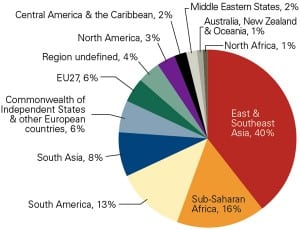
Mercury emissions from power plants in 137 United Nations member countries could be subject to strict controls and reductions if an international treaty is signed by participating nations this October.
-
 Coal
CoalDespite Pollution-Curbing Efforts, Dense Smog Covers Wide Swath of China
Four bouts of dense smog described as the worst air pollution in recent memory enveloped more than half of China in January, from the Beijing-Tianjin-Hebei triangle in the north of the country to Nanjing in the south, via the central city of Wuhan.
-
 Coal
CoalTechno-Economic Considerations When Using Low-Grade Coal for Power Generation
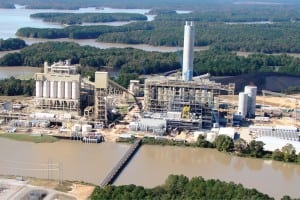
The use of low-grade coal is becoming synonymous with circulating fluidized bed (CFB) power plants. Although CFB technology may often be a better choice than pulverized coal technology, that is not always the case. Owners and developers need to consider several technical and economic factors before making this decision.
-
 Waste to Energy
Expanded Honolulu WTE Plant Delivers Triple Benefits for Oahu
Covanta Energy and the City and County of Honolulu recently completed a $300 million expansion of a 20-year-old waste-to-energy (WTE) facility. The plant is now capable of processing up to 3,000 tons of municipal refuse daily, recycling all the metals, and generating up to 90 MW—enough to supply nearly 10% of Oahu’s electricity.
-
 Waste to Energy
Why Aren’t Construction and Demolition Wastes Considered Biomass Fuel?
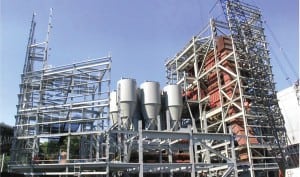
You may be surprised to learn that even with the increased demand for biomass fuels for power generation, construction and demolition fuel is classified as solid waste, not biomass. Reconsidering this designation is critical as U.S. environmental regulations tighten emission profiles for solid waste combustion units and renewable portfolio standards expand.
-
 Gas
GasSelecting a Combined Cycle Water Chemistry Program
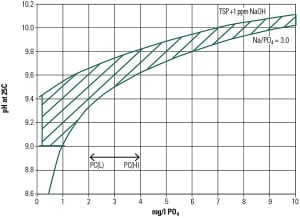
The lifeblood of the combined cycle plant is its water chemistry program. This is particularly true for plants designed for high pressures and temperatures as well as fast starts and cycling. Even though such plants are increasingly common, no universal chemistry program can be used for all of them.
-
Waste to Energy
Waste Tire Power Generating Facility to Be Shuttered on CAA Violations
A 20-MW facility in Ford Heights, Ill., that burns waste tires to produce power is to be shut down to resolve allegations by the Environmental Protection Agency (EPA) of Clean Air Act violations.
-
Environmental
Chu’s Last Public Speech as Secretary of Energy
Dr. Steven Chu gave what was likely his last public speech as U.S. secretary of energy today on the last day of the ARPA-E Energy Innovation Summit. As usual for Chu presentations, it was a mix of data, vision, and humor. It fell to others to comment on the value and legacy of his service, especially to energy research and development.
-
Coal
ARPA-E Plays Matchmaker for Innovative Energy Research Projects
The Advanced Research Projects Agency-Energy (ARPA-E) may be the most important federal agency many in the power industry have never heard of. Whatever generation technology you are associated with, ARPA-E’s work will affect its future.
-
Environmental
Bipartisan Center Outlines 50 Policy Recommendations for More Secure U.S. Energy Future
Technological progress and policy interventions over the last decade have arguably enhanced U.S. energy security and put it in a stronger position to shape its own energy destiny, a new report from the Bipartisan Policy Center (BPC) argues. Among more than 50 energy policy recommendations outlined in the report to tackle significant challenges still faced by the nation’s energy sector are those calling for the establishment of a comprehensive national energy strategy.
-
Coal
AEP to Shutter or Refuel 2 GW of Coal Power in Return for Cheaper SO2 Control Option
A modified settlement reached between American Electric Power (AEP), a coalition of citizen groups, and the Environmental Protection Agency (EPA) on Monday will allow the utility to install less expensive pollution controls on a coal-fired power plant if it ceases coal combustion by 2015 at three aging power plants in Indiana, Ohio, and Kentucky.
-
Coal
Senators Introduce “Carbon Fee” Bill, House Dems Call for Blue Ribbon Climate Panel
Boosted by President Obama’s inaugural address commitment to mitigate climate change, congressional Democrats have initiated several more climate measures. A legislative packet that seeks to mitigate climate change by enacting a carbon "fee" of $20 per ton of emitted carbon or methane equivalent was introduced last week by Sens. Bernie Sanders (I-Vt.) and Barbara Boxer (D-Calif.). In the House, as several Democratic amendments for climate change hearings were voted down, more than 40 lawmakers urged President Obama to create a panel that would help communities deal with climate change events.
-
Coal
PNM, New Mexico, EPA Settle Coal-Fired San Juan NOx Technology Dispute
An agreement reached on Friday between PNM, New Mexico’s largest electricity provider, the New Mexico Environment Department (NMED), and the U.S. Environmental Protection Agency (EPA) calls for the retirement of two units at the 1,800-MW coal-fired San Juan Generating Station by 2017 to comply with federal visibility rules. The remaining two units will be retrofitted with selective noncatalytic reduction technology by 2016, a nitrogen-oxide reducing technology.
-
Coal
EPA Urged to Regulate GHG Emissions of Existing Sources Through Seldom-Used CAA Section
A think tank affiliated with the New York University School of Law is urging the Environmental Protection Agency (EPA) to mandate cuts of greenhouse gas (GHG) emissions in all 50 U.S. states through a little-used section of the Clean Air Act.
-
Hydro
House Unanimously Approves Hydro Bill, Prospects for Passage Are Positive in Senate
The U.S. House voted 422–0 last week, approving a bill that could facilitate the development of small hydropower and conduit projects and direct the Federal Energy Regulatory Commission (FERC) to consider streamlining its two-year permitting process.
-
Environmental
EPA Releases Draft Climate Change Adaption Plan
The U.S. Environmental Protection Agency (EPA) on Friday began accepting comments on its draft Climate Change Adaption Plan, a document that seeks to integrate climate change considerations into future programs and regulations.
-
Environmental
Northeast, Mid-Atlantic Power Plants to See Drastic RGGI Lowering of CO2 Cap
Nine Northeast and Mid-Atlantic states participating in the Regional Greenhouse Gas Initiative (RGGI) will see a 45% lowering of the market-based regulatory program’s carbon dioxide (CO2) cap in 2014, under an updated model rule released last week. The change is expected to reduce projected 2020 power sector CO2 emissions from the region to more than 45% below those in 2005.
-
Environmental
Report Calls for Regulation of Emissions from New Power Plants
New analysis by the World Resources Institute (WRI) finds that the U.S. is not on track to reach its goal of reducing greenhouse gas (GHG) emissions by 17% by 2020 (below 2005 levels) but that it has the tools to get there. Specifically, the report looks at steps the Obama Administration and states can take without congressional action. Those steps would, not surprisingly, require emissions reductions from existing power plants and natural gas systems.
-
Coal
Murkowski’s Energy Blueprint Presses All Measures for OPEC Oil Independence
An energy blueprint released on Monday by Sen. Lisa Murkowski (R-Alaska), the ranking minority member of the Senate Energy and Natural Resources Committee, calls for complete independence from OPEC oil by 2020.
-
Coal
Arizona Challenges EPA’s Regional Haze BART Mandate in Federal Court
The Environmental Protection Agency’s (EPA’s) imposition of a federal implementation plan (FIP) to curb regional haze that could force coal-fired power plants in Arizona to install $1 billion in pollution controls was challenged by the state in federal court last week.
-
 Environmental
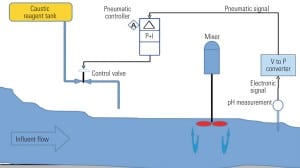
Sediment Pond Effluent pH Control
Many power plants have sediment retention ponds that require control of pH for the effluent. The following guidelines for fossil plant sediment pond pH control will help you design a robust system while staying within budget.
-
 Water
WaterA Moderating Tone from the EPA on 316(b)?
Final water intake structure rules from the EPA expected this June suggest the agency may be listening to industry and even moderating its tone. Stretch goals as part of the Section 316(b) rule are likely, but overall the rule may prove more reasonable than many expected.
-
Coal
D.C. Circuit Denies Petitions for Full Court Review of Decision to Overturn CSAPR
The U.S. Court of Appeals for the D.C. Circuit last week declined petitions for rehearing en banc of the Cross-State Air Pollution Rule (CSAPR). The federal court’s denial of the petitions leaves in place the Clean Air Interstate Rule (CAIR)—a Bush-era rule that the court had formerly invalidated in July 2008 and then reinstated. It also could prompt environmental groups, 15 states, and the Environmental Protection Agency (EPA) to take their case to the U.S. Supreme Court.