
Environmental
-
Legal & Regulatory
FERC’s Work on the Clean Power Plan
Cheryl A. LaFleur One of the most controversial issues facing the energy world today is how our electric sector will respond to the U.S. Environmental Protection Agency’s (EPA’s) proposed Clean Power Plan
-
Renewables
POWER Digest (March 2015)
TIC to Build First U.S. J-series GT Plant. The Industrial Co. (TIC), a wholly owned subsidiary of Kiewit Corp. ,was recently awarded an engineering, procurement, and construction contract to build a gas
-
 Water
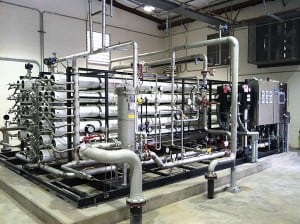
WaterWater and Wastewater Treatment Technology Update
Water is the lifeblood of a thermal power plant. As such, obtaining clean and pure makeup water and dealing with wastewater has been a requirement since the first steam generating unit went into operation. As
-
 Geothermal
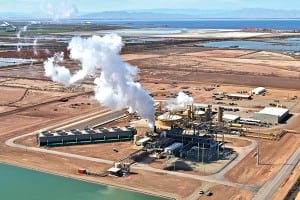
Mining for Lithium in Geothermal Brine: Promising but Pricey
Worldwide, the U.S. is the largest producer of geothermal power; however, geothermal energy provides less than 0.5% of total generation in the U.S. Given geothermal’s small piece of the U.S. electricity pie
-
 Water
WaterFeedwater Chemistry Meets Stainless Steel, Copper, and Iron
Alloys found in the condensate and feedwater systems of power plants include carbon steel for piping, pumps, and in some cases heat exchangers. Many systems still have some copper-based alloys from admiralty
-
 Environmental
Save Power with Natural Cooling for Building Ventilation
With the final Clean Power Plan rule covering existing power plants scheduled for release this summer, and the amount of flexibility that has been afforded to the states to meet emissions targets, states have
-
 Coal
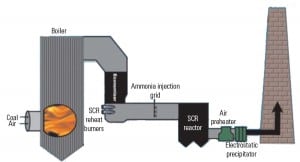
CoalSCR Reheat Burners Keep NOx in Spec at Low Loads
Selective catalytic reduction (SCR) systems installed in steam generators for NOx reduction are ordinarily designed for full boiler load conditions, when SCR inlet temperatures normally exceed unit-specific
-
 Geothermal
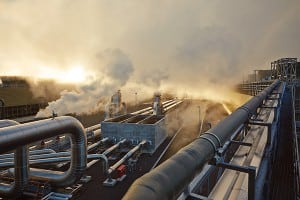
New Zealand Strives to Maximize the Value of Geothermal Wastewater
Geothermal resources have important strategic value for New Zealand, as they are able to directly supply both heat and electricity (see “New Zealand Geothermal Industry Is Poised for the Future” in this
-
 Solar
SolarEPA and Utilities Are “On the Wrong Track,” Say Experts
Speaking to a sparsely filled room as the last of four presenters during the keynote plenary session at the Energy, Utility & Environment Conference in San Diego, Calif., Feb. 16, Len Hering, executive director of the California Center for Sustainable Energy (CSE), made it clear that he doesn’t think natural gas is the answer to […]
-
 Legal & Regulatory
Ameren Comments on Suggested Revisions to the EPA’s Clean Power Plan
Although there has been plenty of discussion in the U.S. power industry about the challenges posed by the Environmental Protection Agency’s (EPA’s) proposed Clean Power Plan (CPP), Missouri-based Ameren Corp. is the first generating company to go public with a specific set of proposed revisions. On Feb. 11, Ameren released a white paper that proposed […]
-
 Renewables
10 Quotes Concerning Energy Transformation from the ARPA-E Summit
The sixth annual ARPA-E Summit wrapped up on Wednesday, and though there were too many sessions to cover in depth, here is a mini-summary by way of selected interesting comments. Speaker photos (where available) follow the comment. “Any disruptive technology will not fit an existing market.” —Brian Janous, Director of Energy Strategy, Microsoft “[The energy […]
-
 Renewables
ARPA-E Summit Takes the Pulse of Energy Technology Innovation
“The coolest thing on Earth” is, according to its new director, a young federal agency that has a unique focus on pushing technology frontiers and an “unblinking attention” to market realities. One thing you can say for sure about the energy world, said Dr. Ellen Williams (Figure 1), incoming director of ARPA-E (Advanced Research Projects […]
-
 Legal & Regulatory
States Can “Just Say No” to the EPA’s Carbon Rule, Expert Says
According to Peter S. Glaser, partner with Troutman Sanders LLP, who practices in the energy and environmental law fields, saying “no” is an option that states have in response to the Environmental Protection Agency’s (EPA’s) Clean Power Plan proposal. Speaking during a panel discussion at George Mason University’s Law and Economics Center on Feb. 4, […]
-
 Legal & Regulatory
Activists Show Up in Droves for EPA Ozone Hearing
The Byron Sher Auditorium in Sacramento, Calif., was filled at times with students, parents, and other concerned citizens as the Environmental Protection Agency (EPA) held the last of three public hearings on proposed updates to the national air quality standards for ground-level ozone on Feb. 2. The hearings were scheduled as part of the policymaking […]
-
 Coal
CoalScrubbing Coal Plant NOx Emissions with Electron Beams
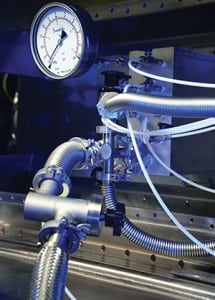
An unnamed power company and the U.S. Naval Research Laboratory (NRL) have partnered to test a concept proven to work at a small scale that applies pulsed electron beam technology to slash coal plant nitric oxide and nitrogen dioxide (NOx) emissions. The concept (Figure 3) essentially involves directing electron beams from a cathode into the […]
-
 Legal & Regulatory
Australia’s Renewables Impasse Weighs Heavily on Generators
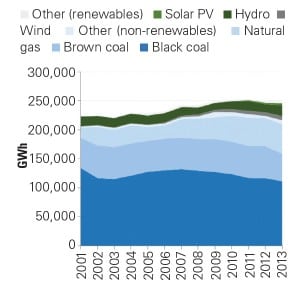
The long-drawn-out political impasse on Australia’s review of its Renewable Energy Target (RET) has generators reeling from what they say are “constant policy changes and distortions from successive interference by governments.” Australia’s RET, which has been in operation since 2001, was increased in 2010 to require that about 20% of the nation’s then-projected demand in […]
-
 Coal
CoalOptimizing Combined Heat and Power in China
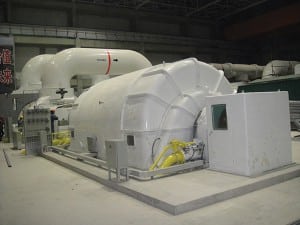
As it struggles to grow its economy while improving air quality in urban areas, China is updating its energy delivery infrastructure. A key part of that plan is switching from coal-fired to gas-fired combined heat and power plants. To push efficiency even further, some plants are turning to synchronous clutches. The developed world has done […]
-
 Nuclear
Dry Cask Storage Booming for Spent Nuclear Fuel
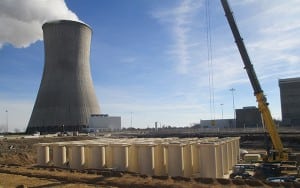
A combination of spent fuel pools reaching capacity, security concerns, and mostly nonexistent policies regarding long-term consolidated storage of nuclear waste is making dry cask storage the only way forward for most nations with nuclear power reactors. Around the world, demand for dry cask storage facilities for spent nuclear fuel (SNF) is on the rise. […]
-
 O&M
O&MOperational Considerations When Burning Higher-Chlorine Coal
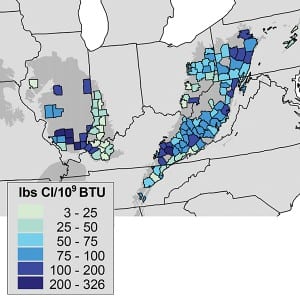
An increasing supply of low-cost higher-chlorine coal is prompting many U.S. generators to give the fuel serious consideration in spite of its reputation for causing corrosion. Though corrosion can be a consideration, it’s not always caused simply by the fuel switch. Understanding the various chemical interactions, as well as operational and emissions pros and cons, […]
-
 Legal & Regulatory
NRC Completes Yucca Mountain Safety Evaluation Report
More than six and a half years after the Department of Energy (DOE) submitted its license application seeking authorization to build a geologic repository, Nuclear Regulatory Commission (NRC) staff published the final two volumes of the safety evaluation report (SER) on the Yucca Mountain site. Released on Jan. 29, Volume 2 covers repository safety before […]
-
 Coal
CoalMIT Study: Carbon Sequestration May Not Work as Advertised
According to a study funded in part by the U.S. Department of Energy (DOE) and conducted by Massachusetts Institute of Technology (MIT) researchers, a smaller portion of carbon dioxide (CO2) that is injected into the ground may be converted into rock than was previously presumed. The team, working in the Department of Earth, Atmospheric and […]
-
 Solar
SolarState of the Union Address Light on Energy Issues
President Obama’s State of the Union (SOTU) address on Tuesday night held no surprises about energy issues. The word “energy” only appeared twice in the president’s speech—once in mention of the nation’s “booming energy production” and once with regard to how we produce and use energy. The word “power” came up twice with respect to […]
-
 Environmental
China Cuts National Energy Intensity by Nearly 5% in 2014
Continuing a drive to reduce its energy intensity 16% between 2010 and 2015, China’s State Council announced on Jan. 20 that the country had managed a 4.8% reduction in 2014, beating the target of 3.9%. Energy intensity is a measure of a nation’s efficiency in using energy to drive growth in gross domestic product (GDP). […]
-
 Legal & Regulatory
U.S. Electric Utility Toxic Releases Decrease 49% During the Past Decade
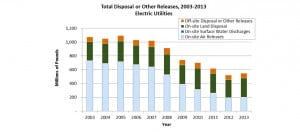
On Jan. 14, the Environmental Protection Agency (EPA) published its Toxics Release Inventory (TRI) report for 2013 showing that electric utilities have cut toxic releases to the environment 49% since 2003. The drop was driven by a 73% decline in on-site toxic air releases as a result of a decrease in hazardous air pollutants (HAP) […]
-
 Renewables
The Outlook for Small Hydropower in China
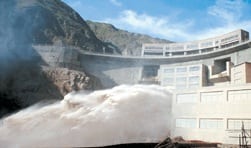
As the global electric power industry continues to develop clean, high-quality energy capacity for sustainable development, the position of small hydropower has changed. In the past few decades, small hydropower development in China has experienced positive momentum, but there are still problems to be solved. To solve these problems, various relationships within the small hydropower […]
-
Legal & Regulatory
Pacific Northwest Moving Ahead with Climate Change Policy?
Oregon and Washington State are examining new policies to regulate greenhouse gas emissions. We expect to see extension of Oregon’s Clean Fuels Program at the top of the 2015 legislative agenda and
-
Commentary
Power Industry Sees Pigs Fly
“When pigs fly” is a figure of speech used to express disbelief that a particular situation will ever come to pass. For the power industry, several recent and emerging developments are the equivalent of
-
 Legal & Regulatory
How U.S. Power Generators Are Preparing for 2015
In mid-November, members of the POWER Generating Company Advisory Team responded via email to the following set of questions. Their comments have been edited for style. POWER: What changes in your fleet’s
-
 Coal
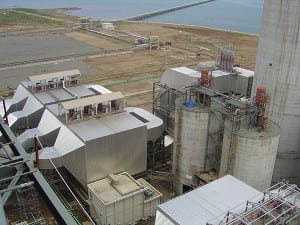
CoalChoosing an ESP Power Supply for Improved Particulate Control
The particulate matter (PM) requirements of the Mercury and Air Toxics Standards (MATS) require filterable PM emissions less than 0.03 lb/MMBtu, which will demand greater particulate removal efficiency from
-
Renewables
POWER Digest (January 2015)
Candu Wins China’s Backing to Develop AFCR Projects. Candu Energy and the China National Nuclear Corp. on Nov. 10 signed a framework joint venture agreement to build Advanced Fuel CANDU Reactor (AFCR)