
Environmental
-
 Commentary
Power’s Environmental Issues Then and Now
Discussions about environmental issues related to power plants and the regulations governing their operation are as old as the industry, I discovered while thumbing through the bound July through December 1914 issues of POWER. The specifics of the environmental concerns have become more detailed and complex as scientific knowledge, monitoring technologies, and mitigation solutions advance. […]
-
 Legal & Regulatory
Weighing the Environmental Impacts of Wind and Solar
Renewable generation is usually characterized as more environmentally friendly than fossil fuels, and in many respects, that’s true. But there is a growing recognition that solar and wind generation have their own impacts, and an increasing number of manufacturers and generators are looking for ways to minimize them. Iceland might be about the last place […]
-
 Legal & Regulatory
Generators Grapple with ELG Implementation
Plant wastewater treatment is not what it once was, and changes in the Environmental Protection Agency’s effluent limitations guidelines (ELG) have added a host of new wrinkles. A panel of power plant experts discussed what plant managers are planning and doing to keep things running smoothly within the new rules. For more than three decades, […]
-
 Legal & Regulatory
B&W to Restructure Power Business, Cites Dismal Coal Projections
Projections that coal utilization will decline faster than previously forecast have spurred Babcock & Wilcox Enterprises (B&W) to shed 200 jobs and restructure its traditional power business that serves coal-fired power generation in a bid to reduce overhead and improve efficiency. The Charlotte, N.C.–based energy and environmental technology and service company said on June 28 […]
-
 Legal & Regulatory
IEA: World’s Power Sector Trails Others in Air Emissions
The world’s power sector last year emitted a third of global sulfur dioxide (SO2) emissions, 14% of nitrogen oxides (NOx), and 5% of total particulate emissions (PM2.5), but those emission values have fallen drastically over the last decade even though coal power generation has seen a surge, the International Energy Agency (IEA) said in a […]
-
 Legal & Regulatory
U.S., Canada, Mexico Commit to 50% Carbon-Free Power by 2025
The U.S., Mexico, and Canada today announced an unprecedented goal to procure 50% of North America’s total power generation from renewables, nuclear, carbon capture and storage (CCS), and energy efficiency technologies by 2025. President Obama, Prime Minister of Canada Justin Trudeau, and the President of Mexico Enrique Peña Nieto, announced the continental goal, part of […]
-
 Renewables
District Energy Systems Improve Efficiency and Reduce Carbon Emissions
Although it’s not widely publicized, a majority of the energy used to generate electricity is wasted in the form of heat discharged to the environment. For better or worse, that’s just the way a typical thermal power plant works. Fuel, such as coal, biomass, natural gas, or uranium (in the case of nuclear plants), is […]
-
 Renewables
Utility Paradigm Changing Globally in Response to Distributed Energy and Digitization
Enrico Viale, head of global thermal generation for the Italian energy company Enel, kicked off an international power industry event yesterday with a keynote presentation describing the “needs” of utilities in the future.
-
 Legal & Regulatory
Despite Stay, EPA Proposes Details of Clean Power Plan Voluntary Incentive Program
The Environmental Protection Agency (EPA) has unveiled details of the Clean Energy Incentive Program (CEIP), a voluntary measure central to the judicially stalled Clean Power Plan that seeks to provide guidance to states and tribes that want to meet goals under the plan when it becomes effective. The final Clean Power Plan, finalized in […]
-
 Legal & Regulatory
Supreme Court Leaves Revised MATS in Place for Now
The Environmental Protection Agency’s (EPA’s) controversial Mercury and Air Toxics Standards (MATS) survived another day as the U.S. Supreme Court on June 13 declined to review the D.C. Circuit’s decision to leave the rule in place while the EPA revises it to comply with a 2015 Supreme Court ruling. The 2015 decision sent MATS back […]
-
 Legal & Regulatory
How Will the Supreme Court Stay Affect the Clean Power Plan?
One of the witnesses testifying before the U.S. Senate Committee on Environment and Public Works on June 9 believes states and regulated entities will be granted additional time to comply with the Environmental Protection Agency’s (EPA’s) Clean Power Plan (CPP), if the rule is ultimately found to be lawful. Currently, the U.S. Supreme Court has […]
-
 Renewables
Experts: Gas Power’s Expansion Riddled with Roadblocks
Even though it may dominate forecasts, natural gas–fired generation faces a troubled expansion in the U.S., according to experts from a variety of stake-holding entities—including an industry group, a utility, a generator, and a pipeline company. Challenges that have few solutions—from price volatility, to gas transport concerns, to rule uncertainty—may upend the nation’s dependence […]
-
 Renewables
China’s New Five-Year Plan Bolsters Climate, Environmental Measures
China unveiled its 13th Five-Year Plan this March. The official proposal that will guide the country’s economic and social development from 2016 through 2020 lays out targets and other measures to address a number of climate change, air pollution, and water policies that will build on progress to transform its power sector. The plan sets […]
-
 Legal & Regulatory
Coal Combustion Residuals Rule Compliance Strategies
The Environmental Protection Agency’s rule to regulate the disposal of coal combustion residuals as solid waste went into effect last fall. After evaluating the available solutions and technologies, here’s what some experts consider the safest and most effective approaches for complying with the rule and protecting the environment. A little over a year ago, the […]
-
 Legal & Regulatory
How the Power Industry Is Making Sense of an Environmental Quandary
This year’s much-awaited Environmental Mega Session at the 18th annual ELECTRIC POWER Conference & Exhibition in New Orleans, La., on April 19 was titled “Navigating Clean Power Plan Compliance”
-
Commentary
Learning from the Clean Air Act’s Tragic Flaw
“Why are you picking on the Clean Air Act?” That’s a question we’ve heard more than once while traveling the country to talk about our new book, Struggling for Air: Power Plants and the “War on
-
 Legal & Regulatory
Energy Policy Differences Between Trump and Clinton Are Black and White
The two probable major-party U.S. presidential candidates hold very different views on energy and climate. One intends to focus on expanding and developing America’s fossil-fuel industries, while the other plans to grow renewable energy and promote efficiency. Can you guess who’s who? Fossil vs. Renewable Donald Trump, the presumed Republican nominee, presented his “America-First Energy […]
-
 Renewables
AGs Tell EPA to Halt Aid to States Planning Clean Power Plan Compliance
The Environmental Protection Agency (EPA) must halt its drive to help states supportive of the Clean Power Plan to comply with the rule because it defies the Supreme Court stay, the attorneys general for West Virginia and Texas have urged the agency. An April 28 request to the agency by 14 states seeking technical assistance […]
-
 Coal
CoalTrump Picks North Dakota Lawmaker as Key Energy Advisor
Donald Trump, presumptive Republican nominee for president, has chosen a back-bench Republican congressman with a lot of experience in state energy regulation as his advisor on energy issues
-
 Legal & Regulatory
EIA: Clean Power Plan Will Wallop Coal Power Generation
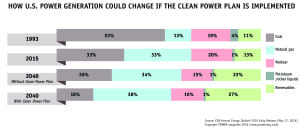
Even if the final Clean Power Plan is not implemented, U.S. electricity-related carbon dioxide (CO2) emissions will remain well below 2005 levels, the Energy Information Administration (EIA) said in a comparison of two cases looking forward through 2040. The cases are part of the agency’s May 17–released Annual Energy Outlook 2016 Early Release (AEO2016 Early […]
-
 Coal
CoalDOE Poised to Pull Out of Texas Clean Energy Project
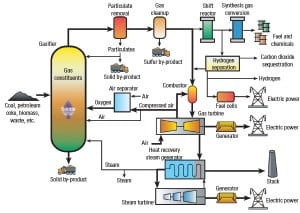
The Department of Energy (DOE) is ready to end its involvement with the Texas Clean Energy Project (TCEP), a carbon capture, utilization, and storage (CCUS) facility under development in west Texas, a move that would effectively shut the project down, according to its backers. Along with FutureGen, Hydrogen Energy California (HECA), and NRG’s Petra Nova […]
-
 Coal
CoalFuel Cells Could Be a “Game-Changer” for Carbon Capture
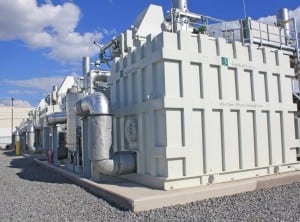
Fuel cells powered by natural gas, biogas, and hydrogen are a rapidly expanding option for distributed generation, with fuel cell–based power plants being deployed in capacities into tens of megawatts. But as the technology improves and costs begin to scale, opportunities for other applications are being explored. One such application may even go beyond power […]
-
 Coal
CoalSaskPower Carbon Capture Facility Operating More Reliably
SaskPower’s Boundary Dam Unit 3 carbon capture facility is now operating with a reliability rate of over 92%.
-
 Nuclear
Nuclear Milestones Confront Exelon, FPL, and TVA
Five nuclear projects—two old, one new, two planned—faced milestones this week as their owners confronted the realities of the U.S. nuclear market. Exelon Seeks Nuclear Support In Illinois, Exelon again warned that the long-challenged Clinton and Quad Cities plants would shut down unless the Illinois legislature passed a bill that would provide economic support for the […]
-
 Nuclear
GAO Chides DHS for Not Doing Enough to Prepare for EMP, Solar Storm Threats to Grid
The Department of Homeland Security (DHS) internally recognizes that a power grid failure resulting from an electromagnetic pulse (EMP) or a solar storm can pose great risk to the security of the nation, but it hasn’t prepared adequately, the Government Accountability Office (GAO) said in a newly released report. The GAO’s 68-page report, “Federal Agencies […]
-
 Coal
CoalA Breakthrough Carbon-Capturing Algae Project
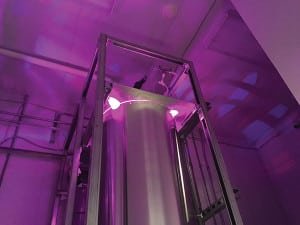
A research photobioreactor designed to capture significant amounts of carbon dioxide (CO2) from power plant flue gas for high-density algae cultivation is showing promise. The bioreactor patented by California-based algal firm PHYCO2 is undergoing a multi-year trial at Michigan State University’s (MSU’s) T.B. Simon Power Plant, a co-generation plant that provides steam, heat, and power […]
-
 Nuclear
A Supercritical CO2–Cooled Small Modular Reactor
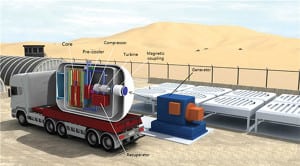
A small modular reactor (SMR) system that uses a supercritical carbon dioxide (CO2) Brayton cycle instead of the steam Rankine cycle is under development at the Korea Advanced Institute of Science and
-
 Nuclear
NRC License Application Submitted for Spent Nuclear Fuel Interim Storage Facility
Development of a consolidated interim storage facility (CISF) took a significant step forward this week with a license application submitted to the U.S. Nuclear Regulatory Commission (NRC) on April 28 by Waste Control Specialists LLC (WCS), with support from AREVA, for a CISF in Andrews County, Texas.
-
 Legal & Regulatory
EPA Motions Court for Weighty Changes to Final Coal Ash Rule
A recent motion filed by the Environmental Protection Agency (EPA) asking a federal court to remand parts of its final coal combustion residuals (CCR) rule could have major new consequences for the power sector if upheld, an expert has said. In its 16-page motion filed on April 18, the agency asked the U.S. Court of Appeals […]
-
 Renewables
Environmental Experts Underscore Clean Power Plan Uncertainty
Even if the Clean Power Plan (CPP) doesn’t overcome legal challenges, it is likely that many states will implement carbon-curbing measures set down by the rule, some panelists said at the Environmental Mega Session at the ELECTRIC POWER 2016 conference in New Orleans on April 19. The Rule’s Shaky Legal Standing The rule is […]