
Environmental
-
 T&D
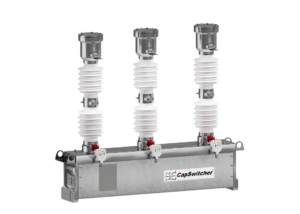
T&DSouthern States Goes SF6-Free with New Switching Products
The company’s O2rigen product line uses a carbon dioxide (CO2) and oxygen (O2) gas blend to eliminate potent greenhouse gas emissions from power switching equipment. Southern States LLC has launched a new line of power switching products that replace sulfur hexafluoride (SF6)—one of the most potent greenhouse gases known—with a natural-origin blend of CO2 and […]
-
 Press Releases
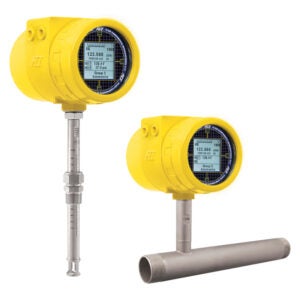
Thermal Flow Meter Offers Precise NH3 Injection for NOx Control in Coal-Fired Power Plants
Ideal for Pollution Control & Monitoring Systems’ Stack or Flue NOx Scrubbers San Marcos, CA—November 6, 2025—Process and pollution control engineers will find that the FCI ST100A Flow Meter helps them more accurately control the application of ammonia (NH3) for nitrous oxide (NOx) removal under harsh operating conditions in large flue stacks at cleaner coal […]
-
 Power
PowerNitrogen as the Safety Blanket for Your Industrial Process
Sponsored by:AIr ProductsIn this paper, Air Products’ representatives explain the basics of nitrogen blanketing, how to elucidate its various value propositions to maximize safety and efficiency, as well as how to practice it effectively and efficiently across a variety of industrial settings. Download the full white paper to learn more.
-
 Legal & Regulatory
EPA Extends Steam-Electric Wastewater Deadlines to 2034, Citing Grid Reliability and Rising Power Demand
The U.S. Environmental Protection Agency (EPA) has moved to shift capital planning and permitting timelines for the nation’s remaining coal-fired power units, acting on two measures targeting wastewater discharge under the Clean Water Act, and separately, air-quality visibility programs and the Clean Air Act. On Sept. 29, the EPA issued a proposed rule and companion […]
-
 Supply Chains
Tracks Moving Turbines: Delivering Clean Energy to North Carolina
Transporting freight for the energy industry that weighs as much as a house and stretches longer than a city block leaves no room for error. Energy freight shipments, which are often referred to as specialized or dimensional freight, are usually oversized, overweight, and frequently irreplaceable loads that are essential to powering industries and communities. For […]
-
 Legal & Regulatory
EPA Streamlines Preconstruction Permitting to Accelerate Power Plants, Data Centers, and Manufacturing Reshoring
The U.S. Environmental Protection Agency (EPA) has issued new guidance under its New Source Review (NSR) preconstruction permitting program that could allow power plant developers to begin certain non-emissions‐related site work—such as installing concrete pads, grading, and utility trenching—before obtaining a Clean Air Act construction permit. The change, described in a sparse set of paragraphs […]
-
 Water
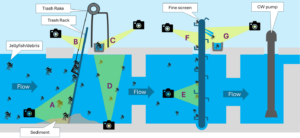
WaterHow Advanced Monitoring and Early Warning Tools Are Revolutionizing Power Plant Cooling Water Intake Management
Thermal power plants, nuclear and fossil-fueled, rely on cooling water intake structures (CWIS) to withdraw water for rejecting waste heat. The CWIS serves as a critical interface between engineered systems and the natural environment, making it vulnerable to various external factors such as biological growth, water chemistry changes, hydraulic forces, drifting debris, and meteorologic events. […]
-
 O&M
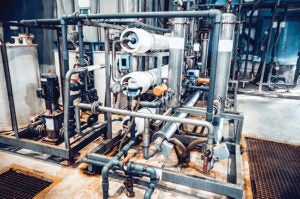
O&MUnderstanding Reverse Osmosis Water Treatment Systems
Reverse osmosis (RO) is a vital water purification technology used in various applications such as boiler feedwater treatment, cooling water systems, and wastewater recycling. The feedwater for RO can
-
 Press Releases
Yokogawa Establishes Trusted Green Sustainability Guiding Principles Covering the Product Lifecycle
Yokogawa has established sustainability guiding principles called Trusted Green that cover Yokogawa Group products over their entire lifecycle, from planning and development to the procurement of parts and materials, production, service, collection, and recycling. For many years, Yokogawa has emphasized the establishment of environmental design standards for products, development of life cycle assessment (LCA) criteria […]
-
 Nuclear
Debunking Nuclear Power’s Biggest Misconceptions and Why It’s Needed Today
Despite nuclear power’s unmatched ability to produce reliable, carbon-free energy at scale, it is often dismissed by clean energy advocates in favor of renewable resources like wind and solar. Cost arguments and public misconceptions around safety and radioactive waste have kept it out of many mainstream climate strategies. But as Tim Gregory argues in his […]
-
 Sustainability
How Biogas Is Solving Data Centers’ Clean Energy Challenge
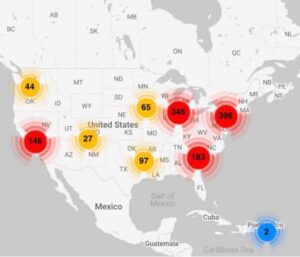
Biogas doesn’t just offer a backup plan for tech companies seeking more power; it provides a blueprint for sustainability. By transforming landfill, agricultural, and wastewater emissions into usable power, biogas solves two problems at once: it reduces fugitive methane emissions, a potent greenhouse gas (GHG), and generates renewable electricity. This is energy that’s good for […]
-
 Offshore Wind
Hybridization of Offshore Wind
Sponsored by:Siemens Energy GlobalThe white paper underscores the transformative potential of hybridizing offshore wind energy, emphasizing the integration of hybrid technologies, e.g. energy storage systems (BESS), to enhance the reliability, stability, and economic feasibility of offshore wind farms. This approach mitigates the intermittency of wind power, resulting in a more consistent and predictable energy output. By contributing to grid stability […]
-
 Legal & Regulatory
EPA Extends Coal Ash Compliance Deadlines, Citing Utility, Contractor Strain
Citing a mounting compliance crunch in America’s coal-fired power sector, the U.S. Environmental Protection Agency (EPA) has finalized new rules extending key deadlines for coal ash cleanup and management, while floating the prospect of a further 12-month delay. The changes address calls from utilities, engineering contractors, and state regulators for more realistic timeframes to assess, […]
-
 Plant of the Year
A Transformative Dawn: South Fork Wind Leads America’s Offshore Reboot
Winning POWER’s highest honor, South Fork Wind—the first commercial-scale offshore wind farm in U.S. federal waters—stands as a beacon for the power sector’s ambition to forge new industries in the
-
 Water
WaterInnovative Stormwater Improvement Project Strengthens Burbank’s Power System
In drought-prone Southern California, Burbank Water and Power has implemented a groundbreaking stormwater capture and reuse system that saves more than eight million gallons of water annually. This
-
 Hydrogen
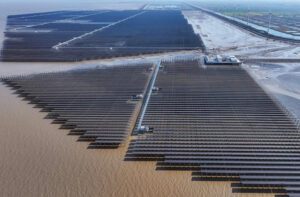
A Modern Blueprint for Coastal Power: China’s Offshore Solar-Hydrogen Integration
Built on degraded tidal flats in China’s Jiangsu Province, CHN Energy’s Rudong project combines 400 MW of offshore photovoltaic generation, grid-scale battery storage, and green hydrogen production with
-
 Coal
CoalReclaimed Ash: Turning Domestic, Legacy Materials into Modern Infrastructure Solutions
As government policies around energy transition continue to evolve, the pace of coal plant retirements in North America has shifted in some regions, slowing in a few cases due to energy reliability concerns. But broadly speaking, many coal-fired units have already retired, leaving behind a significant legacy challenge: the long-term management of coal ash stored […]
-
 Coal
CoalIreland Ends Use of Coal for Power Generation
Ireland is no longer burning coal to produce electricity after the country’s last coal-fired unit was converted to use heavy fuel oil. ESB, the plant’s operator, on June 20 issued a notice that the 305-MW Unit 3 of the Moneypoint station, located on Ireland’s southwest coast, has ended its use of coal after 40 years. ESB previously had said Moneypoint after the conversion would operate under direct dispatch instructions from EirGrid, the grid operator, as part of the balancing market.
-
 Trends
The Great Shift: Navigating the Global Energy Transition
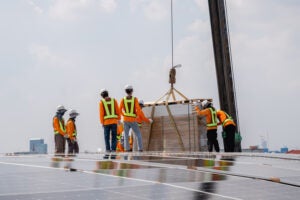
As the world grapples with the urgent need to combat climate change, the transition from fossil fuels to renewable energy sources is accelerating, driven by technological advancements and governmental directives. This global shift promises not only to reduce greenhouse gas emissions, but also to create a more sustainable and resilient energy future. The world stands […]
-
 Legal & Regulatory
EPA Weakening Rules on Power Plant Emissions in Boost for Fossil Fuels
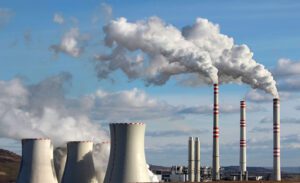
The U.S. Environmental Protection Agency (EPA) has announced sweeping changes to regulations on emissions of greenhouse gases (GHG) and other pollutants from coal- and natural gas-fired power plants, weakening rules established under the Biden administration that sought to combat climate change.
-
 Commentary
Trump Administration Moves to Allow Unlimited Pollution from Power Plants
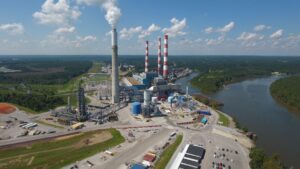
Former EPA employees at the Environmental Protection Network (EPN) strongly oppose the Environmental Protection Agency’s (EPA) proposal to repeal all federal limits on greenhouse gas (GHG) emissions from fossil fuel-fired power plants and to rescind the most recent update to the Mercury and Air Toxics Standards (MATS). These proposals represent a sweeping dismantling of critical […]
-
 Partner Content
Navigating the Distributed Energy Resources Revolution
Sponsored by:
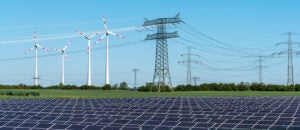
Power generators and transmission system engineers have to rethink their planning strategies, and must continue to develop tools to allow more solar, wind, and other forms of renewable energy to populate the power grid. Integrating renewable energy resources such as solar and wind into the electric power grid involves addressing challenges, starting with the intermittent […]
-
 Legal & Regulatory
EPA Moving to Axe Emissions Limits from Coal- and Gas-Fired Power Plants
The U.S. Environmental Protection Agency (EPA) has confirmed it is drafting a plan to eliminate all limits on greenhouse gases (GHG) from coal- and natural gas-fired power plants. The EPA on May 24 said a new rule on emissions would be published after interagency review.
-
 Geothermal
Modular Geothermal Power: Gradient’s Scalable Solution for Oil and Gas Sites
As the world transitions toward renewable energy sources, geothermal power has emerged as one of the most promising, yet underutilized, options in the clean energy portfolio. Unlike solar and wind, geothermal offers consistent baseload power generation capacity without intermittency challenges, making it an increasingly attractive component in the renewable energy mix. The geothermal sector has […]
-
 Commentary
An Under-Appreciated Threat from Airborne Attacks on Large Nuclear Power Plants
Most of the 440 operable nuclear power plants (NPPs) currently deployed worldwide have long been recognized as potential targets for attack by enemy military forces or terrorists. Such an attack could not only destroy the power-generating capacity of the plant but also release a large plume of radioactive material having the potential to cause long-term […]
-
 Solar
SolarSunraycer, Meta Have Deal for Two Texas Solar Projects
Sunraycer Renewables LLC, a developer, owner and operator of clean energy power sites, on May 1 announced the execution of two Environmental Attribute Purchase Agreements with Meta Platforms for Sunraycer’s Midpoint and Gaia projects in Texas. Meta will purchase 100% of the Environmental Attributes from Sunraycer’s Midpoint Solar project in Hill County, Texas, and the […]
-
 Fiction
Marnie Surfaceblow: The Scrubber Corrosion Case: How Manganese Disrupted Operations
Plant wastewater is not only an increasing environmental concern, but improper monitoring and treatment may lead to unexpected operations and maintenance problems as well. “I have a question Mrs
-
 Solar
SolarThe Solar Industry Is Getting Smarter About Storm Defense
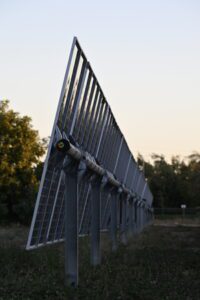
Stowing capabilities, tougher modules, and real-time data are the new frontline in solar’s fight against extreme weather. Alex Roedel and Jyoti Jain, Nextracker The global climate crisis is reshaping the way we think about energy resilience. As extreme weather increases, utility-scale solar projects face a new era of challenges. Advanced solar tracker systems, control and […]
-
 Energy Security
What Trump’s First 100 Days Have Meant to the Power Industry
U.S. President Donald Trump was sworn into office for the second time on Jan. 20, 2025. That means April 30 marks his 100th day back in office. A lot has happened during that relatively short period of time (Figure 1). The Trump administration has implemented sweeping changes to U.S. energy policy, primarily focused on promoting […]
-
 Commentary
Trump’s Latest Actions Can Make America’s Grid Reliable
Recent executive actions announced by President Trump will go a long way in restoring the reliability of America’s electric grid, which has been eroding due to green energy policies and regulations that don’t reflect the real energy needs of the country. Under the Biden administration, U.S. Environmental Protection Agency (EPA) rules were designed to force […]