Coal
-
 Coal
CoalSecond Life for an Indiana Coal Plant—as an Inland Port
American Electric Power’s (AEP’s) Tanner’s Creek Plant in Lawrenceburg, Ind., concluded six decades of operation last May as the company moved to retire a group of its oldest plants. Closure of the four-unit, 995-MW coal-fired facility (Figure), once the most efficient steam plant in the world, was a blow to the southwestern Indiana communities around […]
-
 Coal
CoalLow River Water Could Cause Problems for German Coal Power Plants
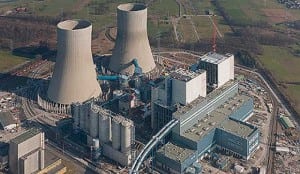
German utility RWE warned energy markets this week that low water levels on the Rhine River may affect the delivery of hard coal to some of its plants.
-
 Legal & Regulatory
H.F. Lee Coal Ash Spill Puts Duke Energy Under the Spotlight Again
Although Duke Energy maintains that “only very minor erosion of material” migrated from an inactive coal ash basin on the H.F. Lee Power Plant site, several environmental advocacy groups are concerned that the spill has dirtied North Carolina’s Neuse River. “This spill is easily visible to anyone in a boat. The area looks like a […]
-
 Coal
CoalPilot Test of Pressurized Fluidized Bed Combustion Carbon Capture Technology Kicks Off in Canada
In a major development for a novel carbon capture technology, developers are preparing to commission a 1-MWt oxy-fired pressurized fluidized bed combustion (oxy-PFBC) pilot test facility in Canada’s capital city, Ottawa. The U.S. Department of Energy (DOE) and its Canadian counterpart, Natural Resources Canada, commemorated the facility’s construction and commissioning in a ribbon-cutting ceremony on October 18 […]
-
 Legal & Regulatory
Court Orders EPA to Evaluate Coal Industry Job Losses Related to Air Pollution Rules
A federal court has ordered the Environmental Protection Agency (EPA) to file a plan and schedule to evaluate the consequences of its air pollution rules on jobs, finding for a giant coal company that is suing the agency for an alleged “war on coal” waged over the past five years. In an October 17 summary […]
-
 Coal
CoalExplosion Reported at Oak Grove Power Plant
An explosion reported on October 13 at Luminant’s coal-fired Oak Grove Power Plant located near Franklin, Texas, was from a blown transformer, the company said. Robertson County dispatchers received a call from the power plant at 6:08 p.m., reporting that there had been an explosion at the plant “as a result of an electrical issue.” […]
-
 Coal
CoalSupercritical CO2 Brayton Power Cycle Pilot Plant Bolstered with $80M in Federal Funding
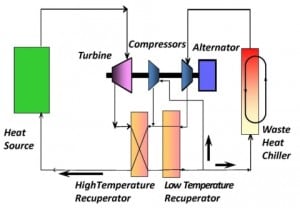
The Department of Energy’s National Energy Technology Laboratory (NETL) will award up to $80 million to a 10-MWe pilot project that seeks to advance the development and commercialization of supercritical carbon dioxide (sCO2) Brayton power cycles. The plant will be managed by three research entities: the Gas Technology Institute (GTI), Southwest Research Institute (SwRI), and […]
-
 Legal & Regulatory
MPUC Decision Spells End for Two Coal Units at Xcel’s Largest Plant
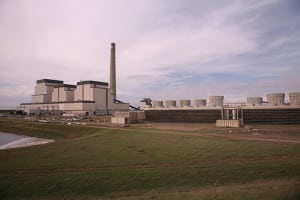
The Minnesota Public Utilities Commission (MPUC) voted unanimously to support Xcel Energy’s latest long-range plan, which will transform the company’s energy fleet. Xcel expects to more than double its renewable energy portfolio as a result, delivering greater than 60% carbon-free energy to its Upper Midwest (Michigan, Minnesota, North Dakota, South Dakota, and Wisconsin) customers by […]
-
 Legal & Regulatory
Northeastern States File Suit to Force EPA Action on Ozone Transport Region Expansion
Six northeastern states are suing the Environmental Protection Agency (EPA) to force it to act on controlling air pollution blowing in from coal-fired power plants located in nine Midwestern and southern states. New York, Connecticut, Massachusetts, New Hampshire, Rhode Island, and Vermont on October 7 filed a lawsuit in the U.S. District Court for the […]
-
 Coal
CoalKemper County IGCC Plant Generates First Syngas-Fueled Power
Mississippi Power’s integrated gasification combined cycle (IGCC) plant in Kemper County, Miss., on October 12 has begun generating its first power using a combination of syngas (produced from locally mined lignite) and natural gas. The milestone is a major one, said Thomas Fanning, CEO of Mississippi Power’s parent company Southern Co. “After decades of research […]
-
 Coal
CoalNew Technology Offers Hope for Cost-Effective Carbon Capture and Storage Systems
Academics at the University of Sheffield—a public research university in the UK—have begun two new carbon capture and storage (CCS) projects, searching for cheaper methods of capturing carbon dioxide (CO2) from fossil-fueled power plants. The work is being funded by the European Commission’s (EC’s) Horizon 2020 Low Carbon Energy program. Solvents Could Be Game-Changing The […]
-
Coal
Delayed Again, Kemper County IGCC Plant to Start Operations in a Month
Mississippi Power’s integrated gasification combined cycle (IGCC) power plant under construction in Kemper County, Miss., will likely be placed in service by November 30, a month later than anticipated. The delay will be costly. Mississippi Power reached a new milestone on September 16, announcing that it had started producing syngas using the second gasifier—gasifier “A”—at […]
-
 Legal & Regulatory
Paris Agreement Meets Final Requirement to Enter into Force
As of October 5, the Paris Agreement—the first global agreement on efforts to limit and mitigate the effects of climate change—had been ratified by a sufficient number of countries, representing at least 55% of global greenhouse gas (GHG) emissions, to bring the agreement into force.
-
 Coal
CoalPSEG Will Retire Two New Jersey Coal Power Plants
Public Service Enterprise Group (PSEG) will close the 620-MW Hudson Generation Station in Jersey City, N.J., and the 632-MW Mercer Generation Station in Hamilton Township, N.J., on June 1, 2017. “The sustained low prices of natural gas have put economic pressure on these plants for some time. In that context, we could not justify the […]
-
Coal
Slide Show Supplement to Mátra Power Plant, Visonta, Hungary
The Mátra Power Plant in Visonta, Hungary, uses a dense slurry system for handling fly ash and other coal combustion residuals. The DSS combines ash and water in a 1:1 ratio, creating a cement-like slurry. [gss ids=”93802,93804,93832,93808,93834,93836,93838,93840,93842,93844,93822,93846,93848,93850″]
-
 Coal
CoalCoal Treatment Helps Power Plant Reduce Fuel Costs
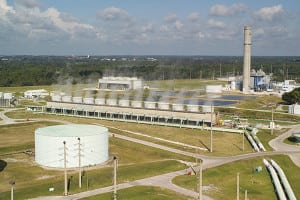
Lakeland Electric, the third-largest public power utility in Florida, reported that it saved $12 million in fiscal year 2015 through the use of a coal treatment at its McIntosh Power Plant Unit 3. The savings
-
 Coal
CoalTOP PLANT: Mátra Power Plant, Visonta, Hungary
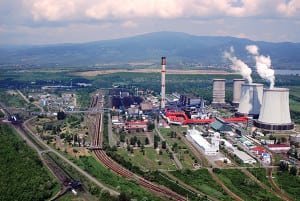
Owner/operator: Mátra Power Plant Co. Ltd. Hungary’s largest coal-fired power plant is a model of efficiency and environmental impact despite its 1960s-era vintage. Continual upgrades have kept the plant running smoothly, and a modern dense slurry ash-handling system keeps combustion residuals under control and allows for a zero liquid discharge posture. Unlike some of its […]
-
 Coal
CoalTOP PLANT: National Capital Power Station Dadri, Gautam Budh Nagar, Uttar Pradesh, India
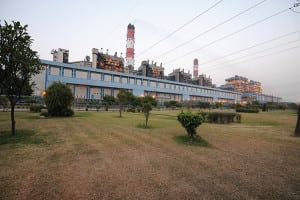
Owner/operator: NTPC Ltd. India’s state-owned generator NTPC operates a large fleet of power plants across the nation, and one of its top performers is found outside the capital of New Delhi. Staff at NTPC Dadri have taken a proactive, innovative approach to maintaining their plant, making it one of the most efficient in India despite […]
-
 Coal
CoalTOP PLANT: Tanjung Bin Energy Power Plant, Johor, Malaysia
Owner/operator: Malakoff Corp. Bhd. Building a power plant on a site previously used for an aquaculture farm comes with more than a few challenges. For the Tanjung Bin Energy Power Plant, that meant some redesign and rework was required. Even so, the GE-led construction consortium made adjustments and delivered the state-of-the-art ultrasupercritical project on time […]
-
 Coal
CoalCoal Combustion By-products Aren’t All Bad: The Beneficial Use Solution
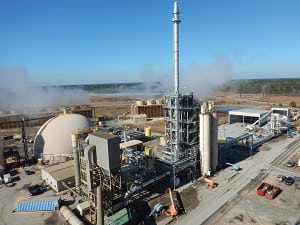
While it’s true that coal ash can be an environmental hazard if it’s not properly managed, there are a lot of positive uses for coal combustion products that actually provide benefits to the world. Many beneficial uses have been around for decades, but valuable new options are being developed, and some are starting to make […]
-
Coal
Sasan’s Shadow: An Ultra Mega Power Project’s Dark Side
For all its record-breaking achievements for speed, innovation, and efficiency, the 3,960-MW Sasan Ultra Mega Power Project should have been a POWER Top Plant. But the unique project has been plagued by serious setbacks—including loss of life—that show how perilous the plant construction journey can be. A decade ago, India was suffering a power crisis […]
-
 Coal
CoalDuke Energy Agrees to Pay $6 Million for Dan River Coal Ash Spill
Duke Energy agreed to pay a $6 million fine under a new settlement reached with North Carolina’s Department of Environmental Quality (DEQ) for the February 2014 coal ash spill at its Dan River power plant in Eden. State regulators fined the utility $6.8 million in February, but Duke Energy challenged the decision, which was the […]
-
 Legal & Regulatory
Dutch Parliament Vote Could End Coal Power Generation in the Netherlands
The Dutch parliament’s vote in favor of a motion to cut carbon emissions 55% by 2030 could spell the end of coal-fired power generation in the European nation. Although nonbinding, the measure would bring the Netherlands in line with agreements negotiated during the Paris climate talks that took place late last year. What it means […]
-
 Legal & Regulatory
LIVE UPDATES: The Clean Power Plan at the D.C. Circuit
Oral arguments on the merits of the Environmental Protection Agency’s (EPA’s) Clean Power Plan were concluded before an en banc panel (10 judges, rather than the anticipated three) at the D.C. Circuit Court of Appeals on September 27. West Virginia v. Environmental Protection Agency (No. 15-1363) is arguably the most important environmental case in nearly […]
-
 Slideshows
SLIDESHOW: An Alarming Trend Affecting U.S. Baseload Power
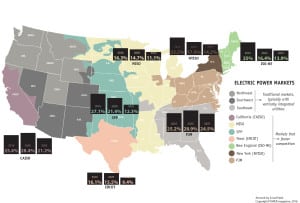
States, regulators, and market participants have in recent years called attention to a trend concerning uneconomic baseload generation in organized wholesale markets, specifically in ISO New England, New York Independent System Operator (NYISO), MISO, PJM, the Electric Reliability Council of Texas (ERCOT), and the California Independent System Operator (CAISO). Cheap natural gas, low power demand […]
-
 Coal
CoalAEP to Shed Ohio, Indiana Coal and Gas Plants in Move for Full Regulation
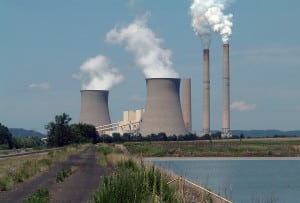
In an effort to become a fully regulated power company, American Electric Power (AEP) has agreed to sell four Midwestern power plants—representing a total of 5.2 GW—to a newly formed joint venture of Blackstone and ArcLight Capital Partners for about $2.17 billion. AEP will sell: the 1,186-MW natural gas–fired Lawrenceburg Generating Station in Lawrenceburg, Ind. […]
-
Legal & Regulatory
EPA Issues Updated CSAPR Rule in Push for Compliance with More Stringent 2008 Ozone NAAQS
Updates finalized by the Environmental Protection Agency (EPA) to its Cross-State Air Pollution Rule (CSAPR) identify nitrogen oxide emission (NOx) reductions from power plants in 22 states to help states address transported pollution under the agency’s more stringent 2008 ozone air quality standards. It marks the first time the EPA has updated an existing program […]
-
 Renewables
NREL: Integrating 30% of Wind and PV into Eastern Interconnection Is “Technically Feasible”
If wind and solar photovoltaic (PV) penetrations in the Eastern Interconnection were amped up to 30%, they would decrease coal, combined cycle, and combustion turbine capacity factors by 30% to 50%, a new study from the National Renewable Energy Laboratory (NREL) suggests. The study, NREL’s Eastern Renewable Generation Integration Study (ERGIS), was released on August […]
-
 Legal & Regulatory
Coal Power Plant Post-Retirement Options
Deciding to retire a coal-fired unit is often a tough call, but even tougher decisions follow. The next steps taken by a generation owner have multiple economic, environmental, and stakeholder consequences. Since 2000, U.S. generating companies (Gencos) have announced the closure of more than 200 coal-fired power plants, totaling 102 GW of generating capacity. Closures […]