
Business
-
 Business
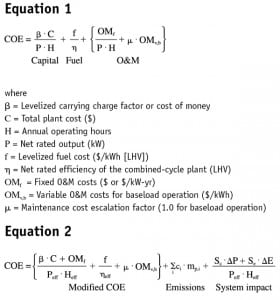
A More Accurate Way to Calculate the Cost of Electricity
Life-cycle cost of ownership is a common metric used to compare power plant system alternatives. However, the familiar formula for calculating the cost of generating electricity omits factors that are becoming increasingly important to business decisions. A new formula addresses those blind spots by estimating the value of the part-load performance of cycling combined-cycle plants.
-
Business
POWER Digest (June 2011)
Italian Firm Wins Contract to Build Massive African Hydropower Plant. Italian construction firm Salini Costruttori said on March 31 it has signed a €3.35 billion contract with Ethiopia state-owned Ethiopia Electric Power Corp. to build a 5,250-MW hydropower plant on the Blue Nile, a tributary of the Nile River. The project, slated to be completed […]
-
Business
NERC CIP Update
The North American Electric Reliability Corp. (NERC) Reliability Standards are under constant revision even while new requirements are under active development. Three important regulatory definitions are currently being contested.
-
Supply Chains
TREND: Markets and Critical Materials
While China seems determined to exploit its current control over the market for rare earths and other minerals critical to high-tech and green energy technologies, and while governments engage in conventional hand-wringing and head-scratching, markets appear to be reacting in the ways that markets are supposed to react.
-
Legal & Regulatory
The Energy Efficiency Conundrum
For many energy analysts and policy makers, efficiency is the Holy Grail, the universal solvent, the way to effortlessly reconcile supply and demand while simultaneously serving the needs of the environment. Don’t build new power plants, says policy guru Amory Lovins; gather "negawatts" instead. President Obama says that Americans "can save as much as 30% of our current energy usage without changing our quality of life."
-
Business
POWER Digest (May 2011)
ABB, BHEL to Deliver $1.1B Multi-Terminal UHVDC Line in India. Zurich-based ABB and Indian state-owned company Bharat Heavy Electricals Ltd. (BHEL) said on March 23 that they had been selected by Power Grid Corp. of India Ltd. (PGCIL) to deliver an ultrahigh-voltage direct current (UHVDC) transmission system to convey hydropower from northeastern India to the […]
-
Legal & Regulatory
Supreme Court Expands Employee Rights
U.S. Supreme Court rulings in two recent cases further advance the rights of employees in disputes with employers, continuing a long-term trend in federal law on employment discrimination.
-
Business
HAZCOM Is Essential for Avoiding Explosive Situations
In 1983, OSHA published its Hazard Communication (HAZCOM) Standard, which requires that the hazards of all chemicals used in the workplace be communicated to employees so that responsible protective measures can be taken. Today, HAZCOM remains near the top of the list of most frequently violated OSHA standards that result in a citation. The 1917 Halifax Explosion, one of the world’s largest nonnuclear explosions, testifies to what can happen when you don’t have—or don’t follow—an effective HAZCOM program.
-
Legal & Regulatory
Japan, Critical Materials, and Weak Links in Supply Chains
The devastation in Japan has focused new attention on supply chain issues and the impact of the partial collapse of that country’s manufacturing infrastructure on both Japanese imports and exports.
-
 Coal
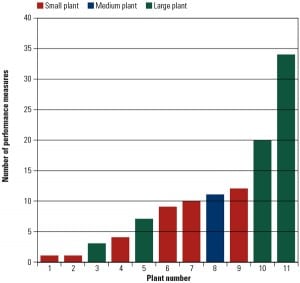
CoalBenchmarking Fossil Plant Performance Measures, Part III: Metrics Used for Compensation
In Part III of this three-part report, we look at plant- and fleet-level metrics used to determine compensation. As expected from this EUCG-sponsored benchmarking survey, there is broad use of quantifiable metrics to set portions of compensation, but the metrics selected vary substantially across the surveyed utilities. More surprising was the number of utilities that used no performance metrics as part of their employee compensation packages.
-
Legal & Regulatory
John Hanger, Pa.’s Former Environmental Chief, Talks About Challenges of Keeping Gas Drilling Safe
John Hanger, who led Pennsylvania’s Department of Environmental Protection until January, talked with ProPublica earlier this year about the challenges of trying to regulate the expanding drilling industry.
-
HR
Writing an Employee Handbook Your Employees Will Read, and Heed, Part 1
Not complying with current law can be expensive in today’s legal climate. Employers should review their employee handbooks and employment-related policies to make sure they are up to date. More importantly, employers should draft their handbooks so that employees actually read them and follow their policies.
-
 Business
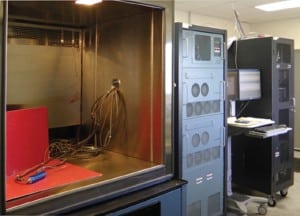
KEMA Opens Lab to Test Energy Storage Performance
Dutch energy consulting firm KEMA in February opened a new laboratory in Chalfont, Pa., to test and verify emerging utility-scale energy storage systems.
-
Business
POWER Digest (April 2011)
China Inaugurates 660-kV DC Line. The China Power Grid Co. on Feb. 28 began transmitting power through a 660-kV direct current power transmission link that runs from northwest China’s Ningxia Hui Autonomous Region. Part of China’s west-east power transmission program, the 10.4 billion yuan (US$1.58 billion) project runs 1,333 kilometers through five provinces and regions […]
-
 Solar
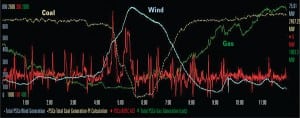
SolarEnergy Storage Enables Just-in-Time Generation
One of the main criticisms of renewable energy facilities is that they are unable to dispatch electricity when it’s needed. The great game-changer is low-cost energy storage, which would enable renewable energy production to be stored and rapidly released when needed. Here are seven promising distributed energy storage technologies that could be commercialized in the near future.
-
 Coal
CoalBenchmarking Fossil Plant Performance Measures, Part II: Fleet-Level Metrics
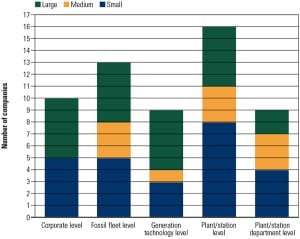
Part II of this three-part series moves up the typical utility organization to consider important fleet-level fossil plant operating metrics. This portion of the EUCG-sponsored benchmarking survey found that utilities favor fleet-level metrics that are similar to plant-level metrics but assign them different priority. Utilities generally agreed on what were important metrics in the eight categories examined, although none were favored by a majority of the surveyed utilities.
-
Business
POWER Digest (March 2011)
GDF SUEZ, RWE, and Iberdrola Pull out of Cernavoda Nuclear Expansion. French power company GDF SUEZ, Germany’s RWE, and Spain’s Iberdrola on Jan. 20 said they would no longer participate in a project to build Units 3 and 4 of the Cernavoda nuclear project in Romania. The companies cited “economic and market uncertainties surrounding the […]
-
 Coal
CoalCanada’s “Clean” Image Extends to Clean Power
Canada’s extensive natural resources are the driver of its powerful economy, and energy is Canada’s single most important export. Yet policy makers across the nation are currently dealing with the consequences of a generation of under-investment in the electricity system and deciding what the new grid and supply mix should look like. Several provinces are competing to lead the charge in renewable energy and grid intelligence. Policy makers hope that such efforts will not only provide for Canada’s electricity needs but also create the green economy jobs that will drive the nation’s next generation of economic development.
-
Supply Chains
TREND: Uranium Business Heats Up
The long-struggling uranium business, hoping that demand for nuclear fuel will increase, is slowly stretching its muscles and strengthening exploration and production efforts in the U.S. and elsewhere.
-
 Business
Who Needs an Owner’s Engineer?
In the past, members of a utility’s engineering staff spent their career designing and building new power plants. Today, many utility engineers find that opportunity comes around only once in a career. To fill the experience gap, an “owner’s engineer” company can add to a utility’s team a cadre of highly qualified power engineers who focus on avoiding design errors and keeping the project on schedule.
-
Legal & Regulatory
Renewables Face Chills and Thrills in Project Financing
The winter of 2010-2011 has been a cold one for financing renewable energy projects. That’s the weather report from a recent project financing meeting in New Orleans, a survey of developers and builders done by a large Minnesota construction company, and accounts from those in the financial trenches.
-
 Coal
CoalBenchmarking Fossil Plant Performance Measures, Part I: Station-Level Metrics
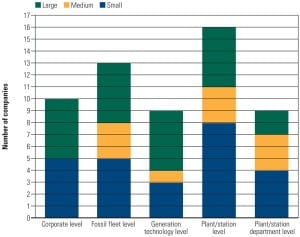
How does your company prepare and share fossil plant performance data? What data are important, and how much effort is required to collect and report the data? What are the most important statistics for reporting key fossil plant operations? The latest EUCG benchmarking survey reveals the favored fossil performance metrics at several of the largest utilities in eight key categories.
-
Legal & Regulatory
Can a Stew of Power Generation Regulations Clear the Air?
Don’t get fixated on the Environmental Protection Agency’s moves against carbon dioxide. The real action is in the area of conventional air pollutants.
-
 Business
Training Tomorrow’s Power Industry Workers
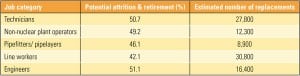
As U.S. electric utilities watch increasing numbers of older workers leave the workforce, they are left with a shrinking pool of experienced personnel. To meet this growing challenge, a number of educational programs are being offered to help younger workers take advantage of career opportunities in the electric power industry.
-
 Smart Grid
Do Smart Grid Standards Adequately Address Security Problems?
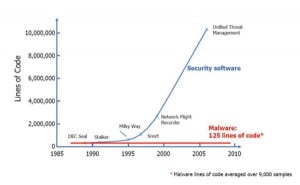
While the cybersecurity threat escalates asymmetrically, federal agencies may be shortchanging cybersecurity while developing smart grid standards designed to protect the emerging smart grid from attack.
-
Legal & Regulatory
Will Critical Materials Become a Green Roadblock?
Critical minerals—such as rare earth metals—are important to many new energy technologies. However, the U.S. Department of Energy is concerned that foreign control of supply, particularly by China, could limit the ability of these technologies to develop fully, so the DOE is developing a strategy to keep the supply chain open. Meanwhile, some analysts say China is playing a losing game with its hold on the minerals.
-
Supply Chains
Is Peak Coal the Latest Supply Threat?
We’ve heard—endlessly, it seems at times—about "peak oil," the idea that the world is rapidly running out of oil and will face catastrophic consequences. Now talk is emerging about "peak coal."
-
 Business
The Great Solar Storm of 2012?
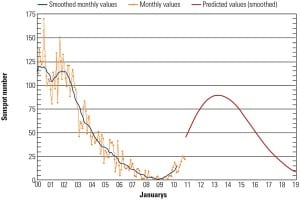
The 2009 blockbuster movie 2012 about a global cataclysm combined Hollywood special effects with supposed predictions by Nostradamus; a Mayan calendar that ends on December 21, 2012; and a very rare planetary alignment that supposedly occurs on the same day. Hollywood producers seldom let technical accuracy get in the way of a good story, but suppose, this one time, the story has an element of truth.
-
Business
POWER Digest (Feb. 2011)
MHI to Continue Pre-Construction Work for North Anna Unit. Mitsubishi Heavy Industries Ltd. (MHI), through Mitsubishi Nuclear Energy Systems Inc., and Dominion subsidiary Virginia Electric and Power Co. on Dec. 27 said they had reached an agreement to continue pre-construction, engineering, and planning work in preparation for a third unit at Dominion’s North Anna Nuclear […]
-
Business
Look Before You Leap into the Cloud
Given cloud computing’s potential to lower operating costs and increase flexibility, it’s no wonder that it is on the cusp of sending the corporate world into a paradigm shift.