The UK’s battery storage capacity is set to triple by 2030 and could reach 50 GW by mid-century—a transformation that will reshape how the nation powers itself. This explosive growth isn’t just about capacity; it’s about building the backbone of a decarbonised electricity system.
The UK’s efforts to decarbonise its economy have gained unprecedented momentum in recent years, with clean energy deployment advancing despite the unwanted impact of global economic headwinds and geopolitical uncertainties. In time, as the UK journeys through its energy transition, we will move toward a cleaner, more efficient and, ultimately, more affordable electrified energy system—a green prize for consumers and businesses alike.
DNV’s third UK Energy Transition Outlook (ETO) report concludes that electricity demand will more than double by mid-century, with renewable sources in the form of wind and solar supplying most new capacity. Facilitating this change requires us to strengthen and expand our grid to accommodate new energy generation and manage the increasing complexity of energy flows. Scaling the rollout of battery energy storage systems (BESS) will be critical to managing this expansion, ensuring stability and resilience in the grid while realising the full value of renewables.
The UK Energy Storage Landscape
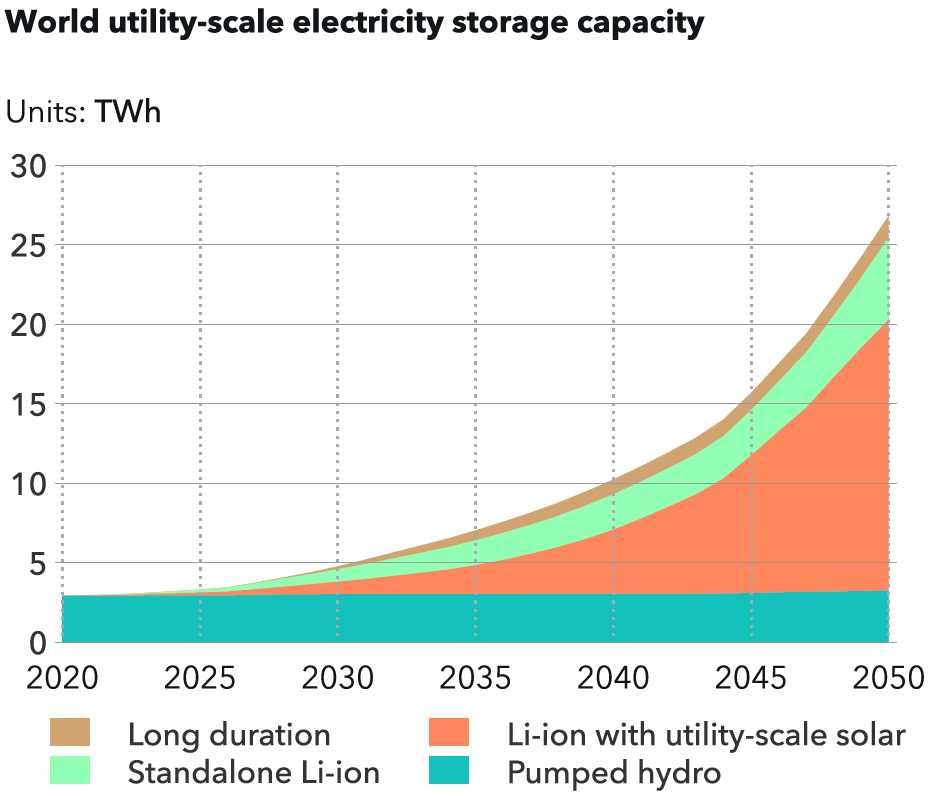
As variability in electricity generation increases, the need for electricity energy storage rises in tandem. As outlined in DNV’s Energy Transition Outlook: New Power Systems report, pumped hydro is currently the global primary method for utility-scale electric storage (Figure 1). However, geographical constraints limit the growth potential of pumped hydro in the UK, meaning attention is turning to other emerging technologies to meet the burgeoning storage demands of the coming decades.
 |
|
1. Pumped hydro storage has the largest capacity by far of any energy storage technology currently in service. However, lithium-ion (Li-ion) battery storage is expected to grow rapidly through 2050 and beyond. Courtesy: DNV |
Lithium-ion batteries dominate the BESS market today, comprising about 95% of the storage projects DNV is involved with. BESS support the balance between supply and demand, absorbing excess energy during periods of high generation and releasing energy during times of high demand. Many systems also deliver fast-acting stability services, offering real-time dynamic response to regulate grid frequency and voltage. Thanks to their rapid response times, lithium-ion batteries can deliver ancillary and locational stability services to the grid, while also providing intraday energy shifting with durations of up to several hours.

In This Issue
Full issueAs utility-scale grid connected assets, BESS assets need to be designed and managed to optimise capacity, efficiency, and reliability. Without those, BESS would not be able to complement other baseload and peaking sources, from fossil fuels to nuclear, to balance variability from growing renewable generation.
The BESS Growth Path
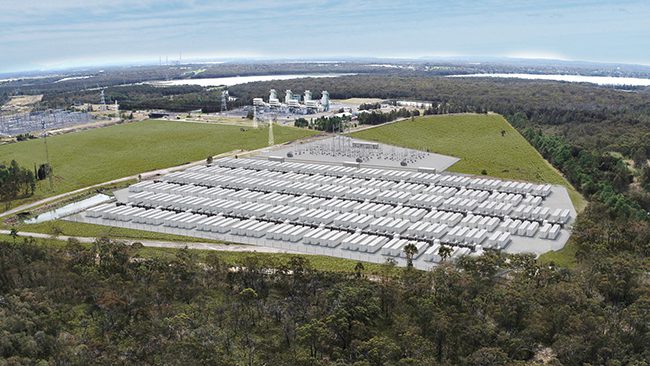
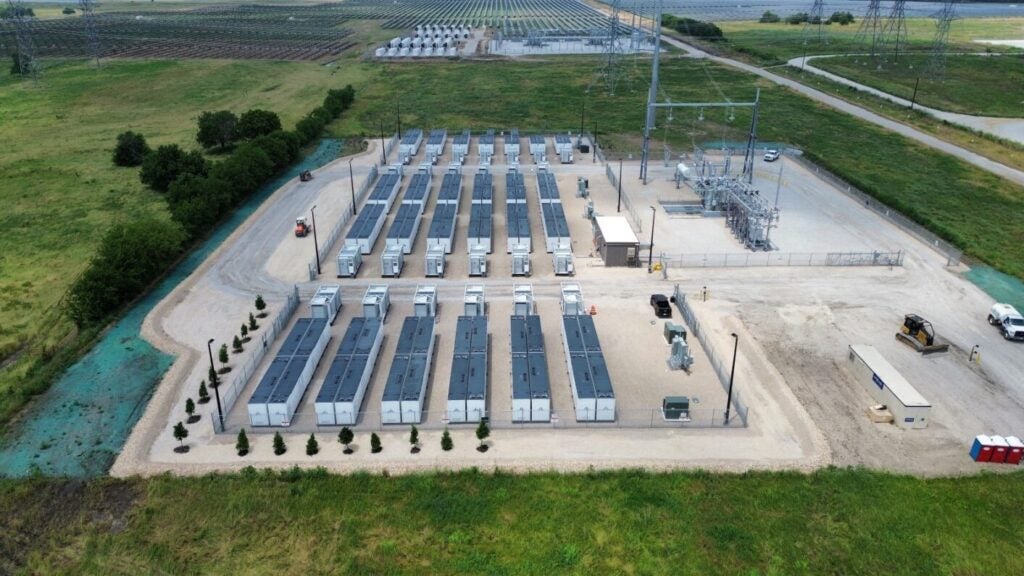
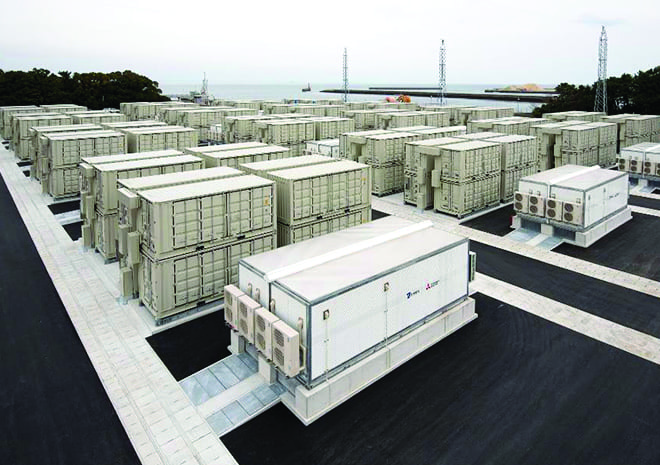
The deployment of utility-scale battery storage facilities has increased rapidly in the UK in recent years, now providing approximately three quarters of the power storage capacity available to the grid today. However, this is only the start, as DNV predicts an exponential growth path for battery storage, with a threefold increase of the capacity in power terms expected by the end of the decade. This boost in capacity will be fuelled by larger transmission connected projects, alongside smaller traditional distribution connected ones.
This growth is expected to continue as we approach 2050, ultimately reaching close to 50 GW of power and 140 GWh of energy storage capacity. This is supported by the downward trend of equipment costs for storage facilities, exacerbated by a strong competitive market and economies of scale in China.
Not only has lithium-ion established itself as the technology of choice for short duration storage, it has also proven competitive up to eight hours duration as demonstrated by the long duration electricity storage (LDES) auction happening globally and the promising outcome of the first round of the LDES cap and floor scheme administered by Ofgem in the UK.
The scheme, however, recognises the benefits of technological diversity, and provides support to fast track the deployment of more capital expenditure (CAPEX) intensive long duration storage technologies. This includes mechanical and chemical energy storage solutions, such as pumped hydro energy storage, flow batteries, and compressed air or liquid air energy storage. Consequently, the longer duration space in the UK is expected to pick up momentum around 2030 and beyond.
Lithium-ion batteries will continue to play an important role while the commercial viability of longer duration technologies solidifies. Sodium-based batteries, while less energy dense and more expensive, are also expected to complement lithium-ion.
Electric vehicle (EV) batteries also have vast storage capacity. Through vehicle-to-grid (V2G) technology, EVs can act as distributed energy storage units that supply power back to the grid when needed. By 2050, V2G solutions are expected to provide more than half of the UK’s total battery storage energy throughput, dramatically increasing grid flexibility.
Addressing the Safety of Battery Storage Systems
The rapid expansion of battery technologies has also given rise to associated fire risks, sparking concerns among the public, emergency services, and regulators. High-profile battery storage fires have been reported around the world, including incidents in the U.S., the UK, South Korea, Australia, and China.
To address this, the BESS industry has made significant efforts to educate key stakeholders, increasing awareness of the safest methods for handling fires. But there is still work to be done. DNV’s investigations into some of these incidents show battery fires can stem from causes ranging from minor issues like rainwater ingress to complex system vulnerabilities that let small faults escalate into major fires. The safe and sustainable growth of battery storage depends on advancing technical safeguards and strengthening human preparedness, which includes targeted first responder training to reduce risk.
This can be supported by rigorous safety standards and system-level risk assessments, which go beyond safety considerations isolated to the battery unit itself. These should analyse equipment interdependencies and operational interfaces, as well as how they interact with plant infrastructure and surrounding areas. Standards, such as International Electrotechnical Commission (IEC) Standard 62933-5-2 and National Fire Protection Association (NFPA) Standard 855, advocate this approach to risk management, emphasising that assessments should start at the component level and systematically progress up to subsystems, integrated systems, plant-wide interactions, and adjacent areas.
The Diverse Future for Energy Storage
As the UK’s energy system continues its green transformation, energy storage systems will be critical to ensuring energy security and supporting grid efficiency and flexibility. While lithium-ion batteries are currently leading the charge and will remain vital to enabling short- and medium-duration balancing, the long-term outlook is more diverse.
Competing longer duration storage technologies are entering the market and are receiving government policy support to increase their commercial viability. At the same time, pumped hydro, a mature but proven technology, is a strong contender for securing some funding mechanism for deployment.
DNV’s UK ETO points to a clear growth pathway for BESS and other energy storage solutions. If deployment is scaled responsibly and supported by investment and robust safety standards, storage will play a central role in enabling a reliable, decarbonised and cost-effective electricity system for the UK.
—Thibault Delouvrie is principal consultant, Energy Storage, Energy Systems, with DNV.